
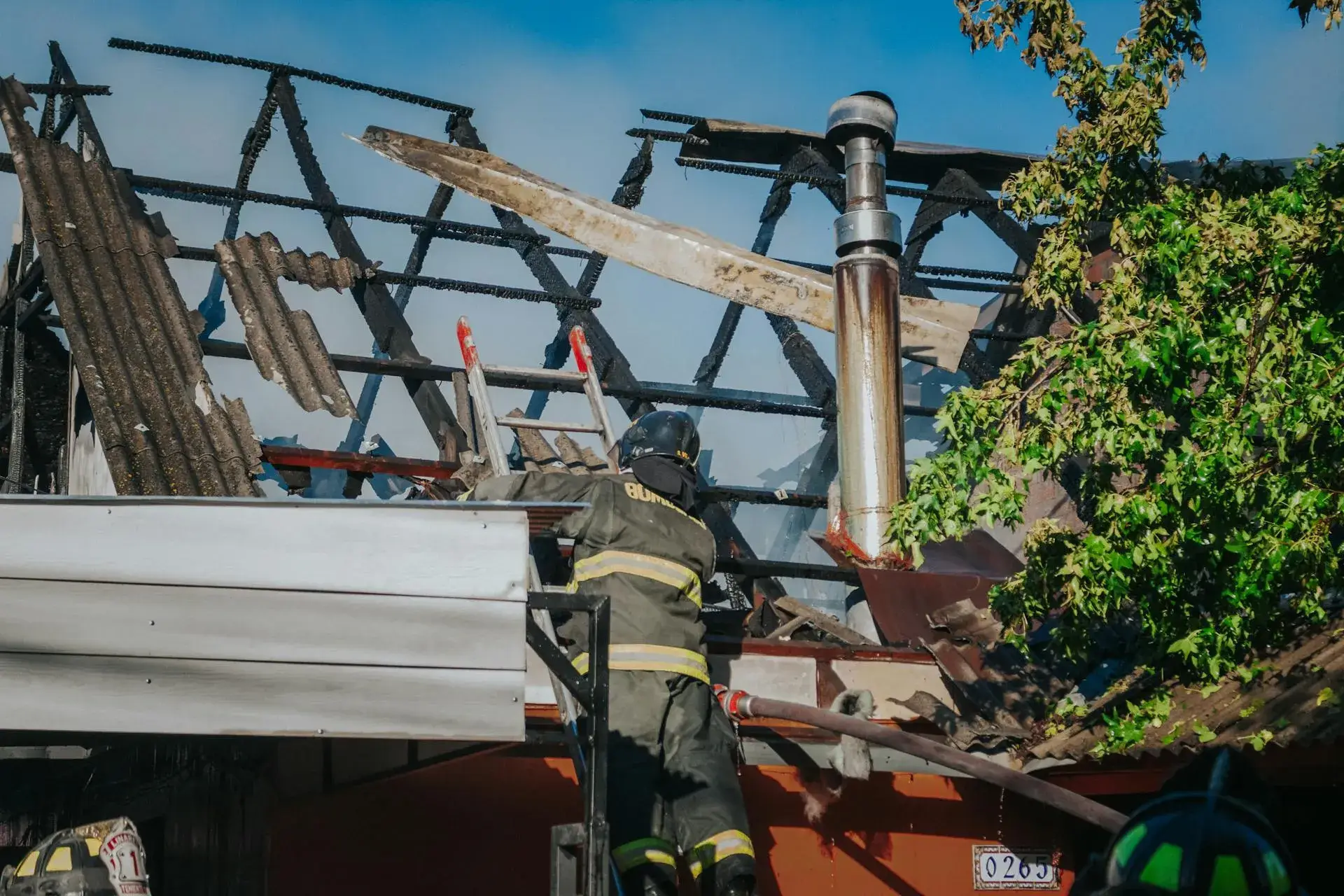
Fire Damage Restoration in Florence, KY
Fire damage compounds by the hour as acidic soot corrodes surfaces and a forced-air furnace pushes smoke deeper into a closed-up home. Our local team responds to Florence and Boone County emergencies within 60 minutes.
What Happens When You Call
A real person answers, not a call center. We assess your situation, confirm the scene is safe and released by the fire department, and begin coordinating your response immediately.
Your dedicated restoration team is dispatched from our local base serving Florence and the surrounding Boone County communities.
The team arrives with board-up materials, HEPA filtration, soot removal equipment, and structural assessment tools. Emergency stabilization begins immediately.
Structure secured, initial soot and debris cleared from critical areas, restoration plan documented. You know exactly what comes next.
Your home just came through a fire. Whether Florence Fire and EMS knocked it down fast or you caught it before it spread, the damage is active and compounding right now. Soot is acidic and keeps corroding every surface it touches. Smoke residue is working deeper into wall cavities, ductwork, and insulation with each hour, and a running furnace carries it through the whole house. X Response exists for exactly this moment. When you reach out, your restoration team is mobilized within minutes. From that point forward, one team manages everything: stabilization, cleaning, demolition, and rebuild. Call now. Your team is standing by.
Why Florence Homes Are Vulnerable to Fire Damage
A house fire is one of the hardest things a Florence family can go through. Boone County sits on the Ohio River just south of Cincinnati, and its cold, freeze-thaw winters push furnaces, space heaters, and fireplaces to run hard for months, which is when residential fire calls climb. The Florence Fire Department responds to numerous residential structure fires annually, often citing overworked heating systems and kitchen mishaps as leading causes during the winter months. When a fire ignites it spreads fast, destroying belongings and compromising the structure of the home, and thorough documentation is usually the first real step in an insurance claim. X Response understands the toll a fire takes, and our team responds with urgency and care, bringing the full range of fire and smoke mitigation needed to return your home to its pre-loss condition.
The damage you can see from the flames is usually only part of the story. The heat of a fire drives acidic soot and corrosive residue deep into wall cavities, ductwork, and porous materials, so rooms the fire never reached can still be coated in residue that etches glass, tarnishes fixtures, and eats into drywall if it is not neutralized quickly. On top of that, the water used to put the fire out creates a serious secondary risk, and in a Florence home built over a basement that water runs straight down to the lowest level. Handling a loss like this takes an IICRC-certified team that can manage structural drying, soot removal, and repairs at the same time.
The first 24 to 48 hours after a fire decide how much can be saved and how far the cost climbs. Within hours acidic soot starts to permanently discolor plastics and tarnish metal, and smoke odor settles into soft materials all through the house. Stabilizing the structure comes first. Our crews board up openings and tarp any damaged roof sections to protect your Florence home against winter weather and intrusion, and we begin pulling out suppression water before it soaks deeper into building materials or freezes in the basement during a Boone County cold snap. In January 2025 a cold-weather apartment fire in Florence sent several people to the hospital and forced families out into freezing temperatures, a reminder of how quickly a winter fire turns into an emergency.
Our fire restoration process treats the whole disaster as one job, from the first emergency call to the final coat of paint. After stabilization and water mitigation we clean soot and smoke residue from every salvageable surface, then catalog, pack out, and store your belongings for specialized off-site cleaning. Deodorization is a major part of the work: we use hydroxyl generators and other treatments to break down the compounds behind lingering smoke odor rather than masking them, and our reconstruction crews rebuild the damaged parts of the home once every category of damage has been resolved.
Winter Heating Season in a Boone County Home
Florence's heating season runs from roughly November through March, and that stretch is when residential fires concentrate. Furnaces, space heaters, fireplaces, and wood stoves all run for months at a time, and the National Fire Protection Association consistently ranks heating equipment among the leading causes of home fires. Equipment pushed hard through a cold Northern Kentucky winter is exactly the kind that fails, and a portable space heater set too close to bedding, upholstery, or drapes adds another layer of risk. When a heating fire starts near a basement furnace, the smoke and heat rise into the floors above quickly, so a problem that began downstairs becomes a whole-house one.
Cooking Fires in Homes and Apartments
Cooking is the number one cause of home fires nationally, and it drives a large share of Florence's fire calls. A grease fire on the stovetop can fill a kitchen with heavy smoke in a couple of minutes, and once that smoke reaches the return registers of a forced-air furnace it spreads to every room on the system. In Florence's many apartment complexes and divided rentals, a cooking fire in one unit can push smoke through shared walls, ceilings, and attic spaces into neighboring units, so the cleanup routinely reaches well beyond the kitchen where it started.
Aging Wiring in Older Florence Homes
Plenty of homes in Florence's older neighborhoods and first-generation subdivisions still run on electrical systems sized for a fraction of today's load. Undersized panels, overloaded circuits, and brittle old wiring struggle under modern kitchens, electronics, and the winter space heaters that come out every cold snap, and that mismatch produces heat at loose or overloaded connections. Electrical fires in these homes often ignite inside a wall or ceiling and smolder unseen, breaking into the living space only after they have already burned through framing, which is what makes aging wiring one of the most serious and least visible fire risks in the older parts of town.
Suppression Water in the Basement and Winter Freezing
When the fire department knocks down a house fire, the water has to go somewhere, and in a Florence home built over a basement it runs downward. It pours down stairwells and through floor penetrations and collects at the lowest point of the house, soaking drywall, framing, stored belongings, and anything finished down there. In winter that standing water is a second problem, because if the power is out or the home sits unheated after the fire it can freeze and expand and crack whatever it has already saturated. On top of the water, a forced-air furnace that ran during or right after the fire will have pushed soot and smoke through the supply ducts into every room. A real Florence fire restoration has to handle the fire above, the water in the basement, and the contaminated ductwork all at once.
Apartment and Multifamily Density
Florence has grown quickly as a Cincinnati suburb, and much of that growth is apartments, condominiums, and multifamily buildings. When a fire starts in one of these buildings, shared attics, common walls, and connected utility chases let smoke and heat move into units that never saw flame, and a single kitchen or heating fire can displace dozens of neighbors at once. Cold-weather events make it worse, because families pushed out of a burning building in January have nowhere warm to go. Restoring a multifamily fire means assessing every affected unit, not just the one where the fire began, and coordinating the work so residents can get home as quickly as it is safe to do so.
Fire damage in Florence is never just what the flames touched. It is soot and smoke carried through the ductwork into every room, suppression water collecting and sometimes freezing in the basement, and heat that races through the framing and aging wiring of older homes. Each part needs its own approach in the right order. It takes a team that understands full-basement construction, forced-air smoke distribution, and how a cold Northern Kentucky heating season concentrates fire risk from furnaces, space heaters, and older home heat across this Boone County community.
What Happens to Your Home While You Wait
Within 1 Hour
Soot immediately starts reacting with the surfaces it lands on. The acidic compounds in smoke residue begin pitting and etching metal fixtures, appliances, and hardware, and smoke odor works into soft materials including clothing, bedding, upholstery, and carpet. In a Florence home closed up tight against winter cold there is nowhere for the smoke to vent, and if the furnace ran during or after the fire it has already carried contaminated air to every room.
1 to 24 Hours
Soot permanently stains porous surfaces such as grout, natural stone, and unsealed concrete, and metal surfaces begin to show visible corrosion. Smoke residue pushes deeper into wall cavities, insulation, and clothing stored in closets. Materials a technician could have wiped clean in the first hour now need more aggressive cleaning or replacement. If suppression water is standing in the basement, it is soaking into drywall and flooring at the same time.
24 to 48 Hours
Corrosion from soot becomes permanent on many metal surfaces, and smoke odor bonds deep into porous materials so that surface cleaning alone no longer removes it. Suppression water that was not extracted starts breeding bacteria, and in a damp basement or wall cavity it creates the conditions for mold to take hold. In a sealed winter home with the air recirculating, odors grow stronger rather than fading.
48 to 72 Hours
The restoration scope expands as materials that could have been saved earlier now have to be replaced. Soot corrosion works beneath the surface coatings on appliances and fixtures, smoke odor is embedded in soft goods and building materials, and mold colonization begins in the water-damaged areas. Fire, smoke, and water damage compound one another, and the cost climbs with every day of delay.
One Week and Beyond
Structural fasteners and steel show measurable corrosion, and wiring and electrical components exposed to heat and soot have to be replaced for safety. Smoke odor has permeated the whole structure to the point that thermal fogging, hydroxyl treatment, or ozone is required on top of physical cleaning. The project has shifted from cleaning to reconstruction across much of the home, and the insurance claim grows more complicated as the carrier weighs whether faster action would have limited the loss.
Soot is acidic, and the longer it sits the more of that corrosion becomes permanent. In a closed-up Florence home with the furnace recirculating air, smoke reaches every room fast, so the difference between cleaning a surface and replacing it is often measured in hours. Contact X Response now. Our Florence team responds within 60 minutes.
How We Restore Fire-Damaged Florence Homes
Fire restoration is the most complex category of property damage because several kinds of damage happen at once. Here is exactly what the process involves in a Florence home.
Emergency Board-Up and Stabilization
Once the fire department releases the scene, our team moves in to secure the structure. That means boarding up broken windows, tarping open roof sections, and bracing anything the heat has compromised. An unsecured fire-damaged home in a Boone County winter is exposed to snow, rain, freezing temperatures, and intrusion, so speed matters. We also shut down and isolate the HVAC system so it stops moving soot and smoke into unaffected areas. With the structure secured, we assess it systematically to map the full extent of fire, smoke, soot, and water damage.
Soot and Debris Removal
Loose soot, charred debris, and materials that cannot be restored come out first: burned drywall, melted fixtures, destroyed insulation, and any structural element that failed under heat. In a Florence home this phase also includes extracting the suppression water that ran down and pooled in the basement during firefighting. HEPA air scrubbers run continuously to capture the particulates the work stirs up. The surfaces that remain are then cleaned by the method each one calls for: dry sponging for light soot on painted walls, wet cleaning for heavier deposits, and abrasive methods for char on masonry or metal.
HVAC and Duct System Decontamination
The forced-air furnace in a Florence home ties every room to one air handler, so if the system ran during or after the fire it pushed smoke and soot into ductwork throughout the house. We clean the interior of the supply and return ducts, replace filters, clean the blower assembly and coil, and confirm the system runs without recirculating contamination. Where duct interiors are too heavily coated to clean, we replace those sections. The system has to be verified clean before any finish work starts, or the first heating cycle will re-contaminate fresh paint, flooring, and furnishings.
Odor Elimination and Surface Treatment
Smoke odor is molecular and reaches into materials where surface cleaning cannot. After the physical soot removal, we use thermal fogging, hydroxyl generators, or ozone treatment to break down the odor compounds embedded in framing and remaining materials rather than masking them. Surfaces that will be refinished get an odor-sealing primer before new paint so nothing bleeds back through. Every treated area is checked by both instrument and nose before the project moves on to reconstruction.
Structural Rebuild and Completion
Once every category of damage has been handled at the structural level, reconstruction begins: drywall, insulation, flooring, trim, cabinetry, fixtures, and anything else removed during restoration. We rebuild to current code, which sometimes means upgrading original wiring or other systems that no longer meet requirements. A final inspection confirms that every system works, every surface is finished, and the home is fully livable, and you receive complete documentation of the work for your records and your insurance file.
The X Response Difference
Fire restoration is complex. You want one team that carries the job from emergency stabilization through final rebuild, not a patchwork of subcontractors. X Response is that team.
Insurance Claim Guidance for Florence Homeowners
Fire damage insurance claims in Kentucky are usually more straightforward than water claims, because a standard homeowner's policy covers fire damage regardless of how the fire started. The complication is scope. A fire that burns one room commonly spreads smoke and soot through the whole house by way of the forced-air furnace, and carriers may push back on damage claimed beyond the room of origin. Water used to put the fire out is generally covered as part of the fire loss. The key is thorough documentation from day one, before any cleaning, because once soot is wiped from a surface the proof of contamination is gone. In Florence, most interior restoration does not need a separate permit, but a structural rebuild that touches electrical, plumbing, or framing requires a City of Florence building permit.
How X Response Helps
- Document soot, smoke, and water damage in every room before any cleaning begins, establishing the full scope from day one
- Photograph and catalog all damaged contents including electronics, clothing, and furnishings that may show no visible burn but carry smoke contamination
- Prepare a detailed scope of work that separates fire damage, smoke damage, and water damage into categories your adjuster recognizes
- Document HVAC contamination with interior duct photos that prove system-wide distribution of smoke particles beyond the fire origin room
- Provide daily progress documentation so your carrier can track the restoration timeline and approve scope changes in real time
X Response does not file claims on your behalf, adjust claims, or make coverage determinations. We provide documentation and guidance to help you make informed decisions about your property and your policy. Coverage decisions are made solely by your insurance carrier.
Certified Restoration Specialists Serving Florence
When you contact X Response for fire damage restoration in Florence, your team is drawn from certified professionals who know how fire-damaged homes behave in Northern Kentucky. They understand how a full-basement house lets suppression water run down to the lowest level, how a forced-air furnace carries smoke and soot into every room, and how a cold heating season concentrates fire risk from furnaces, space heaters, and older home heat. They have worked cooking fires in apartments and divided rentals where smoke reached neighboring units, electrical fires that smoldered inside aging walls before breaking through, and multi-room events that required full demolition and rebuild. This is a local team with local knowledge, not a crew sent in from hours away.
Every technician on your fire restoration team holds current IICRC certification in fire and smoke damage restoration, with additional water damage certification to handle the suppression water that comes with nearly every fire. Their equipment includes HEPA air scrubbers, thermal foggers, hydroxyl generators, ozone units for unoccupied spaces, and commercial dehumidifiers for the water phase. When the team arrives, they bring everything needed to stabilize the structure and begin restoration right away.
In Florence, X Response works with Content Recovery Specialists, an independent local restoration partner serving Boone County.
Fire Damage Restoration FAQ for Florence Homeowners
Other Emergency Services in Florence

Water Damage Restoration
Burst pipes, storm flooding, standing water. We extract, dry, and restore before mold sets in.
Learn more
Smoke Damage Restoration
Soot residue, chemical odors, HVAC contamination. We decontaminate surfaces, eliminate odors, and restore air quality.
Learn more
Mold Remediation
Testing, containment, removal, prevention. We find the source, eliminate the growth, and stop it from returning.
Learn more
Sewage Cleanup
Sewer backups, contaminated water, biohazard. We extract, sanitize, and restore safely.
Learn more