
Water Damage Restoration in New Orleans, LA
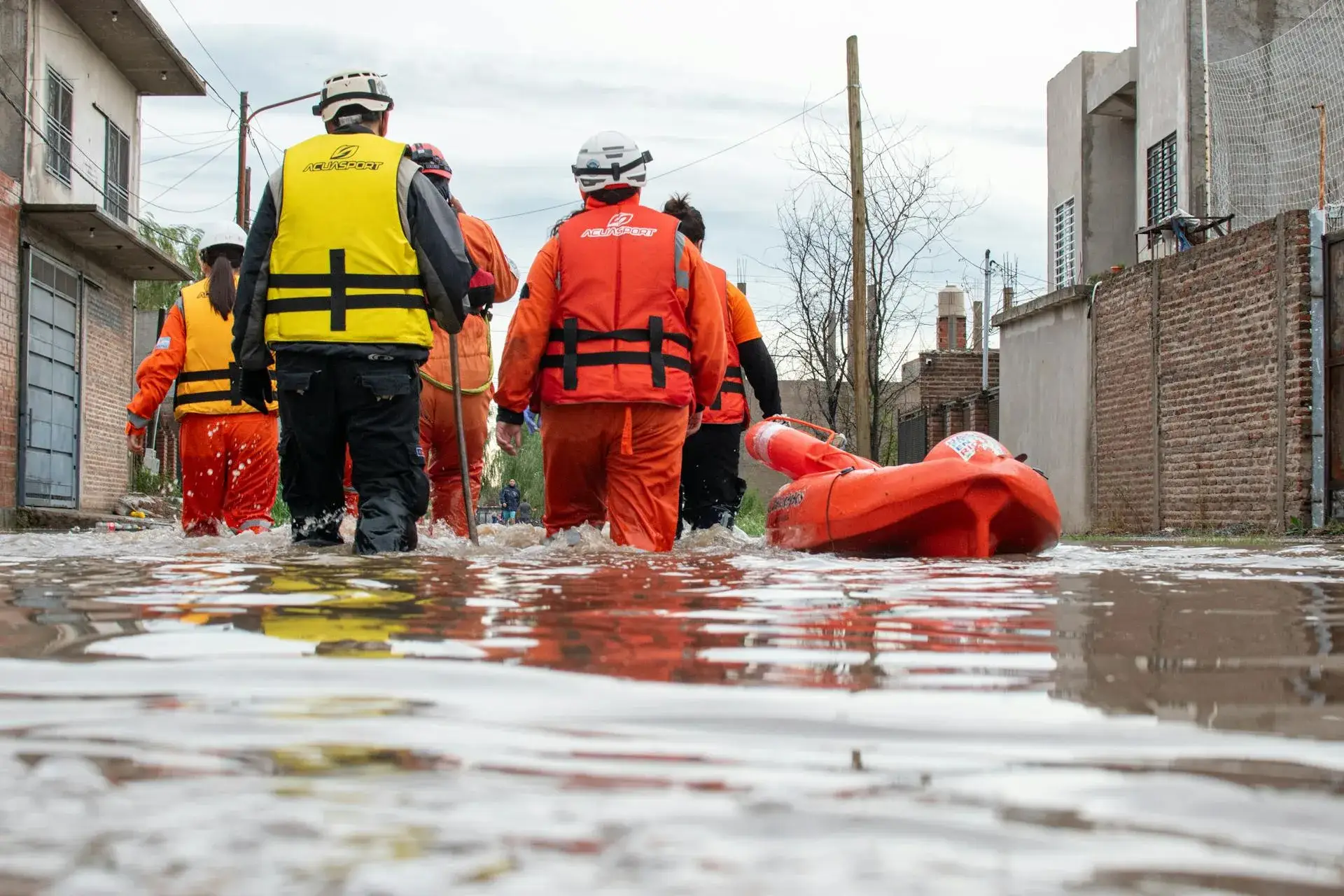
New Orleans sits below sea level and depends entirely on mechanical pumping for drainage. When that system fails, water rises in minutes. Our Orleans Parish team responds within 60 minutes around the clock.
What Happens When You Call
A real person takes your emergency call and dispatches our New Orleans restoration team at any hour.
Your dedicated specialists arrive to assess the water source, map moisture penetration, and secure your property against further intrusion.
We rapidly extract standing water using truck-mounted pumps and begin placing industrial drying equipment throughout the structure.
Daily moisture monitoring continues until your home reaches verified dry standard, documented for your insurance carrier.
In a city where much of the ground surface sits below sea level, standing water has no natural path to recede. Every minute of delay allows floodwater to saturate structural materials and accelerate deterioration. When you call X Response, certified restoration professionals mobilize immediately. Call now. Your local team is standing by.
Why New Orleans Homes Are Vulnerable to Water Damage
New Orleans occupies one of the most hydrologically precarious positions of any major American city. Approximately half of the metropolitan area sits below sea level, with some neighborhoods resting as much as eight feet below the surface of Lake Pontchartrain. The city relies entirely on the Sewerage and Water Board of New Orleans (SWBNO) and its network of drainage pump stations to remove rainwater from streets and residential areas. When these stations operate correctly, massive turbine pumps push stormwater through outfall canals and into the lake. When they fail, water accumulates with alarming speed because gravity offers no natural drainage path. In July 2026, a pump operator error at SWBNO Drainage Pump Station 7 caused all three pumps to go offline for 45 minutes, and water rose six feet in 20 minutes, flooding lower Lakeview, Mid-City, and areas surrounding City Park. That single mechanical failure turned dozens of blocks into a shallow lake within the span of a lunch break. The incident demonstrated that water damage in New Orleans is not exclusively a hurricane phenomenon. It can happen on any afternoon when the drainage system stumbles.
The systemic fragility of the city's drainage infrastructure has been a recurring concern for decades. Just six days after Governor Jeff Landry issued Executive Order JML 24-25 on February 27, 2024 establishing the SWB Task Force to study the utility's operational deficiencies, the city experienced significant street flooding on March 4, 2024, underscoring the urgency of the task force's mandate. The final task force report documented chronic underfunding, deferred maintenance, and staffing shortages that have left the pump station network operating below design capacity during the very storms that demand full output. The Tropical Storm Arthur remnants that swept through on June 18, 2026 brought torrential rainfall, suspected tornado strikes, and caused 1,400 power outages in Orleans Parish alone, potentially compromising pump operations at the moment when the system needed to perform at peak capacity. Each of these events deposits water inside homes and businesses across the city, saturating carpet, warping hardwood floors, and infiltrating wall cavities where hidden moisture becomes a breeding ground for mold within 48 hours. Residents in low-lying neighborhoods like Hollygrove, Broadmoor, and parts of Gentilly have experienced multiple flooding events within the same year from separate pump failures or overwhelmed drainage capacity.
Hurricane Katrina remains the defining water event in New Orleans history. In August 2005, levee failures along the Industrial Canal, the London Avenue Canal, and the 17th Street Canal allowed Lake Pontchartrain and Mississippi River floodwater to inundate approximately 80 percent of the city. Some neighborhoods remained submerged for weeks, with the Lower Ninth Ward experiencing water depths exceeding 12 feet. While the federal levee system has since been rebuilt to a 100-year flood standard by the U.S. Army Corps of Engineers, the interior drainage network remains aging and vulnerable. The SWBNO system was designed decades ago for a smaller city footprint and has struggled to keep pace with development patterns that increase impervious surface coverage. Homes throughout Gentilly, New Orleans East, the Lower Ninth Ward, and Broadmoor that were rebuilt after Katrina now face recurring flood risk from the same interior drainage failures that plagued the city before the storm. The newer construction materials used in post-Katrina rebuilds, including engineered wood products like oriented strand board, luxury vinyl plank flooring, and synthetic trim, respond differently to water exposure than the original cypress and hardwood framing. OSB delaminates rapidly when wet, vinyl planking traps water beneath its surface against the slab, and these materials require specialized drying protocols distinct from those used on traditional construction.
Professional water damage restoration in New Orleans must account for the city's unique below-sea-level elevation and the impossibility of natural drainage. Unlike communities built on elevated terrain where gravity eventually pulls floodwater toward storm drains and waterways, water in New Orleans neighborhoods simply sits until it is mechanically removed. The surrounding water table, often just two to four feet below the surface, also means that moisture continuously migrates upward through concrete slabs via capillary action, working against the drying process from below even as restoration equipment removes water from above. Standard consumer dehumidifiers cannot overcome this ambient moisture load in a saturated structure where the ground itself is a moisture source. Restoration requires commercial low-grain refrigerant (LGR) dehumidifiers capable of achieving grain depressions below 40 grains per pound, high-velocity air movers positioned to break the boundary layer on wet surfaces, and continuous psychrometric monitoring to draw bound moisture from structural materials before biological contamination takes hold. The margin for error is narrow: in New Orleans' warm, humid environment, mold germination begins within 48 hours on any organic material maintaining elevated moisture content. Our teams apply EPA-registered antimicrobial treatments throughout the drying process and document every moisture reading for your insurance claim, creating a defensible record that supports reimbursement and demonstrates that professional-grade intervention was necessary given the city's environmental conditions.
Below-Sea-Level Elevation
Much of New Orleans sits below sea level with no gravity drainage. Floodwater cannot recede naturally and must be mechanically pumped out, meaning even minor drainage failures create standing water conditions in homes.
Aging Pump Station Infrastructure
The SWBNO drainage system relies on pump stations built across multiple decades. Mechanical failures, operator errors, and power outages at these stations can flood entire neighborhoods within minutes during rain events.
High Water Table
The water table across Orleans Parish typically sits two to four feet below the surface. During heavy rain, hydrostatic pressure pushes groundwater upward through slab foundations and into crawl spaces.
Recurring Storm Exposure
New Orleans faces annual threats from tropical storms and hurricanes that overwhelm even a functioning drainage system. Wind-driven rain penetrates roofing and exterior walls, creating interior water damage invisible from outside.
New Orleans faces water damage risks that no other American city of its size must contend with. A restoration team operating here must understand both the science of structural drying and the city's complete dependence on mechanical drainage.
What Happens to Your Home While You Wait
Within 1 Hour
Floodwater spreads across flooring and begins wicking upward into drywall and baseboards. In below-sea-level areas, water has nowhere to drain and continues rising.
1 to 24 Hours
Wood baseboards and furniture legs begin swelling. Particleboard cabinetry delaminates. Metal fasteners and appliance connections start corroding in the mineral-rich floodwater.
24 to 48 Hours
New Orleans' ambient humidity and warmth initiate mold germination inside wall cavities and behind cabinetry where airflow is minimal.
48 to 72 Hours
Active mold colonization spreads across organic materials. Hardwood floors cup and warp as moisture differentials destabilize the wood grain structure.
One Week and Beyond
Structural wood framing weakens. Widespread mold remediation, extensive material demolition, and major reconstruction become unavoidable expenses.
Every hour of delay compounds the damage and the cost in a city where water cannot drain on its own. Contact X Response now for immediate New Orleans water damage help.
How We Restore Water-Damaged New Orleans Homes
Our New Orleans water damage restoration process combines immediate action with rigorous science tailored to this below-sea-level city.
Emergency Assessment and Containment
Our Orleans Parish team arrives with thermal imaging cameras and professional moisture meters to map exactly where water has traveled, including behind walls, under flooring, and into the substructure.
Rapid Water Extraction
Truck-mounted extraction units remove hundreds of gallons per minute. For pump-failure flooding common in New Orleans, we deploy submersible pumps and weighted extraction tools designed for standing water scenarios.
Controlled Structural Drying
Commercial LGR dehumidifiers and high-velocity air movers create a controlled dry environment that overcomes the city's persistent ambient humidity. We monitor psychrometric readings daily and adjust equipment placement.
Antimicrobial Treatment and Verification
EPA-registered antimicrobials are applied to all affected surfaces. A final comprehensive moisture inspection confirms your home has reached verified dry standard before equipment removal.
The X Response Difference
X Response brings the equipment, certifications, and local knowledge required to properly restore water-damaged homes in New Orleans, where the rules of gravity do not apply to drainage.
Insurance Claim Guidance for New Orleans Homeowners
Water damage claims in New Orleans often involve complex distinctions between covered perils and flood events, especially given the city's unique drainage infrastructure failures and the presence of both NFIP flood policies and standard homeowner's coverage among residents.
How X Response Helps
- Comprehensive photo and video documentation of initial damage conditions and daily drying progress
- Clear identification and documentation of the water source category (clean, gray, or black water)
- Detailed daily moisture readings and psychrometric logs that justify equipment deployment to adjusters
- Source differentiation reports that help establish whether damage resulted from a covered peril or rising floodwater requiring separate NFIP coverage
X Response does not adjust claims or guarantee coverage decisions, but we provide thorough, professional documentation that supports your carrier's review process.
Certified Restoration Specialists Serving New Orleans
When you call X Response for water damage in New Orleans, you get a local team that understands Orleans Parish hydrology and the specific challenges of restoring homes in a city built below sea level. Our technicians hold current IICRC certifications in Water Damage Restoration (WRT) and Applied Structural Drying (ASD), and they have hands-on experience with the types of flooding events that result from pump station failures, tropical storms, and the persistent drainage vulnerabilities unique to this city. They know the difference between drying a post-Katrina rebuild with engineered materials and drying a century-old raised cottage with cypress framing, and they adjust equipment placement and drying targets accordingly.
In New Orleans, X Response works with PowerPro Remediation, an independent local restoration partner serving Orleans Parish County.
Water Damage Restoration FAQ for New Orleans Homeowners
Other Emergency Services in New Orleans

Fire Damage Restoration
Structural damage, soot, debris. We stabilize, clean, and rebuild what fire destroyed.
Learn more
Smoke Damage Restoration
Soot residue, chemical odors, HVAC contamination. We decontaminate surfaces, eliminate odors, and restore air quality.
Learn more
Mold Remediation
Testing, containment, removal, prevention. We find the source, eliminate the growth, and stop it from returning.
Learn more