
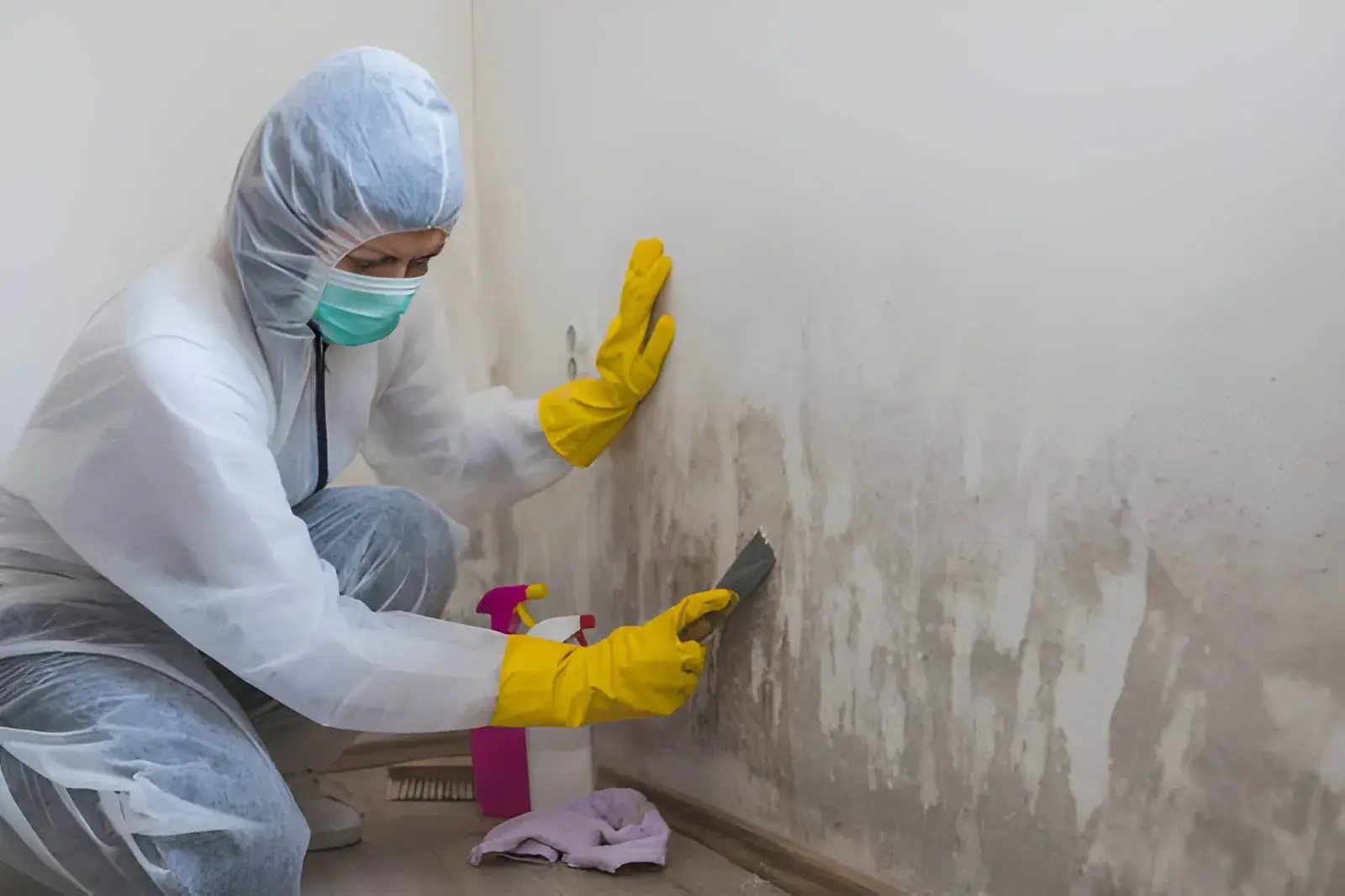
Mold Remediation
Testing, containment, removal, prevention. When mold threatens your property and your health, our certified remediation specialists find the source, eliminate the growth, and make sure it does not come back.
What Mold Does to Your Property and Your Health
Mold remediation is the process of identifying, containing, removing, and preventing mold contamination in a building. It is different from mold removal, which is a term that implies all mold can be eliminated from an environment. That is not realistic. Mold spores exist naturally in every indoor and outdoor environment. The goal of professional remediation is to return mold levels to normal background concentrations, eliminate active colonies, and correct the conditions that allowed the growth in the first place. Without addressing the underlying moisture source, any cleanup is temporary. The mold will come back.
How Mold Grows in Buildings
Mold needs three things to colonize a surface: moisture, an organic food source, and time. Most building materials provide the food source. Drywall, wood framing, carpet, insulation, ceiling tiles, wallpaper, and even dust on hard surfaces contain enough organic material to sustain mold growth. The variable is always moisture. A burst pipe, a slow plumbing leak, condensation from poor ventilation, high indoor humidity, or unresolved water damage from a storm can all create the conditions mold needs. Once moisture is present, mold can begin colonizing within 24 to 48 hours. By the time visible growth appears, the colony is already well established and likely producing spores that have spread to other areas through air circulation.
Common Mold Species in Homes
There are thousands of mold species, but homeowners typically encounter a handful of common types. Each behaves differently and presents different levels of concern.
- Cladosporium: One of the most common indoor and outdoor molds. It grows on fabrics, wood surfaces, and inside HVAC ducts. Cladosporium is typically olive-green to brown or black and can trigger allergic reactions and respiratory irritation, particularly in people with asthma.
- Aspergillus: A large genus with over 180 species, many of which are found indoors. Aspergillus grows on walls, insulation, paper products, and in HVAC systems. Some species produce mycotoxins. It is the most common cause of aspergillosis, a group of respiratory infections that can be serious in immunocompromised individuals.
- Penicillium: Recognizable by its blue-green color, Penicillium spreads quickly and is commonly found on water-damaged materials, wallpaper, carpet, and insulation. It produces musty odors and can cause allergic reactions and respiratory symptoms. Penicillium is one of the fastest-spreading indoor molds.
- Stachybotrys chartarum: Commonly called black mold, Stachybotrys grows on materials with high cellulose content like drywall, wood, and ceiling tiles that have been wet for an extended period. It produces mycotoxins called satratoxins that can cause more severe health effects than most other indoor molds. Despite its reputation, mold color alone is not a reliable indicator of species or danger.
Health Risks of Indoor Mold Exposure
Indoor mold exposure affects people differently depending on the species, the concentration of spores, and individual sensitivity. The most common health effects are allergic reactions: sneezing, runny nose, red eyes, and skin rash. People with asthma may experience worsening symptoms including wheezing, chest tightness, and shortness of breath. Prolonged exposure to mold that produces mycotoxins, particularly Stachybotrys and certain Aspergillus species, can cause more serious respiratory problems, chronic fatigue, and neurological symptoms like difficulty concentrating. Immunocompromised individuals, young children, and elderly people face significantly higher risk from mold exposure. The CDC identifies indoor mold as a contributor to respiratory illness and recommends professional remediation when mold contamination is present.
When Professional Remediation Is Required
The EPA's guidance on mold cleanup uses area size as a practical threshold. Mold contamination covering less than about 10 square feet, roughly a 3-by-3-foot patch, can often be handled by the homeowner with proper precautions. Contamination between 10 and 100 square feet requires limited containment and should be handled by trained professionals. Areas exceeding 100 square feet require full containment with negative air pressure, HEPA filtration, and professional remediation following the ANSI/IICRC S520 standard. Regardless of size, professional remediation is recommended when mold is inside wall cavities, HVAC systems, or when occupants are experiencing health symptoms. The critical point that many homeowners miss is that cleaning visible mold without fixing the moisture source guarantees the problem will return.
The IICRC S520 Standard
Professional mold remediation follows the ANSI/IICRC S520 Standard for Professional Mold Remediation, most recently updated in 2024. The S520 was cited in the 2026 National Defense Authorization Act as the benchmark for mold remediation in military housing, reflecting its standing as the national consensus standard for this work. It covers assessment and documentation of mold contamination, containment and engineering controls, removal procedures for contaminated materials, cleaning and antimicrobial treatment, and post-remediation verification through clearance testing. When you contact X Response, our teams follow the S520 standard to ensure your property is remediated systematically and to a documented professional benchmark.
How We Remediate Mold-Contaminated Properties
From initial inspection through clearance testing, here is exactly what happens when you contact X Response.
Inspection and Mold Testing
When you contact X Response, our remediation specialists conduct a thorough inspection of the property to identify all areas of visible mold growth and the conditions that caused it. We use moisture meters and thermal imaging to detect hidden moisture behind walls, under flooring, and inside ceiling cavities where mold often grows undetected. Air sampling and surface sampling are collected and sent to an accredited laboratory to identify the mold species present and measure spore concentrations. The inspection produces a detailed scope of work and the documentation your insurance company needs to process your claim.
Containment and Negative Air Pressure
Before any mold is disturbed, the contaminated area is sealed off from the rest of the building using polyethylene sheeting and physical barriers. Negative air pressure is established inside the containment zone using exhaust fans that vent filtered air to the exterior. This pressure differential ensures that when mold spores are released during removal, they flow inward toward the filtration equipment rather than escaping into unaffected areas of the home. For contamination exceeding 100 square feet, the IICRC S520 standard requires full containment with double-layer barriers and continuous negative pressure monitoring throughout the project.
HEPA Air Filtration and Spore Control
Air scrubbers equipped with HEPA filters are placed inside the containment zone and run continuously throughout the remediation process. HEPA filters capture 99.97% of particles down to 0.3 microns, which includes mold spores that typically range from 4 to 20 microns in diameter. The air inside the containment zone is cycled through filtration multiple times per hour to keep airborne spore counts as low as possible while contaminated materials are being removed. Air scrubbers continue running after removal is complete to capture residual spores before containment barriers are taken down.
Mold Removal and Antimicrobial Treatment
Contaminated porous materials that cannot be salvaged, such as mold-damaged drywall, insulation, carpet, and ceiling tiles, are carefully removed, bagged in sealed polyethylene, and disposed of properly. Non-porous and semi-porous surfaces like wood framing, concrete, and metal are cleaned using HEPA-filtered vacuums, wire brushing, and sanding as needed to remove all visible mold growth. After physical removal, all surfaces within the containment zone are treated with EPA-registered antimicrobial solutions to eliminate residual mold and inhibit regrowth. Every removed material is documented for your insurance claim.
Source Correction, Drying, and Clearance Testing
This is the step that separates professional remediation from surface-level cleanup. Our team addresses the moisture source that caused the mold, whether that is a plumbing leak, roof intrusion, condensation issue, or inadequate ventilation. The affected area is dried to target moisture levels using commercial dehumidifiers and air movers. Once the area is dry and all remediation work is complete, an independent clearance test is performed. Air and surface samples are collected and analyzed by an accredited laboratory to confirm that mold spore levels have returned to normal background concentrations. A walkthrough with you ensures everything meets our standards and yours before the project closes.
Insurance Guidance for Mold Remediation Claims
Mold coverage is one of the most complicated and misunderstood areas of homeowner's insurance. Most standard HO-3 policies either exclude mold damage entirely or limit mold-related payouts to a sub-limit, typically between $1,000 and $10,000, regardless of how much your overall dwelling coverage is worth. That cap applies to the total cost of testing, containment, removal, and repair combined, which means it can be exhausted quickly on even a moderate remediation project. The key factor in whether your claim is covered is usually whether the mold resulted from a covered peril. Mold caused by a sudden and accidental event like a burst pipe or appliance overflow is more likely to be covered than mold caused by gradual leaks, deferred maintenance, high humidity, or condensation. Some states require insurers to offer mold coverage, while others allow full exclusions. Understanding how your specific policy treats mold before you file can make the difference between a successful claim and a denied one.
How X Response helps with your mold remediation claim
- Detailed mold inspection reports with laboratory results that document the species, extent, and location of contamination
- Moisture source identification that connects the mold growth to the original water event, which is critical for establishing a covered peril
- Coverage alignment review so you understand how your policy's mold sub-limits and exclusions apply to your situation
- Claims process guidance from initial filing through resolution, including documentation that supports your claim
X Response provides guidance and documentation support. We do not act as public adjusters, make coverage determinations, or guarantee claim outcomes.
Frequently Asked Questions About Mold Remediation
Other Emergency Restoration Services

Water Damage Restoration
Flooding, burst pipes, storm surges. We extract the water, dry the structure, and restore your property.
Learn more
Fire Damage Restoration
Structural damage, soot, debris. We stabilize, clean, and rebuild what fire destroyed.
Learn more
Smoke Damage Restoration
Wildfire impingement, soot, chemical odors. We decontaminate surfaces, eliminate odors, and restore air quality.
Learn more
Sewage Cleanup
Biohazard situations handled safely with full sanitation, disinfection, and structural restoration.
Learn more