
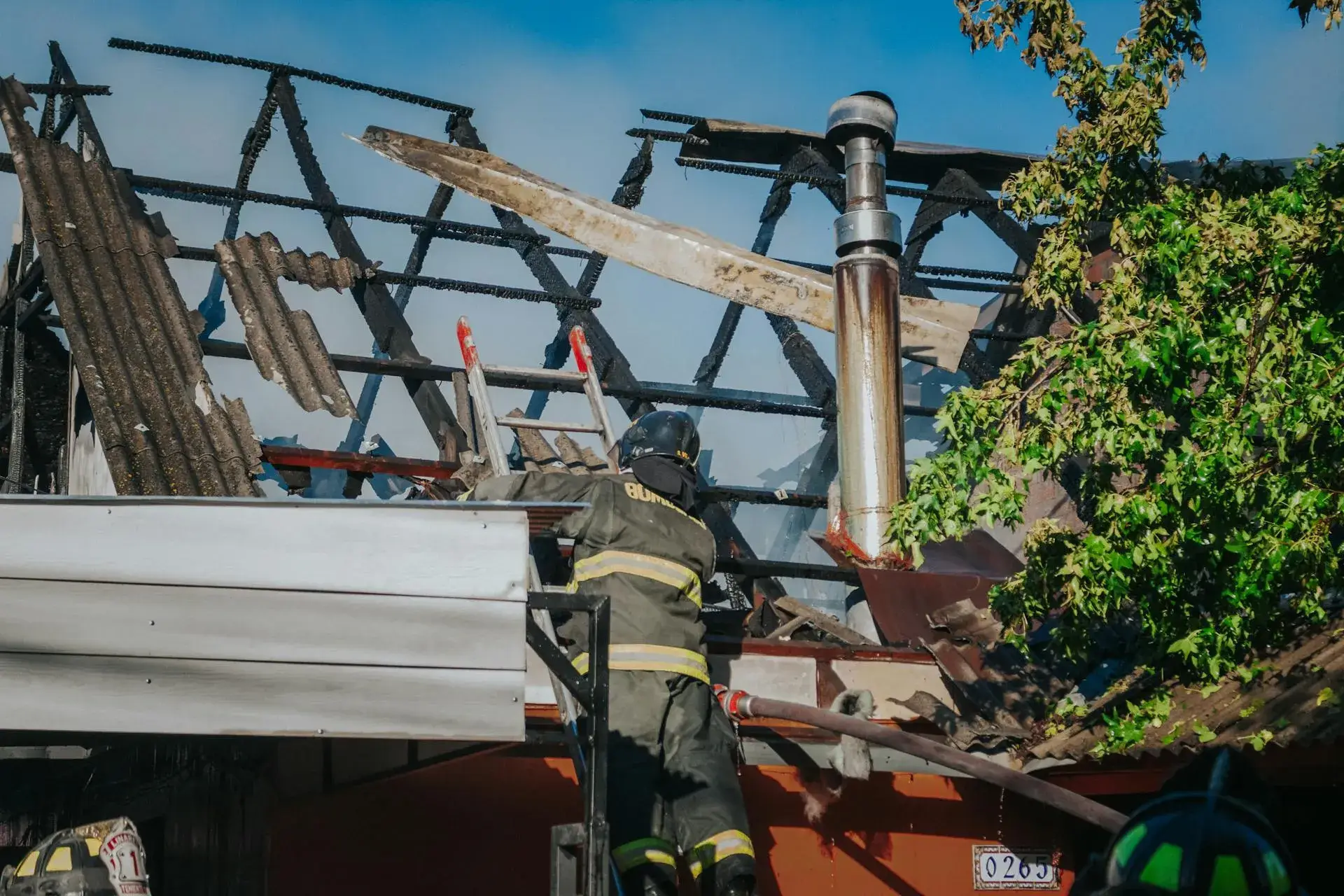
Fire Damage Restoration in Prairie View, TX
Winter heating fires, multi-family student housing electrical overloads, and cascading firefighting water saturation cause devastating destruction across Prairie View. Our certified fire recovery specialists arrive on site within 60 minutes.
What Happens When You Call
A specialized fire loss dispatcher documents your emergency and sends a Waller County mobile restoration unit directly to your Prairie View address.
Technicians arrive equipped with heavy-duty board-up materials, structural shoring equipment, HEPA air scrubbers, and industrial water extractors.
Crews stabilize damaged roofs and windows, extract thousands of gallons of suppression water, and conduct an initial hazardous material survey.
Soot removal film, chemical dry sponges, and hydroxyl generators are deployed to strip corrosive residues and eliminate persistent smoke compounds.
A structure fire in central Waller County inflicts compounding destruction long after emergency crews extinguish active flames. Corrosive soot deposits etch glass and metal fixtures, toxic smoke residues permeate framing assemblies, and thousands of gallons of firefighting water flood concrete slabs and subflooring. X Response delivers rapid, certified fire damage restoration throughout Prairie View, mobilizing specialized recovery crews within minutes of your initial contact. From urgent emergency board-up and thermal cavity drying through complete molecular odor neutralization, our specialists handle every phase. Reach our 24/7 response center now. Experienced technicians are standing by.
Why Prairie View Homes Are Vulnerable to Fire Damage
Prairie View is an established university center located in central Waller County, Texas, positioned along the US Highway 290 corridor forty-five miles northwest of Houston. According to the 2020 United States Census, Prairie View had a population of 8,184 residents across Waller County. Renowned as the home of Prairie View A&M University, the city's architectural fabric features a dense concentration of modern multi-story student housing communities along University Drive and FM 1098 Loop, alongside traditional single-family neighborhoods, vintage timber-framed residences, and modern slab-on-grade subdivisions located along Wyatt Chapel Road, Richards Road, and Owens Road.
Fire damage scenarios in Prairie View present unique technical challenges rooted in local housing density, climatic extremes, and emergency response operations. During sudden winter cold snaps known across Southeast Texas as blue northers, temperatures drop rapidly into freezing ranges. Because local buildings are predominantly designed for warm weather, residents rely heavily on portable space heaters and HVAC electric resistance heat strips that place intense strain on electrical circuits. In high-density student housing developments, unattended cooking appliances and overloaded electrical outlets represent frequent ignition sources. When blazes occur, fires spread rapidly through shared partition walls and floor joists. Furthermore, suppression efforts by the Prairie View Volunteer Fire Department and Waller County emergency services districts discharge heavy volumes of water into multi-story complexes, cascading through floor assemblies and saturating ground-floor units. In Prairie View's dense prairie humidity, unaddressed firefighting water quickly triggers structural rot and microbial growth beneath soot-blackened drywall, requiring immediate integrated water extraction and fire remediation.
Multi-Family Student Housing Electrical and Cooking Fires
High-occupancy student living facilities near Prairie View A&M experience intense appliance usage. Unattended kitchen fires and power strips overtaxed by multiple electronic devices represent frequent causes of structural fires across the campus community.
Blue Norther Cold Fronts and Heating Equipment Fires
Sudden winter temperature drops frequently push residential heating systems beyond design capacities. Overworked auxiliary heat strips, unattended space heaters, and creosote accumulation in chimneys represent major sources of residential structure fires across Waller County.
Cascading Firefighting Water Intrusion in Multi-Story Buildings
Extinguishing structural fires in multi-family complexes requires thousands of gallons of suppression water. Water cascades downward through floor decks, saturating intermediate ceilings, wall insulation, and concrete slab foundations across multiple tenant units.
Corrosive Acidic Soot Deposition
Synthetic materials found in modern furnishings, plastics, and electronics release hydrochloric and sulfuric acid compounds during combustion. Without rapid chemical stabilization, soot residues permanently pit metal plumbing fixtures and etch window glazing within 48 hours.
Prairie Humidity and Trapped Smoke Particulates
Prairie View's average relative humidity exceeding 80% traps microscopic smoke particles within porous structural lumber and attic rafters. High humidity accelerates the chemical breakdown of soot, creating persistent, noxious odors that resist basic surface cleaning.
Recovering from fire damage in Prairie View demands experienced soot mitigation specialists, industrial drying equipment, and comprehensive knowledge of Waller County construction styles. Our certified crews protect your home from long-term secondary structural loss.
What Happens to Your Home While You Wait
Within Minutes
Acidic soot residues settle across all exposed surfaces, immediately yellowing plastics, discoloring porous stone, and tarnishing brass, chrome, and aluminum fixtures throughout the property.
1–24 Hours
Soot compounds begin permanently etching fiberglass fixtures, laminate countertops, and appliance finishes. Unchecked firefighting water saturates subfloors, and intense smoke odor permeates HVAC ductwork.
24–48 Hours
Acidic residues cause irreversible pitting on chrome plumbing fixtures and bathroom mirrors. Saturated drywall begins losing structural integrity, and wood finishes bubble and peel.
48–72 Hours
Soot stains become permanently bonded to painted walls and synthetic fibers. Microbial colonies begin forming on wet framing timbers soaked by firefighting water in the humid prairie environment.
One Week and Beyond
Unremediated soot permanently corrodes metallic framing components and electrical wiring. Lingering smoke compounds cross-contaminate unaffected areas, necessitating extensive structural reconstruction.
Fast professional mitigation stops destructive soot and water before they cause irreparable losses. Contact X Response immediately for comprehensive fire recovery in Prairie View.
How We Restore Fire-Damaged Prairie View Homes
Our fire damage mitigation adheres strictly to IICRC S520 and S700 standards, coordinating structural stabilization, chemical soot decontamination, and advanced thermal odor elimination.
Structural Safety Assessment and Emergency Board-Up
Technicians secure the structure, boarding broken windows, covering compromised roof decking with heavy-duty tarps, and installing temporary structural bracing where load-bearing studs are charred.
Suppression Water Extraction and Rapid Dehumidification
We extract standing firefighting water from slabs and subfloors using high-capacity vacuum units, deploying commercial LGR dehumidifiers to halt moisture migration and prevent mold growth.
Selective Demolition and Charred Material Removal
Severely charred sheetrock, collapsed ceiling insulation, and unsalvageable framing are carefully excised and discarded according to local environmental safety regulations.
Surface Decontamination and Chemical Soot Stripping
Using specialized dry chemical sponges, alkaline soot-releasing detergents, and HEPA vacuum systems, technicians remove corrosive residues from salvageable walls, ceilings, and trim.
Molecular Smoke Odor Elimination
We utilize industrial hydroxyl generators, thermal foggers, and HEPA air filtration devices to neutralize embedded smoke compounds at the molecular level without damaging delicate materials.
The X Response Difference
Choose proven restoration professionals equipped with advanced decontamination technology, technical certifications, and transparent communication.
Insurance Claim Guidance for Prairie View Homeowners
Filing an insurance claim after a structure fire in Prairie View involves detailed coordination regarding structural losses, personal property inventories, and necessary emergency stabilization. Standard Texas homeowners and commercial policies cover fire and smoke damage resulting from accidental blazes, but adjusters demand rigorous forensic separation between primary fire damage, secondary soot deposition, and water saturation from emergency suppression. Our experienced documentation team builds comprehensive, carrier-ready claim packages designed to meet the strict standards of the Texas Department of Insurance and the Texas Prompt Payment of Claims Act.
How X Response Helps
- Comprehensive photographic and thermal imaging inventories detailing fire, soot, and suppression water impact
- Detailed, line-item reconstruction and cleaning estimates compiled using industry-standard Xactimate pricing
- Clear separation of emergency board-up and structural mitigation costs from permanent structural rebuilds
- Total loss inventory reports documenting unsalvageable contents, building materials, and fixtures
- Ongoing communication with insurance adjusters to expedite claim reviews and ensure compliant documentation
X Response performs professional, independent structural restoration and decontamination services. Final insurance claim approval, deductible calculations, and financial settlements remain under the exclusive authority of your insurance carrier.
Certified Restoration Specialists Serving Prairie View
Our Prairie View fire restoration specialists possess comprehensive field experience handling structural fire losses across Waller County. Whether addressing a kitchen fire in a multi-story student housing complex near University Drive or mitigating extensive electrical fire damage in a residential slab-on-grade home along US-290, our technicians tailor remediation procedures to the specific structural properties and climate conditions of Southeast Texas. Our emergency teams maintain continuous 24/7 readiness.
Every project manager maintains active credentials from the Institute of Inspection, Cleaning and Restoration Certification (IICRC), including Fire and Smoke Damage Restoration Technician (FSRT) and Odor Control Technician (OCT). Utilizing advanced diagnostic tools such as thermal imaging cameras and chemical testing kits, we restore properties with verified scientific precision.
In Prairie View, X Response works with First Response Restoration, an independent local restoration partner serving Waller County.
Fire Damage Restoration FAQ for Prairie View Homeowners
Other Emergency Services in Prairie View

Water Damage Restoration
Burst pipes, storm flooding, standing water. We extract, dry, and restore before mold sets in.
Learn more
Smoke Damage Restoration
Soot residue, chemical odors, HVAC contamination. We decontaminate surfaces, eliminate odors, and restore air quality.
Learn more
Mold Remediation
Testing, containment, removal, prevention. We find the source, eliminate the growth, and stop it from returning.
Learn more
Sewage Cleanup
Sewer backups, contaminated water, biohazard. We extract, sanitize, and restore safely.
Learn more