
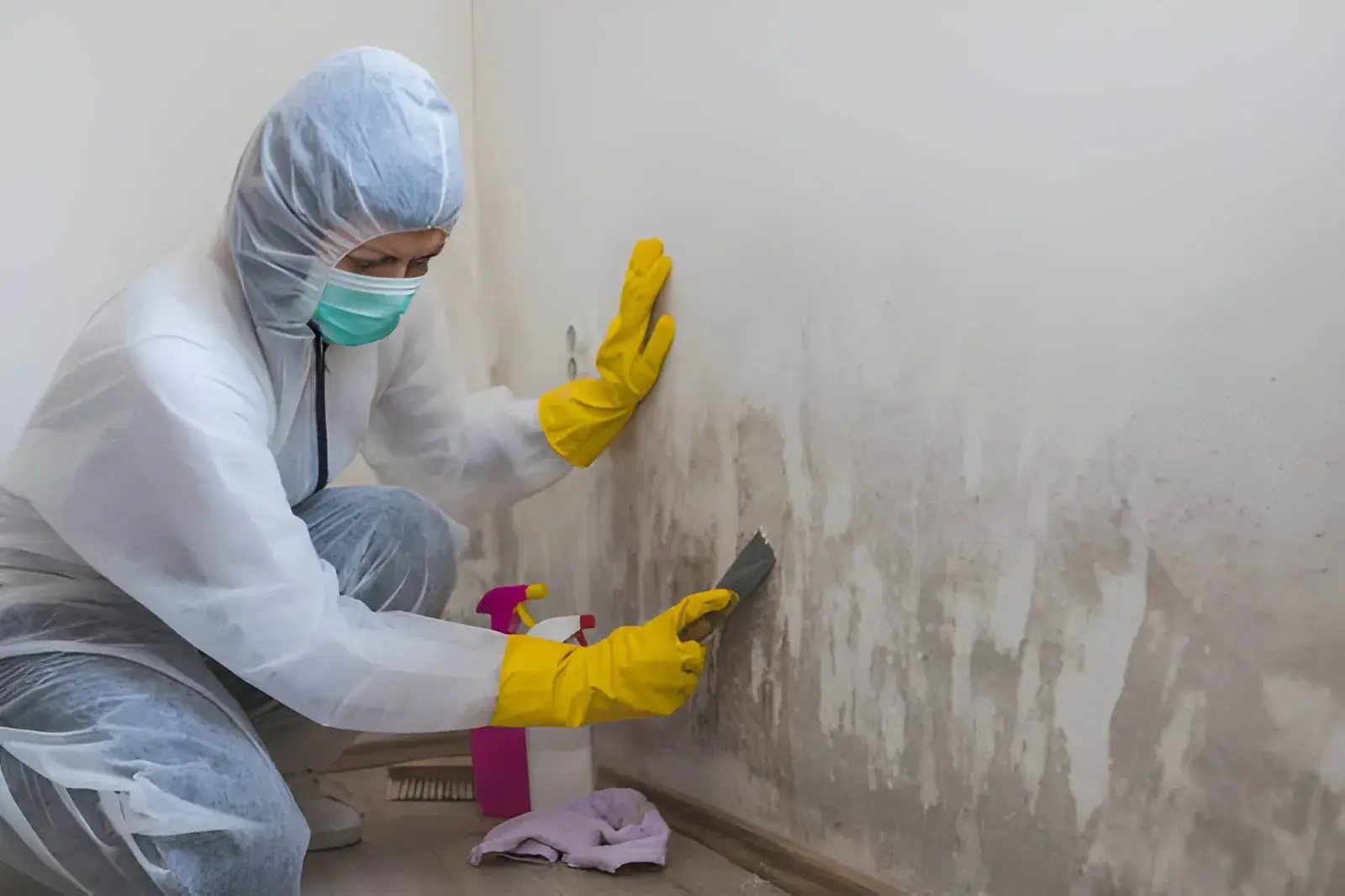
Mold Remediation in Chandler, AZ
Mold colonies double in size every 24 to 48 hours in Chandler's warm conditions. Every day without intervention allows contamination to spread deeper into your home. Our local team responds within 60 minutes.
What Happens When You Call
A real person answers, not a call center. We assess your situation, determine the likely moisture source, and begin coordinating your response immediately.
Your dedicated remediation team is dispatched from our local base serving Chandler and the surrounding East Valley communities in Maricopa County.
Team arrives with moisture detection equipment, air sampling tools, HEPA filtration, and containment materials. Assessment begins immediately to determine the full scope.
Contamination mapped, moisture source identified, containment established, remediation plan documented. You know exactly what comes next.
You have discovered mold in your home. Whether visible growth on a wall, a musty smell from the HVAC system, or a test result confirming elevated spore counts, the contamination is active and expanding right now. In Chandler's warm conditions, mold colonies grow faster than in cooler climates. X Response exists for exactly this moment. When you reach out, your remediation team is mobilized within minutes. From that point forward, one team manages everything: assessment, containment, removal, and verification. Call now. Your team is standing by.
Why Chandler Homes Are Vulnerable to Mold
Chandler is a city of approximately 281,000 residents in Maricopa County, Arizona, where the perception of desert dryness leads many homeowners to assume mold cannot grow in their homes. That assumption is dangerously wrong. Arizona does not require a state-specific mold remediation license, and evaporative coolers pump moisture directly into homes where monsoon storms dump intense rain on hardpan soil that cannot absorb it and slab plumbing leaks can go unnoticed for months in a region where homeowners rarely think to check for water damage. The combination of hidden moisture sources and homeowner complacency about mold risk in an arid climate means that when mold is finally discovered in a Chandler home, it has often been growing for weeks or months and has colonized well beyond the visible area. Professional remediation following IICRC S520 standards becomes essential in a state with no licensing requirement to separate qualified professionals from unqualified ones.
The moisture sources that drive mold growth in Chandler are fundamentally different from those in humid climates. Rather than ambient humidity, Chandler homes face targeted moisture intrusion from specific mechanical and environmental sources. Evaporative coolers, still common in older Chandler homes and commercial buildings, pump water-saturated air directly into living spaces and can overflow or leak from roof-mounted reservoirs into attic spaces. Slab plumbing leaks beneath the concrete foundation wick moisture upward through the slab for months before any surface indication appears. Monsoon storms drive water through roof flashings, window seals, and exterior wall penetrations. And condensation forms on cold HVAC components and ductwork in a home that cycles between 110-degree exterior temperatures and 76-degree interior conditions, creating persistent moisture at every thermal bridge.
The EPA has estimated that building dampness and mold are associated with approximately a 30 to 50 percent increase in respiratory and asthma-related health outcomes. In Chandler's hot-climate housing stock, where monsoon leaks, evaporative cooler failures, and failing HVAC systems create conditions for rapid mold colonization, this health risk is not abstract. Arizona landlord-tenant law recognizes mold as a habitability issue, and Chandler's rental housing market, which includes thousands of apartment units and single-family rentals, faces recurring mold complaints driven by deferred maintenance on aging cooling systems and unaddressed moisture intrusion. For homeowners, the absence of a state mold license makes it critical to verify that any remediation provider follows IICRC S520 standards for containment, removal, and post-remediation verification.
Evaporative Coolers as Mold Incubators
Thousands of older Chandler homes and commercial buildings still use evaporative (swamp) coolers that operate by passing air over water-saturated pads. These roof-mounted units contain float valves, water reservoirs, supply lines, and drain pans that can fail in multiple ways. A stuck float valve overfills the reservoir and sends water cascading into the attic space below. A clogged drain pan traps standing water that breeds bacteria and mold within the unit itself, then distributes mold spores directly into the living space through the supply ducts. Wet pads that are not properly maintained develop mold growth that becomes airborne when the blower runs. Supply line connections on the roof deteriorate under extreme UV exposure and leak water onto roofing materials and into attic insulation. Because these units sit on the roof and the damage occurs above the ceiling, homeowners often do not discover the moisture intrusion until ceiling stains appear, drywall sags, or a musty smell develops throughout the home. By that point, mold has typically colonized insulation, framing, and drywall paper in the attic and ceiling cavity for weeks or months.
Slab Leaks and Sub-Foundation Moisture
Chandler homes are built on concrete slab foundations with copper supply lines running beneath or through the slab. Arizona's extremely hard water accelerates pinhole corrosion in copper piping, eventually causing leaks that saturate the soil beneath the foundation. Because the slab is impervious, water wicks upward through cracks, joints, and the natural porosity of concrete over time. This moisture reaches the underside of flooring materials, the base of walls, and carpet padding, creating a persistent humid microenvironment that is invisible from above. Mold colonization begins at the slab surface and along the base of drywall where paper facing contacts the damp concrete. Homeowners may notice a musty smell, higher-than-expected water bills, or warm spots on tile flooring before they realize water has been pooling beneath their foundation for months. By discovery, the mold colony often extends along the entire length of the leak path beneath the slab, requiring removal of flooring, baseboards, and lower wall sections to fully remediate.
Monsoon Moisture Intrusion and Delayed Discovery
Chandler's monsoon season, running from mid-June through September, delivers sudden intense downpours that find every weakness in the building envelope. Water enters through aging roof flashings, around poorly sealed windows, through stucco cracks, and via gaps where utilities penetrate exterior walls. On a flat terrain with hardpan soils, monsoon runoff also pools against foundation walls and can wick through slab edges into the home. The critical factor for mold growth is that homeowners may not discover the intrusion immediately. Water that enters the attic through a compromised roof flashing saturates insulation and sits against framing without any visible sign in the living space below. Water that penetrates a wall cavity behind stucco saturates insulation batts that hold moisture for weeks in the enclosed space. By the time the homeowner notices a stain, a smell, or buckled paint, mold has been growing in the hidden cavity for an extended period. Chandler's warm temperatures accelerate the colonization timeline, with mold establishing within 24 to 48 hours of initial moisture contact.
HVAC Condensation and Duct Mold
Chandler homes maintain a temperature differential of 30 to 40 degrees between outdoor air and conditioned interior air during summer months. This differential creates condensation at every thermal bridge where warm air contacts cold surfaces. The evaporator coil, condensate drain pan, and interior duct surfaces nearest the air handler are primary condensation points. If the condensate drain line clogs, water backs up in the drain pan and eventually overflows into the air handler cabinet, the plenum, and surrounding building materials. If duct connections are not sealed, condensation forms on the duct exterior where warm attic air contacts the cold duct surface, dripping onto insulation and ceiling framing. Even properly functioning systems produce enough condensation at the coil that any disruption to drainage creates standing water within hours. Once mold establishes on the evaporator coil or interior duct surfaces, the blower distributes spores to every room in the home with each cooling cycle. Occupants may report allergy symptoms, musty odors from vents, or visible dark spots on supply registers.
No State Mold License and Quality Verification
Arizona does not require contractors performing mold remediation to hold a state-specific mold license. Any general contractor, handyman, or cleaning company can advertise mold removal services without demonstrating competency in containment protocols, safe removal procedures, or post-remediation verification. This creates significant risk for Chandler homeowners who may hire unqualified providers that disturb mold colonies without proper containment, spreading spores throughout the home and making the contamination worse. IICRC S520 is the industry standard for professional mold remediation, specifying requirements for assessment, containment, air filtration, removal, cleaning, and post-remediation verification. When selecting a remediation provider in Arizona, homeowners must verify IICRC certification independently because the state provides no licensing mechanism to filter unqualified operators. X Response's certified remediation teams follow IICRC S520 protocols on every project, with documented containment, HEPA filtration, and third-party post-remediation verification available to confirm the work meets professional standards.
Mold in Chandler grows where homeowners least expect it: beneath slabs, inside attic spaces above leaking evaporative coolers, within wall cavities behind stucco, and on HVAC components that produce condensation all summer long. The desert climate creates a false sense of security that delays discovery, while the warmth that characterizes the environment accelerates every stage of colonization once moisture is present. Effective remediation requires identifying and eliminating the moisture source, containing the affected area, removing contaminated materials safely, and verifying the work with quantitative testing. In a state with no mold license, IICRC S520 compliance is the only reliable quality standard.
What Happens to Your Home While You Wait
Within 24 Hours
Once moisture contacts an organic surface in Chandler's warm conditions, mold spores begin germinating. Temperatures between 77 and 86 degrees Fahrenheit, which characterize Chandler interiors when HVAC is compromised or in hidden cavities without direct cooling, are optimal for most common indoor mold species. Visible growth has not yet appeared, but the colonization process has begun. This is the window where drying the affected area can prevent a mold problem from developing at all.
24–48 Hours
Mold colonies become visible as fuzzy growth on paper-faced drywall, wood surfaces, carpet backing, and organic debris. In Chandler's warmth, this timeline is at the shorter end compared to cooler climates. The colony produces hyphae (root structures) that penetrate into porous materials, making surface cleaning ineffective. Spore production begins, releasing reproductive cells into the air that can colonize additional surfaces. If the HVAC system is running, spores enter the return air stream and distribute throughout the home.
48 Hours–1 Week
Colony growth accelerates as the organism matures and produces more spores. Growth spreads along the moisture path, following damp drywall, wet insulation, and saturated framing. Secondary colonies establish wherever spores land on surfaces with adequate moisture. The affected area may now extend several feet beyond the original moisture intrusion point. Occupants begin reporting respiratory symptoms, allergic reactions, or musty odors that intensify when the HVAC runs.
1–4 Weeks
Mold penetrates deep into porous building materials. Drywall paper becomes fully colonized and structurally weakened. Wood framing shows surface growth and staining. The colony produces mycotoxins in some species, creating a health hazard that goes beyond allergic response. Hidden colonies in wall cavities, beneath flooring, and inside ductwork may now be extensive while visible signs remain limited to a small area of surface growth. Professional assessment typically reveals contamination extending well beyond the visible boundary.
One Month and Beyond
Structural materials require replacement rather than cleaning. Framing, sheathing, and subfloor sections may show rot where persistent moisture combined with mold degradation. The remediation scope now includes demolition, structural repair, and rebuilding in addition to mold removal. HVAC systems that have been distributing spores for weeks require complete duct cleaning or replacement. Insurance claims become more complex as carriers assess whether earlier intervention could have limited the scope.
In Chandler's warm conditions, the mold colonization timeline compresses compared to national averages. What takes 72 hours in a cooler climate happens in 24 to 48 hours here. Contact X Response now. Our Chandler team responds within 60 minutes.
How We Restore Mold-Affected Chandler Homes
Mold remediation is a controlled, systematic process that protects both your home and its occupants. Here is exactly what it involves in a Chandler home.
Inspection and Moisture Source Identification
Our team arrives with moisture meters, thermal imaging cameras, and air sampling equipment to determine the full extent of mold contamination and identify the moisture source driving growth. In Chandler homes, this means inspecting the obvious locations along with the common hidden sources: evaporative cooler conditions in the attic, slab moisture at the base of walls, condensate drain function at the HVAC air handler, and monsoon intrusion paths through the building envelope. Identifying and eliminating the moisture source is the first priority because removing mold without fixing the moisture problem guarantees recurrence. Air sampling establishes baseline spore counts that guide the remediation scope and provide comparison data for post-remediation verification.
Containment and Air Filtration
Before any mold is disturbed, the affected area is isolated from the rest of the home using polyethylene sheeting and negative air pressure. HEPA air scrubbers within the containment zone capture airborne spores as remediation work disturbs the colony. This prevents cross-contamination to unaffected areas of the home. In Chandler homes where the HVAC system has been distributing spores, supply registers in unaffected rooms are sealed during remediation to prevent the containment zone from communicating with clean spaces through the duct system. The containment remains in place throughout the entire removal process and is not removed until post-remediation air sampling confirms acceptable conditions.
Mold Removal and Material Disposal
Contaminated materials are removed following IICRC S520 protocols. Porous materials that cannot be adequately cleaned, including drywall, insulation, carpet, and carpet padding, are cut away, bagged within the containment zone, and disposed of properly. Non-porous surfaces that can be cleaned, including framing lumber, concrete, and metal components, are treated with appropriate antimicrobial solutions and physically cleaned to remove surface growth. In Chandler homes with slab leaks, this often includes removing flooring and lower wall sections along the entire moisture path. For evaporative cooler-related mold in attics, contaminated insulation is removed and framing is cleaned and treated. All removed materials are documented with photos for your insurance file.
Drying and Moisture Verification
After contaminated materials are removed, the remaining structure is dried to moisture levels that will not support mold recurrence. In Chandler's climate, this typically requires mechanical dehumidification even though outdoor air is dry, because wall cavities and slab edges hold moisture that ambient ventilation cannot reach. The moisture source identified during inspection must be repaired before or during this phase: a leaking evaporative cooler is fixed or replaced, a slab leak is repaired, a clogged condensate drain is cleared, or monsoon intrusion paths are sealed. Moisture readings are taken at multiple points and documented to confirm the structure has reached acceptable dryness before any reconstruction begins.
Post-Remediation Verification and Clearance
After removal, treatment, and drying are complete, post-remediation air sampling verifies that spore counts have returned to normal background levels. These samples are compared against the baseline taken during initial inspection and against outdoor ambient levels to confirm successful remediation. Visual inspection confirms no remaining growth on any surface within the former containment zone. You receive a complete remediation report including before-and-after air sampling results, moisture readings, photos of all work performed, and documentation of the moisture source repair. This report serves as your evidence of professional remediation for your records, your insurance file, and any future real estate transaction.
The X Response Difference
Mold remediation in Arizona requires a provider with verified IICRC certification, proper containment protocols, and quantitative verification because the state provides no licensing oversight. X Response delivers all three on every Chandler project.
Insurance Claim Guidance for Chandler Homeowners
Mold damage insurance coverage in Arizona depends on the moisture source. If mold resulted from a sudden, accidental covered event such as a burst pipe, appliance failure, or storm damage, the resulting mold remediation is typically covered under your homeowner's policy. However, mold from long-term neglected maintenance, gradual leaks, or chronic moisture issues is generally excluded. Slab leaks present a gray area: if the leak was sudden, resulting mold may be covered; if the leak has been active for months due to delayed detection, carriers may deny the mold portion as a maintenance failure. The key to successful claims is documenting the connection between the mold and a sudden event, and demonstrating that you took prompt action once the problem was discovered.
How X Response Helps
- Document the moisture source and connect it to a covered event (burst pipe, storm damage, appliance failure) rather than gradual deterioration
- Photograph all visible mold growth and affected materials before any remediation work begins
- Provide air sampling results that quantify the contamination and establish the scope of required work
- Document prompt response from discovery to remediation engagement, showing you mitigated promptly once aware
- Prepare a detailed scope separating mold remediation, moisture source repair, and reconstruction into distinct cost categories
X Response does not file claims on your behalf, adjust claims, or make coverage determinations. We provide documentation and guidance to help you make informed decisions about your property and your policy. Coverage decisions are made solely by your insurance carrier.
Certified Restoration Specialists Serving Chandler
When you contact X Response for mold remediation in Chandler, your team is drawn from certified professionals who understand the unique mold challenges facing homeowners in the desert environment. They know where mold hides in Chandler homes: beneath slab foundations where pinhole leaks wick moisture upward, inside attic spaces where evaporative coolers leak onto framing and insulation, within wall cavities where monsoon water enters through stucco cracks, and on HVAC components where condensation provides constant moisture all summer. They understand that Arizona's lack of a state mold license means homeowners need a provider they can verify, and they maintain current IICRC certification that demonstrates competency in containment, removal, and verification protocols.
Every technician on your mold remediation team holds current IICRC certification in mold remediation (AMRT) and follows S520 standards on every project. Equipment includes professional moisture meters, thermal imaging cameras, HEPA air scrubbers, negative air machines for containment, and air sampling equipment for pre-and-post verification. When your team arrives, they bring everything needed to assess the full extent of contamination, establish containment, and begin the remediation process immediately.
In Chandler, X Response works with No Worries Rooter, an independent local restoration partner serving Maricopa County.
Mold Remediation FAQ for Chandler Homeowners
Other Emergency Services in Chandler

Water Damage Restoration
Burst pipes, storm flooding, standing water. We extract, dry, and restore before mold sets in.
Learn more
Fire Damage Restoration
Structural damage, soot, debris. We stabilize, clean, and rebuild what fire destroyed.
Learn more
Smoke Damage Restoration
Soot residue, chemical odors, HVAC contamination. We decontaminate surfaces, eliminate odors, and restore air quality.
Learn more
Sewage Cleanup
Sewer backups, contaminated water, biohazard. We extract, sanitize, and restore safely.
Learn more