Mold Remediation in Hillsboro, MO
Summer humidity and damp hillside basements across Hillsboro create ideal incubators for aggressive fungal colonies. Our certified remediation specialists isolate mold blooms under negative pressure, eliminate airborne spores, and treat underlying moisture sources to safeguard your family.
What Happens When You Call
Technicians arrive equipped with moisture meters and infrared cameras to trace hidden dampness fueling fungal growth.
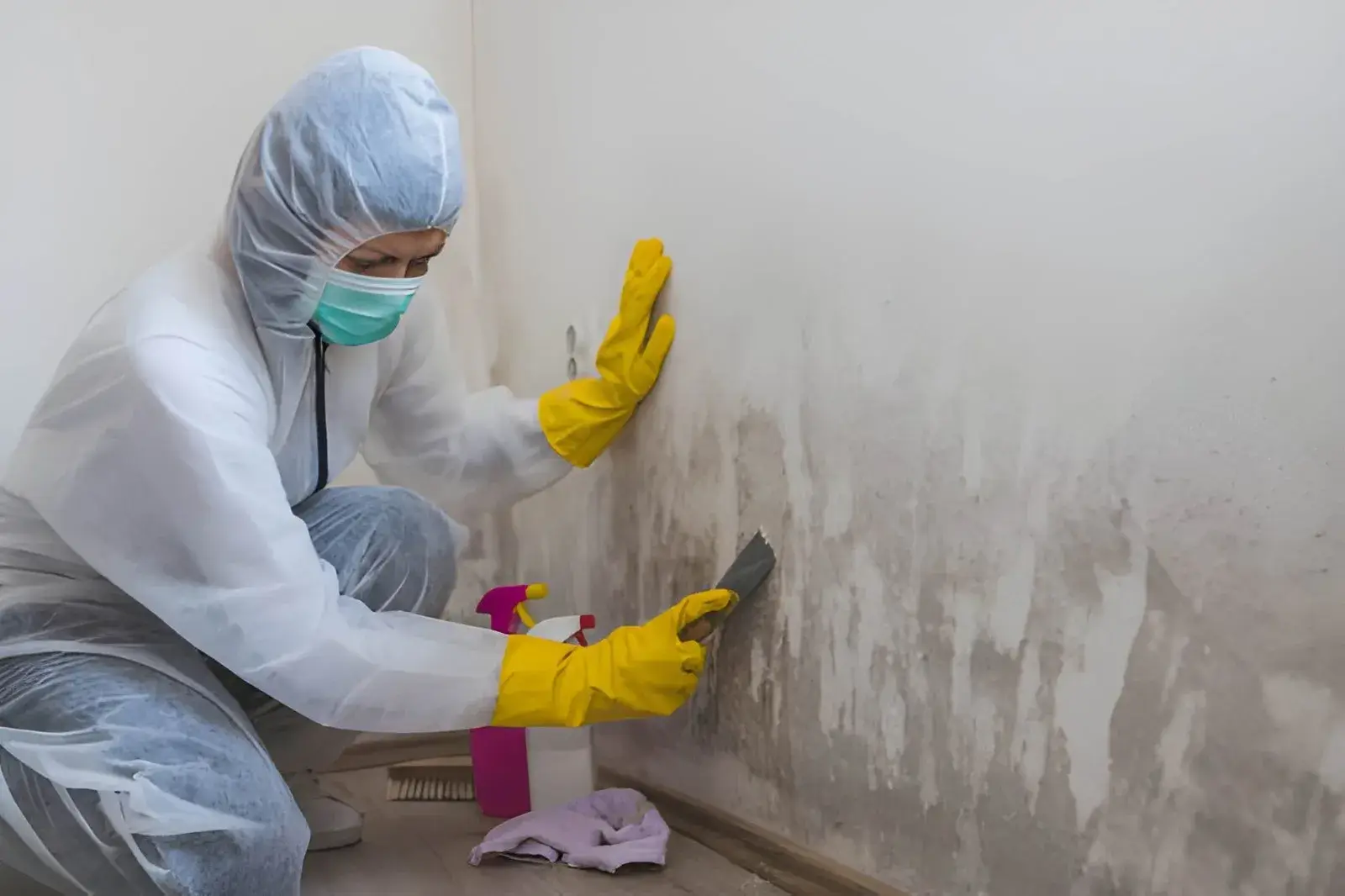
Crews seal the affected work area using six-mil poly sheeting and establish negative air pressure to trap airborne spores.
Industrial HEPA air scrubbers filter the indoor atmosphere, continuously capturing microscopic spores and fungal fragments.
Specialized technicians remove colonized porous materials, treat remaining wood with EPA-registered antimicrobials, and apply mold-resistant coatings.
Microbial spores multiply rapidly once relative humidity exceeds 60 percent, triggering respiratory irritation and decomposing structural framing. When mold appears in your home, 911 Water Damage Experts LLC responds promptly. Contact our emergency dispatch team 24/7.
Why Hillsboro Homes Are Vulnerable to Mold
The United States Environmental Protection Agency recommends maintaining indoor relative humidity below 60 percent, ideally between 30 and 50 percent, and drying water-damaged areas within 24 to 48 hours to prevent mold growth. In the hilly terrain of Hillsboro and central Jefferson County, summer weather patterns bring prolonged periods of high heat and stifling humidity. As moist outdoor air penetrates residential basements carved into limestone hillsides along Highway 21, warm vapor condenses against cold concrete foundation walls and floor slabs, creating ideal conditions for fungal colonies including Aspergillus, Cladosporium, and Stachybotrys to establish within days.
Many residential properties in Hillsboro, particularly split-foyer homes and ranch houses built during the 1970s and 1980s along Highway B and rural county roads, feature walkout basements set deep into dense clay hillside soil. Saturated clay retains moisture for weeks following regional storms, exerting steady hydrostatic pressure that slowly wicks moisture through microscopic masonry pores. Trapped behind finished drywall panels, baseboards, and carpet padding, this hidden dampness creates an undisturbed microbial incubator that compromises indoor air quality throughout the home.
Crawlspace foundations common in older homes and rural parcels near Sandy Creek present another serious moisture challenge. Unsealed dirt crawlspace floors continuously release ground moisture into subfloor assemblies. Rising water vapor saturates structural floor joists, subflooring, and fiberglass insulation batts, degrading wood fibers and allowing mold to thrive. As negative pressure pulls air from the crawlspace into living areas through the stack effect, airborne mold spores and musty odors enter bedrooms and family spaces.
Attempting to scrub active mold colonies with bleach or household disinfectants often backfires by releasing millions of airborne spores throughout the HVAC ventilation system. Professional remediation requires strict adherence to IICRC S520 containment standards. Our certified remediation crews establish physical poly barriers, maintain negative air pressure using HEPA-filtered exhaust equipment, clean exposed framing with controlled abrasive techniques, and apply hospital-grade botanical antimicrobials that prevent recurring spore germination.
High Midwestern Summer Humidity
undefined
undefined
Central Jefferson County summers feature high relative humidity that condenses against cool basement slabs, providing moisture for fungal growth.
Hillside Clay Hydrostatic Infiltration
undefined
undefined
Moisture-retaining clay soils press against sub-grade basement walls, slowly migrating through foundation masonry into finished wall cavities.
Unsealed Crawlspace Ground Evaporation
undefined
undefined
Exposed soil in rural Hillsboro crawlspaces releases ground moisture into structural subfloors, causing chronic joist dampness and fungal blooms.
Protecting your Hillsboro home from persistent fungal colonization requires clinical physical containment, HEPA air filtration, and permanent moisture correction.
What Happens to Your Home While You Wait
First 24 to 48 Hours
undefined
undefined
Microscopic mold spores settle on damp cellulose surfaces, germinating and extending hyphal networks into drywall paper backing.
3 to 7 Days
undefined
undefined
Active fungal colonies become visible as dark spotting on baseboards and joists, releasing musty volatile organic compounds into room air.
1 to 2 Weeks
undefined
undefined
Fungal networks penetrate deeply into porous drywall and subflooring, triggering musty odors and causing allergic irritation in sensitive occupants.
2 to 4 Weeks
undefined
undefined
Airborne spore concentrations spike inside living areas, while structural wood framing suffers surface softening and wood fiber degradation.
Beyond One Month
undefined
undefined
Severe fungal colonization causes widespread structural framing rot, complete drywall destruction, and extensive HVAC ductwork contamination.
Never ignore musty odors or damp walls in your Hillsboro home. Reach 911 Water Damage Experts LLC immediately for certified mold eradication.
How We Restore Mold-Affected Hillsboro Homes
Our certified remediation technicians adhere strictly to IICRC S520 guidelines, neutralizing mold contamination while safeguarding indoor air quality.
Comprehensive Moisture and Mold Inspection
undefined
undefined
We inspect damp areas using thermal imaging and moisture meters, identifying the underlying moisture pathways fueling the fungal outbreak.
Negative Air Containment Isolation
undefined
undefined
Crews seal off the work zone using six-mil poly sheeting and deploy negative air machines to prevent spore migration into clean living areas.
HEPA Air Scrubbing and Selective Demolition
undefined
undefined
Air scrubbers capture microscopic airborne spores while technicians remove non-salvageable contaminated drywall and carpet under strict safety protocols.
Antimicrobial Treatment and Encapsulation
undefined
undefined
Exposed framing is cleaned with HEPA vacuums, treated with EPA-registered botanical antimicrobials, and sealed with mold-resistant encapsulation coating.
The X Response Difference
When dealing with mold contamination in Hillsboro, trust the experienced specialists at 911 Water Damage Experts LLC.
Insurance Claim Guidance for Hillsboro Homeowners
Navigating an insurance claim for mold damage requires demonstrating that colonization resulted from a sudden and accidental covered peril.
How X Response Helps
- Comprehensive pre-remediation photographic and psychrometric moisture documentation linking mold to specific water intrusions
- Detailed line-item estimates drafted in industry-standard Xactimate software for transparent insurance adjuster review
- Post-remediation clearance documentation showing successful containment, material removal, and surface antimicrobial treatment
We coordinate directly with property insurance adjusters and carriers regulated by the Missouri Department of Commerce and Insurance.
Certified Restoration Specialists Serving Hillsboro
Our Hillsboro mold remediation specialists hold certifications through the Institute of Inspection, Cleaning and Restoration Certification (IICRC), including Applied Microbial Remediation (AMRT) and Water Damage Restoration (WRT). Serving residential and commercial clients across central Jefferson County from Highway 21 to rural Highway B roads, our team delivers meticulous workmanship and healthy indoor environments.
In Hillsboro, X Response works with 911 Water Damage Experts LLC, an independent local restoration partner serving Jefferson County County.