
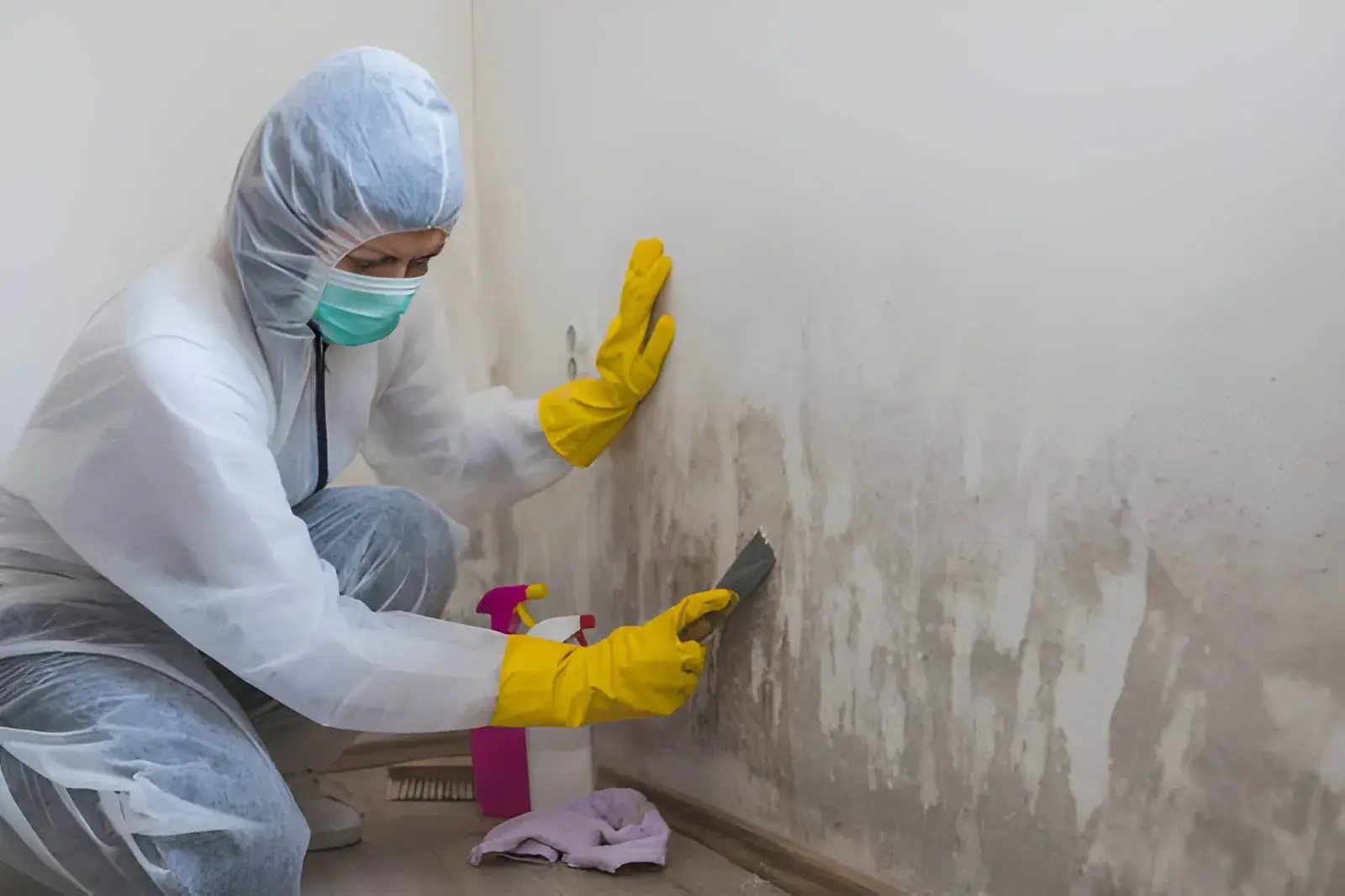
Mold Remediation in Cortland, OH
Hidden mold colonies degrade drywall, rot wooden floor joists, and circulate allergenic spores throughout living areas. Our certified Trumbull County remediation team mobilizes immediately to contain and eliminate fungal contamination in your Cortland property.
What Happens When You Call
A regional coordinator takes your call immediately, documents your property symptoms, and dispatches our Trumbull County environmental remediation team.
Certified technicians arrive on site in Cortland within 60 minutes equipped with thermal imaging cameras, invasive moisture meters, and HEPA containment gear.
We conduct comprehensive moisture mapping and visual inspection to locate hidden colonization inside wall voids, crawl spaces, and subflooring.
Our crew establishes physical polyethylene containment zones under continuous negative pressure, deploying commercial HEPA scrubbers to protect indoor air.
Discovering active mold in your Cortland home requires immediate, controlled remediation before airborne spores contaminate unaffected rooms. You cannot afford to rely on surface sprays that leave living fungal roots embedded inside wall cavities and subfloors. When you contact X Response, our certified microbial remediation team responds promptly and arrives on site within 60 minutes. From establishing negative-pressure containment and commercial HEPA air filtration to physical colony removal, botanical antimicrobial sanitization, and post-remediation verification, we restore a safe indoor environment. Call now. Your local Cortland mold remediation specialists are ready.
Why Cortland Homes Are Vulnerable to Mold
Cortland, Ohio, an established community of 7,105 residents in Trumbull County, lies directly alongside Mosquito Creek Lake, where high groundwater tables and dense glacial clay-till soils restrict natural subsurface water drainage. Many residences in Cortland, from established frame houses near Main Street to contemporary homes in surrounding subdivisions, feature full sub-grade basements or semi-conditioned crawl spaces. During warm, humid Northeast Ohio summer months, ambient outdoor relative humidity frequently exceeds 75 percent. When this warm, moisture-laden air enters cool below-grade basements through foundation joints, utility penetrations, and open windows, it cools rapidly toward its dew point, producing persistent surface condensation along masonry foundation walls and exposed framing. The U.S. Environmental Protection Agency recommends maintaining indoor relative humidity below 60 percent, ideally between 30 and 50 percent, to inhibit mold amplification and prevent moisture-driven fungal colonization. When basement humidity exceeds this safe threshold, dormant fungal spores germinate on drywall paper facings, wood framing, and carpet backing within 24 to 48 hours.
In addition to summer condensation challenges, Cortland properties encounter strong seasonal hydrostatic pressure. Heavy spring rains and winter snowmelt saturate the local clay subsoils, pushing groundwater against masonry foundations and through hairline floor cracks. Chronic moisture intrusion creates ideal breeding conditions for harmful fungal species such as Aspergillus, Cladosporium, Penicillium, and Stachybotrys chartarum. Homeowners often attempt to wash visible growth with household bleach, but bleach only removes surface discoloration while adding water that encourages fungal root structures to penetrate deeper into porous drywall and wood. Successfully resolving mold problems in Cortland requires certified environmental specialists who locate and eliminate moisture sources, maintain strict negative-pressure containment, and remove contaminated materials in full accordance with IICRC S520 remediation standards.
Clay-Till Hydrostatic Pressure
Dense clay soils surrounding Cortland foundations retain moisture after heavy rainfall, forcing dampness through basement masonry and floor seams.
Summer Sub-Grade Condensation
Warm, humid outdoor air drawn into cool below-grade living spaces reaches its dew point, creating chronic surface moisture on basement walls.
Sump Pump and Drainage Overloads
Severe convective downpours overwhelm residential sump pumps and perimeter drains, causing localized moisture accumulation in finished basements.
Enclosed Crawl Space Humidity
Unconditioned crawl spaces under older additions act as continuous moisture reservoirs, transferring damp air upward into subflooring and framing.
Protecting your family and property from indoor mold contamination in Cortland requires proven containment methods and permanent moisture abatement. X Response delivers the certified expertise needed to restore clean indoor air.
What Happens to Your Home While You Wait
Within 24 to 48 Hours
Microscopic mold spores absorb moisture from damp building materials and germinate, sending root-like hyphae into drywall, wood framing, and subfloors.
3 to 7 Days
Fungal colonies spread across surfaces, producing visible clusters of black, green, or white growth while emitting volatile organic compounds (VOCs) that cause musty odors.
1 to 2 Weeks
Mycelial networks penetrate deep into subflooring and wall framing, digesting cellulose fibers and weakening sheetrock structural integrity.
2 to 4 Weeks
Airborne spore levels multiply inside living areas, entering forced-air HVAC ducts and triggering allergic symptoms, chronic coughing, and respiratory irritation.
Beyond One Month
Extensive fungal colonization causes structural wood decay in subfloors and load-bearing studs, necessitating hazardous-material containment, framing tear-outs, and reconstruction.
Early professional intervention halts fungal colonization before structural tear-outs become necessary. Contact X Response immediately for certified mold abatement in Cortland.
How We Restore Mold-Affected Cortland Homes
Our Cortland mold remediation protocol adheres strictly to IICRC S520 standards, ensuring safe containment, thorough fungal elimination, and permanent moisture control.
Diagnostic Thermal Inspection and Moisture Profiling
We inspect your property using FLIR infrared cameras, deep-probe moisture meters, and hygrometers to locate hidden moisture reservoirs behind walls, under floors, and within foundation assemblies.
Negative-Pressure Containment Setup
Technicians isolate the contaminated work zone using heavy 6-mil poly barriers and zippered airlocks, running commercial HEPA negative air machines to prevent spore migration into clean living areas.
HEPA Air Scrubbing and Filtration
We operate commercial air scrubbers equipped with certified HEPA filters capable of capturing 99.97 percent of microscopic particles down to 0.3 microns, continuously cleansing ambient indoor air.
Controlled Material Removal and Bio-Washing
Unsalvageable materials like saturated drywall and insulation are double-bagged and safely removed. Remaining structural framing is scrubbed, sanded, and bio-washed with EPA-registered botanical antimicrobials.
Antimicrobial Encapsulation and Final Verification
We apply commercial mold-resistant polymer sealants to all cleaned framing lumber to prevent future colonization, conducting thorough post-remediation visual and moisture inspections to verify clean results.
The X Response Difference
When mold threatens your Cortland property, trust a certified restoration partner committed to strict containment standards, biological science, and complete customer safety.
Insurance Claim Guidance for Cortland Homeowners
Navigating property insurance claims for mold remediation in Trumbull County requires an understanding of policy limitations and rigorous documentation. Most standard Ohio homeowner policies cover mold remediation only when fungal growth directly results from a covered peril, such as an internal plumbing freeze, burst pipe, or sudden appliance rupture. In contrast, mold resulting from long-term maintenance neglect, high ambient summer humidity, or groundwater seepage is frequently excluded or subject to strict monetary coverage caps. Our team assists you by maintaining thorough records from the moment we arrive on site.
How X Response Helps
- Comprehensive photographic and thermal imaging evidence establishing the exact point of moisture origin and causal peril.
- Detailed documentation proving the sudden and accidental nature of the water intrusion event that catalyzed mold growth.
- Strict adherence to IICRC S520 protocols demonstrating that containment and remediation steps were medically and structurally necessary.
- Standardized Xactimate itemized pricing broken down by containment, HEPA air filtration, material removal, and antimicrobial application.
- Direct coordination with your insurance adjuster to supply all technical moisture logs and remediation scope details.
X Response is an emergency mitigation and environmental restoration company. We do not act as public insurance adjusters or provide legal interpretations of insurance coverage. Coverage determinations are made exclusively by your insurance provider.
Certified Restoration Specialists Serving Cortland
Our Cortland mold remediation technicians are certified environmental specialists who live and work in Trumbull and Mahoning counties. Having remediated moisture issues in residential neighborhoods across Cortland, Bazetta, and Warren, our team possesses deep familiarity with regional clay soils, foundation designs, and local building assemblies.
Every crew leader maintains current certification from the Institute of Inspection, Cleaning and Restoration Certification (IICRC) as an Applied Microbial Remediation Technician (AMRT) and Water Damage Restoration Technician (WRT). Equipped with commercial negative air machines, industrial HEPA filtration systems, and EPA-registered botanical antimicrobials, our team is dedicated to restoring healthy indoor air to your Cortland home.
In Cortland, X Response works with Restoworks Disaster Restoration, an independent local restoration partner serving Trumbull County County.
Mold Remediation FAQ for Cortland Homeowners
Other Emergency Services in Cortland

Water Damage Restoration
Burst pipes, storm flooding, standing water. We extract, dry, and restore before mold sets in.
Learn more
Fire Damage Restoration
Structural damage, soot, debris. We stabilize, clean, and rebuild what fire destroyed.
Learn more
Smoke Damage Restoration
Soot residue, chemical odors, HVAC contamination. We decontaminate surfaces, eliminate odors, and restore air quality.
Learn more