
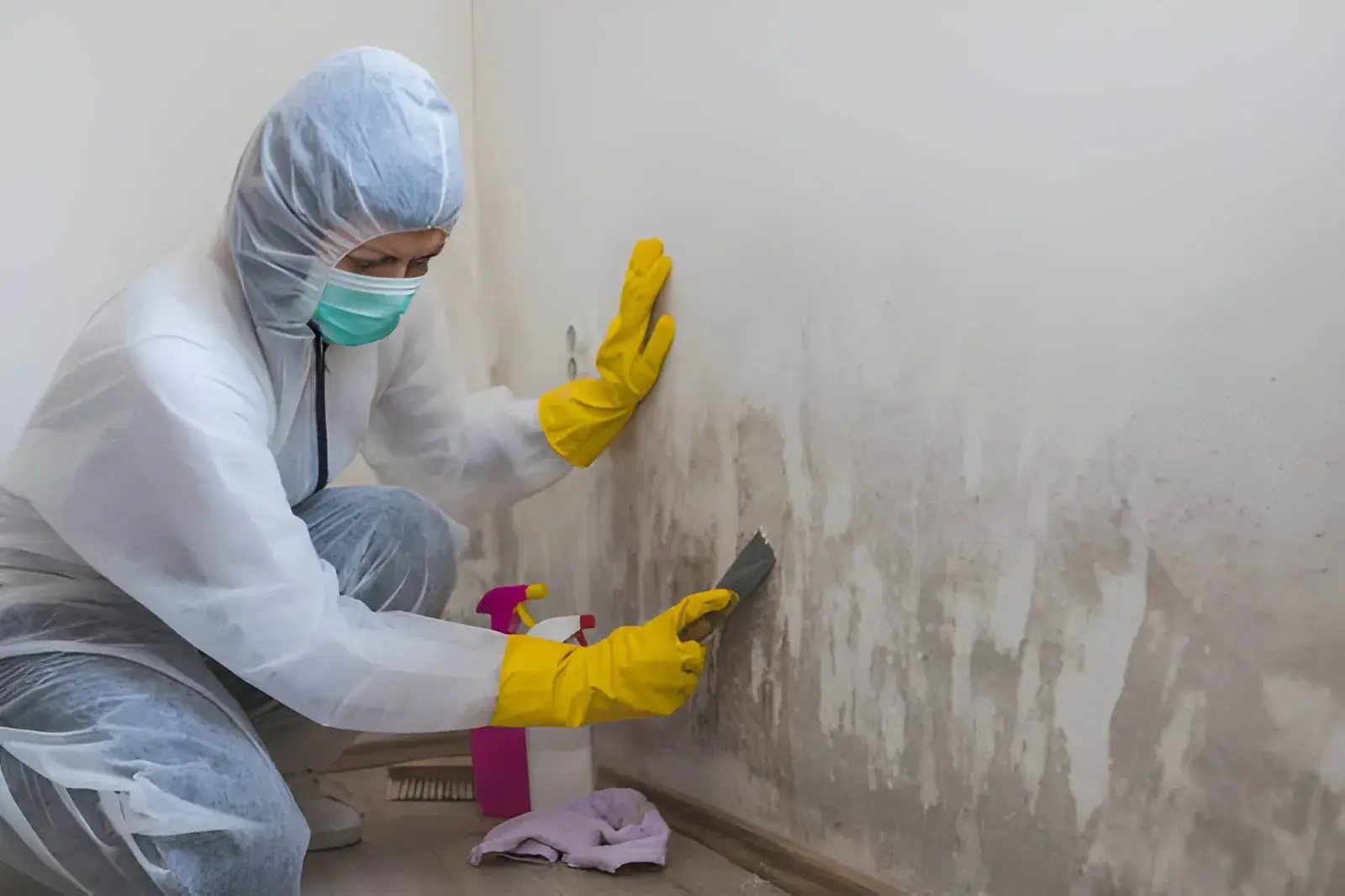
Mold Remediation in East Liverpool, OH
River valley humidity and damp hillside basements fuel toxic mold growth behind drywall within 48 hours. Our Columbiana County remediation team mobilizes immediately to protect your indoor air.
What Happens When You Call
A regional coordinator takes your call directly, assesses your property's moisture symptoms, and dispatches our Columbiana County remediation specialists.
Certified technicians arrive with thermal imaging cameras, digital moisture meters, and negative-air containment equipment.
We seal off the affected areas using heavy 6-mil poly sheeting and establish continuous negative air pressure to trap microscopic spores.
Technicians remove colonized materials under HEPA filtration, treat structural framing with botanical antimicrobials, and apply protective fungicidal sealers.
Discovering mold inside your East Liverpool home or commercial facility requires fast, professional remediation before airborne spores spread throughout your living quarters. Superficial bleach wiping fails to eliminate root hyphae embedded deeply in porous building materials. When you contact X Response, our certified mold remediation crew arrives on site within 60 minutes. From infrared moisture detection and negative-pressure containment to HEPA air filtration and complete antimicrobial decontamination, we eliminate microbial colonies safely and thoroughly. Call now. Your local East Liverpool mold remediation team is ready to respond.
Why East Liverpool Homes Are Vulnerable to Mold
East Liverpool, Ohio, an established riverfront city of 9,958 residents situated along the Ohio River in Columbiana County, presents an environment exceptionally conducive to residential and commercial mold growth. The city's river valley topography creates elevated ambient relative humidity throughout the late spring, summer, and early autumn, frequently running high along low-elevation corridors like River Road and Broadway Street. When this warm, humid river air enters cool below-grade basements and poorly ventilated crawl spaces, condensation rapidly forms on cold masonry walls, water supply pipes, and concrete floors. The Ohio Department of Health advises that mold colonies feed on drywall paper backing, insulation, and wood framing following flood intrusion, requiring immediate source water elimination to halt fungal expansion. In East Liverpool, unmitigated basement dampness routinely triggers extensive colonies of Aspergillus, Cladosporium, and Stachybotrys chartarum on structural subflooring and framing lumber.
The structural characteristics of East Liverpool's housing stock compound these mold hazards. Many homes built on steep hillside terraces during the late 19th and early 20th centuries feature older porous sandstone foundations, mortar-set rubble walls, or unsealed brick basements that experience continuous hydrostatic pressure from hillside groundwater tables. During winter and spring, heavy precipitation and snowmelt run down steep slopes, seeping into foundation cracks and saturating basement sill plates. Because the State of Ohio does not license mold remediation contractors, property owners must rely on certified professionals who adhere strictly to ANSI/IICRC S520 standards. Furthermore, Ohio Revised Code section 5302.30 mandates the disclosure of known water intrusion and mold conditions during residential property sales, making professional remediation and complete clearance verification critical for preserving property value. X Response delivers scientific remediation tailored to Columbiana County's unique river valley building dynamics.
Ohio River Valley Humidity and Condensation
Moist river air keeps summer relative humidity elevated, causing widespread condensation when warm air contacts cool below-grade foundation walls.
Porous Sandstone and Rubble Basements
Older residential basements throughout East Liverpool absorb groundwater through unsealed mortar joints and porous stone under continuous hillside hydrostatic pressure.
Hillside Snowmelt and Surface Runoff
Heavy precipitation and winter snowmelt drain down steep valley slopes, feeding moisture directly into floor joists and perimeter sill plates.
Unregulated State Remediation Standards
With no state mold licensing requirements in Ohio, property owners require certified IICRC technicians who follow strict containment and engineering controls.
From persistent basement dampness to hidden mold behind insulated walls, East Liverpool properties need proven remediation strategies. X Response combines certified Columbiana County experience with advanced containment technology to restore healthy indoor air.
What Happens to Your Home While You Wait
Within 24 to 48 Hours
Microscopic mold spores settle on damp organic surfaces, germinating and developing invisible root structures (hyphae) inside drywall, subflooring, and carpet backing.
2 to 7 Days
Fungal colonies expand across surfaces, releasing visible discoloration and musty microbial volatile organic compounds (mVOCs) into the surrounding air.
1 to 2 Weeks
Hyphae penetrate deep into wood framing, degrading structural cellulose and softening drywall. Airborne spore counts rise dramatically, triggering allergic reactions and respiratory irritation.
2 to 4 Weeks
Extensive fungal colonization causes widespread material decay, rotting wood base plates and delaminating drywall. Uncontained spores migrate into central HVAC ductwork, contaminating the entire home.
Beyond One Month
Deep fungal contamination causes significant structural timber rot and pervasive indoor air contamination. Remediating damage at this stage requires extensive controlled demolition and structural framing replacement.
In East Liverpool, early mold intervention prevents minor moisture issues from becoming costly environmental hazards. Contact X Response immediately to schedule a certified mold inspection.
How We Restore Mold-Affected East Liverpool Homes
Successful mold remediation in East Liverpool requires a rigorous, science-based protocol adhering strictly to ANSI/IICRC S520 guidelines to ensure complete spore containment and removal.
Moisture Mapping and Mold Assessment
Our technicians inspect the property using infrared thermal cameras, calibrated pinless moisture meters, and digital hygrometers to identify hidden moisture intrusion and determine the boundary of contamination.
Negative-Pressure Containment Isolation
We construct sealed containment chambers using heavy 6-mil flame-retardant poly sheeting and commercial zipper doors, utilizing negative-air machines with HEPA filtration to prevent spore escape.
HEPA Air Scrubbing and Particulate Removal
Industrial air scrubbers continuously circulate and filter indoor air through certified medical-grade HEPA filters, capturing 99.97 percent of airborne mold spores and microscopic particulates down to 0.3 microns.
Controlled Material Removal and Remediation
Heavily colonized, non-salvageable porous materials like drywall, carpet padding, and acoustic ceiling tiles are carefully bagged inside containment. Remaining framing is micro-cleaned using HEPA vacuuming and antimicrobial scrubbing.
Antimicrobial Treatment and Encapsulation
All exposed framing lumber is treated with EPA-registered botanical antimicrobials and coated with a durable, mold-resistant fungicidal sealer to prevent future microbial colonization.
The X Response Difference
When mold threatens your East Liverpool residence or commercial property, choose a certified remediation partner dedicated to safety, complete spore removal, and long-term prevention.
Insurance Claim Guidance for East Liverpool Homeowners
Navigating property insurance coverage for mold remediation in Columbiana County requires clear documentation of the underlying cause. In Ohio, most property insurance policies contain strict mold limitations or exclusions unless the fungal growth directly results from a covered 'sudden and accidental' peril, such as a burst plumbing line or sudden appliance rupture. Mold stemming from ongoing groundwater seepage or deferred maintenance is generally excluded. X Response helps property owners establish the precise cause and timeline of moisture intrusion with professional documentation.
How X Response Helps
- Comprehensive photographic documentation detailing mold colonization patterns, moisture meter readings, and affected structural materials.
- Clear technical origin reports linking fungal growth to specific covered plumbing or structural water events.
- Itemized Xactimate estimates detailing containment setup, HEPA filtration, controlled demolition, and antimicrobial treatments.
- Comprehensive moisture logs verifying that structural framing has been dried to industry-standard baseline moisture content.
- Direct coordination with your insurance adjuster to provide technical documentation supporting your claim.
X Response is an emergency mitigation and restoration contractor. We do not act as public adjusters or interpret insurance policy legal language. Coverage determinations are made exclusively by your insurance provider.
Certified Restoration Specialists Serving East Liverpool
Our East Liverpool mold remediation technicians live and work throughout the upper Ohio River valley, bringing deep experience in mitigating moisture issues specific to regional architecture. From hillside homes and historic brick residences downtown to contemporary dwellings across Columbiana County, our crew understands the local foundation styles and building materials.
Every field remediation supervisor maintains active certification from the Institute of Inspection, Cleaning and Restoration Certification (IICRC) as an Applied Microbial Remediation Technician (AMRT) and Water Damage Restoration Technician (WRT). Equipped with commercial HEPA air scrubbers, negative-air machines, and electrostatic antimicrobial foggers, our team delivers safe, thorough property restoration.
In East Liverpool, X Response works with Restoworks Disaster Restoration, an independent local restoration partner serving Columbiana County County.
Mold Remediation FAQ for East Liverpool Homeowners
Other Emergency Services in East Liverpool

Water Damage Restoration
Burst pipes, storm flooding, standing water. We extract, dry, and restore before mold sets in.
Learn more
Fire Damage Restoration
Structural damage, soot, debris. We stabilize, clean, and rebuild what fire destroyed.
Learn more
Smoke Damage Restoration
Soot residue, chemical odors, HVAC contamination. We decontaminate surfaces, eliminate odors, and restore air quality.
Learn moreNearby Service Areas
Also serving nearby: