
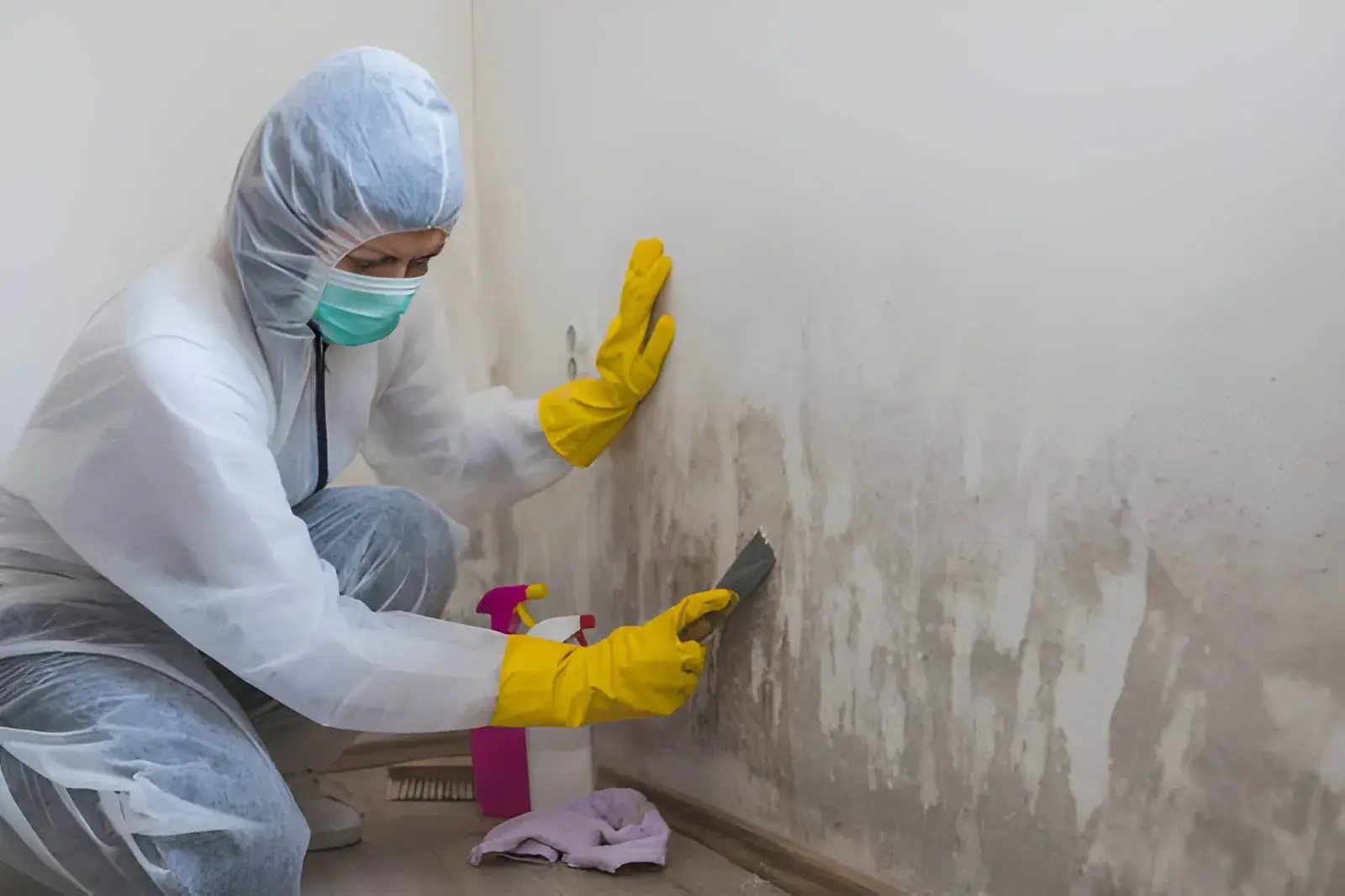
Mold Remediation in Bellevue, TN
Mold spreads through your home's air and structure every day it goes unaddressed. Our certified team responds to Bellevue properties within 60 minutes for assessment.
What Happens When You Call
A real person answers, not a call center. We assess your situation, ask targeted questions about moisture history and symptoms, and begin coordinating your response immediately.
Your dedicated remediation team is dispatched from our local base serving Bellevue and the surrounding Davidson County communities.
Team arrives with moisture meters, thermal imaging, HEPA air scrubbers, and containment materials. Professional assessment begins immediately.
Assessment complete, containment established, remediation plan documented. You know exactly what the problem is, where it is, and how we resolve it.
You have discovered mold in your home, or you suspect it based on musty odors, unexplained allergies, or visible discoloration. The problem will not stabilize on its own. In Bellevue's humid Middle Tennessee climate, mold colonies grow and spread daily, releasing spores through your HVAC system and into the air your family breathes. X Response exists for exactly this moment. When you reach out, your remediation team is mobilized within minutes. Call now. Your team is standing by.
Why Bellevue Homes Are Vulnerable to Mold
Bellevue sits in Davidson County in the heart of Middle Tennessee, where approximately 50 inches of annual precipitation and average relative humidity near 65 percent create ideal conditions for mold growth in residential structures. The May 2010 flood that dropped 12.34 inches in 24 hours on the Davidson County area demonstrated how quickly extreme moisture events can saturate homes and initiate mold colonization. But mold in Bellevue does not require a catastrophic flood. The normal humid climate, combined with the construction patterns in this rapidly growing community, produces conditions where mold establishes from routine moisture sources: condensation in crawl spaces, minor plumbing leaks, HVAC condensation, and the residual construction moisture that can remain in homes built during wet weather. Bellevue's explosive growth, from 2,194 residents in 2010 to 7,485 in 2020, means most homes are new construction built quickly during one of the most active residential building periods in Davidson County's history. During the catastrophic May 2010 flood, the Harpeth River reached an all-time record crest of 33.32 feet at Bellevue, nearly nine feet higher than the previous record.
The rapid construction pace during Bellevue's growth period raises specific mold concerns. Homes framed during Tennessee's rainy spring months can trap construction moisture in wall cavities when the exterior is sealed before framing dries completely. In Middle Tennessee's humid climate, that trapped moisture does not evaporate through the building envelope as readily as in drier regions. It condenses on the interior face of sheathing and supports mold growth inside wall cavities that remains hidden until renovation or investigation reveals it. Additionally, many of Bellevue's homes sit on crawl spaces where Middle Tennessee's clay-rich soils hold moisture against the foundation, creating perpetual humidity in the below-floor space that feeds mold on joists, subfloor, and HVAC ductwork running through the crawl space.
Middle Tennessee's Humid Climate
Bellevue receives approximately 50 inches of rain annually with relative humidity averaging 65 percent year-round and summer months regularly exceeding 70 percent. These conditions mean that any moisture source inside a home, whether from a plumbing leak, crawl space intrusion, roof failure, or condensation, will support mold colonization within 24 to 48 hours rather than drying naturally. The humid climate also creates condensation risk on any surface cooler than the dew point: cold water supply pipes, air conditioning ductwork, poorly insulated walls, and windows during transitional seasons. Each condensation point is a potential mold site requiring no flood or leak to initiate growth.
Crawl Space Foundations and Clay Soils
Many Bellevue homes, particularly those built in the earlier phases of development and along the original rural road corridors, sit on crawl space foundations over Middle Tennessee's clay-rich soil. The clay holds moisture against foundations after heavy rain, keeping the ground beneath homes damp for extended periods. Vented crawl space designs, still common in the area, pull humid outdoor air across cooler crawl space surfaces where condensation forms on floor joists, subfloor sheathing, ductwork, and plumbing. This creates a chronic moisture environment that supports year-round mold growth without any single triggering event. The HVAC ductwork running through these crawl spaces then distributes spores throughout the living space above.
Construction Moisture in Rapid-Build Homes
Bellevue's 241 percent growth between 2010 and 2020 produced thousands of new homes built during an intense construction period. When homes are framed during wet weather and sealed quickly to meet construction schedules, moisture trapped in wall cavities and structural materials can support hidden mold growth. Middle Tennessee's humidity prevents the natural drying that would occur in arid climates. Homeowners in newer Bellevue subdivisions may experience musty odors or respiratory symptoms without visible mold because contamination exists within sealed wall assemblies, behind vapor barriers, or in attic sheathing that was installed before the roof was complete during a rain event.
HVAC Distribution of Spores
Every home in Bellevue relies on forced-air heating and cooling, and the HVAC system connects mold problems in one part of the home to air quality throughout. Ductwork in unconditioned crawl spaces sweats condensation on its exterior, feeding mold growth on the duct surface and adjacent framing. When mold establishes anywhere, the system distributes spores through supply air to every room. A crawl space mold colony releases spores drawn through floor penetrations and return pathways into the system, contaminating the living space above. This means mold anywhere in the home quickly becomes a whole-home air quality issue.
Post-Flood and Post-Leak Mold Risk
The May 2010 flood demonstrated Davidson County's vulnerability to extreme water events, and Bellevue's position at the Harpeth River headwaters means tributaries can flash quickly during intense rainfall. After any water intrusion, whether from flooding, roof leaks, plumbing failures, or appliance malfunctions, mold begins colonizing within 24 to 48 hours in Middle Tennessee's warm, humid conditions. Properties that experienced the 2010 flood without proper professional drying likely developed persistent mold problems in concealed locations. Even routine storms that drive water against foundations or overflow gutters create mold risk in crawl spaces where water pools against the clay soil and saturates framing before anyone notices.
These factors create a mold environment that is persistent and progressive. The humid climate supports growth year-round. Crawl space foundations on clay soil provide chronic moisture. Rapid construction sometimes trapped moisture in wall assemblies. HVAC systems distribute spores throughout homes. And extreme rainfall events periodically saturate structures beyond their capacity to dry naturally. Effective mold remediation in Bellevue requires a team that resolves the moisture source alongside removing the contamination, because treating visible mold without addressing the underlying condition restarts the colonization clock.
What Happens to Your Home While You Wait
24–48 Hours After Moisture
Mold spores begin germinating on any surface that remains wet. In Middle Tennessee's warm, humid climate, colonization starts quickly. Growth begins concealed: inside wall cavities, on the back of drywall, beneath flooring, and on crawl space framing. No visible mold is apparent yet.
3–7 Days
Colonies become established and produce spores in quantity. Musty odors may be noticeable. Growth remains primarily concealed but actively releases spores into air that the HVAC distributes throughout the home. Allergic reactions may begin for sensitive occupants.
1–4 Weeks
Mold becomes visible on surfaces. Colonies expand across drywall, framing, and organic materials. Structural materials begin degrading. The HVAC has distributed spores to other areas and secondary colonies may establish far from the original source. Scope has expanded.
1–3 Months
Extensive growth compromises structural integrity of framing, subfloor, and sheathing. Multiple colonies established via HVAC distribution. Indoor air quality has deteriorated significantly. Materials that could have been cleaned earlier now require removal. Cost and timeline multiply.
3 Months and Beyond
Structural wood decay advances. Entire subfloor sections may need replacement. Extended HEPA filtration and multiple clearance tests required. Financial impact includes remediation, structural repair, potential relocation, and diminished property value without documentation.
Mold does not stabilize in Bellevue's climate. Every day expands the affected area and deepens impact. Contact X Response now. Our team begins assessment within 60 minutes.
How We Restore Mold-Affected Bellevue Homes
Mold remediation follows a protocol to remove contamination, protect unaffected areas, and address the moisture source. Here is our process for Bellevue properties.
Professional Assessment and Moisture Mapping
Our team arrives with moisture meters, thermal imaging, and hygrometers to identify both mold contamination and the moisture source. We map moisture throughout the affected area and trace it to its origin: crawl space humidity, plumbing leak, HVAC condensation, construction moisture, or residual water damage. For Bellevue homes with crawl spaces, we inspect the entire environment including vapor barrier, ventilation, drainage, and ductwork. The assessment produces a detailed scope identifying every affected area and the moisture correction required.
Containment and Air Filtration
Before disturbing any mold, we establish physical containment using polyethylene sheeting and create negative air pressure with HEPA-filtered scrubbers. This prevents spores from migrating to unaffected areas. For crawl space remediation, containment extends from access through the work pathway. HEPA scrubbers filter at 99.97 percent efficiency down to 0.3 microns. The rest of the home remains habitable in most cases.
Mold Removal and Material Disposal
Porous materials with mold throughout (drywall, insulation, padding, severely affected wood) are removed and disposed of properly. Semi-porous materials like framing and subfloor are cleaned to bare wood using HEPA-vacuuming and sanding, then treated with EPA-registered antimicrobials. Non-porous surfaces are cleaned and treated in place. All work is within containment using PPE and HEPA-filtered tools.
Moisture Source Correction
Removing mold without correcting the moisture source guarantees recurrence. For Bellevue homes, correction commonly involves crawl space encapsulation with vapor barrier and dehumidifier, plumbing repair, HVAC condensation management, improved ventilation, and drainage correction. For crawl spaces on clay soil, we recommend sealed configuration with mechanical dehumidification rather than vented designs that import humid air. For newer homes with construction moisture issues, controlled ventilation strategies allow walls to dry without introducing additional humidity.
Clearance Testing and Documentation
After remediation, air samples compare indoor spore counts against outdoor baselines. Surface samples verify treated materials are clean. Results are documented in a complete remediation report including findings, work performed, moisture correction, and clearance results. This documentation satisfies Tennessee disclosure requirements for property transactions and supports insurance claims.
The X Response Difference
When you contact X Response for mold remediation in Bellevue, you get a team that resolves the complete problem: moisture source, contamination, and verified clearance.
Insurance Claim Guidance for Bellevue Homeowners
Mold insurance coverage in Tennessee depends on the moisture cause. If mold developed from a sudden, accidental covered event like a burst pipe, appliance failure, or storm-driven roof leak, your policy typically covers remediation as part of the water claim. If mold developed from long-term conditions like chronic crawl space humidity or deferred maintenance, standard policies generally exclude it. Many Tennessee policies include a mold sublimit of $10,000 to $25,000 that caps coverage even for covered events. Documentation of the water event and timeline from intrusion to mold discovery is critical for establishing coverage.
How X Response Helps
- Document the moisture source and establish whether it qualifies as a sudden, accidental covered event
- Connect mold claim to original water damage claim with timeline documentation if applicable
- Photograph all mold-affected areas before remediation to establish scope
- Provide detailed scope itemizing remediation, moisture correction, and clearance testing separately
- Obtain clearance testing documentation demonstrating successful remediation
X Response does not file claims on your behalf, adjust claims, or make coverage determinations. We provide documentation and guidance to help you make informed decisions about your property and your policy. Coverage decisions are made solely by your insurance carrier.
Certified Restoration Specialists Serving Bellevue
When you contact X Response for mold remediation in Bellevue, your team brings certified expertise to a community they understand. They know that Bellevue's newer construction built during rapid growth periods sometimes contains trapped construction moisture presenting differently from chronic crawl space humidity in older homes. They know that the Harpeth River headwaters create post-flood mold risk specific to properties along the tributary corridors. They have remediated mold across Davidson County's range of housing and understand how Middle Tennessee's climate interacts with each construction type.
Every technician holds current IICRC certification in mold remediation and water damage restoration. The team carries moisture meters, thermal imaging, HEPA scrubbers, containment materials, antimicrobial agents, and PPE. When your team arrives, they bring complete capability to assess, contain, remediate, and verify without delay.
In Bellevue, X Response works with Tennessee Water and Fire, an independent local restoration partner serving Davidson County.
Mold Remediation FAQ for Bellevue Homeowners
Other Emergency Services in Bellevue

Water Damage Restoration
Burst pipes, storm flooding, standing water. We extract, dry, and restore before mold sets in.
Learn more
Fire Damage Restoration
Structural damage, soot, debris. We stabilize, clean, and rebuild what fire destroyed.
Learn more
Smoke Damage Restoration
Soot residue, chemical odors, HVAC contamination. We decontaminate surfaces, eliminate odors, and restore air quality.
Learn more
Sewage Cleanup
Sewer backups, contaminated water, biohazard. We extract, sanitize, and restore safely.
Learn more