
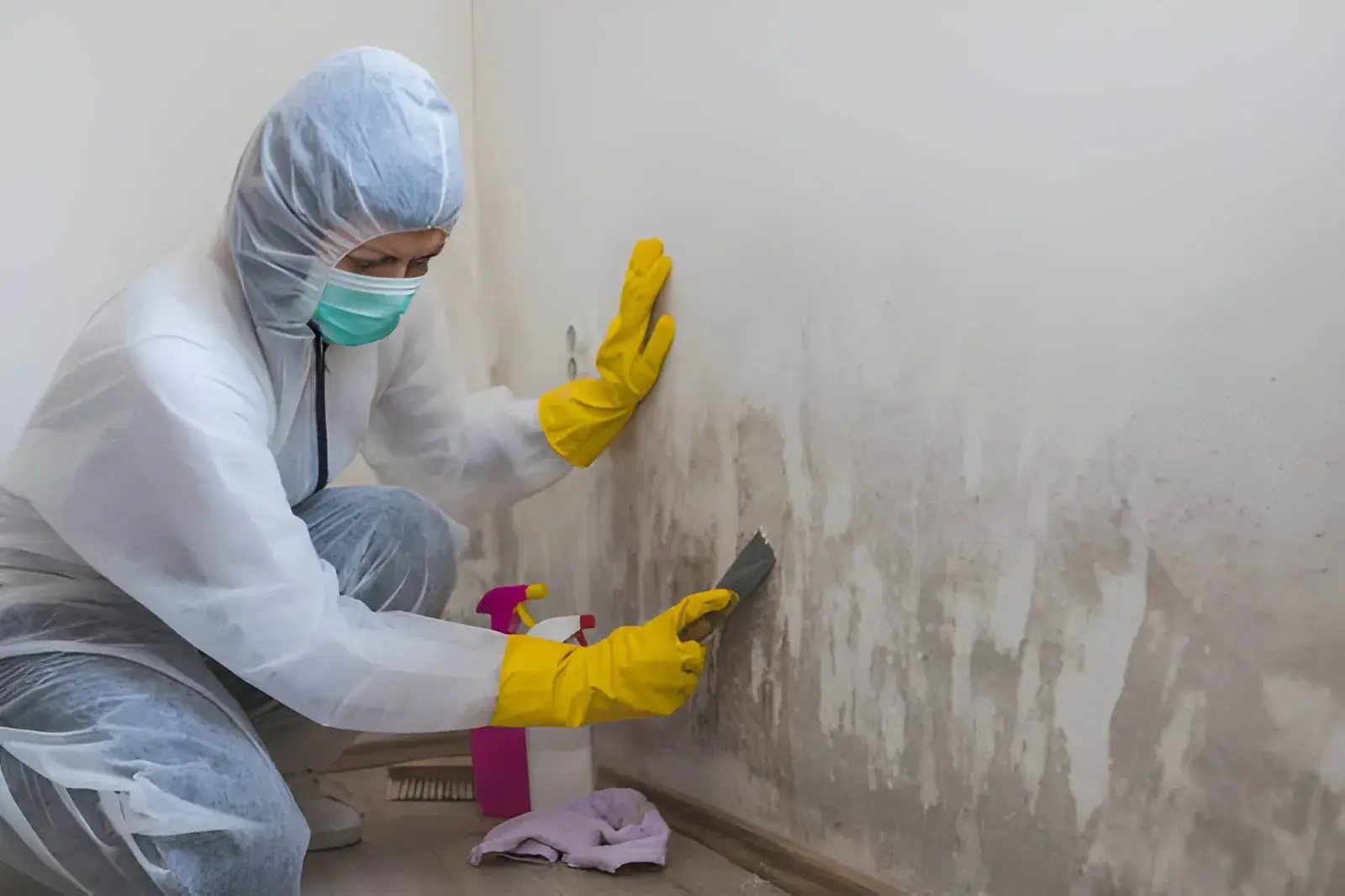
Mold Remediation in Lufkin, TX
Piney Woods humidity, trapped condensation, and hidden roof leaks trigger explosive fungal colonization inside Lufkin properties. Our certified microbial remediation team responds within 60 minutes.
What Happens When You Call
Our response center schedules an immediate on-site assessment by a licensed Angelina County remediation supervisor.
Technicians arrive in Lufkin equipped with commercial air scrubbers, HEPA vacuums, and calibrated thermal diagnostic tools.
Crews seal the affected work zone with airtight 6-mil polyethylene containment barriers and establish negative air pressure.
Infected porous building materials are excised cleanly, and structural timber frames receive antimicrobial wash and dry ice blasting.
Microscopic mold spores colonize damp organic surfaces across Deep East Texas within 24 to 48 hours of moisture intrusion. Elevated indoor humidity feeds active colonies of Aspergillus, Penicillium, and Stachybotrys behind baseboards, under floor coverings, and throughout crawl spaces. X Response dispatches licensed microbial remediation specialists across Lufkin within the hour to erect negative pressure containment, deploy hospital-grade HEPA filtration, and eliminate fungal roots safely. Call now for 24/7 emergency mold remediation.
Why Lufkin Homes Are Vulnerable to Mold
Lufkin is the principal urban and commercial center of Angelina County, positioned in the dense timber belt of Deep East Texas between the Angelina and Neches rivers. According to the 2020 United States Census, Lufkin had a population of 34,143 residents and serves as the county seat of Angelina County. Founded in 1884 as a railroad and timber hub, the city contains an architectural mix ranging from older homes framed with local yellow pine to post-war brick veneer residences and modern single-family subdivisions built on monolithic slab foundations along Loop 287.
The regional climate and dense forest environment create a prime setting for microbial growth. Lufkin experiences a humid subtropical climate (Köppen Cfa) marked by hot, humid summers where dense pine tree canopies restrict natural sunlight and airflow, keeping ambient humidity elevated. When persistent atmospheric moisture combines with attic condensation leaks, clogged AC condensate drain pans, or water intrusion from severe thunderstorms and fallen tree limbs, fungal colonies flourish unnoticed within wall cavities and under flooring. Furthermore, mold mitigation across Texas is strictly regulated by the Texas Department of State Health Services (DSHS) under Texas Occupations Code Chapter 1958, requiring rigorous physical containment, licensed execution, and an official Certificate of Mold Damage Remediation (CMDR-1) to ensure legal and real estate compliance.
Piney Woods Canopy Shading and Ambient Moisture
Dense stands of mature loblolly pines and hardwood timber shade residential rooftops and perimeter foundations across Lufkin. This heavy forest canopy slows exterior surface drying after rains, elevating ambient relative humidity around walls and crawl spaces.
Slab Foundation Condensation and Moisture Wicking
Dense clay subsoils beneath Lufkin slab foundations retain high groundwater levels. During hot summer months, warm humid air in contact with cool air-conditioned slab surfaces produces hidden condensation under vinyl plank, laminate, and carpet.
Attic HVAC Condensate Drain Overflows
Prolonged summer heat drives central air conditioning units to run continuously for months. High condensation volumes frequently clog primary PVC drain lines, causing overflow pans to leak onto ceiling drywall and insulation, seeding hidden mold colonies above living areas.
Pier-and-Beam Crawl Space Moisture Trapping
Older homes in established central Lufkin neighborhoods feature raised pier-and-beam foundations. Poorly ventilated crawl spaces collect damp forest air and rainfall runoff, saturating wooden floor joists and subflooring with aggressive fungal rot.
Storm Roof Punctures and Hidden Attic Leaks
Severe convective thunderstorms and straight-line winds frequently down heavy pine branches onto residential roofs. Small punctures that escape immediate detection allow rainwater to seep slowly into attic insulation and ceiling joists, feeding extensive mold colonies.
Eradicating toxic mold in Lufkin requires certified containment engineering, medical-grade HEPA filtration, and strict adherence to Texas DSHS regulatory standards. Our crews restore safe, sanitized indoor air to homes and commercial spaces across Angelina County.
What Happens to Your Home While You Wait
24–48 Hours
Microscopic mold spores absorb moisture and begin germinating on damp cellulose building materials, including drywall paper backing, carpet padding, and acoustic ceiling tiles.
3–7 Days
Visible fungal colonies form under baseboards and behind wallpaper. Mycelial hyphae penetrate deeply into porous structural wood framing, releasing noticeable musty odors.
1–2 Weeks
Active sporulation releases millions of airborne fungal fragments into indoor air. Spores circulate into HVAC ductwork, contaminating unaffected rooms and triggering respiratory irritation.
2–4 Weeks
Deep fungal colonization digests cellulose fibers in wall studs and subflooring, causing wood softening, drywall crumbling, and elevated volatile organic compound (VOC) levels.
1 Month and Beyond
Extensive structural wood decay compromise framing integrity. Severe mold contamination requires invasive structural remediation, complete drywall removal, and significant reconstruction costs.
Stopping fungal spread requires immediate professional containment. Contact X Response immediately for licensed mold remediation in Lufkin.
How We Restore Mold-Affected Lufkin Homes
Our mold remediation protocol strictly adheres to Texas DSHS Chapter 1958 rules and IICRC S520 guidelines, prioritizing containment, occupant safety, and verifiable clearance.
Protocol Review and Containment Engineering
We review the independent assessment protocol and isolate the work area with 6-mil flame-retardant polyethylene sheeting, zipper access portals, and negative air machines exhausting outdoors.
Continuous HEPA Air Scrubbing
Commercial air scrubbers equipped with certified HEPA filters run continuously at four or more air changes per hour (ACH) to capture airborne spores and prevent cross-contamination.
Controlled Demolition of Non-Salvageable Materials
Contaminated drywall, insulation, and underlayment are misted with antimicrobial solutions, cleanly excised, and double-bagged in sealed 6-mil plastic bags before removal.
Mechanical Abrasion and Antimicrobial Cleansing
Exposed structural framing timbers are remediated using wire brushing, HEPA vacuuming, and EPA-registered antifungal washes to extract embedded fungal roots.
Clearance Verification and CMDR-1 Certification
An independent licensed Mold Assessment Consultant (MAC) performs post-remediation clearance testing. Upon passing, we execute the official Texas CMDR-1 certificate.
The X Response Difference
Ensure your property is safe, compliant, and legally certified with professional remediation services.
Insurance Claim Guidance for Lufkin Homeowners
Navigating mold insurance claims in Texas requires strict compliance with state regulatory statutes and clear evidence linking fungal colonization to a covered water peril. Most Texas homeowners policies carry standard mold coverage limits or endorsements that apply when mold results from a sudden plumbing burst or covered internal pipe break. Under Texas Insurance Code Section 544.522, insurers cannot deny insurance or charge a surcharge based on past mold damage if an official Certificate of Mold Damage Remediation (CMDR-1) has been filed. Our team coordinates directly with adjusters to ensure transparent claim processing.
How X Response Helps
- Comprehensive photographic documentation detailing initial fungal growth and moisture penetration points
- Detailed line-item scopes prepared using industry-standard Xactimate pricing software
- Strict separation of independent mold assessment protocols and remediation execution documentation
- Chain-of-custody containment logs and disposal manifests for contaminated materials
- Execution of the Texas CMDR-1 certificate upon verified third-party laboratory clearance
X Response performs independent certified mold remediation services. Policy coverage, benefit caps, and claim approvals remain the exclusive authority of your insurance carrier.
Certified Restoration Specialists Serving Lufkin
Our Lufkin mold remediation professionals possess deep technical knowledge of Angelina County architecture, Piney Woods forest moisture dynamics, and Texas DSHS regulatory compliance. Whether managing localized mold outbreaks in residential bathrooms and attics or executing large-scale structural decontamination for commercial buildings along Loop 287, our technicians prioritize occupant health and structural integrity. We maintain 24/7 readiness to respond across East Texas.
Every remediation supervisor holds active certification from the Institute of Inspection, Cleaning and Restoration Certification (IICRC) as an Applied Microbial Remediation Technician (AMRT) and is licensed under the Texas Department of State Health Services (DSHS). Utilizing hospital-grade HEPA air filtration equipment, negative air monitoring, and specialized antimicrobials, our team delivers permanent, verifiable mold elimination.
In Lufkin, X Response works with First Response Restoration, an independent local restoration partner serving Angelina County.
Mold Remediation FAQ for Lufkin Homeowners
Other Emergency Services in Lufkin

Water Damage Restoration
Burst pipes, storm flooding, standing water. We extract, dry, and restore before mold sets in.
Learn more
Fire Damage Restoration
Structural damage, soot, debris. We stabilize, clean, and rebuild what fire destroyed.
Learn more
Smoke Damage Restoration
Soot residue, chemical odors, HVAC contamination. We decontaminate surfaces, eliminate odors, and restore air quality.
Learn more
Sewage Cleanup
Sewer backups, contaminated water, biohazard. We extract, sanitize, and restore safely.
Learn moreNearby Service Areas
Also serving nearby: