
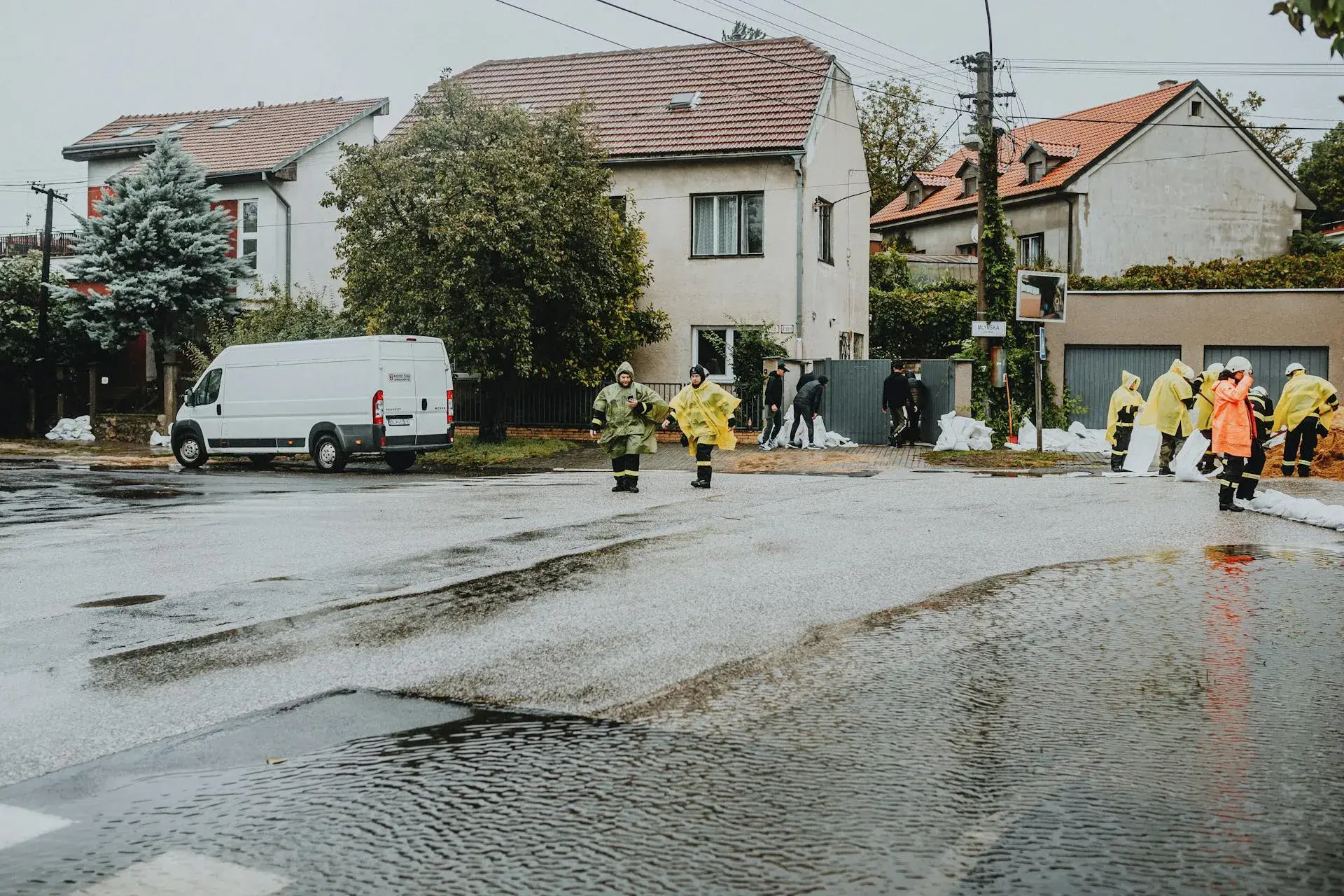
Sewage Cleanup in Olathe, KS
Sewage is a Category 3 biohazard. Every minute of exposure increases health risk and contamination spread. Our local team responds to Olathe sewage emergencies immediately.
What Happens When You Call
A real person answers, not a call center. We assess your situation, identify the likely sewage source, and begin coordinating your emergency response immediately.
Your dedicated restoration team is dispatched from our local base serving Olathe and the surrounding Johnson County communities.
Team arrives with biohazard extraction equipment, personal protective gear, antimicrobial treatment systems, and containment materials. Emergency mitigation begins immediately.
Contaminated water extracted, affected materials removed, area disinfected, and restoration plan documented. You know exactly what comes next.
Sewage is in your home. This is not a situation where you can wait for a convenient appointment or try to handle it yourself. Category 3 black water contains bacteria, viruses, parasites, and chemical contaminants that pose immediate health risks to anyone exposed. You need a team trained in biohazard protocols that can extract contaminated water, remove unsalvageable materials safely, disinfect the affected area, and verify the space is safe for occupancy. Call now. Your team is standing by.
Why Olathe Homes Are Vulnerable to Sewage
Olathe is the county seat of Johnson County, Kansas, with approximately 149,000 residents. The city is served by Johnson County Wastewater (JCW), whose administrative headquarters are located at 11811 S. Sunset Drive, Suite 2500, in Olathe itself. JCW manages the sanitary sewer collection system for Johnson County, maintaining thousands of miles of sewer mains, lift stations, and treatment infrastructure. As the county seat hosting JCW's offices, Olathe sits at the administrative center of a system that has documented persistent inflow and infiltration problems countywide, where rainwater and groundwater enter sanitary sewer lines during storms, overwhelming capacity and increasing backup risk for individual homes. The City of Olathe signed nearly $1 million in contracts for environmental and wastewater services in 2025, including watershed improvement studies at locations that experienced localized flooding during a 100-year storm event earlier that year.
The interaction between stormwater flooding and the sanitary sewer system creates particular sewage backup risk in Olathe. During the July 2025 storm that dropped more than eight inches of rain in a single day, the city's stormwater infrastructure was overwhelmed across multiple neighborhoods. When stormwater overwhelms the storm system and saturates the ground, it also infiltrates the separate sanitary sewer system through defective pipe joints, cracked mains, and deteriorated manholes. This excess flow pressurizes the sanitary system and can force sewage back through residential lateral connections into basement floor drains. In neighborhoods like College Meadows, where the stormwater system itself is documented as inadequate, the compounding effect of surface flooding and sewer system pressure creates simultaneous water and sewage intrusion that contaminates an already-flooding basement with Category 3 biohazard material.
Johnson County Wastewater Infrastructure and Inflow Problems
Johnson County Wastewater has publicly documented the problem of inflow and infiltration (I&I) in its sanitary sewer system. During rain events, water that should flow into the storm system instead enters sanitary lines through defective joints, cracked pipes, deteriorated manholes, and illegal cross-connections from sump pumps or downspouts tied directly to the sanitary line. JCW actively conducts I&I reduction campaigns and maintains updated regulations for sanitary sewer use (code updated July 2024), but the system-wide problem persists across the aging infrastructure that serves Olathe and surrounding cities. When infiltration overwhelms pipe capacity during intense storms like the July 2025 event, the sanitary system pressurizes and can force sewage back through residential laterals into homes at their lowest point. JCW's administrative headquarters in Olathe positions the city at the center of both the problem and the ongoing remediation effort.
Storm-Driven Sewer Surcharges in a Flood-Prone City
The July 2025 storm that dropped eight inches of rain across Olathe in a single day created conditions where both the stormwater system and the sanitary sewer system exceeded capacity simultaneously. Lake Olathe overspilled, Mill Creek flooded its corridor, and surface water saturated the ground across the city. This saturation drives groundwater infiltration into the sanitary system at the same moment the system is already handling peak residential flows. The result is a surcharge that pressurizes lateral connections throughout affected neighborhoods. Homes without functioning backwater prevention valves on their lateral line experience sewage entering through basement floor drains, the lowest toilets, and basement shower or laundry drains. The city's subsequent $1 million investment in watershed improvement studies reflects recognition that these events are not anomalies but predictable consequences of infrastructure that has not kept pace with development and intensifying storm patterns.
Lateral Line Aging in Established Neighborhoods
Olathe was founded in 1857 and incorporated the same year. While most current housing dates from the latter half of the 20th century, the city's northern and central neighborhoods include homes built in the 1950s through 1970s served by clay tile or cast iron lateral lines that have been in the ground for 50 to 70 years. These materials degrade over time: clay tile joints separate, allowing both root intrusion and groundwater infiltration. Cast iron corrodes internally, building scale that restricts flow and catching debris that forms blockages. Root intrusion from Olathe's mature tree canopy is especially problematic in these older neighborhoods, where established root systems have had decades to find and penetrate lateral line joints. A partial blockage from roots or grease accumulation can handle normal daily flow but fails catastrophically during peak flow from a household event or system surcharge, sending sewage back into the home.
Grease Accumulation and Household Blockages
Fats, oils, and grease (FOG) poured down kitchen drains accumulate on lateral line walls over years, gradually narrowing the effective pipe diameter until a complete blockage forms. In Olathe's older laterals with roughened interior surfaces from age and corrosion, grease adheres more readily and accumulates faster than in newer PVC installations. When a grease blockage fully obstructs the lateral, sewage has nowhere to go except back through the home's lowest fixture, typically the basement floor drain. Johnson County Wastewater's June 2026 grease-blockage manhole overflow in nearby Overland Park demonstrated the same mechanism at a larger scale in the public main. For individual Olathe homeowners, lateral blockages from grease are one of the most common causes of sewage backup because they develop gradually without warning until the day flow stops entirely.
Basement Floor Drains as Sewage Entry Points
Nearly every home in Olathe has a basement with a floor drain connected to the sanitary sewer system. Under normal conditions, this drain provides a gravity outlet for the basement level. During a sewer backup event, it becomes the unprotected entry point for contaminated water into the home. Older Olathe homes built before current code requirements often lack backwater prevention valves on their lateral, meaning nothing stops reversed flow from entering through the floor drain, basement shower, or laundry sink. Even in homes equipped with backwater valves, these devices require periodic maintenance and testing that many homeowners neglect. A stuck or failed valve provides no protection when the next surcharge event occurs. The city's 54,000+ occupied housing units represent tens of thousands of basement floor drains, each a potential sewage entry point during system surcharges or individual lateral blockages.
Sewage backup risk in Olathe is driven by the intersection of documented JCW inflow and infiltration issues, a stormwater system that multiple neighborhoods have proven inadequate during intense storms, aging lateral lines in established neighborhoods, grease accumulation as a gradual blockage mechanism, and universal basement construction that places living space at the entry point for reversed flow. The city's own nearly $1 million investment in watershed and wastewater studies acknowledges the infrastructure gap. For individual homeowners, sewage backup remains a health emergency requiring immediate professional response with biohazard-rated extraction, material removal, and verified disinfection.
What Happens to Your Home While You Wait
Within 1 Hour
Category 3 sewage water spreads across basement flooring and wicks into every porous material: carpet, pad, drywall, baseboards, and stored contents. Bacterial contamination is immediate. In Olathe's finished basements, furniture, electronics, and belongings at floor level are contaminated within minutes. The area becomes an immediate health hazard for any person or pet without protective equipment.
1–24 Hours
Bacteria multiply rapidly in warm, nutrient-rich sewage water. Contamination wicks upward through drywall into wall cavities. Odor intensifies as biological decomposition accelerates. Carpet pad becomes unsalvageable almost immediately. Drywall contaminated above approximately 12 inches from the waterline typically cannot be decontaminated and must be removed.
24–48 Hours
Mold colonization begins on sewage-contaminated materials, creating a dual biohazard. The scope of contaminated materials expands as moisture migrates further. Structural framing absorbs contaminated water and begins swelling. The HVAC system, if it has cycled, may have distributed contaminated air from the basement to the rest of the home.
48–72 Hours
Extensive bacterial and mold contamination through all porous materials that contacted sewage. Structural wood at connection points degrades. Odor permeates into porous concrete, which is extremely difficult to deodorize once saturated. The restoration scope expands significantly beyond cleanup into material removal and structural assessment.
One Week and Beyond
The basement becomes a severe biohazard with established bacterial contamination and mold throughout. Materials that could have been cleaned in the first 24 hours require complete removal. Health risks intensify, and the home may not be safely habitable until full remediation is complete. Insurance claims become more complex as carriers assess whether timely mitigation could have limited the damage.
Sewage contamination is a health emergency, not a cleanup inconvenience. Contact X Response now. Our Olathe team responds immediately.
How We Restore Sewage-Damaged Olathe Homes
Sewage cleanup requires biohazard protocols that protect occupants and workers. Here is exactly how our team handles Category 3 contamination in Olathe homes.
Safety Assessment and Containment
Our team arrives in full personal protective equipment and assesses the contamination extent before anyone enters without protection. We identify the sewage source, whether from the JCW system surcharging through the lateral, a private lateral blockage from roots or grease, or a fixture overflow, and determine whether the source is still active. The affected area is isolated with containment barriers, and the HVAC system is shut down to prevent airborne contamination from spreading. If the backup originated from the public system, we coordinate with Johnson County Wastewater to confirm the main is clear.
Category 3 Extraction and Material Removal
Contaminated water is extracted using dedicated biohazard equipment. In Olathe basements, extraction starts at the lowest point. Once standing water is removed, all porous materials that contacted sewage are removed as biohazard waste: carpet, pad, contaminated drywall cut at least 12 inches above the waterline, baseboards, insulation, and unsalvageable contents. Non-porous surfaces including concrete, metal framing, and sealed surfaces are prepared for antimicrobial treatment.
Antimicrobial Treatment and Disinfection
Every surface that contacted contaminated water receives professional antimicrobial treatment using EPA-registered disinfectants effective against Category 3 organisms. Concrete slabs and foundation walls are treated thoroughly because their porous nature absorbs contaminated liquid below the surface. Structural framing is treated on all accessible faces. Treatment is applied at manufacturer-specified concentrations and dwell times to ensure effective pathogen elimination. HEPA air scrubbers capture airborne contaminants throughout the process.
Structural Drying
After material removal and disinfection, remaining structure must be dried to verified standards before reconstruction. In Johnson County's humid climate, mechanical dehumidification is essential. We position commercial dehumidifiers and air movers to dry concrete, foundation walls, and remaining framing. Daily moisture readings track progress. This phase prevents secondary mold growth and eliminates residual odor that no surface treatment can address while the substrate remains damp.
Verification and Completion
Final inspection verifies all contaminated materials are removed, antimicrobial treatment covers all affected surfaces, moisture readings confirm dry standard, and no residual odor remains. Documentation includes before-and-after photos, treatment records, moisture readings, and a completion report. This supports your insurance claim and provides evidence the space was restored to safe, habitable condition following IICRC S500 standards.
The X Response Difference
When you contact X Response for sewage cleanup in Olathe, you get a team trained in biohazard protocols that treats Category 3 contamination with the seriousness it requires.
Insurance Claim Guidance for Olathe Homeowners
Sewage backup insurance claims in Kansas depend on whether your policy includes a sewer and drain backup endorsement, a separate add-on not included in standard coverage. Many Johnson County homeowners carry this endorsement given documented backup risks, but limits vary from $5,000 to $25,000 or more. If the backup was caused by a public system surcharge during a storm, some carriers consider whether the event qualifies under broader water damage provisions. If the backup resulted from your own lateral blockage from roots or grease, the sewer backup endorsement is typically the only applicable coverage. Without that endorsement, sewage cleanup is entirely out of pocket regardless of cause.
How X Response Helps
- Verify whether your policy includes sewer and drain backup coverage and what the limit is
- Document the backup source: JCW system surcharge, private lateral blockage, or fixture overflow
- Photograph all contamination including water level, affected materials, and the entry point
- Provide detailed scope of work documenting extraction, material removal, treatment, and drying with dated photos
- Track disposal costs separately since biohazard waste disposal may be a reimbursable line item
X Response does not file claims on your behalf, adjust claims, or make coverage determinations. We provide documentation and guidance to help you make informed decisions about your property and your policy. Coverage decisions are made solely by your insurance carrier.
Certified Restoration Specialists Serving Olathe
When you contact X Response for sewage cleanup in Olathe, your team is drawn from certified professionals who work across Johnson County and understand the specific backup patterns in this metro. They know how the JCW system surcharges during intense storms when infiltration overwhelms capacity. They understand how aging laterals in the older neighborhoods near downtown fail from root intrusion and grease accumulation. They have managed cleanup after both public system backups and private lateral blockages, and they know Olathe's universal basement construction puts living space at the exact point where sewage enters. This is a local team with local expertise.
Every technician holds current IICRC certification and is trained in Category 3 biohazard protocols following the IICRC S500 standard. Equipment includes dedicated biohazard extraction units, EPA-registered antimicrobial systems, HEPA air scrubbers, full PPE, and commercial dehumidification sized for Johnson County's humidity. Kansas handles contractor licensing at the local level, and our team meets all applicable Johnson County requirements.
In Olathe, X Response works with Best Option Restoration, an independent local restoration partner serving Johnson County.
Sewage Cleanup FAQ for Olathe Homeowners
Other Emergency Services in Olathe

Water Damage Restoration
Burst pipes, storm flooding, standing water. We extract, dry, and restore before mold sets in.
Learn more
Fire Damage Restoration
Structural damage, soot, debris. We stabilize, clean, and rebuild what fire destroyed.
Learn more
Smoke Damage Restoration
Soot residue, chemical odors, HVAC contamination. We decontaminate surfaces, eliminate odors, and restore air quality.
Learn more
Mold Remediation
Testing, containment, removal, prevention. We find the source, eliminate the growth, and stop it from returning.
Learn moreNearby Service Areas
Also serving nearby: