
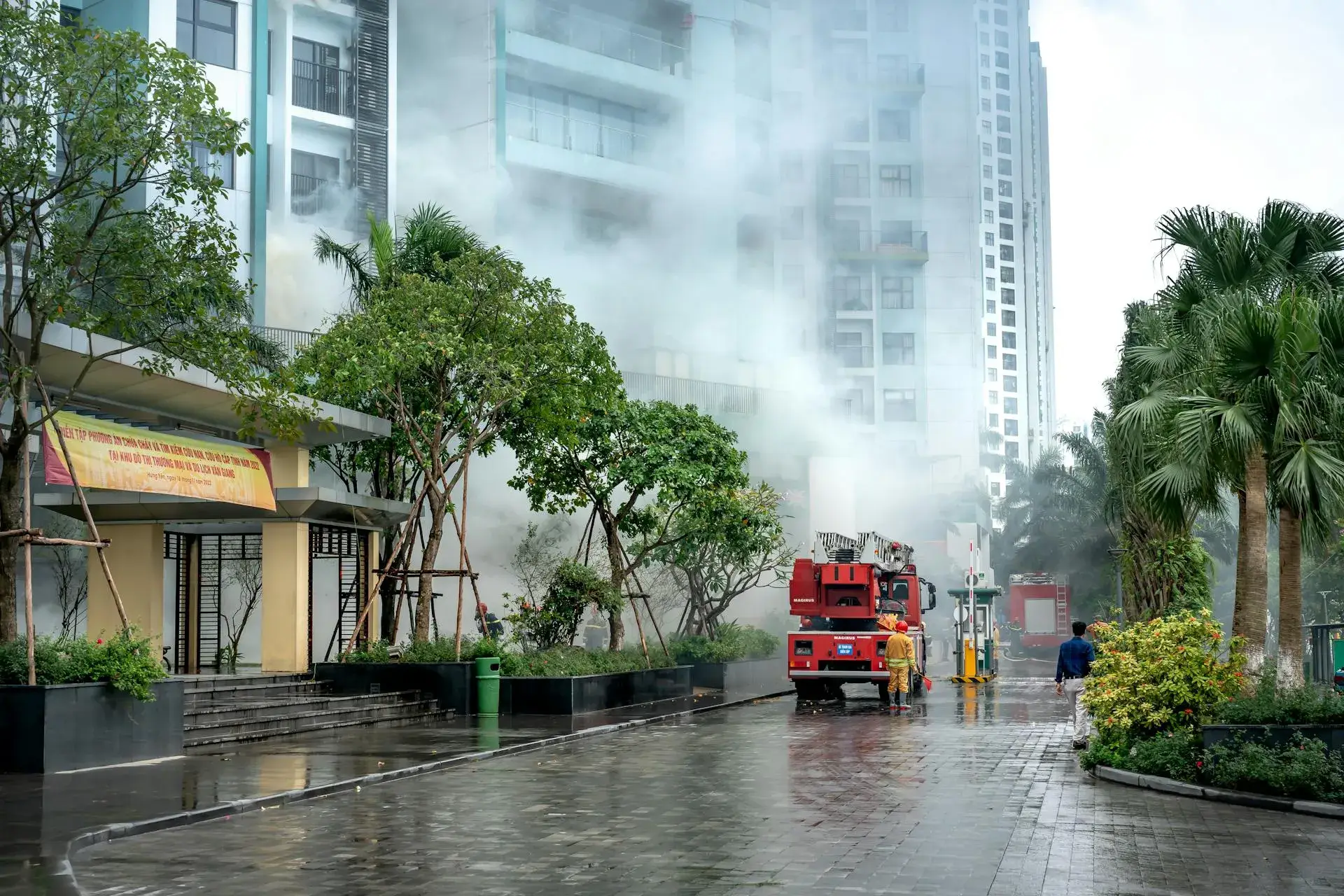
Smoke Damage Restoration in Georgetown, KY
Smoke residue is acidic and corrosive, and every hour it sits it bonds deeper into surfaces and porous materials and grows harder to remove. Our local team serving Georgetown and Scott County responds within 60 minutes.
What Happens When You Call
A real person answers, not a call center. We assess your situation, determine the smoke source and extent of contamination, and begin coordinating your response immediately.
Your dedicated restoration team is dispatched from our local base serving Georgetown and the surrounding Scott County communities in central Kentucky's Bluegrass.
Team arrives with HEPA filtration, soot removal equipment, air quality monitoring tools, and odor treatment systems. Assessment and initial mitigation begin immediately.
Contamination mapped, critical surfaces protected, HVAC isolated, restoration plan documented. You know exactly what comes next.
Smoke has infiltrated your home. Whether from a structure fire, a neighboring property fire, a furnace puffback, or wildfire smoke that drifted in on a summer air-quality alert, the contamination is active and worsening right now. Soot particles are settling deeper into surfaces, odor compounds are bonding into porous materials, and your HVAC system may be distributing contamination to every room. X Response exists for exactly this moment. When you reach out, your restoration team is mobilized within minutes. From that point forward, one team manages everything: assessment, cleaning, decontamination, and odor elimination. Call now. Your team is standing by.
Why Georgetown Homes Are Vulnerable to Smoke Damage
Smoke damage is a serious and often underestimated threat to Georgetown homes, and it reaches well beyond the room where a fire starts. Smoke from central Kentucky fires often infiltrates the ductwork of Georgetown's diverse housing stock, requiring advanced HEPA filtration and thermal fogging for complete removal. Residents felt a milder version of that reach in late June 2023, when smoke from the Canadian wildfires settled over the region and the Kentucky Energy and Environment Cabinet issued an air-quality alert on June 28 that pushed the Lexington area and the surrounding Bluegrass, Scott County included, into the unhealthy range. A fire inside a closed-up house concentrates those same combustion byproducts to a far more damaging degree. When synthetic materials, plastics, and household goods burn, they release an acidic, sticky soot that coats every surface, and left untreated it will etch glass, tarnish metal fixtures, and discolor walls within days. X Response understands the chemistry of smoke damage and deploys specialized cleaning agents and equipment to remove these residues and return your home to a safe, breathable condition.
The most persistent consequence of smoke damage is the acrid odor that settles into a property. Smoke behaves like a gas during a fire, driven by heat and pressure into the microscopic pores of building materials. It works into wall cavities, settles in insulation, and bonds to the fibers of carpet and upholstery. In Georgetown's older downtown homes, that odor sinks into porous plaster and unsealed woodwork, while the newer subdivisions that grew with Scott County trap it in drywall and carpet, and Kentucky's swing between humid Bluegrass summers and dry furnace-heated winters can reactivate it long after the visible residue is gone. Masking the smell with air fresheners or standard cleaners only postpones the problem. True odor elimination requires a scientific approach that neutralizes the volatile organic compounds at their source, and our technicians are trained in thermal fogging that recreates the behavior of smoke to reach the same crevices, paired with hydroxyl generators that are safe to run in occupied rooms.
A thorough smoke restoration also means inspecting the parts of the home no one sees, and the HVAC system is the most commonly overlooked. During a fire, return vents pull hot, soot-laden air straight into the ductwork and coat the interior surfaces with corrosive residue. Georgetown's housing runs from historic homes near the downtown courthouse square to the subdivisions that expanded with Scott County, and both rely on central forced-air systems that tie every room to the same duct network, so once contamination reaches the return it does not stay in one place. If the system is switched on before it is decontaminated, it will push soot and odor into rooms that were never touched by the fire, multiplying the scope of the loss. The acidity of soot also threatens the internal circuitry of electronics and appliances, which makes early isolation of the system a priority.
Restoring a Georgetown home after smoke damage is a methodical, multi-phase process. The first priority is ventilation and the placement of commercial HEPA air scrubbers to pull airborne particulate out of the environment. Once the air is stabilized, our technicians dry-sponge affected surfaces to lift loose soot without grinding it deeper into paint or drywall, then move to wet-cleaning with alkaline degreasers that break down the sticky, acidic residue on framing, cabinetry, and hard surfaces. Salvageable belongings, textiles, and furniture are packed out for off-site cleaning and deodorization. Throughout the work we document the full scope for your insurer so that cleaning, replacement, and any repainting or sealing are properly recorded.
Wildfire Smoke Infiltration Through the Building Envelope
No home is sealed tightly enough to keep fine wildfire smoke out, and Georgetown's mix of century-old downtown houses and newer subdivisions gives it plenty of ways in. In late June 2023, smoke from the Canadian wildfires drifted deep into the Ohio Valley, and on June 28 the Kentucky Energy and Environment Cabinet issued an air-quality alert as fine-particulate readings across central Kentucky and the Lexington area climbed into the unhealthy range, with the haze lingering into the following day. Those PM2.5 particles work through every gap in the building envelope: the seams around older windows, the fresh-air path of the HVAC system, and the attic and soffit vents that let smoke settle on insulation and drift down through ceiling openings for recessed lights and exhaust fans. In Scott County's historic homes, aged weatherstripping and plaster walls give smoke more ways in than a tightly built modern house, while the larger subdivision homes pull it through bigger duct systems. Over a multi-day event, enough particulate accumulates to leave a visible film on hard surfaces and drive odor deep into carpet, drapes, and upholstery, and ordinary dusting never reaches the particulate that settled in wall cavities, insulation, and the ductwork.
Forced-Air Furnace and AC Distribution of Smoke
Georgetown homes run a forced-air gas furnace through the long heating season, roughly November through March, and central air conditioning through the humid Bluegrass summer, so the duct system moves air through the house for most of the year. When smoke from any source enters the return air, the blower carries it to every register and lines the duct interior, blower housing, and coil with fine residue. A standard low-efficiency filter does little to stop it, so particles settle on downstream components and throughout the living space. Even after new filters go in, the residue already coating the duct interior keeps shedding particles into the airflow, producing headaches, respiratory irritation, and an odor that returns every time the system runs. In the larger two-story homes common in Scott County's newer subdivisions, a single system can serve a lot of square footage, so clearing it takes professional duct cleaning, coil decontamination, and sometimes replacement of the oldest and most contaminated duct runs.
Furnace Puffback and Winter Heating Smoke
Kentucky's heating season brings a smoke source that has nothing to do with a house fire, and older equipment raises the odds. A furnace puffback happens when unburned fuel collects in the combustion chamber and ignites all at once, forcing a blast of oily black soot through the ductwork and out every register in seconds. Aging furnaces and burners that have missed a service are the ones most likely to do it, and Georgetown's older downtown homes hold plenty of them. Wood-burning fireplaces and masonry chimneys add to the winter picture, because a deteriorated flue liner or a cold-weather backdraft can push wood smoke and creosote residue back into the living space. Because these events happen in the depths of winter, the house is shut tight against the cold with almost no natural ventilation, so the soot settles and bonds into plaster, trim, and furnishings while the furnace keeps recirculating it. Puffback residue is greasy and acidic, and it demands the same disciplined cleaning and duct decontamination as smoke from a structure fire.
Neighbor Fire Smoke Transfer
Georgetown's neighborhoods range from tight historic blocks near the courthouse square, where homes sit close together, to subdivisions where houses share narrow side yards, and smoke from a neighbor's fire crosses those property lines freely. In the minutes before the fire department arrives, the plume drifts across the yard and works its way indoors. A home with windows open on a mild spring or fall day, or with its HVAC drawing in outside air, can take on real smoke contamination even though its own structure never burned. That early deposit is enough to leave soot on surfaces, drive odor into soft furnishings, and coat the inside of the ductwork. These secondary smoke claims catch a lot of Scott County owners off guard, because they return to a home that looks untouched but carries a strong smoke smell and a fine film across horizontal surfaces. Where subdivision homes share similar floor plans, a fire in one is a preview of how smoke would move through an identical layout next door.
Soot Acidity and Corrosion Over Time
Soot is not just dirt. It is carbon carrying acidic compounds, including hydrochloric and sulfuric acids along with organic acids from combustion, and those acids keep attacking whatever they land on until the residue is cleaned away. What drives the damage is elapsed time, not any reading on a thermostat. Metal fixtures and appliance housings corrode and pit, glass and mirrors etch, and grout and unsealed stone stain the longer the soot sits. In a Georgetown home closed up for the heating season, the furnace recirculates those acidic particles past the same surfaces again and again with no fresh air to dilute them, and the older downtown houses feel it most because plaster, unsealed old wood trim, and original floors are more porous than modern sealed materials and pull residue and odor deeper. The lesson for homeowners is simple: the window to clean and save soot-contaminated materials narrows every hour, and materials that could be cleaned on the first day may be lost if they sit untreated for several days.
Smoke damage in Georgetown arrives from several directions: a structure fire, a neighbor's fire, a furnace puffback or chimney problem during the heating season, and the wildfire haze that settled over central Kentucky in 2023. Whatever the source, the pattern holds. Particles ride the forced-air system through the house, settle on every surface, bond into porous plaster and aged wood, and grow harder to remove by the hour. Real restoration deals not only with the visible soot but with the molecular-level odor locked into materials and the residue inside the ductwork that would otherwise keep recirculating particles for months.
What Happens to Your Home While You Wait
Within 1 Hour
Soot particles settle on horizontal surfaces throughout the home, and the acidic compounds in soot begin reacting with metal, synthetic materials, and finished wood right away. In an older Georgetown home, porous plaster and aged wood trim start taking on odor almost immediately. If the HVAC system is running, it distributes contamination from the smoke source to every room served by the ductwork, and smoke odor bonds with upholstery, carpet, drapes, and any clothing left out in open closets.
1 to 24 Hours
Soot permanently stains porous surfaces including grout, natural stone, and unsealed concrete if it is not addressed. Metal fixtures and hardware show visible oxidation and pitting. Smoke odor penetrates deeper into wall cavities, insulation batts, and carpet padding. Electronics exposed to acidic soot residue begin internal corrosion at the circuit board level. Materials that could have been wiped clean in the first hour now require more aggressive methods or replacement.
24 to 48 Hours
Surface corrosion becomes permanent on many metal and synthetic materials. Smoke odor has bonded at a molecular level into porous building materials including drywall paper facing, wood grain, and concrete pores, and standard surface cleaning can no longer fully eliminate it. Soot residue that migrated into wall cavities through electrical outlets and switch plates has settled on wiring and insulation, where it will outgas for months without intervention.
48 to 72 Hours
Restoration scope expands significantly. Materials that could have been salvaged with professional cleaning earlier now require replacement. Smoke odor is embedded so deeply in porous materials that only thermal fogging, hydroxyl generation, or ozone treatment combined with physical cleaning can address it. Electronics that were exposed to soot for this duration often show permanent internal damage. Insurance claims become more complex as the scope of required work expands beyond the initial event.
One Week and Beyond
The home has reached a state where comprehensive restoration or reconstruction is required for most affected areas. Soot corrosion has permanently damaged metal surfaces and synthetic components. Smoke odor has permeated framing, sheathing, and concrete to a degree that may require encapsulation or replacement of structural materials. HVAC ductwork and components that went uncleaned for a week have distributed contamination so thoroughly that multiple cleaning cycles or duct replacement becomes necessary. The project timeline and cost have multiplied compared to early intervention.
With smoke, time is what matters. Every hour the acidic soot sits, it bonds deeper and corrodes more, and in a closed-up Georgetown home during the heating season there is little fresh air to slow it down. Contact X Response now. Our Georgetown team responds within 60 minutes.
How We Restore Smoke-Damaged Georgetown Homes
Smoke damage restoration requires a systematic approach that addresses visible contamination, hidden residue, molecular-level odor, and HVAC system contamination. Here is exactly what the process involves.
Air Quality Assessment and Source Identification
Our team arrives with particulate monitors, thermal cameras, and surface testing equipment to map the full extent of smoke contamination. We identify the smoke source, determine whether it was a single acute event or prolonged exposure, and assess which materials have been affected. In Georgetown homes, this includes inspecting the HVAC system, ductwork, attic space, and all rooms regardless of proximity to the smoke source, because forced-air distribution means contamination rarely stays localized. Air quality readings establish a baseline that guides the restoration plan and provides verification benchmarks for completion.
HVAC Isolation and Filtration
The HVAC system is either shut down or set to recirculate through maximum-efficiency filtration so it cannot spread contaminated air. HEPA air scrubbers go in throughout the home to start pulling airborne particles out immediately, which gives us a controlled environment to clean in without recontaminating surfaces. During the heating season, when a Georgetown home cannot go without heat, we rig temporary filtration in the return-air path so the furnace keeps the house warm while particles are captured before they recirculate.
Surface Cleaning and Soot Removal
Every affected surface is cleaned using methods appropriate to the material: dry chemical sponges for light soot on painted walls and ceilings, wet cleaning solutions for heavier deposits, ultrasonic cleaning for electronics and delicate items, and abrasive methods for masonry and metal. In Georgetown homes, we work systematically from top to bottom and from the rooms farthest from the source toward the origin, preventing cross-contamination during the process. Porous materials that cannot be adequately cleaned, including heavily contaminated carpet padding, drywall insulation, and some soft goods, are removed and documented for insurance purposes.
Odor Elimination Treatment
After physical soot removal, smoke odor remains embedded in porous materials at a molecular level. We deploy appropriate odor treatment based on the material types and severity of contamination. Thermal fogging penetrates the same pathways smoke used to enter materials, neutralizing odor compounds within wood grain, concrete pores, and wall cavity surfaces. Hydroxyl generators break down volatile organic compounds in occupied spaces safely. For severe contamination in unoccupied areas, ozone treatment oxidizes odor molecules at the molecular level. Surfaces that will be repainted or refinished receive odor-sealing primers that permanently encapsulate any residual compounds. Every treated area is verified before close-out.
HVAC Decontamination and Air Quality Verification
Once the living space is clean and odor-free, the HVAC system receives full professional cleaning. This includes interior duct surfaces, the evaporator coil, blower assembly, air handler housing, and all accessible components. Heavily contaminated duct sections that cannot be adequately cleaned are replaced. New high-efficiency filters are installed and the system is run and retested to confirm clean air delivery. Final air quality measurements throughout the home verify that particulate levels and odor have returned to normal. You receive documentation of all readings and work performed.
The X Response Difference
Smoke damage requires more than surface cleaning. It requires systematic decontamination of the entire home including the HVAC system and molecular-level odor treatment. X Response delivers that full scope in Georgetown.
Insurance Claim Guidance for Georgetown Homeowners
Smoke damage insurance coverage depends on the source. Smoke damage from a fire at your own property is covered under the fire loss. Smoke damage from a neighbor's fire is typically covered under your own policy as well, because it represents sudden accidental damage to your property regardless of fault. Wildfire smoke infiltration presents a more complex coverage situation. Some policies cover environmental contamination from named wildfire events when it causes measurable property damage, while others exclude gradual environmental exposure. The key is documenting measurable contamination through air quality readings, surface testing, and professional assessment that establishes the link between a specific smoke event and the damage to your home's interior.
How X Response Helps
- Document contamination with air quality readings and surface testing that establishes measurable damage beyond normal soiling
- Identify the smoke source and connect it to a specific event your policy recognizes (structure fire, neighbor fire, named wildfire)
- Photograph soot deposits, damaged surfaces, and HVAC contamination before any cleaning begins
- Prepare a scope of work that separates cleaning, replacement, duct decontamination, and odor treatment into standard categories
- Provide pre-and-post air quality documentation proving the contamination existed and that restoration resolved it
X Response does not file claims on your behalf, adjust claims, or make coverage determinations. We provide documentation and guidance to help you make informed decisions about your property and your policy. Coverage decisions are made solely by your insurance carrier.
Certified Restoration Specialists Serving Georgetown
When you contact X Response for smoke damage restoration in Georgetown, your team is drawn from certified professionals who understand what it takes to restore homes across Scott County, from the historic houses near the downtown square to the subdivisions that grew with the county. They know how a forced-air furnace spreads contamination to every room during the long heating season, how a puffback or a chimney backdraft can push soot through the ductwork in seconds, how acidic soot works into porous plaster and aged wood the longer it goes untreated, and how the Canadian wildfire smoke that settled over central Kentucky in 2023 infiltrated homes through building-envelope gaps and HVAC intakes. They have handled neighbor-fire secondary smoke claims, kitchen and cooking fires, and extended wildfire smoke infiltration. This is a local team with local expertise, operating under national quality standards.
Every technician on your smoke restoration team holds current IICRC certification in fire and smoke damage restoration. Equipment includes HEPA air scrubbers, particulate monitors, thermal foggers, hydroxyl generators, ozone generators for unoccupied treatment, and professional duct cleaning systems. When your team arrives, they bring everything needed to assess contamination levels, begin air filtration immediately, and execute the full restoration process from initial cleaning through final air quality verification.
In Georgetown, X Response works with Content Recovery Specialists, an independent local restoration partner serving Scott County.
Smoke Damage Restoration FAQ for Georgetown Homeowners
Other Emergency Services in Georgetown

Water Damage Restoration
Burst pipes, storm flooding, standing water. We extract, dry, and restore before mold sets in.
Learn more
Fire Damage Restoration
Structural damage, soot, debris. We stabilize, clean, and rebuild what fire destroyed.
Learn more
Mold Remediation
Testing, containment, removal, prevention. We find the source, eliminate the growth, and stop it from returning.
Learn more
Sewage Cleanup
Sewer backups, contaminated water, biohazard. We extract, sanitize, and restore safely.
Learn more