
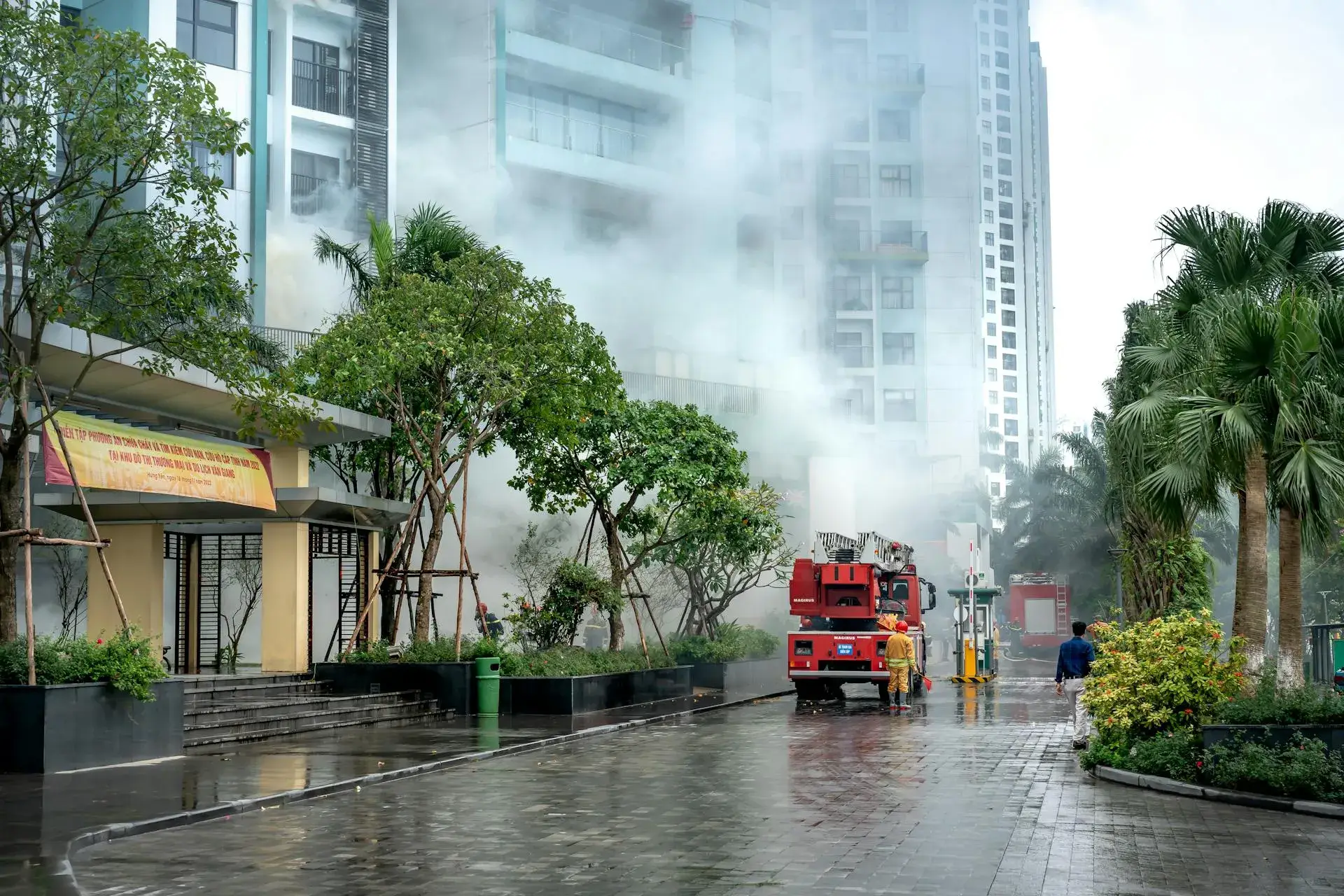
Smoke Damage Restoration in Donelson, TN
Smoke residue bonds permanently to surfaces within hours. Every delay makes restoration harder and more expensive. Our local team responds to Donelson emergencies within 60 minutes.
What Happens When You Call
A real person answers, not a call center. We assess the smoke source, exposure duration, and affected areas, and begin coordinating your response immediately.
Your dedicated restoration team is dispatched from our local base serving Donelson and the surrounding Davidson County communities.
Team arrives with air quality monitors, commercial HEPA scrubbers, chemical sponges, and thermal fogging equipment. Assessment and initial treatment begin immediately.
Surfaces treated, HVAC decontaminated, odor neutralized, air quality verified. You know exactly what the results show and what comes next.
Smoke has infiltrated your home, whether from a structure fire on your property, a fire in a neighboring home, or a lightning strike during one of Middle Tennessee's severe storms. The residue is actively bonding with your finishes, etching metals, and embedding into soft materials. X Response exists for exactly this moment. When you reach out, your restoration team is mobilized within minutes. From that point forward, one team manages everything: assessment, surface cleaning, odor neutralization, HVAC decontamination, and air quality verification. Call now. Your team is standing by.
Why Donelson Homes Are Vulnerable to Smoke Damage
Donelson sits in one of Middle Tennessee's most active severe weather corridors. The region experiences frequent thunderstorms, high winds, and occasional tornadoes that produce fire-related damage through lightning strikes and downed power lines. The December 2023 tornado outbreak killed six people across Middle Tennessee and damaged or destroyed hundreds of homes, demonstrating the scale of weather-related property damage the region faces. Lightning-caused fires and electrical fires from storm-damaged wiring represent a distinct source of residential smoke damage in Davidson County because they often occur during or after storms when multiple incidents compete for emergency response resources. The National Weather Service documented that Middle Tennessee's severe weather exposure, combined with the region's dense suburban development, creates ongoing risk for fire and smoke events that affect multiple properties simultaneously. During the March 2021 flash flooding event, parts of the Donelson and Nashville metro area received 7 to 9 inches of rain, causing record-high water levels on local creeks and triggering a Flash Flood Emergency.
Beyond storm-driven events, Donelson faces the same adjacent-property smoke exposure risk as any rapidly growing suburban community. The town's 241 percent growth between 2010 and 2020 produced master-planned subdivisions where homes sit on compact lots with 10 to 20 feet of separation. When a structure fire occurs in one of these homes, smoke travels to neighboring properties through proximity, prevailing winds, and the HVAC systems that every home relies on for heating and cooling. The forced-air systems distribute smoke particles through ductwork into every room within minutes of infiltration. A homeowner may not discover significant soot deposition and persistent odor until days after a neighbor's fire, by which time soot has bonded with surfaces and embedded in materials. The newer construction that dominates Donelson contains synthetic materials in furnishings and finishes that produce particularly corrosive and odorous smoke when they burn, making adjacent-property exposures more chemically aggressive than smoke from older, primarily wood-constructed homes.
Storm-Related Fire and Smoke Events
Middle Tennessee's severe weather produces fire and smoke damage through lightning strikes, downed power lines, and electrical failures in storm-damaged homes. The December 2023 tornado outbreak killed six across the region and damaged hundreds of homes, creating conditions where electrical fires develop in damaged structures hours or days after the storm passes. Lightning-caused attic fires are common during the spring and summer thunderstorm season and can smolder undetected, filling the home with smoke before flames become visible. These storm-fire events often coincide with roof damage that allows rain intrusion, creating a combined fire, smoke, and water damage scenario. Emergency services stretched across multiple storm-related incidents may have longer response times, extending the window during which smoke continues bonding to surfaces.
Adjacent-Property Smoke in Compact Subdivisions
Donelson's newer subdivisions place homes 10 to 20 feet apart on compact lots. When a structure fire occurs in one home, adjacent properties receive concentrated smoke exposure through proximity. Smoke travels laterally from the fire building, depositing soot on exterior surfaces, infiltrating through the building envelope, and entering HVAC systems of downwind neighbors. In the master-planned communities common in Donelson, homes are oriented in patterns that funnel wind between structures, potentially concentrating smoke against specific neighboring walls. These exposures frequently go unrecognized until homeowners notice discoloration, odor, or respiratory symptoms days after the event.
HVAC Systems as Contamination Networks
Every home in Donelson relies on forced-air heating and cooling. When smoke enters from any source, the HVAC system distributes particles to every room through supply air. The entire duct network, air handler, evaporator coil, and blower assembly become contaminated. Simply replacing the filter does not address deposited particulate. Until the system is professionally cleaned, it recirculates residual particles with every cycle. Donelson's newer, energy-efficient homes are particularly affected because their tight construction traps contaminated air inside once it enters, preventing the slow dilution that leakier older homes allow.
Synthetic Material Smoke Chemistry
Donelson's housing stock is predominantly built since 2005 with modern synthetic materials in furnishings, insulation, flooring, and finishes. When these materials burn, they produce wet, acidic soot containing compounds that aggressively corrode metals, etch glass, and permanently discolor plastics and fabrics. This soot is chemically different from the dry soot produced by wood fires in older homes. It requires different cleaning chemistry, bonds to surfaces faster, and causes permanent damage sooner. Electronics are particularly vulnerable: acidic soot causes circuit board corrosion that can destroy computers, appliances, and entertainment systems within 48 to 72 hours if not treated.
Middle Tennessee Humidity and Odor Persistence
Middle Tennessee's humid climate complicates smoke odor removal. Humidity drives smoke molecules deeper into porous materials and causes embedded residues to expand and release odor cyclically as moisture levels fluctuate. Donelson's average relative humidity near 65 percent annually, with summer months exceeding 70 percent, maintains persistent conditions that keep smoke odor active in untreated materials indefinitely. Standard household cleaning addresses only the surface layer, leaving embedded contamination intact. The cyclical pattern of odor disappearing in dry conditions and returning with humidity convinces some homeowners the problem is resolving when in fact the source remains embedded in structural materials.
These factors combine to make smoke damage in Donelson more complex than it appears. Storm-related events create fire and smoke scenarios during the most stressful weather conditions. Compact subdivision spacing produces frequent adjacent-property exposures. Synthetic materials generate more corrosive smoke chemistry. HVAC systems distribute contamination throughout tight, energy-efficient homes. And Middle Tennessee's humidity drives residues deeper and maintains odor indefinitely. Effective smoke restoration requires a team that understands soot chemistry, moves fast enough to treat surfaces before permanent damage sets in, and has the equipment to address contamination at the molecular level.
What Happens to Your Home While You Wait
Within 1 Hour
Smoke residue settles on all exposed surfaces. The HVAC system distributes particles into every room. Acidic residues from modern synthetics begin reacting with metal surfaces. Fine particulate remains airborne and continues depositing as air currents settle.
1–24 Hours
Soot begins bonding chemically to painted surfaces, chrome fixtures, and glass. Oily residues penetrate into porous materials. Acidic soot starts permanently etching metals. Light-colored fabrics and wall coverings absorb discoloration. Smoke odor molecules migrate into drywall, wood, and soft furnishings. Electronics exposed to corrosive soot begin degrading.
24–72 Hours
Metal corrosion becomes permanent without professional intervention. Plastics, wall paint, and ceiling finishes yellow permanently. Smoke odor embeds deeply enough that surface cleaning alone cannot reach it. Electronics fail as particulate corrodes circuit boards. In Middle Tennessee's humidity, moisture drives smoke molecules deeper into every porous surface.
72 Hours–One Week
Soft materials reach a point where cleaning cost approaches replacement. Smoke odor permeates structural materials. The HVAC continues redistributing particulate. Restoration scope has expanded significantly beyond what immediate treatment would have required.
Two Weeks and Beyond
Damage requiring surface cleaning now requires material removal. Drywall, carpet, and furnishings must be replaced. Structural deodorization requires extended treatment. What started as cleaning becomes reconstruction with corresponding cost increases.
Smoke damage is uniquely time-sensitive because residue actively bonds and migrates from the moment of exposure. Contact X Response now. Our Donelson team begins treatment within 60 minutes.
How We Restore Smoke-Damaged Donelson Homes
Smoke damage restoration follows a systematic process addressing visible soot, invisible contamination, embedded odor, and air quality. Here is our approach for Donelson properties.
Air Quality Assessment and Source Identification
Our team arrives with particulate monitors and inspection tools to assess contamination extent and type. We identify the smoke source because different sources require different treatment chemistry. A kitchen fire, a structural fire involving synthetics, and a lightning-caused attic fire each produce distinct residues. We map contamination throughout the home including HVAC, attic, and crawl space. For adjacent-property exposures, we verify the entry pathway and seal it after treatment.
Surface Cleaning and Soot Removal
Every contaminated surface is cleaned using agents matched to the soot type. Dry soot is removed with chemical sponges and HEPA vacuums before wet cleaning. Oily protein residue requires alkaline cleaners. Acidic synthetic soot demands pH-neutral agents applied before permanent etching occurs. Walls, ceilings, trim, and fixtures are cleaned top to bottom. HEPA air scrubbers run continuously during cleaning to capture released particulate.
HVAC Decontamination
The entire forced-air system is cleaned: supply ducts, return ducts, air handler, blower, evaporator coil, and all registers. We use mechanical agitation with negative-pressure HEPA collection to remove deposited soot without releasing it into the living space. The evaporator coil and drain pan are cleaned and treated with antimicrobial agents. New filtration is installed only after the system is confirmed clean.
Structural Deodorization
Surface cleaning removes visible soot but not embedded odor molecules. We employ thermal fogging that generates heated solvent vapor penetrating porous materials at the same molecular size as smoke, neutralizing odor at its source. For severe cases, hydroxyl generators run over extended periods to oxidize odor molecules. Middle Tennessee's humidity makes thorough deodorization critical because untreated embedded odor resurfaces during high-humidity periods.
Air Quality Verification and Completion
Air quality testing confirms particulate levels have returned to acceptable baselines and no detectable smoke odor remains under both dry and humid conditions. The HVAC runs at full capacity during testing to confirm ductwork is clean. Completion documentation includes air quality readings, before-and-after photos, and detailed work summary.
The X Response Difference
When you contact X Response for smoke damage in Donelson, you get a team that addresses the full contamination pathway: surfaces, HVAC, embedded odor, and air quality verification.
Insurance Claim Guidance for Donelson Homeowners
Insurance coverage for smoke damage depends on the source. If smoke entered your Donelson home from a structure fire on your property or an adjacent property, your homeowner's policy typically covers full remediation including surface cleaning, HVAC decontamination, contents restoration, and deodorization. For lightning-caused fires, coverage is straightforward as lightning is a named peril in standard policies. Adjacent-property smoke exposure from a neighbor's fire is also covered. The key is documentation: establishing the source, entry pathway, extent of contamination, and specific treatment required.
How X Response Helps
- Document smoke contamination with professional air quality readings and surface measurements before cleaning begins
- Identify and document the smoke source and entry pathway to establish the covered cause of loss
- Photograph visible soot on surfaces, inside HVAC registers, and on soft materials before treatment
- Maintain detailed scope of work itemizing each treatment area and method for adjuster verification
- Obtain post-treatment air quality readings demonstrating measurable remediation results
X Response does not file claims on your behalf, adjust claims, or make coverage determinations. We provide documentation and guidance to help you make informed decisions about your property and your policy. Coverage decisions are made solely by your insurance carrier.
Certified Restoration Specialists Serving Donelson
When you contact X Response for smoke damage in Donelson, your team brings specialized knowledge of smoke chemistry and deodorization science to a community they know. They understand that the newer construction throughout Donelson produces different smoke residues than older homes, requiring adjusted cleaning chemistry. They know that Middle Tennessee's severe weather creates storm-fire scenarios where smoke damage coexists with roof damage and water intrusion. They have treated smoke from kitchen fires, lightning-caused attic fires, and adjacent-property exposures across Davidson County's range of housing.
Every technician holds current IICRC certification in fire and smoke restoration with specialized training in odor control and HVAC decontamination. The team carries commercial HEPA air scrubbers, thermal foggers, hydroxyl generators, and professional air quality monitors so every phase proceeds without delay.
In Donelson, X Response works with Tennessee Water and Fire, an independent local restoration partner serving Davidson County.
Smoke Damage Restoration FAQ for Donelson Homeowners
Other Emergency Services in Donelson

Water Damage Restoration
Burst pipes, storm flooding, standing water. We extract, dry, and restore before mold sets in.
Learn more
Fire Damage Restoration
Structural damage, soot, debris. We stabilize, clean, and rebuild what fire destroyed.
Learn more
Mold Remediation
Testing, containment, removal, prevention. We find the source, eliminate the growth, and stop it from returning.
Learn more
Sewage Cleanup
Sewer backups, contaminated water, biohazard. We extract, sanitize, and restore safely.
Learn more