
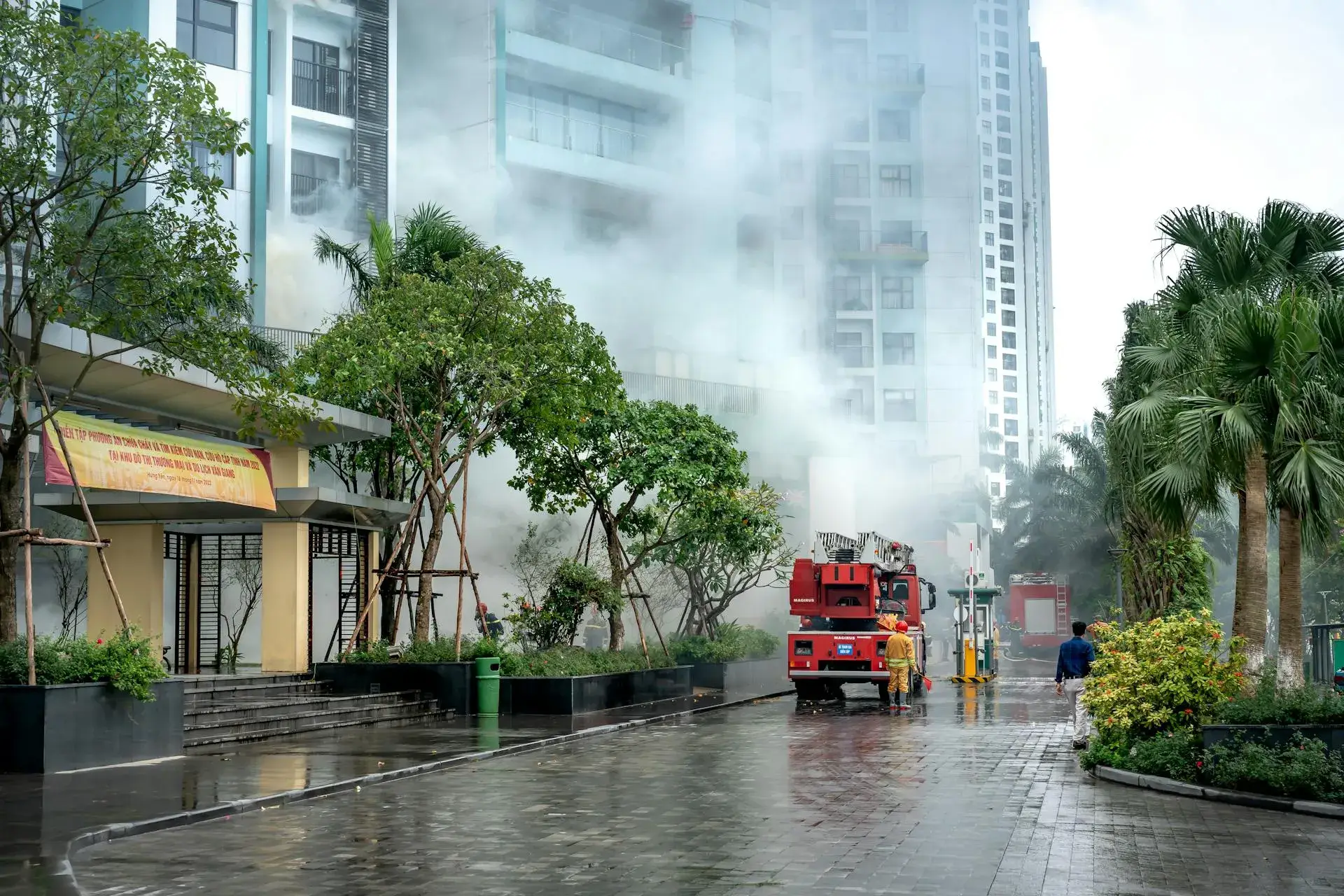
Smoke Damage Restoration in Livingston, TX
When electrical malfunctions, kitchen flare-ups, or furnace blowbacks spread fine soot throughout your Livingston property, toxic odors penetrate deep into building assemblies. Our certified smoke mitigation crews arrive within 60 minutes.
What Happens When You Call
An emergency smoke response dispatcher evaluates the severity of the soot event and mobilizes an emergency mitigation crew to your address in Livingston.
Technicians seal off unaffected living quarters using polythene vapor barriers and establish negative air pressure with industrial HEPA scrubbers.
Crews analyze soot chemistry, removing dry or oily carbon residues from painted walls, ceilings, and wood trim with chemical vulcanized sponges.
Advanced thermal fogging and hydroxyl generators treat porous building materials, dismantling combustion odor molecules at the molecular level.
Smoke damage is insidious, traveling far beyond the immediate source of combustion through heating and cooling ductwork, plumbing chases, and wall cavities. In the humid East Texas Piney Woods, microscopic smoke particles bind with moisture vapor, creating acidic aerosols that corrode metal hardware, tarnish appliances, and permanently stain painted surfaces. X Response provides advanced, certified smoke damage restoration throughout Livingston and surrounding lakefront communities. Using specialized chemical soot sponges, HEPA air scrubbers, and industrial hydroxyl molecular deodorization, our technicians completely eliminate soot residues and lingering smoke odors. Reach our 24/7 emergency smoke remediation team immediately. Your local crew is ready to respond.
Why Livingston Homes Are Vulnerable to Smoke Damage
Livingston is a historic community situated in the heart of Polk County, Texas, serving as the county seat and regional crossroads for US Highway 59 and US Highway 190. The city was originally settled in 1835 as Springfield. Later renamed Livingston in 1846, the city grew into a major timber, agricultural, and commercial center surrounded by dense pine forests and the expansive waters of Lake Livingston. Today, the town presents a diverse mixture of architecture, including historic early-twentieth-century residential dwellings with traditional lath-and-plaster walls near downtown, mid-century ranch homes along Church Street, and contemporary wood-frame lakeside houses in outlying subdivisions along FM 3126 and State Highway 146.
The physical behavior of smoke in Livingston is heavily influenced by the region's humid subtropical climate and local residential construction characteristics. When a fire or localized combustion event occurs, whether from an electrical failure, a kitchen grease blaze, or an uncleaned fireplace flue, thermal expansion drives hot smoke plumes into attics, wall cavities, and ceiling joists. Central HVAC air handling units quickly distribute fine soot particles into every room, depositing oily or dry carbon residues across porous surfaces. In the high-humidity environment of the Piney Woods, sulfurous and nitrogenous smoke residues bond with ambient moisture, transforming into corrosive acids that rapidly etch window glazing, pit metallic finishes, and permanently discolor vinyl flooring. Complete smoke remediation requires scientific particle containment, comprehensive duct decontamination, and molecular-level deodorization.
Central HVAC Forced-Air Soot Distribution
When a combustion event occurs while central air conditioning operates, soot particles enter the return air plenum, distributing microscopic contaminants through supply ductwork into every room.
Piney Woods Humidity Accelerating Acid Corrosion
Livingston's sustained high humidity turns fine soot into an acidic slurry on contact with metallic fixtures, bathroom faucets, and electrical appliances, causing rapid pitting and tarnishing within hours.
Dense Wood Framing and Porous Wall Finishes
Livingston's timber-rich residential construction features unfinished pine framing, attic rafters, and wood trim that absorb volatile smoke compounds, creating deep odor reservoirs.
Complex Soot Chemistry Variations
Combustion of synthetic plastics, foam furniture, and kitchen cooking oils produces sticky, protein-based or wet soot that smears and damages surfaces if treated with conventional household cleaners.
Concealed Attic and Cavity Smoke Accumulation
Thermal draft pressures drive smoke upward into unconditioned attic spaces and wall cavities, where soot coats insulation batts and structural rafters, producing lingering odors long after visible cleanup.
Eradicating pervasive smoke damage across Livingston requires chemical soot testing, specialized filtration, and true molecular deodorization. Our certified specialists ensure your indoor air is clean and safe.
What Happens to Your Home While You Wait
Within 1 Hour
Airborne soot particles settle over every surface, creating visible yellow or black films. Acidic residues begin interacting with plastics, polished metals, and finished wood cabinetry.
1–24 Hours
Porous surfaces absorb smoke odors deeply. Kitchen appliances, polished brass, and aluminum window frames exhibit micro-pitting, while unsealed drywall begins absorbing volatile chemical vapors.
24–48 Hours
Soot acids cause permanent etching on window glass, mirrored surfaces, and polished marble. Painted walls discolor permanently, and upholstery fabrics absorb oily smoke resins.
48–72 Hours
Carpet fibers, fiberglass insulation batts, and drywall cores become deeply contaminated with synthetic VOCs. Odors become increasingly pungent as temperature and humidity fluctuate.
One Week and Beyond
Untreated smoke residues chemically bind with finishes, requiring extensive abrasive media blasting, complete drywall replacement, and total ductwork reconstruction.
Rapid professional intervention prevents smoke residues from causing irreversible surface etching and persistent odors. Connect with X Response today for 24/7 smoke restoration in Livingston.
How We Restore Smoke-Damaged Livingston Homes
Our smoke remediation process follows strict IICRC S540 standards for professional smoke damage mitigation, ensuring comprehensive physical decontamination and atmospheric purification.
Containment and Negative Pressure Air Scrubbing
We isolate contaminated areas using heavy-duty plastic vapor barriers and install commercial HEPA air filtration scrubbers to exhaust airborne soot and prevent cross-contamination into clean rooms.
Soot Classification and Dry Surface Decontamination
Technicians test the soot type and clean ceilings, walls, and cabinetry using specialized vulcanized rubber dry chemical sponges, lifting carbon residues without embedding them into surfaces.
Complete HVAC Duct and Air Handler Remediation
We mechanically clean supply and return duct runs, wash air handler blower wheels, and replace filtration media to eliminate the circulation of fine soot through the home.
Thermal Fogging and Hydroxyl Gas Deodorization
Our technicians introduce vaporized odor-counteracting compounds and hydroxyl radicals that replicate natural solar purification, dismantling odor molecules embedded in wood framing.
Encapsulation and Odor-Barrier Sealing
Heavily exposed framing timbers, subflooring, and ceiling joists receive a specialized shellac or pigmented odor-barrier coating, permanently locking away any microscopic trace particles.
The X Response Difference
Trust a certified restoration contractor with the technical expertise and equipment required to return your Livingston home to clean, odor-free safety.
Insurance Claim Guidance for Livingston Homeowners
Successfully resolving an insurance claim for smoke damage in Livingston requires rigorous documentation proving the migration path of smoke, the chemical nature of soot deposits, and the necessity of comprehensive deodorization. While standard Texas homeowners insurance policies cover sudden and accidental smoke damage from internal and external fires, adjusters often scrutinize the extent of required cleaning versus repainting or complete material replacement. In particular, claims involving central air conditioning contamination require clear justification for duct cleaning and component replacement. Our comprehensive documentation dossiers provide adjusters with undeniable physical and photographic proof to support full coverage.
How X Response Helps
- Comprehensive soot swab test results and surface contamination mapping throughout living spaces
- High-resolution photographic catalogs recording soot distribution on walls, ceilings, and ductwork
- Itemized restoration scopes developed using insurance-approved Xactimate pricing databases
- Documentation of specialized structural deodorization and thermal fogging procedures
- Direct coordination with insurance adjusters to expedite claim approval under Texas insurance statutes
X Response provides independent structural smoke decontamination and odor neutralization services. Final coverage decisions, reimbursement limits, and policy interpretations are determined solely by your property insurance provider.
Certified Restoration Specialists Serving Livingston
Our Livingston smoke and soot restoration team brings extensive technical expertise and local knowledge to every property recovery project across Polk County. Smoke particles are microscopic, measuring less than 0.1 microns, which allows them to penetrate deeply into wall cavities and ductwork. In Livingston, our specialized hydroxyl and dry sponge techniques permanently remove soot and eliminate odors without surface damage.
Led by Brandon Cole, Senior Smoke Remediation & Odor Control Specialist, our technicians maintain active certifications from the Institute of Inspection, Cleaning and Restoration Certification (IICRC) and OSHA, including IICRC Certified Fire and Smoke Restoration Technician (FSRT), IICRC Certified Odor Control Technician (OCT), National Air Duct Cleaners Association (NADCA) ASCS Certified, OSHA 10-Hour Construction Safety Certification. Equipped with industrial equipment and advanced diagnostics, we provide complete structural recovery.
In Livingston, X Response works with First Response Restoration, an independent local restoration partner serving Polk County.
Smoke Damage Restoration FAQ for Livingston Homeowners
Other Emergency Services in Livingston

Water Damage Restoration
Burst pipes, storm flooding, standing water. We extract, dry, and restore before mold sets in.
Learn more
Fire Damage Restoration
Structural damage, soot, debris. We stabilize, clean, and rebuild what fire destroyed.
Learn more
Mold Remediation
Testing, containment, removal, prevention. We find the source, eliminate the growth, and stop it from returning.
Learn more
Sewage Cleanup
Sewer backups, contaminated water, biohazard. We extract, sanitize, and restore safely.
Learn moreNearby Service Areas
Also serving nearby: