
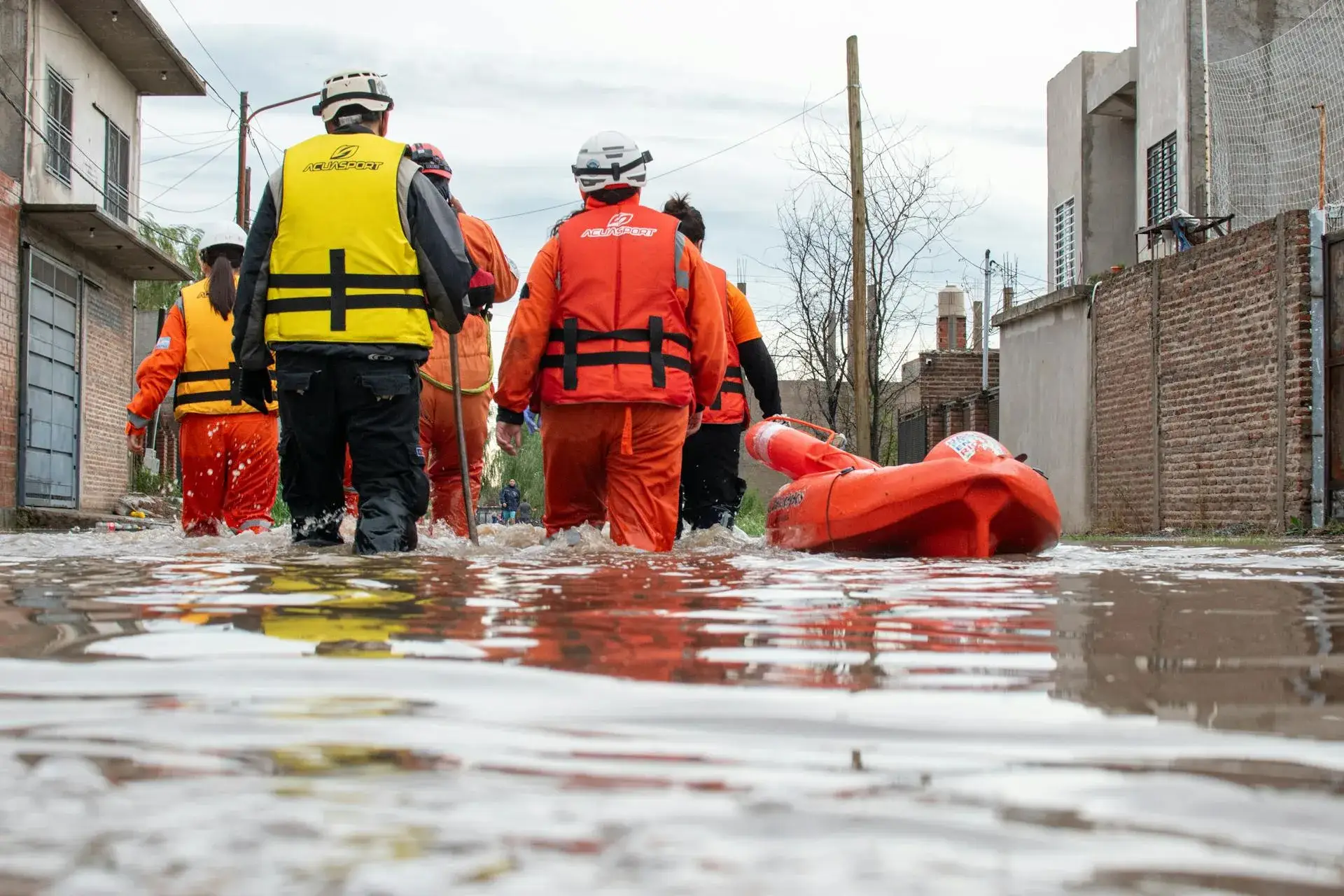
Water Damage Restoration in Alliance, OH
Standing water inside an Alliance residence saturates hardwood subflooring, drywall, and basement foundations within minutes. Our local Stark County emergency restoration crew responds within 60 minutes to extract water and begin thermal-guided structural drying.
What Happens When You Call
A live emergency coordinator answers your call immediately to assess the flooding, guide utility shutoffs, and dispatch local crews.
Our Stark County restoration truck deploys directly from our regional staging center with truck-mounted extractors and drying gear.
Technicians arrive at your Alliance property to deploy commercial submersible pumps, inspect moisture migration paths, and extract water.
Standing water is removed, commercial LGR dehumidifiers are positioned, and daily psychrometric logs track drying progression.
When water breaches your foundation walls or an overhead supply pipe splits in Alliance, immediate professional mitigation stops structural rot and prevents fungal colonization. You need certified restoration technicians on site right away. When you contact X Response, an emergency crew dispatches immediately, arriving at your residence within the hour. From high-capacity extraction to final digital moisture clearance, one dedicated team oversees your entire recovery. Call now. Your team is standing by.
Why Alliance Homes Are Vulnerable to Water Damage
Alliance, Ohio, known as the Carnation City, is a historic community of 21,672 residents located in eastern Stark County along the Mahoning County border. Anchored by the University of Mount Union and a rich industrial railroad heritage, the city features a diverse mix of Victorian-era residences, mid-century neighborhoods, and contemporary single-family developments. The municipality is bisected by the upper Mahoning River, which flows northward toward Deer Creek Reservoir and Berlin Lake, supported by local tributaries including Beech Creek. The USGS monitoring station 03086500 on the Mahoning River at Alliance monitors continuous streamflow and gage height across an 89.2-square-mile drainage area in Stark County. During intense summer thunderstorms, heavy runoff from urbanized streets and agricultural land upstream causes the Mahoning River corridor to rise rapidly, backing up local storm sewer networks and saturating the surrounding glacial silt-loam subsoils.
Because Stark County subsoils contain high percentages of dense glacial clay till, natural drainage occurs slowly, leaving groundwater tables elevated for days following significant precipitation. Saturated soil exerts relentless hydrostatic pressure against subterranean block, poured concrete, and historic sandstone basement foundations. When summer electrical storms knock out power lines along the Route 62 and State Street corridors, basement sump pumps fail simultaneously, permitting subterranean groundwater to inundate finished basements and mechanical spaces. During the winter months, severe sub-zero arctic cold snaps freeze plumbing lines inside unheated basements, crawlspaces, and exterior wall cavities. Once freezing temperatures ease and lines thaw, high-pressure municipal water floods multiple finished floors. Managing water damage in Alliance requires industrial submersible pumps, truck-mounted extraction equipment, commercial desiccant or LGR dehumidifiers, and thermal imaging cameras to discover water trapped inside structural cavities.
Mahoning River Watershed and Beech Creek Runoff
Torrential summer thunderstorms across eastern Stark County channel massive runoff into the Mahoning River basin. Rising river levels back up municipal storm catchments and inundate low-lying residential basements.
Glacial Clay Subsoils and Hydrostatic Pressure
Dense glacial till underlying Alliance retains water and drains poorly. Elevated groundwater levels press against subterranean concrete block and stone foundations, forcing water through mortar joints and floor cracks.
Storm-Induced Power Outages and Sump Failures
Severe summer convective squalls regularly down tree limbs onto overhead power lines. Sump pumps without backup battery systems fail immediately, resulting in feet of standing basement floodwater.
Sub-Zero Winter Freezes and Pipe Bursts
Northeast Ohio winter freezes frequently drop temperatures below zero, freezing supply lines in exterior walls, crawlspaces, and cantilevers. Split copper and PEX lines release high-volume pressurized water as soon as indoor heat restores liquid flow.
The combination of the Mahoning River drainage, dense clay till subsoils, and harsh winter freeze-thaw cycles creates persistent water risks in Alliance. Immediate mechanical extraction and monitored structural drying are vital to protecting property values.
What Happens to Your Home While You Wait
Within 1 Hour
Standing water spreads across floors, soaking into carpet padding, hardwood seams, and drywall baseboards. Water enters finished basement utility spaces, threatening furnaces and water heaters.
1 to 24 Hours
Drywall wicks moisture upward, softening gypsum panels and blistering paint. Hardwood floorboards begin cupping along grain lines, and composite wood vanities swell irreversibly.
24 to 48 Hours
Microbial germination begins on damp organic substrates behind baseboards and beneath damp subfloors. High indoor humidity starts condensing on windows and wall surfaces.
48 to 72 Hours
Visible mold colonies emerge across damp drywall surfaces and structural sill plates. Microbial volatile organic compound odors circulate into forced-air ductwork.
One Week and Beyond
Wood framing suffers fungal degradation, subflooring delaminates, and drywall loses all structural integrity, requiring extensive demolition and reconstruction.
In Alliance, rapid extraction within the first 24 hours prevents extensive demolition and structural reconstruction. Contact X Response now. Our Stark County team responds within 60 minutes.
How We Restore Water-Damaged Alliance Homes
Our water damage mitigation process follows ANSI/IICRC S500 standards to extract water, dry structural materials, and document complete environmental recovery.
Thermal Inspection and Moisture Mapping
We scan floors, walls, and ceilings using FLIR thermal imaging cameras and calibrated non-invasive moisture meters to trace every migration route of water inside your Alliance home.
High-Volume Extraction and Pumping
Our technicians use truck-mounted vacuum extractors and heavy-duty submersible pumps to rapidly remove standing basement floodwater, extracting water from carpets and subflooring before structural wood absorbs moisture.
Controlled Evaporation and Air Movement
We place commercial centrifugal air movers to generate high-velocity laminar airflow across damp flooring, walls, and cavities, drawing trapped moisture out of building assemblies.
Low-Grain Refrigerant Dehumidification
High-capacity LGR and desiccant dehumidifiers operate around the clock to extract airborne moisture vapor, lowering ambient relative humidity and accelerating structural evaporation.
Moisture Verification and Antimicrobial Application
We log daily moisture content readings until structural elements match predetermined dry standards. Before removing equipment, we apply EPA-registered antimicrobial solutions to prevent fungal growth.
The X Response Difference
When water threatens your Alliance property, X Response delivers immediate emergency pumping, scientific drying, and thorough insurance documentation.
Insurance Claim Guidance for Alliance Homeowners
Managing an insurance claim after a water disaster in Ohio requires understanding how insurers classify sudden internal plumbing ruptures versus external groundwater seepage. Homeowner policies typically cover sudden internal bursts, while groundwater or sewer backup events often depend on specific policy endorsements. Complete, objective documentation is essential.
How X Response Helps
- We capture timestamped digital photography of all affected building components and personal contents prior to mitigation.
- We document the physical point of water origin to support appropriate policy coverage determinations.
- Our team maintains continuous psychrometric logs and moisture readings to justify the deployment of all extraction and drying equipment.
- We create comprehensive estimates using standard insurance pricing software to speed up claim reviews.
- We communicate directly with your insurance adjuster to clarify the scope of work and drying milestones.
X Response does not file claims on your behalf or make coverage determinations. We provide documentation to help you make informed decisions. Coverage decisions are made solely by your insurance carrier.
Certified Restoration Specialists Serving Alliance
When you contact X Response for water restoration in Alliance, your property is managed by certified restoration technicians who understand eastern Stark County's architectural landscape, from historic Victorian homes near Mount Union to modern residential subdivisions. Our team knows how local clay soils and seasonal freeze-thaw cycles impact foundation structures.
Every crew leader maintains current IICRC certification in Water Damage Restoration (WRT) and Applied Structural Drying (ASD). Equipped with heavy-duty vacuum extraction units, commercial desiccant dehumidifiers, and thermal imaging cameras, we provide rapid, reliable mitigation day or night.
In Alliance, X Response works with Restoworks Disaster Restoration, an independent local restoration partner serving Stark County County.
Water Damage Restoration FAQ for Alliance Homeowners
Other Emergency Services in Alliance

Fire Damage Restoration
Structural damage, soot, debris. We stabilize, clean, and rebuild what fire destroyed.
Learn more
Smoke Damage Restoration
Soot residue, chemical odors, HVAC contamination. We decontaminate surfaces, eliminate odors, and restore air quality.
Learn more
Mold Remediation
Testing, containment, removal, prevention. We find the source, eliminate the growth, and stop it from returning.
Learn moreNearby Service Areas
Also serving nearby: