
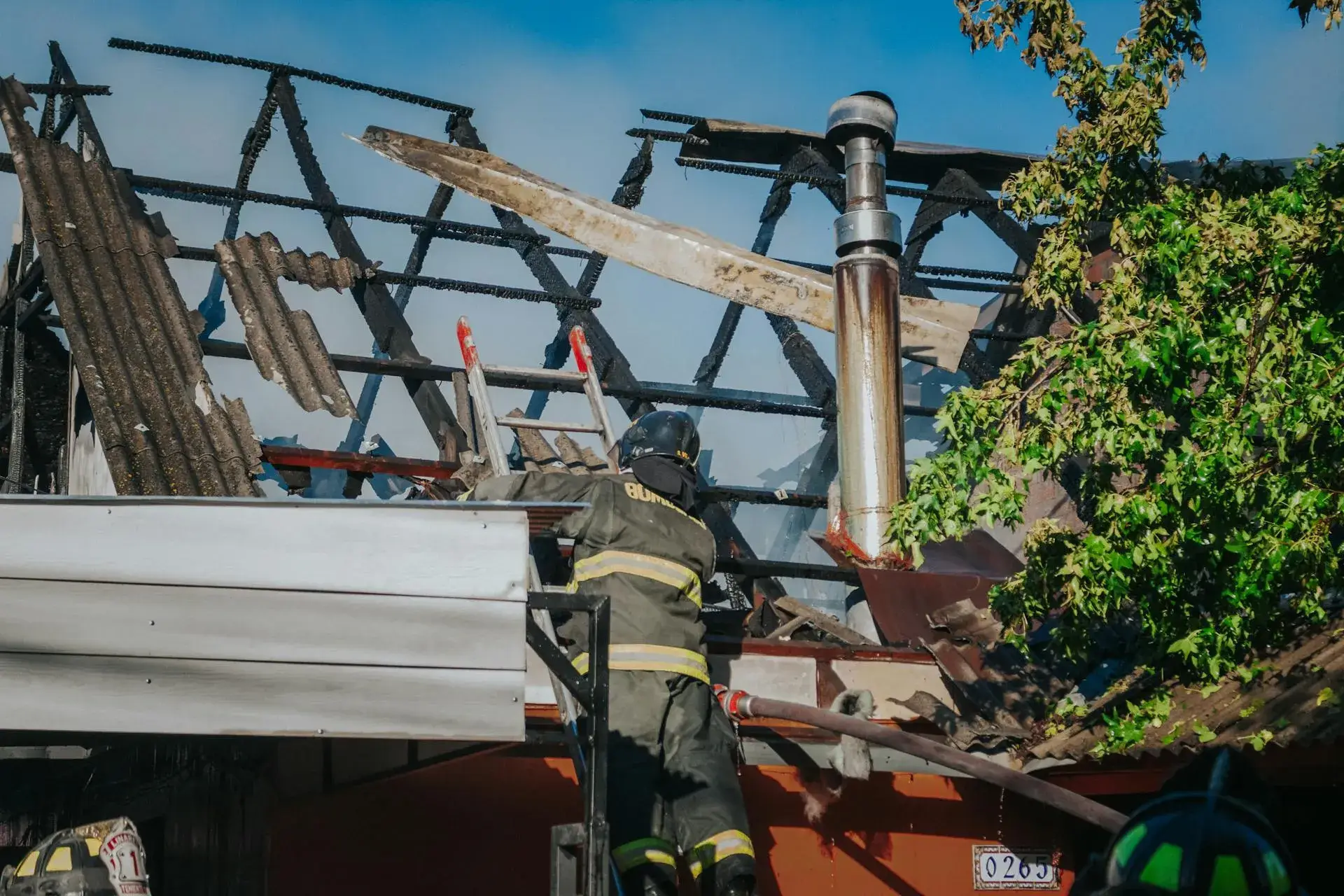
Fire Damage Restoration in Tyndall AFB, FL
Acidic combustion residues and hundreds of gallons of extinguishing water cause immediate structural decay in Bay County. Our emergency crew arrives within 60 minutes.
What Happens When You Call
Your emergency call initiates immediate dispatch of our certified fire recovery crew to Tyndall AFB.
Technicians secure the structure with emergency window board-up, door framing reinforcement, and heavy-duty weather tarps across compromised roofs.
We extract high volumes of firefighting water and deploy commercial desiccant dehumidifiers to protect unburned building elements.
Crews remove burned structural debris, apply soot-neutralizing detergents to salvageable finishes, and prepare framing for rebuild.
When fire impacts a residential home, administrative office, or commercial facility on Tyndall AFB, the damage extends far beyond burned walls. Massive volumes of firefighting water saturate building assemblies, while caustic soot particles spread into unburned rooms. Rapid emergency intervention is vital to secure the structural shell, seal the property against coastal weather, and halt corrosive chemical etching. X Response mobilizes around the clock to take command of your restoration. Call our emergency fire response team now.
Why Tyndall AFB Homes Are Vulnerable to Fire Damage
Tyndall AFB occupies a vast 29,000-acre coastal peninsula in southern Bay County, bounded by St. Andrew Sound, East Bay, and the Gulf of Mexico. The installation encompasses military residential housing, training centers, industrial maintenance facilities, and extensive natural pine and coastal scrub reserves. Because of its large geographic footprint and direct exposure to marine winds, properties on the base face significant wildland-urban interface (WUI) hazards in addition to typical structural and electrical fire perils. According to the Bay County Board of County Commissioners, coordinated emergency services and fire protection protocols safeguard residential communities and vital infrastructure across Bay County. Fire suppression operations across this coastal military district demand rapid response, high water application rates, and professional coordination to protect both civilian living quarters and critical defense infrastructure.
Following fire extinguishment on Tyndall AFB, property managers and residents are confronted with a dual crisis of severe burn damage and massive water saturation. Firefighting teams must deliver thousands of gallons of water to control flames fueled by wood framing, specialized facility materials, and residential furnishings. In the base's predominantly slab-on-grade structures, this water pools across floors and wicks deeply into interior wall partitions. Simultaneously, burning synthetic building products, cable insulation, and office electronics release caustic acidic soot. When these acidic particles interact with the warm, salt-tinged humidity characteristic of Bay County, they aggressively attack metal window components, copper pipes, HVAC equipment, and sensitive electronics. Without immediate emergency extraction, soot washing, and industrial dehumidification, structural elements experience rapid decay and extensive mold growth within 48 hours.
Peninsula Timberland and Wildfire Exposure
Thousands of acres of managed pine flatwoods on the Tyndall AFB peninsula create substantial wildland fuel loads. Fast-moving brush fires driven by Gulf winds can approach perimeter housing and facility boundaries, requiring immediate defensive structural mitigation.
Massive Firefighting Water Retention on Concrete Slabs
Pumping thousands of gallons of water into a burning structure floods the underlying concrete slab foundation. Water seeps into expansion joints and beneath wall baseplates, requiring industrial extraction and continuous desiccant dehumidification to prevent foundation dampness.
Accelerated Chemical Corrosion in Coastal Humidity
The peninsula's maritime climate carries high ambient moisture and airborne salt from the Gulf. Acidic soot residues combine with this humid air to form corrosive chemical acids that pit stainless steel fixtures, tarnish copper wiring, and degrade sensitive electrical equipment within 24 to 48 hours.
Structural Charring in Heavy Wood and Steel Construction
Facilities across the installation feature a mix of reinforced concrete, structural steel, and heavy timber framing. Fire traveling along structural lines deeply chars lumber and warps light-gauge steel, demanding professional engineering assessments and selective structural replacement.
Recovering from fire damage in Tyndall AFB requires simultaneous mitigation of heavy flame destruction, pervasive toxic soot, and saturated building substrates.
What Happens to Your Home While You Wait
Within Minutes
Thick smoke and hot soot billow into ceilings and attic cavities. Acidic soot particles begin clinging to cooler surfaces, staining light-colored vinyl, plastics, and porous ceiling tiles.
1 to 24 Hours
Acidic combustion residues begin etching glass window panes, tarnishing chrome bathroom fixtures, and pitting metal appliance finishes. Firefighting water pools deeply on the slab, wicking upward into unburned drywall.
24 to 48 Hours
Soot residues penetrate deep into the pores of drywall, untreated wood studs, and grout lines. Metal electrical components begin oxidizing. Firefighting water trapped in the warm Panhandle air initiates rapid mold germination.
48 to 72 Hours
Corrosive chemical soot reactions cause permanent staining on porcelain, ceramic tile, and painted surfaces. Wood framing members swell from moisture absorption, and mold colonies begin colonizing wet wall cavities.
One Week and Beyond
Unremediated smoke odors become deeply embedded in structural roof trusses and concrete subfloors. Prolonged moisture causes framing lumber to rot. Restoration costs increase sharply as salvageable materials degrade into demolition waste.
Do not delay fire mitigation in Bay County. Contact X Response immediately for 24/7 structural stabilization and soot removal.
How We Restore Fire-Damaged Tyndall AFB Homes
Our fire damage restoration protocol follows rigorous safety guidelines and IICRC S540 standards to safely stabilize, clean, and restore fire-damaged properties in Tyndall AFB.
Structural Safety Assessment and Emergency Enclosure
We arrive on site to inspect the property for structural hazards, including sagging roof rafters and compromised load-bearing walls. Our team immediately boards up broken windows, secures damaged exterior doors, and installs heavy-duty tarps across damaged roof sections to guard against weather.
Industrial Water Removal and Deep Dehumidification
We extract standing firefighting water from the building using commercial truck-mounted units. High-capacity desiccant and LGR dehumidifiers are placed to rapidly draw deep moisture out of the concrete slab and saturated wall cavities, stopping mold growth before it starts.
Controlled Charred Debris Removal and Selective Demolition
Technicians systematically remove ruined drywall, insulation, and burned structural framing. Every removed item is photographed and inventoried to assist your insurance or facility claim, while temporary structural shoring is installed to support load-bearing components safely.
Precision Soot Cleaning and Chemical Neutralization
We use dry chemical sponges, specialized alkaline soot-lifting washes, and HEPA vacuums to lift soot from salvageable walls, ceilings, and wood trim. Corrosive soot residues are neutralized on contact to prevent irreversible metal pitting and glass etching.
Framing Encapsulation and Rebuild Preparation
After thorough cleaning, all exposed framing lumber is sealed with specialized odor-blocking antimicrobial encapsulants. The structure is left clean, deodorized, dry, and fully prepped for final reconstruction.
The X Response Difference
Count on X Response for reliable, certified fire damage restoration in Tyndall AFB and across Bay County.
Insurance Claim Guidance for Tyndall AFB Homeowners
Navigating a property or insurance claim after a structure fire on Tyndall AFB involves managing multiple coverage areas, including structural repairs, personal property contents, and facility restoration. Because fire suppression introduces heavy water damage, claims must address both fire and water perils simultaneously. Thorough, detailed documentation from day one is essential to ensure your claim is processed fairly and completely under standard insurance guidelines.
How X Response Helps
- Comprehensive photographic and 3D visual documentation of the fire origin, structural burn areas, and water damage.
- Itemized personal or facility contents inventory detailing brand names, model numbers, ages, and replacement values.
- Clear separation of direct fire destruction from secondary water extraction and structural drying scopes.
- Detailed line-item restoration estimates prepared using industry-standard Xactimate pricing software.
- Direct coordination with claims adjusters or facility managers to walk through all structural damage and review the scope of work.
X Response is an independent certified restoration contractor. We provide structural mitigation and technical documentation services. We do not act as licensed public adjusters or offer legal policy interpretation. Coverage determinations are made solely by your insurance carrier.
Certified Restoration Specialists Serving Tyndall AFB
Our fire restoration technicians serving Tyndall AFB bring extensive field expertise in mitigating structural fire and smoke emergencies across Bay County. Every technician holds active certifications from the Institute of Inspection, Cleaning and Restoration Certification (IICRC) in Fire and Smoke Restoration (FSRT) and Odor Control (OCT). We understand the complex building styles and intense humidity conditions unique to coastal military communities.
We operate heavy-duty restoration service vehicles fully stocked with emergency board-up materials, commercial HEPA air filtration equipment, and advanced deodorization technology. From residential housing areas to administrative buildings, our crew approaches every project with urgency, professionalism, and genuine commitment to restoring safety.
In Tyndall AFB, X Response works with Coastal Emergency Restoration, an independent local restoration partner serving Bay County.
Fire Damage Restoration FAQ for Tyndall AFB Homeowners
Other Emergency Services in Tyndall AFB

Water Damage Restoration
Burst pipes, storm flooding, standing water. We extract, dry, and restore before mold sets in.
Learn more
Smoke Damage Restoration
Soot residue, chemical odors, HVAC contamination. We decontaminate surfaces, eliminate odors, and restore air quality.
Learn more
Mold Remediation
Testing, containment, removal, prevention. We find the source, eliminate the growth, and stop it from returning.
Learn more