
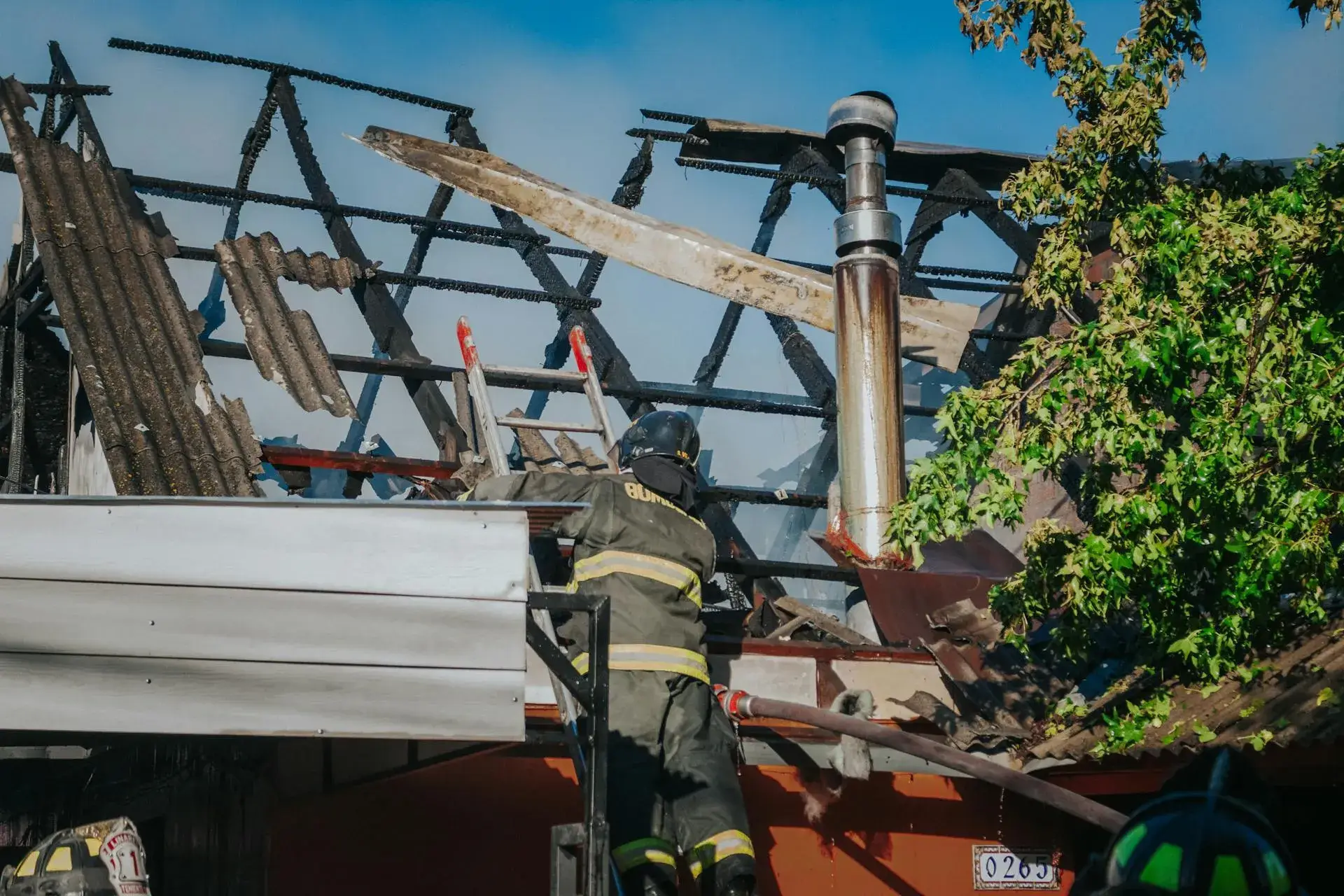
Fire Damage Restoration in Noblesville, IN
Fire damage compounds by the hour through corrosive soot, acidic residues, and moisture from suppression efforts. Our local team responds to Noblesville emergencies within 60 minutes to stabilize your property and stop secondary damage before it escalates.
What Happens When You Call
A real person answers, not a call center. We assess your situation, ask the right questions, and begin coordinating your response immediately.
Your dedicated restoration team is dispatched from our local base serving Noblesville and the surrounding Hamilton County communities.
Team arrives with board-up materials, structural assessment tools, and initial soot containment equipment. Emergency stabilization begins immediately.
Property secured, initial damage documented, restoration plan mapped. You know exactly what comes next and what your insurance needs.
Your home just experienced a fire. Whether it started in the kitchen, a century-old wall cavity in the historic district, or a garage in one of the newer subdivisions east of SR 37, you need someone to take control now. X Response exists for exactly this moment. When you reach out, your restoration team is mobilized within minutes and on site within the hour. From that point forward, one team manages everything: emergency stabilization, structural assessment, soot removal, odor elimination, and insurance documentation. You are never left guessing about the next step. Call now. Your team is standing by.
Why Noblesville Homes Are Vulnerable to Fire Damage
Noblesville is the county seat of Hamilton County, Indiana, with a population of approximately 74,000 and a service area that spans 58 square miles of mixed terrain, from the dense historic downtown core near the courthouse to sprawling modern subdivisions east of SR 37 and rural stretches along the White River and Morse Reservoir. The Noblesville Fire Department operates seven stations with 140 career firefighters across 58 square miles of Hamilton County, covering areas including the White River corridor, Morse Reservoir, and Potter's Bridge. That professional capacity serves a jurisdiction where fire risk varies dramatically by neighborhood: century-old commercial buildings downtown with balloon-frame construction and shared walls, 1960s and 1970s ranch homes along the river corridors with original wiring, and modern two-story homes in master-planned communities built since 2000. Recent incidents illustrate the range. In June 2025, a house fire on the 6000 block of Rushing River Road required a full department response. In December 2024, investigators worked to determine the cause of a house fire at 15000 Winning Colors Drive. In May 2024, fire broke out at the KFC restaurant on Sheridan Road at SR 38 around 2:30 a.m., with passing drivers reporting smoke before flames were visible.
Noblesville's fire risk profile is shaped by three overlapping factors that distinguish it from its Hamilton County neighbors. First, the Conner Street Historic District, listed on the National Register of Historic Places since 1999, contains mixed-use buildings with balloon-frame construction, shared party walls, and limited fire separation between commercial and residential floors. Second, homes along the White River corridor and Morse Reservoir sit in areas with elevated ambient moisture, which weakens structural framing over decades and makes those homes more vulnerable to fire spread through compromised wood members. Third, the city's 58-square-mile service area includes rural and semi-rural stretches where structure fires may develop longer before detection or response simply because of distance and lower population density. The August 2025 chemical explosion at the Indiana American Water treatment plant on Wayne Street, which triggered a shelter-in-place order for downtown Noblesville, demonstrated that fire risk here extends beyond residential structure fires into chemical and industrial hazards that can produce toxic combustion byproducts across entire neighborhoods.
Historic Downtown and Balloon-Frame Construction
The Conner Street Historic District and surrounding blocks near the Hamilton County Courthouse contain commercial and mixed-use buildings dating to the late 1800s and early 1900s. These structures commonly use balloon framing, a construction method where wall studs run continuously from the foundation to the roofline without horizontal fire stops between floors. In a balloon-frame building, fire that enters a wall cavity at ground level has an unobstructed vertical channel to the attic, allowing flames to reach the roof structure before occupants on upper floors detect smoke. Shared party walls between adjacent storefronts mean a fire in one business can enter the wall cavity and emerge in the building next door. For residents of upper-floor apartments in these mixed-use buildings, a commercial kitchen fire downstairs or an electrical fault in original wiring can produce fire and smoke throughout the building with very little warning. Restoration in these structures requires careful material handling to preserve historic elements where possible while addressing the deep penetration of smoke into old-growth wood framing that absorbs combustion byproducts aggressively.
White River Corridor Moisture and Structural Vulnerability
Homes along the White River and near Morse Reservoir experience persistently elevated ambient moisture from proximity to open water and the river's floodplain. Over years, this moisture cycles into structural wood, subfloor, and roof decking, weakening connections and reducing the fire resistance of framing members. A dry 2x4 in a subdivision home east of SR 37 resists ignition and maintains structural integrity longer during a fire than the same lumber in a river-corridor home that has absorbed seasonal moisture for decades. Once fire compromises moisture-weakened structural members, the framing fails faster, leading to earlier roof collapse and more extensive structural loss. For homeowners in neighborhoods like those along River Road or near Potter's Bridge, fire damage restoration must include thorough assessment of whether structural members retain adequate integrity after the fire or require replacement, even in areas where char depth appears superficial.
Chemical and Industrial Fire Hazards
The August 2025 chemical explosion at the Indiana American Water treatment plant on Wayne Street forced a shelter-in-place order for downtown Noblesville and surrounding blocks. While this specific event was an explosion rather than a sustained structure fire, it demonstrated that industrial incidents near residential areas produce hazardous combustion byproducts, airborne particulates, and chemical residues that settle on and infiltrate nearby homes. Residents within the shelter-in-place zone reported chemical odors inside their homes hours after the event. For restoration purposes, chemical fires and explosions produce contamination that differs from residential fire soot. The residues may include caustic compounds, volatile organic chemicals, and particulates that require specialized cleaning protocols and air quality testing before a home is safe to reoccupy. Noblesville's mix of industrial facilities near established residential neighborhoods creates this risk in ways that purely residential suburbs do not face.
Extended Detection Time in Rural Coverage Areas
Noblesville's 58-square-mile service area includes semi-rural stretches north toward Arcadia and east beyond SR 37 where homes sit on multi-acre lots with significant setbacks from roads and neighbors. In these areas, a structure fire can develop for longer before anyone detects it, simply because there are fewer people nearby to see smoke or smell combustion. A fire that starts in an unoccupied portion of the home, such as a garage, basement, or attic, may burn through the initial fuel load and begin spreading to adjacent areas before a neighbor notices or a smoke detector signal reaches the homeowner remotely. Longer development time means greater structural damage, deeper soot penetration, and more extensive smoke contamination by the time suppression begins. Restoration projects for these homes tend to be larger in scope because the fire had more time to progress through the structure before containment.
Mixed Housing Stock Across Multiple Eras
Noblesville's housing spans from 1800s-era homes near the courthouse square to 1960s and 1970s ranch homes along the established river corridors, 1990s subdivisions in central areas, and modern construction in master-planned communities like those off Pleasant Street and east of SR 37. Each era presents different fire behavior and different restoration challenges. Pre-1940s homes may have knob-and-tube wiring that overheats under modern electrical loads, plaster-and-lath walls that conceal fire spread, and balloon framing that channels flames vertically. Mid-century homes often have original electrical panels, aluminum wiring, and ungrounded circuits that increase ignition risk. Modern homes have open floor plans that allow smoke to spread rapidly and engineered lumber that, while strong under normal conditions, fails faster under fire exposure than solid-sawn dimensional lumber. Understanding which era of construction you are working in determines how fire traveled through the structure and where hidden damage is most likely to exist.
Fire damage restoration in Noblesville requires understanding the specific ways fire behaves across this city's diverse building stock and geography. A fire in a balloon-frame downtown building spreads differently than one in a modern subdivision home, and a home along the White River corridor presents different structural concerns than one on higher ground east of SR 37. Effective restoration accounts for these differences rather than applying a one-size approach to every property.
What Happens to Your Home While You Wait
Within 1 Hour
Soot and combustion residues settle on every surface, including rooms the fire never reached. Acidic soot begins etching metal fixtures, appliances, and hardware. Smoke odor penetrates soft materials including upholstery, carpet, clothing, and bedding. In Noblesville's older downtown buildings with open stairways and shared walls, soot migrates through the structure far faster than in compartmentalized modern construction. The building is still off-gassing combustion chemicals that continue spreading contamination.
1–24 Hours
Soot residue permanently discolors grout, natural stone, and porous surfaces if not addressed. Acidic compounds corrode HVAC components, electronics, and metal surfaces. Plastic fixtures yellow. In homes near the White River corridor where ambient humidity is already elevated, moisture accelerates the chemical reactions between soot and surfaces, shortening the window for successful cleaning. Water from fire suppression soaks into subfloor, plaster walls in older homes, and insulation in newer ones.
24–72 Hours
Corrosion damage to metal surfaces becomes permanent without intervention. In Noblesville's historic downtown buildings with plaster-and-lath walls, suppression water wicks through wall cavities and saturates materials that are extremely slow to dry without active intervention. Smoke-saturated wood framing in older homes, already softened by decades of moisture cycling from the river corridor, begins releasing odor compounds continuously. Restoration scope expands significantly as materials that could have been cleaned in the first day now require replacement.
72 Hours to One Week
Smoke odor fully penetrates wall cavities, HVAC ductwork, and structural wood. In the old-growth lumber of Noblesville's pre-1920s homes, smoke molecules absorb deeper into the dense wood grain than in modern kiln-dried framing, making odor elimination more complex the longer treatment is delayed. Suppression water left unaddressed develops into active mold growth in wall cavities, beneath flooring, and inside the plaster systems of older buildings. The project transitions from fire restoration alone to combined fire, smoke, water, and mold remediation.
One Week and Beyond
Permanent damage to surfaces, fixtures, and structural elements that could have been saved with earlier intervention. HVAC systems distribute soot and odor throughout the home every time they run, recontaminating areas that have been cleaned. In homes where suppression water reached the crawl space or basement, Hamilton County's clay-heavy soil prevents natural drainage, keeping moisture trapped against foundation walls and floor joists indefinitely without mechanical extraction. Insurance claims grow contested as carriers question the timeline and whether earlier action could have reduced scope.
The window for preventing secondary damage after a fire is measured in hours, not days. Contact X Response now. Our Noblesville team responds within 60 minutes to begin stabilization and prevent the escalation that turns a manageable restoration into a major rebuild.
How We Restore Fire-Damaged Noblesville Homes
Fire damage restoration is not a single task. It is a coordinated sequence that addresses structural damage, soot contamination, smoke odor, water from suppression, and the risk of mold, all managed as one integrated project. Here is exactly how the process works when you call X Response after a fire in Noblesville.
Emergency Stabilization and Board-Up
Our team secures the property immediately: boarding up openings where windows, doors, or roofing were compromised by fire or suppression crews. In Noblesville's winter conditions, an unsecured structure loses heat rapidly and becomes vulnerable to pipe freezing, which compounds existing fire damage with water damage. For historic downtown buildings, board-up includes securing upper-floor windows and shared party walls to prevent weather intrusion into adjacent properties. We tarp damaged roof sections, secure entry points against unauthorized access, and remove immediate hazards like hanging plaster, compromised ceiling joists, or weakened floor sections.
Structural and Content Assessment
A systematic walk-through documents every room, categorizing damage into structural, content, and contamination zones. In Noblesville's older homes with balloon framing, we inspect wall cavities from foundation to attic for hidden fire travel even when visible damage appears limited to one floor. In newer construction, we check attic spaces and garage separation walls for heat damage that may not be visible from the living space. We identify what can be restored versus what must be replaced, photograph and log all content items for insurance purposes, and produce a detailed scope of work that accounts for the specific construction type of your home.
Soot, Char, and Debris Removal
Charred materials, fire-damaged framing, and unsalvageable building components are removed and disposed of properly. All surfaces in the smoke-affected zone are cleaned using techniques appropriate to the type of soot and the surface material. In downtown Noblesville's older buildings with original hardwood, plaster crown molding, and historic trim, salvageable elements are cleaned with methods that preserve the material rather than aggressive techniques that would damage irreplaceable features. For modern homes where synthetic materials burned, the oily, pungent residue from plastics, carpet padding, and composite materials requires specialized chemical cleaning agents.
Smoke Odor Elimination
Visible soot removal addresses what you can see, but smoke odor molecules penetrate wall cavities, insulation, HVAC ductwork, and structural wood at a molecular level. We use a combination of thermal fogging, hydroxyl generators, and targeted ozone treatment in sealed spaces to neutralize odor at the source rather than masking it. In Noblesville's older homes where old-growth wood framing has absorbed smoke deeply into dense grain, odor elimination requires longer treatment cycles and sometimes selective encapsulation of structural members that cannot be replaced without compromising the building's integrity. HVAC systems are fully cleaned and decontaminated to prevent recirculation of contaminated air.
Water Damage Mitigation and Mold Prevention
Every fire that requires suppression produces water damage. In Noblesville homes, suppression water collects in crawl spaces, pools in basement low points common in the river corridor neighborhoods, and saturates wall cavities and subfloor. Plaster-and-lath construction in older homes absorbs and holds water far longer than modern drywall, creating extended drying timelines and elevated mold risk if not actively managed. We deploy extraction equipment and commercial dehumidifiers as part of the fire restoration process, not as an afterthought. Antimicrobial treatments are applied to all water-contacted surfaces to prevent mold development during the weeks-long restoration timeline.
Reconstruction and Completion
Once the structure is clean, dry, odor-free, and structurally sound, reconstruction begins. Damaged framing, drywall, flooring, electrical, and mechanical systems are rebuilt to current code. In Noblesville's historic district, reconstruction must balance current building code requirements with preservation guidelines for contributing structures. For all properties, we manage the full reconstruction through Hamilton County permitting and inspections, from framing and insulation through drywall, paint, and trim, delivering a finished home rather than leaving you to coordinate a separate contractor for the rebuild phase.
The X Response Difference
When you contact X Response after a fire in Noblesville, you get a single team that manages the full restoration, from emergency board-up through reconstruction, treating fire, smoke, water, and mold as one coordinated project with one point of contact.
Insurance Claim Guidance for Noblesville Homeowners
Fire damage insurance claims in Indiana are typically covered under your standard homeowner's policy, which is the good news compared to flood events that require separate coverage. However, fire claims rank among the most complex because they involve multiple damage categories: structural fire damage, smoke contamination, water damage from suppression, content losses, and potential additional living expenses while your home is uninhabitable. Coverage depends on your policy limits, the source of the fire, and whether the carrier finds the damage was sudden and accidental versus resulting from neglect or code violations. In Noblesville's older homes, carriers sometimes scrutinize whether outdated wiring or deferred maintenance contributed to ignition, making thorough documentation of the fire's origin and spread pattern essential for a clean claim.
How X Response Helps
- Document all fire, smoke, water, and content damage with professional photos and a detailed scope of work from day one
- Separate fire damage from pre-existing conditions, particularly in older homes where carriers may attribute damage to deferred maintenance
- Inventory and photograph all damaged content items with replacement value estimates for your adjuster
- Track Additional Living Expense receipts if you are displaced, as most policies cover temporary housing and meals up to your sublimit
- Provide your adjuster with a structured restoration timeline and phased scope so coverage decisions can be made before each phase of work begins
X Response does not file claims on your behalf, adjust claims, or make coverage determinations. We provide documentation and guidance to help you make informed decisions about your property and your policy. Coverage decisions are made solely by your insurance carrier.
Certified Restoration Specialists Serving Noblesville
When you contact X Response after a fire in Noblesville, your restoration team is drawn from certified professionals who work across Hamilton County and understand how fire behaves in the specific construction types found here. They know how balloon framing in the Conner Street Historic District channels flames vertically from foundation to roofline without stopping, how river-corridor homes with moisture-weakened framing require different structural assessment criteria than homes on higher ground, and how the city's 58-square-mile service area produces fires that may have developed longer before detection than in denser suburban neighborhoods. They have restored homes after kitchen fires in downtown mixed-use buildings, electrical fires in mid-century homes with original wiring, garage fires in modern subdivisions, and chemical contamination events from industrial incidents near residential areas.
Every technician on your team holds current IICRC certification in fire and smoke restoration and carries the appropriate Indiana licensing for the work being performed. Equipment includes thermal imaging for mapping heat damage in concealed wall cavities and balloon-frame stud bays, commercial air scrubbers for particulate containment during demolition, industrial dehumidifiers for addressing suppression water in plaster-and-lath walls that dry slowly, and professional-grade odor elimination systems including thermal foggers and hydroxyl generators sized for the dense old-growth wood common in Noblesville's pre-1920s buildings. When your team arrives, they bring everything needed to begin stabilization immediately.
In Noblesville, X Response works with The Cleaning Source, an independent local restoration partner serving Hamilton County.
Fire Damage Restoration FAQ for Noblesville Homeowners
Other Emergency Services in Noblesville
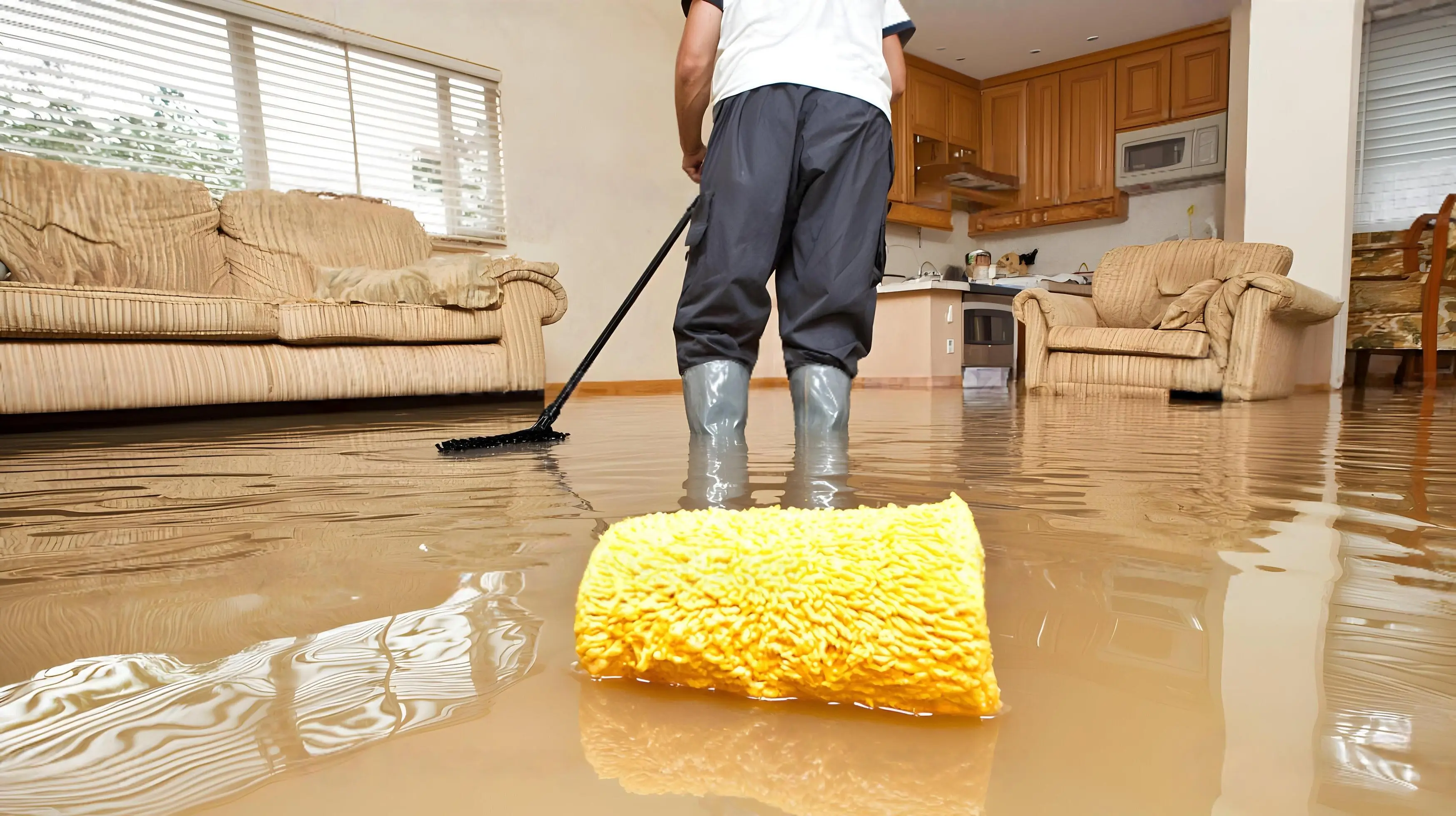
Water Damage Restoration
Burst pipes, storm flooding, standing water. We extract, dry, and restore before mold sets in.
Learn more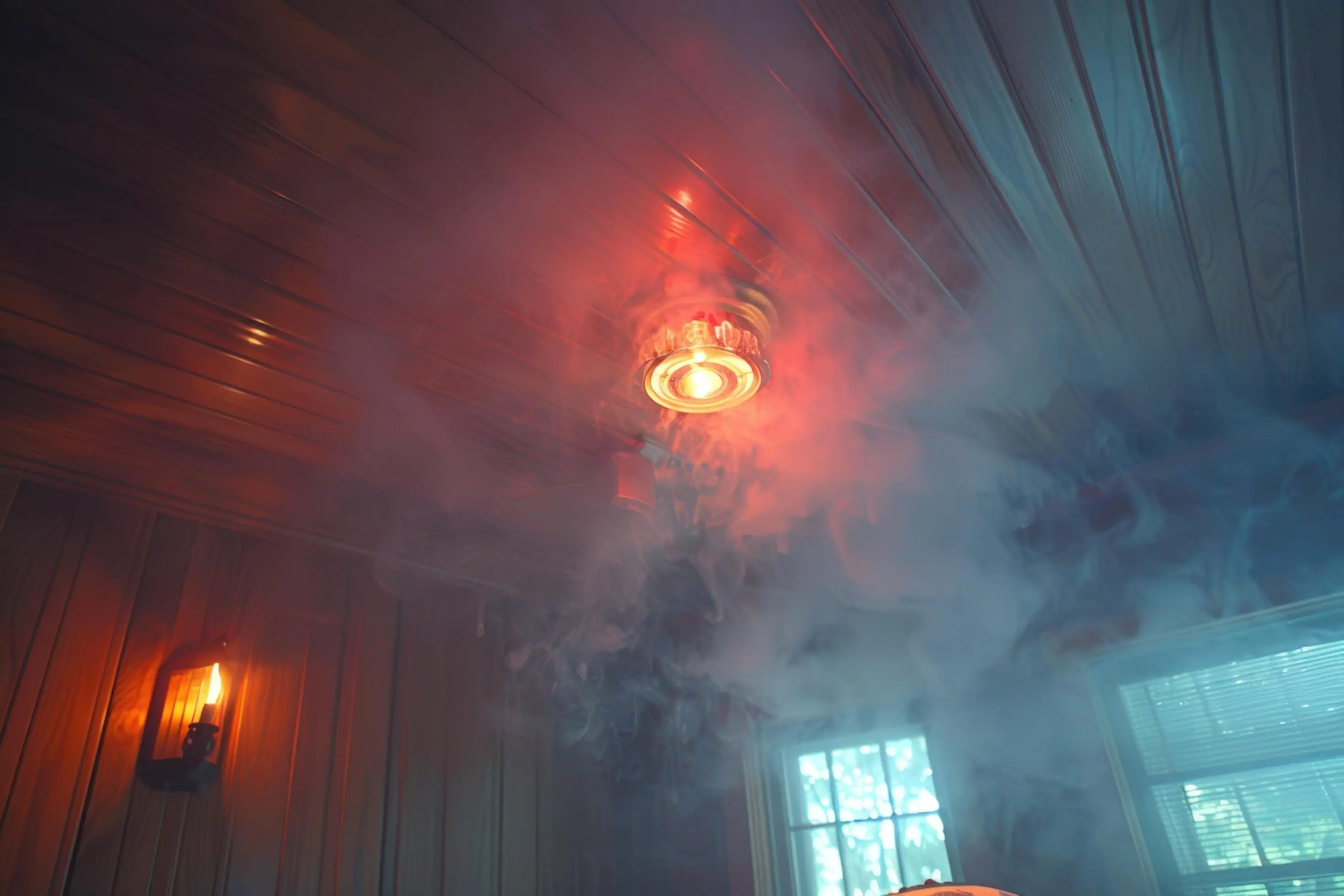
Smoke Damage Restoration
Soot residue, chemical odors, HVAC contamination. We decontaminate surfaces, eliminate odors, and restore air quality.
Learn more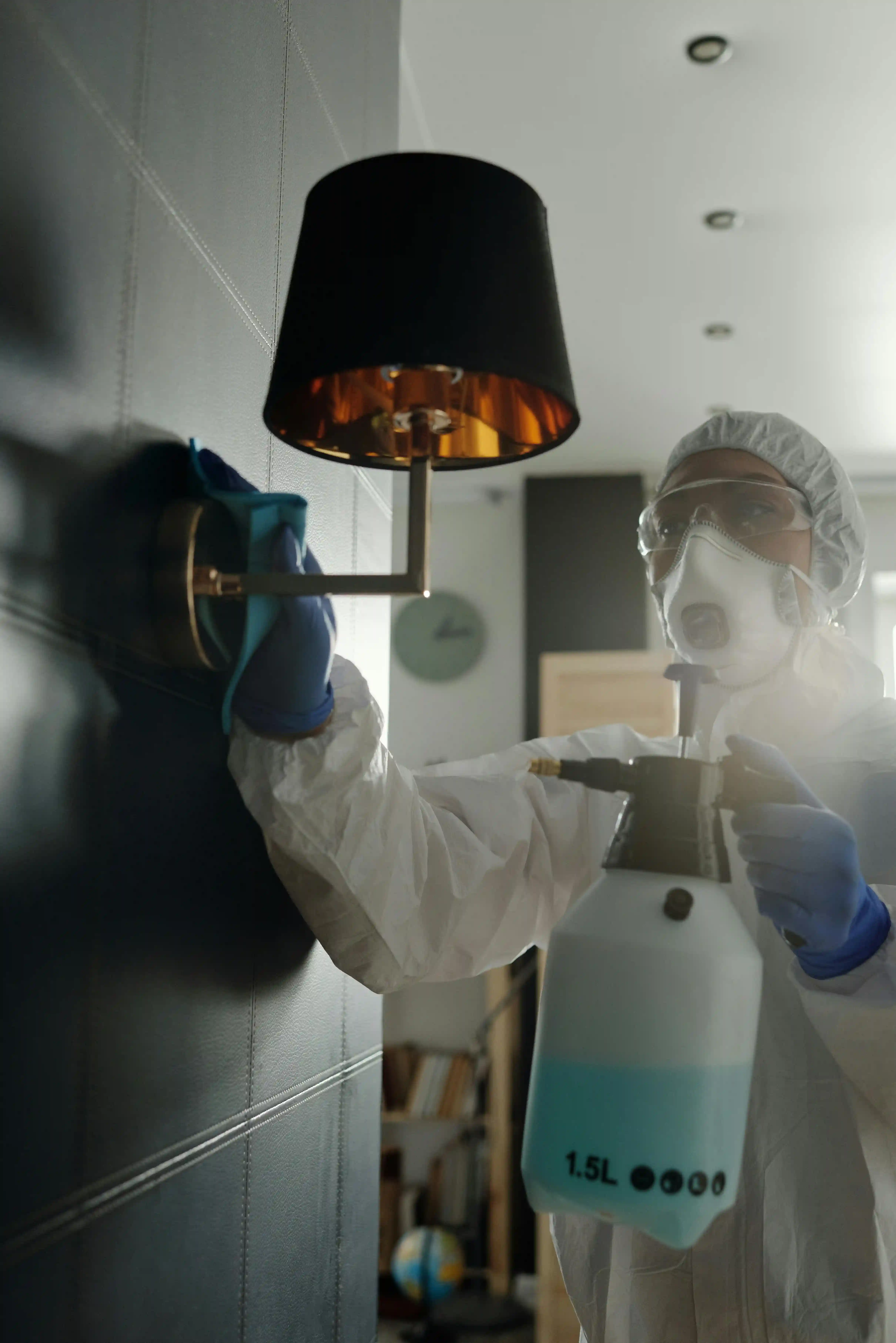
Mold Remediation
Testing, containment, removal, prevention. We find the source, eliminate the growth, and stop it from returning.
Learn more
Sewage Cleanup
Sewer backups, contaminated water, biohazard. We extract, sanitize, and restore safely.
Learn more