
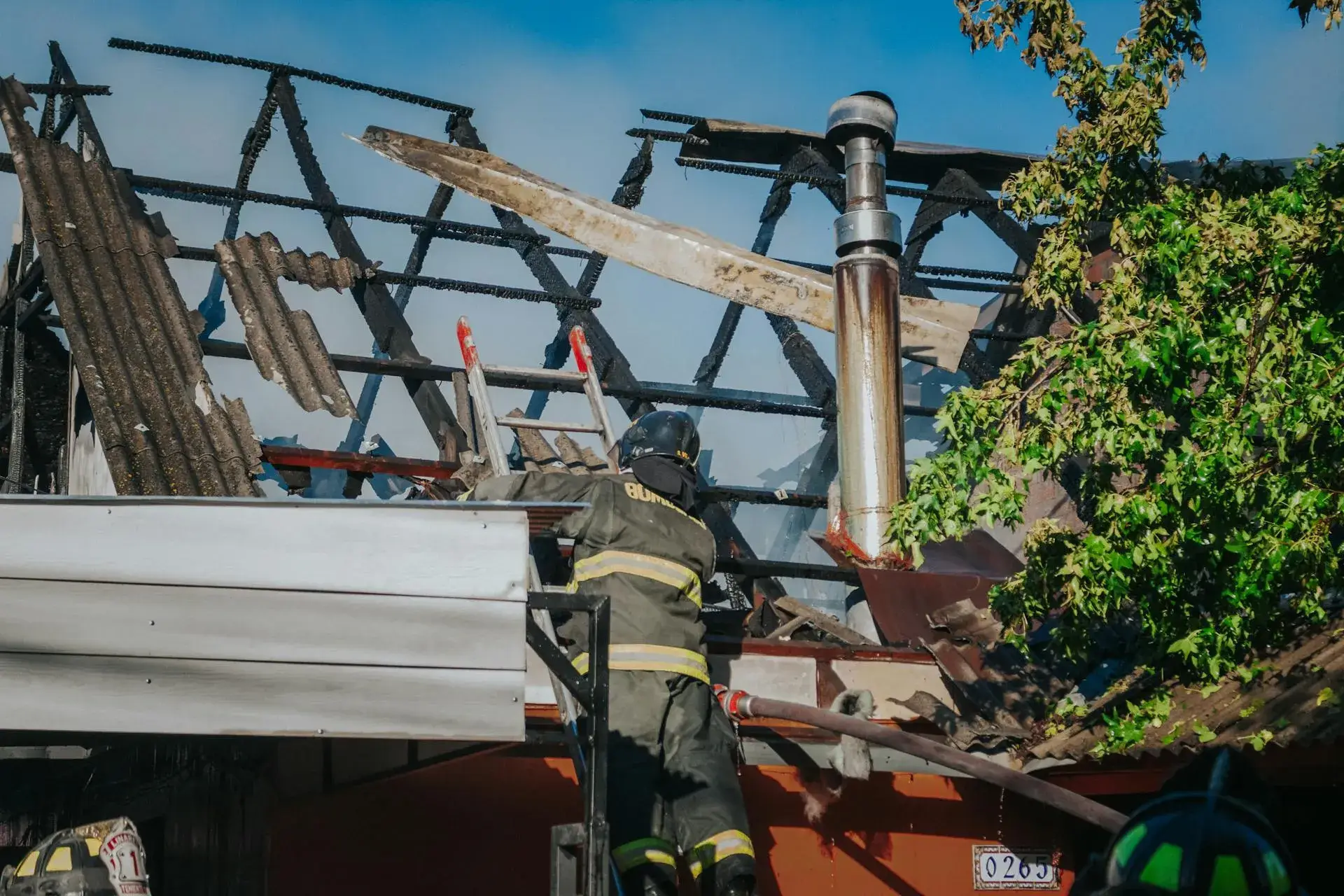
Fire Damage Restoration in Carmel, IN
Fire damage spreads through soot, char, and corrosive residues every hour you wait. Our local team responds to Carmel emergencies within 60 minutes to stabilize your property.
What Happens When You Call
A real person answers, not a call center. We assess your situation, ask the right questions, and begin coordinating your response immediately.
Your dedicated restoration team is dispatched from our local base serving Carmel and the surrounding Hamilton County communities.
Team arrives with board-up materials, structural assessment tools, and initial soot containment equipment. Emergency stabilization begins immediately.
Property secured, initial damage documented, restoration plan mapped. You know exactly what comes next and what your insurance needs.
Your home just experienced a fire and everything feels chaotic. You need someone to take control of the situation now, not after a callback queue, not next week. X Response exists for exactly this moment. When you reach out, your restoration team is mobilized within minutes and on site within the hour. From that point forward, one team manages everything: emergency stabilization, structural assessment, soot removal, odor elimination, and insurance documentation. You are never left guessing about the next step. Call now. Your team is standing by.
Why Carmel Homes Are Vulnerable to Fire Damage
Carmel is a city of approximately 103,600 residents in Hamilton County, Indiana, served by a fire department that has achieved a level of professional recognition matched by only a handful of agencies worldwide. The Carmel Fire Department is one of only 326 agencies globally and one of only four in the state of Indiana to achieve accredited agency status from the Commission on Fire Accreditation International (CFAI), having been accredited initially in August 2013, re-accredited in March 2019, and accredited for a third time in 2024. The department operates six stations across the city and in July 2025 pursued a federal SAFER grant to increase the number of trained frontline firefighters as the community continues growing. Despite this exceptional capability, fire damage remains a reality in any growing city with diverse construction types, dense commercial districts, and housing stock that spans from historic homes near the Monon Trail to sprawling custom builds in Village of WestClay.
Carmel has experienced significant structure fires that demonstrate the damage patterns homeowners face. In May 2024, a fire at a strip mall on Rangeline Road killed one person, injured another, and damaged two businesses, illustrating how commercial fires in Carmel's dense downtown Arts and Design District affect adjacent properties through shared walls and radiant heat. In June 2025, crews battled a large house fire in Hamilton County with no injuries reported but substantial structural damage. That same month, a fire broke out in the basement of businesses in downtown Carmel at Goodness Gracious Kitchen and Indiana Artisan Gifts, requiring response from multiple departments and affecting the shared building infrastructure. In April 2025, a severe storm caused structural damage across multiple Carmel neighborhoods, with the city deploying building inspectors to assess affected homes, a reminder that storm-related fires from downed power lines and lightning add to the fire risk profile beyond the typical cooking, heating, and electrical causes.
Dense Downtown and Mixed-Use Fire Risk
Carmel's Arts and Design District, Midtown area, and City Center feature multi-story mixed-use buildings combining retail, restaurant, and residential space in close proximity. The June 2025 downtown basement fire at Goodness Gracious Kitchen and Indiana Artisan Gifts required multiple departments and demonstrates how fire in a shared commercial building affects all tenants and neighboring structures. Restaurant fires from cooking equipment, grease ignition, and electrical faults are statistically the leading cause of commercial fires, and Carmel's concentration of dining establishments in the downtown district creates a density of this specific risk. For residents in the condominiums and apartments above or adjacent to these commercial spaces, a restaurant fire below can produce severe smoke damage throughout the building even when flames are contained to the point of origin.
Large Custom Homes and Complex Construction
Carmel's residential development includes substantial custom homes in developments like Village of WestClay, Bridgewater, and The Estates at Towne Meadow. These homes often feature 4,000 to 8,000 square feet of living space with complex roof systems, multiple HVAC zones, extensive attic spaces, and custom millwork throughout. A fire in a large custom home presents restoration challenges beyond what a standard suburban house does: more square footage of smoke contamination, more complex ductwork to decontaminate, more surfaces requiring specialized cleaning, custom materials that cannot be replaced with standard products, and higher content values in furnishings, artwork, and personal collections. Insurance claims on these properties are correspondingly complex, with replacement values that push policy limits and require detailed documentation of custom features.
Attached Housing Along the Monon Corridor
Carmel's development along the Monon Greenway Trail includes significant townhome and condominium construction, particularly in the Midtown, City Center, and Arts and Design District areas. In attached housing, fire can spread between units through shared attic spaces, common walls, and interconnected utility chases. Even when the Carmel Fire Department's rapid response contains active burning to one unit, smoke migrates through the building's HVAC system, through penetrations in fire-rated assemblies, and through shared structural cavities into neighboring units. For townhome and condo owners, a neighbor's fire can produce severe smoke damage in your home requiring full content cleaning, duct decontamination, and professional odor elimination, even though no flame ever entered your unit.
Winter Heating and Electrical Ignition
Carmel's winter temperatures regularly drop below freezing from December through February, driving continuous furnace operation and supplemental heating use. Heating equipment is the second leading cause of home fires nationally per the National Fire Protection Association, and the risk concentrates in cold-climate communities where heating runs for months straight. Carmel's older homes near the city center and along the Monon Trail, built before current electrical codes, face elevated risk from aging wiring, overloaded circuits, and furnace components that have operated for decades. Newer homes have modern systems but often feature fireplaces, gas logs, and heated garages that introduce additional ignition sources. Space heaters in garages, workshops, and bonus rooms remain a common ignition source in suburban communities during Indiana winters.
Storm-Related Fire and Lightning
In April 2025, severe storms caused structural damage across Carmel, prompting the city to deploy building inspectors for assessment. Indiana's severe storm season, primarily April through August, brings lightning that strikes homes directly, igniting attic insulation, roof materials, or entering through electrical systems. Downed power lines during wind events can arc into contact with structures or vegetation adjacent to homes. A lightning strike or power line contact fire often starts in the attic or exterior and works inward, meaning the fire has significant head start before interior smoke detectors activate. Storm-origin fires are particularly damaging because they often occur simultaneously with water damage from the same storm, compounding the restoration with two concurrent damage types that interact destructively when fire-heated materials contact rain-driven water.
Fire damage restoration in Carmel requires understanding how fire behaves in the construction types prevalent here: dense mixed-use buildings where commercial fires affect residential units above, large custom homes with complex systems and high-value content, attached housing where fire and smoke travel between units, and diverse ignition sources from winter heating through summer lightning. It requires knowing that fire damage is never just fire damage. It is also smoke contamination from combustion byproducts, water damage from suppression, and secondary mold risk if the structure is not properly dried. Effective restoration addresses all of these as one integrated project.
What Happens to Your Home While You Wait
Within 1 Hour
Soot and combustion residues settle on every surface in the home, including areas untouched by flame. Acidic soot begins etching metal fixtures, appliances, and hardware. Smoke odor penetrates soft materials including upholstery, carpet, clothing, and bedding. In Carmel's larger homes with open floor plans and two-story great rooms, smoke travels freely through thousands of square feet within minutes.
1–24 Hours
Soot residue permanently discolors grout, natural stone, and porous surfaces if not addressed. Acidic compounds corrode HVAC components, electronics, and metal surfaces. Plastic fixtures yellow. Smoke odor bonds chemically to painted walls and finished surfaces. Water from fire suppression soaks into subfloor, insulation, and wall cavities, beginning the secondary damage process.
24–72 Hours
Corrosion damage to metal surfaces becomes permanent without intervention. Smoke-saturated insulation in attic spaces continues releasing odor into the living space. Suppression water pooled in basements or crawl spaces on Hamilton County's clay soil begins creating secondary mold risk. Restoration scope expands as materials that could have been cleaned in the first day now require replacement.
72 Hours to One Week
Smoke odor fully penetrates wall cavities, HVAC ductwork, and structural wood. Simple surface cleaning no longer addresses the contamination, and thermal fogging or ozone treatment becomes necessary. Water damage from suppression efforts develops into active mold growth in concealed areas. The project transitions from fire restoration to combined fire, smoke, water, and mold remediation.
One Week and Beyond
Permanent damage to surfaces, fixtures, and structural elements that could have been saved with earlier intervention. HVAC system distributes soot and odor every time it runs. Mold from suppression water reaches a scale requiring dedicated remediation. Insurance claims grow contested as carriers question the timeline.
The window for preventing secondary damage after a fire is measured in hours, not days. Contact X Response now. Our Carmel team responds within 60 minutes to begin stabilization.
How We Restore Fire-Damaged Carmel Homes
Fire damage restoration is not a single task. It is a coordinated sequence that addresses structural damage, soot contamination, smoke odor, water from suppression, and the risk of mold, all managed as one integrated project. Here is exactly how the process works.
Emergency Stabilization and Board-Up
Our team secures the property immediately: boarding up openings where windows, doors, or roofing were compromised by fire or suppression crews. In Carmel's winter conditions, an unsecured structure loses heat rapidly and becomes vulnerable to pipe freezing, compounding fire damage with a water damage emergency. We tarp damaged roof sections to prevent rain intrusion, secure entry points against unauthorized access, and remove immediate hazards like hanging drywall or compromised structural members.
Structural and Content Assessment
A systematic walk-through documents every room, categorizing damage into structural, content, and contamination zones. In Carmel's larger homes, we inspect the full roof system and attic space for heat damage even when visible fire damage is confined to one area. Custom features, high-value content, and specialized materials are documented individually for insurance purposes. We produce a detailed scope of work that becomes the foundation of your claim and the project roadmap.
Soot, Char, and Debris Removal
Charred materials, fire-damaged framing, and unsalvageable components are removed and disposed of properly. All surfaces in the smoke-affected zone are cleaned using techniques appropriate to the soot type: dry sponging for light protein residues from kitchen fires, wet cleaning for heavy synthetic soot, and HEPA vacuuming for loose char particles. In Carmel's custom homes with natural stone, hardwood, and specialty finishes, cleaning techniques are matched precisely to each surface to prevent secondary damage from improper methods.
Smoke Odor Elimination
Visible soot removal is only part of the problem. Smoke odor molecules penetrate wall cavities, insulation, HVAC ductwork, and structural wood at a molecular level. We use thermal fogging, hydroxyl generators, and targeted ozone treatment in sealed spaces to neutralize odor at the source. HVAC systems are fully cleaned and decontaminated because ductwork distributed smoke throughout the home during the fire. In Carmel homes with multiple HVAC zones, each system receives individual decontamination to prevent cross-contamination between served areas.
Water Damage Mitigation and Mold Prevention
Every fire requiring suppression produces water damage. In Carmel homes, suppression water collects in basements, pools in lower-level finished spaces, and saturates wall cavities. If not extracted and dried within 24 to 48 hours, mold colonization begins. We deploy extraction equipment and commercial dehumidifiers as part of the fire restoration, not as an afterthought. Antimicrobial treatments are applied to all water-contacted surfaces to prevent mold development during the weeks-long restoration timeline.
Reconstruction and Completion
Once the structure is clean, dry, odor-free, and structurally sound, reconstruction begins. Damaged framing, drywall, flooring, electrical, and mechanical systems are rebuilt to current code. In Carmel, that means meeting Hamilton County building code requirements and scheduling inspections through the city's Department of Community Services. For custom homes with specialty materials, we coordinate with appropriate trades to match existing finishes rather than installing standard replacements. The result is a finished home, not an unfinished shell.
The X Response Difference
When you contact X Response after a fire in Carmel, you get a single team that manages the full restoration, from emergency board-up through reconstruction, treating fire, smoke, water, and mold as one coordinated project.
Insurance Claim Guidance for Carmel Homeowners
Fire damage insurance claims in Indiana are typically covered under your standard homeowner's policy, which is the good news compared to flood events. However, fire claims are among the most complex because they involve multiple damage categories: structural fire damage, smoke contamination, water damage from suppression, content losses, and potential additional living expenses while your home is uninhabitable. In Carmel's larger custom homes, replacement values can push policy limits, making detailed documentation of custom features, specialty materials, and high-value content critical from day one.
How X Response Helps
- Document all fire, smoke, water, and content damage with professional photos and a detailed scope of work from day one
- Inventory and photograph all damaged content items with replacement value estimates, particularly custom and high-value items
- Separate fire damage from pre-existing conditions so your claim accurately reflects what the fire caused
- Track Additional Living Expense receipts if you are displaced, as most policies cover temporary housing and meals
- Provide your adjuster with a structured restoration timeline so coverage decisions can be made before work begins
X Response does not file claims on your behalf, adjust claims, or make coverage determinations. We provide documentation and guidance to help you make informed decisions about your property and your policy. Coverage decisions are made solely by your insurance carrier.
Certified Restoration Specialists Serving Carmel
When you contact X Response after a fire in Carmel, your restoration team is drawn from certified professionals who work across Hamilton County and understand how fire behaves in the construction types common here. They know how mixed-use downtown buildings share fire and smoke between commercial and residential spaces, how large custom homes with complex roof systems and multiple HVAC zones require thorough inspection beyond the visible damage, and how attached housing along the Monon corridor lets smoke travel between units through shared structural elements. They have restored homes after kitchen fires in the Arts and Design District, lightning-ignited attic fires in subdivision homes, garage fires in custom homes with attached three-car bays, and storm-related structural damage across the city.
Every technician on your team holds current IICRC certification in fire and smoke restoration and carries the appropriate Indiana licensing for the work being performed. Equipment includes thermal imaging for mapping heat damage in concealed spaces, commercial air scrubbers for particulate containment, industrial dehumidifiers for addressing suppression water, and professional-grade odor elimination systems including thermal foggers and hydroxyl generators. When your team arrives, they bring everything needed to begin stabilization immediately.
In Carmel, X Response works with The Cleaning Source, an independent local restoration partner serving Hamilton County.
Fire Damage Restoration FAQ for Carmel Homeowners
Other Emergency Services in Carmel

Water Damage Restoration
Burst pipes, storm flooding, standing water. We extract, dry, and restore before mold sets in.
Learn more
Smoke Damage Restoration
Soot residue, chemical odors, HVAC contamination. We decontaminate surfaces, eliminate odors, and restore air quality.
Learn more
Mold Remediation
Testing, containment, removal, prevention. We find the source, eliminate the growth, and stop it from returning.
Learn more
Sewage Cleanup
Sewer backups, contaminated water, biohazard. We extract, sanitize, and restore safely.
Learn moreNearby Service Areas
Also serving nearby: