
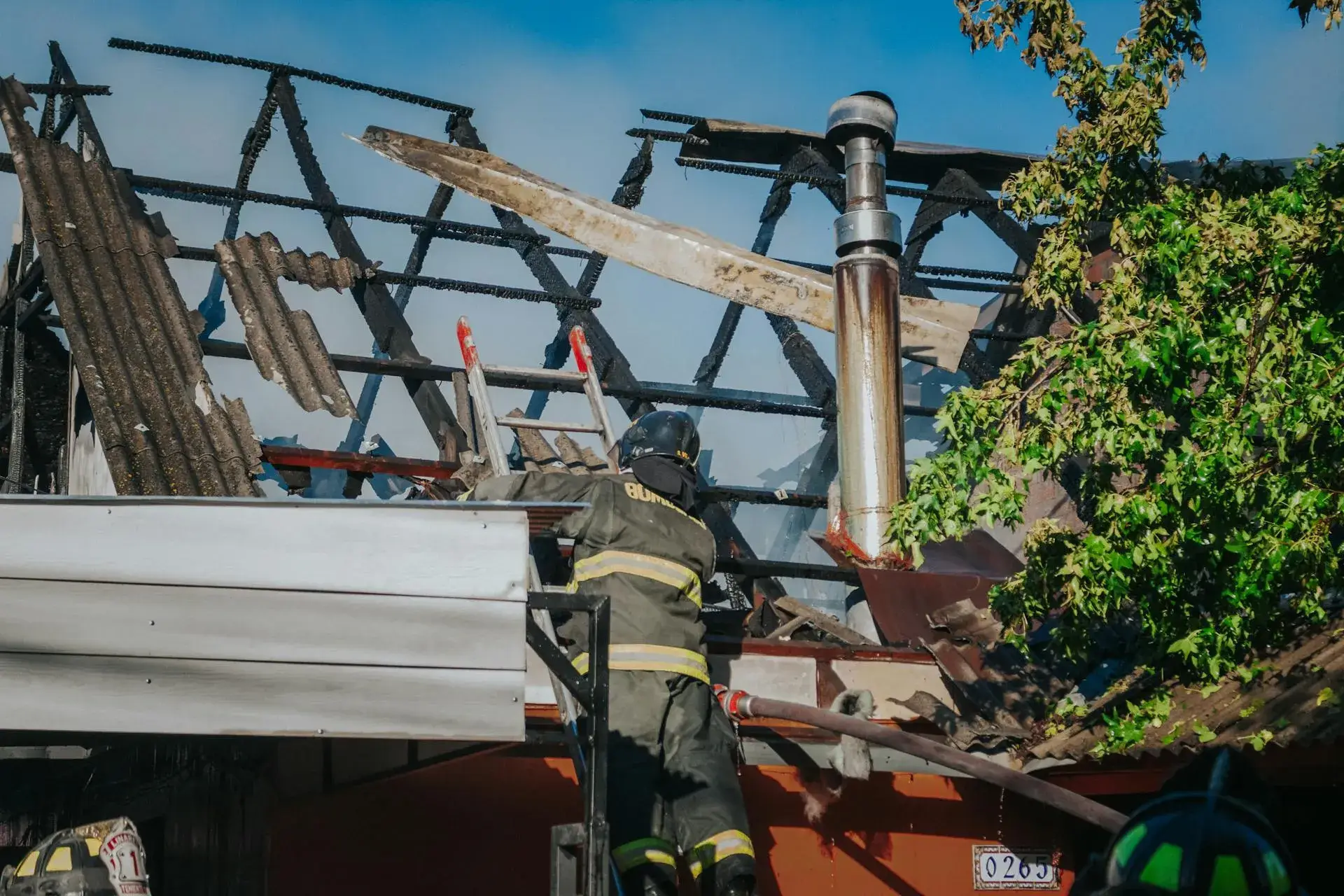
Fire Damage Restoration in Mount Juliet, TN
A house fire changes everything in an instant. Our local team responds immediately to secure your property, begin cleanup, and manage the full restoration from start to finish.
What Happens When You Call
A real person answers. We assess the situation, confirm the fire department has cleared the structure, and begin coordinating your restoration team immediately.
Our team arrives to secure the property. Windows and openings are boarded up. Tarps cover roof damage. The structure is protected from weather, animals, and unauthorized entry.
Full damage assessment with documentation. We map fire, smoke, soot, and water damage throughout the structure. A detailed scope of work and restoration plan is developed.
Debris removal, soot cleanup, and demolition of unsalvageable materials begins. Structural integrity is evaluated. Your insurance documentation is prepared and submitted.
After a fire, the immediate priority is protecting what remains. Weather, soot migration, and secondary water damage from firefighting efforts all continue to cause harm after the flames are out. When you contact X Response, we secure your Mount Juliet home within hours and begin the restoration process the same day. One team coordinates everything from board-up through final reconstruction. You are never left managing multiple contractors or navigating the process alone. Call now. Your team is standing by.
Fire Damage Risks Specific to Mount Juliet Homes
Mount Juliet has gone from a quiet Wilson County crossroads to the largest city in the county in barely two decades, and that growth shapes its fire risk. The housing stock is overwhelmingly newer construction with large, open floor plans and engineered framing that let flame and smoke move quickly once a fire starts. The Fire Department of Mt. Juliet has spent years racing to keep pace, opening new stations in 2023 and another on the north end of town in early 2026 so that crews can reach outlying subdivisions faster. For most of the city's history, fire protection ran out of a Belinda Parkway station and a central building shared with the Wilson County Emergency Management Agency, and the department has openly framed the build-out around a simple truth its chief described as basic physics: the farther a home sits from a station, the longer help takes to arrive.
That timing matters because fires in Mount Juliet move fast. In March 2026, wind-driven flames fully engulfed a local home within minutes even though firefighters arrived in roughly five, and a separate Mount Juliet house fire the same period began with what a resident described as an explosion. The region's severe weather adds another layer. Middle Tennessee sees frequent thunderstorms where lightning can ignite roofs and wiring, and the catastrophic March 3, 2020 tornado that tore through Mount Juliet, destroying hundreds of homes along with Stoner Creek Elementary and West Wilson Middle School, downed power lines and ruptured gas service in ways that routinely spark post-storm fires. Recovery here means understanding both how a home burns and how quickly help can reach it.
Rapid Growth Outpacing Station Coverage
Mount Juliet has grown faster than almost any city in Middle Tennessee, and development keeps pushing outward across Wilson County. The Fire Department of Mt. Juliet has responded by opening new stations, including two in 2023 and a centrally located, storm-hardened station on the north end of town in early 2026, all aimed at shortening response times to neighborhoods that were once far from the nearest engine. Even so, the newest subdivisions on the edges of town can sit minutes farther from help than established areas. Every additional minute lets a fire grow, smoke travel deeper into the structure, and more water accumulate during suppression. Once the fire is out, a restoration team already based in the area means recovery starts quickly.
Wind-Driven Fire in Open-Plan Homes
Most Mount Juliet homes were built in the last few decades with large, open floor plans and engineered framing, a combination that lets fire and smoke spread through a house with startling speed. Wind makes it worse. In March 2026, gusty conditions allowed a Mount Juliet house fire to fully engulf the structure within minutes despite firefighters arriving in about five. Open layouts give a fire more oxygen and fewer barriers, and engineered floor and roof systems can fail faster under heat than old-growth lumber. When a fire moves that fast, the soot and smoke reach far beyond the room of origin, and the cleanup has to follow them throughout the home.
Lightning, Storms, and Tornado Aftermath
Middle Tennessee sees frequent severe thunderstorms from spring through fall, and lightning is a documented cause of residential fires across the region. The March 3, 2020 EF3 tornado that struck Mount Juliet destroyed hundreds of homes and tore down power lines and gas service, the kind of damage that sparks fires during and after a storm. Outages send residents to candles, portable generators, and space heaters, each of which adds its own ignition risk. Homes on open, higher ground and those surrounded by mature trees face elevated exposure when storms roll across Wilson County.
Homes Near the Lakes and Rural Edges
Mount Juliet stretches toward Old Hickory Lake and into pockets of wooded, semi-rural land where homes can sit well off the main roads. In November 2025, crews fought a large fire that destroyed a home on Vanderbilt Road near Old Hickory Lake. In areas without nearby hydrants, firefighters may have to shuttle water by tanker, which can slow the volume needed to knock a fire down. These outlying and lakeside properties combine longer response distances with water-supply challenges, so fires there often grow larger before they are controlled and leave behind more extensive damage to restore.
Secondary Water Damage From Suppression
Putting out a house fire takes a large volume of water, and in Mount Juliet homes built over vented crawl spaces, that water drains through the floor system and pools beneath the structure. In Tennessee's humidity, and with the high water table near Percy Priest and Old Hickory Lakes, standing water under a home can trigger mold growth within 24 to 48 hours. Fire restoration here cannot stop at the soot and char. It has to address the smoke odor and the hidden water damage at the same time, or the secondary loss quietly compounds the original fire while the family is focused on everything else.
Fire damage restoration in Mount Juliet requires understanding what actually burned and how the home is built. A grease fire in the kitchen demands different handling than a lightning strike to the roof or a fire that followed a storm-driven power surge, and a recently built home with an open floor plan behaves differently under fire than an older farmhouse on the rural edge of town. Our team assesses the cause, the soot type, the smoke migration, and the secondary water damage from suppression, then builds a restoration plan matched to your specific home and the materials it is made from.
What Happens After the Fire Is Out
First 24 Hours
Soot and smoke residue begin chemically bonding to surfaces. Acidic soot etches into metal fixtures, appliances, and glass. The synthetic materials common in newer Mount Juliet homes produce a dense, oily soot that smears and spreads easily. Water from firefighting saturates flooring, insulation, and crawl space framing. The longer soot sits, the harder and costlier it becomes to remove.
24–72 Hours
Soot permanently discolors painted surfaces, grout, and porous stone. Metal fixtures begin pitting and corroding beyond repair. Firefighting water pooled in the crawl space initiates mold growth in Tennessee's warm humidity. Smoke odor becomes embedded in HVAC ductwork and redistributes through the home every time the system cycles. Heavily charred framing loses strength and may no longer be salvageable.
1–2 Weeks
Unaddressed water damage from suppression develops into active mold growth behind walls and in crawl spaces. Soot damage that could have been cleaned now requires replacement of affected materials. Smoke odor becomes deeply embedded in framing and insulation, requiring more aggressive treatment. Restoration scope and cost rise substantially.
1 Month+
Corrosion to wiring, plumbing fixtures, and HVAC components may require full replacement rather than cleaning. Mold remediation becomes a separate project layered on top of fire restoration. Structural wood that absorbed water and was not dried develops rot at connection points. What could have been a restoration becomes a near-complete rebuild.
The fire department puts out the fire, but the damage does not stop there. Every day without professional intervention lets soot, smoke, and water cause additional harm that increases your timeline and cost. Contact X Response now. We secure and begin restoring your Mount Juliet home the same day.
How We Restore Fire-Damaged Mount Juliet Homes
Fire damage restoration is a multi-phase project that requires coordination across securing, cleanup, repair, and reconstruction. Here is how we manage each phase.
Emergency Board-Up and Securing
Once the fire department clears the structure, our first priority is protecting it from further damage. We board up broken windows and damaged openings, tarp compromised roof sections, and secure entry points against weather and unauthorized access. In Middle Tennessee, where rain often follows the same storm systems that cause power outages and fires, this step prevents thousands of dollars in additional water damage to already-compromised materials. We also address immediate hazards like unstable structural elements and exposed wiring.
Damage Assessment and Documentation
We conduct a thorough assessment of fire, smoke, soot, and water damage throughout the entire structure, including areas that look untouched but may carry smoke infiltration in wall cavities, attic spaces, or crawl spaces. We use thermal imaging to find hidden hot spots and moisture from firefighting water. We identify the cause and the type of soot it produced, because a grease fire, an electrical fault, and a storm-driven fire each leave different residue. Every finding is documented with photos, measurements, and a detailed scope of work that forms the foundation of your insurance claim.
Soot and Debris Removal
Charred materials, debris, and unsalvageable contents are removed from the structure. Soot is cleaned from all affected surfaces using techniques matched to the material: dry sponging for delicate surfaces, wet cleaning for hard surfaces, and HEPA vacuuming for structural framing. Different fires leave different soot. A kitchen grease fire leaves oily, sticky residue, an electrical fire produces fine residue that penetrates deeply, and a wood-frame fire creates heavy char and ash. We identify the soot type and apply the correct method for each surface.
Smoke Odor Elimination and Water Mitigation
Smoke odor is eliminated using thermal fogging, ozone treatment, and hydroxyl generators depending on the severity and materials involved. HEPA air scrubbers run continuously to remove airborne particulates. At the same time, we address water damage from firefighting. In Mount Juliet homes with crawl spaces, that means extracting pooled water, drying floor joists and subfloor sheathing, and applying antimicrobial treatments to prevent mold. The fire and water damage must be handled in parallel so the secondary damage does not compound the original loss.
Structural Repair and Reconstruction
Once cleanup and mitigation are complete, reconstruction begins. This ranges from replacing drywall and flooring after a contained kitchen fire to full structural framing repair after a fire that spread through the roof or crawl space. Because most Mount Juliet homes are newer construction, we match current finishes, cabinetry, and flooring so repaired areas are indistinguishable from the rest of the house. One team manages the rebuild from start to finish, and a final walkthrough verifies all work meets our quality standards before the project closes.
The X Response Difference
Fire damage restoration is not a single service. It is a coordinated project spanning weeks or months. X Response manages the entire process so you can focus on your family while we focus on your home.
Insurance Claim Guidance for Mount Juliet Homeowners
Fire damage is one of the most comprehensively covered perils under standard Tennessee homeowner's insurance policies. Coverage typically includes structural repair, contents replacement, smoke and soot cleanup, debris removal, and additional living expenses while your home is uninhabitable. Even so, fire claims are among the most complex to document and negotiate, especially when smoke and soot migrate far beyond the room where the fire started or when wind-driven flames damage a large share of the structure before crews can knock the fire down. The difference between a claim that covers your actual restoration cost and one that falls short often comes down to the quality of the initial documentation.
How X Response Helps
- Document all fire, smoke, soot, and water damage with professional photos, thermal imaging, and a detailed scope of work from the first visit
- Identify hidden damage in wall cavities, crawl spaces, attic areas, and HVAC systems that may not be immediately visible
- Align our restoration scope with your policy's coverage categories so your adjuster can process the claim efficiently
- Prepare documentation that meets Wilson County and Mount Juliet requirements so your claim is complete
- Guide you on timing, additional living expense claims, and what to expect throughout the multi-month restoration process
X Response does not file claims on your behalf, adjust claims, or make coverage determinations. We provide documentation and guidance to help you make informed decisions about your property and your policy. Coverage decisions are made solely by your insurance carrier.
Certified Fire Restoration Specialists Serving Mount Juliet
When you contact X Response after a fire in Mount Juliet, your restoration team is drawn from certified professionals who work across Wilson County and understand how local homes are built and how local fires behave. They know that the area's newer, open-plan construction lets fire and smoke spread fast, that wind can turn a contained fire into a total loss in minutes, and that firefighting water drains straight into the vented crawl spaces beneath so many homes here. They have worked through the aftermath of kitchen fires, electrical fires, and the storm-driven damage that follows severe weather across the Nashville Basin. This is not a crew dispatched from downtown Nashville with no local knowledge. It is a local team with local expertise, operating under national quality standards.
Every technician on your team holds current IICRC certification in fire and smoke restoration and carries the appropriate Tennessee state licensing for the structural repair and reconstruction work being performed. We coordinate the entire project, from emergency board-up through soot cleanup, odor removal, water mitigation, and final rebuild, so you work with one team and one point of contact rather than juggling separate contractors during an already difficult time.
Fire Damage Restoration FAQ for Mount Juliet, TN
Other Emergency Services in Mount Juliet

Water Damage Restoration
Burst pipes, storm flooding, standing water. We extract, dry, and restore before mold sets in.
Learn more
Smoke Damage Restoration
Soot residue, chemical odors, HVAC contamination. We decontaminate surfaces, eliminate odors, and restore air quality.
Learn more
Mold Remediation
Testing, containment, removal, prevention. We find the source, eliminate the growth, and stop it from returning.
Learn more
Sewage Cleanup
Sewer backups, contaminated water, biohazard. We extract, sanitize, and restore safely.
Learn moreNearby Service Areas
Also serving nearby: