Mold Remediation in Deltona, FL
Mold spreads through wall cavities and HVAC systems within days of water intrusion. Our certified remediation team inspects, contains, and eliminates mold at the source.
What Happens When You Call
A real person answers and asks targeted questions about what you are seeing, smelling, and where the suspected mold is located. We begin coordinating your inspection immediately.
A certified remediation specialist arrives at your Deltona home with moisture meters, thermal imaging, and air sampling equipment to assess the full scope of contamination.
Lab results confirm mold species and spore concentrations. Your team presents a detailed remediation plan with scope of work, timeline, and documentation for your insurance carrier.
Containment barriers go up, negative air pressure is established, and systematic removal begins. Your home is being restored to safe conditions.
You found mold in your home and you need answers. Not a sales pitch, not a scare tactic. X Response exists for exactly this moment. When you reach out, a certified remediation specialist is scheduled to inspect your property within 24 hours. From that point forward, one team manages everything: testing, containment, removal, clearance verification, and insurance documentation. You are never left guessing what comes next or whether the job was done right. Call now. Your remediation team is standing by.
Why Mold Is So Common in Deltona Homes
Deltona sits in the heart of Volusia County, a planned community of nearly 98,000 people built on former Central Florida wetland starting in 1962. The same subtropical climate that makes the area attractive for year-round living creates conditions where mold thrives. According to the Florida Climate Center, the Daytona Beach monitoring station (the closest to Deltona) records average morning relative humidity of 87% year-round, with summer months reaching 89% in the mornings and rarely dropping below 60% even in afternoon readings. Indoor humidity in homes without properly functioning dehumidification regularly exceeds the 60% threshold where mold colonization begins.
The combination of aging housing stock, persistent humidity, frequent storm-related water intrusion, and construction methods that trap moisture inside wall cavities makes Deltona one of the most mold-prone communities in Central Florida. Understanding why mold grows here is the first step toward eliminating it permanently.
Concrete Block Construction Without Vapor Barriers
Most Deltona homes were built between 1962 and the early 1990s using concrete masonry unit (CMU) construction on monolithic slab foundations. These homes were built before modern building codes required vapor barriers and adequate ventilation in wall assemblies. The porous concrete block absorbs and retains moisture, creating hidden reservoirs inside wall cavities where mold colonies establish themselves long before any visible signs appear on interior surfaces. Remediation in these homes often requires opening walls to access contaminated block and cavity spaces.
Year-Round Subtropical Humidity
Volusia County's climate maintains relative humidity above 80% most mornings throughout the year, with summer months averaging 89% at dawn. Even afternoon readings rarely drop below 60% during the wet season from June through October. This persistent moisture in the air means that any surface below the dew point, including cold water pipes, air conditioning ducts, and exterior-facing walls, will accumulate condensation. Without active dehumidification, indoor humidity in Deltona homes routinely exceeds the 60% threshold where mold begins to grow.
Post-Hurricane Water Intrusion
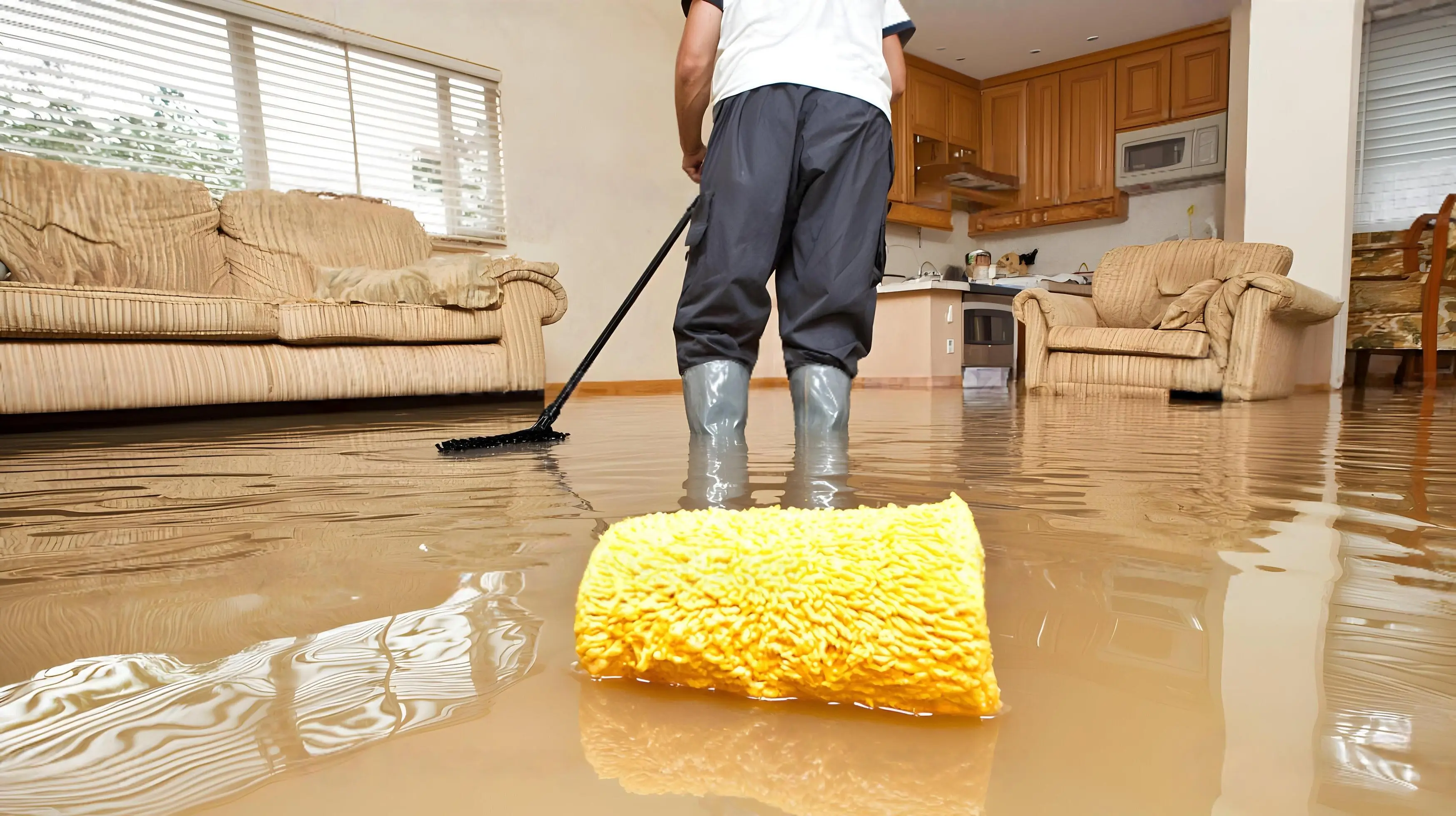
Volusia County took direct impacts from Hurricanes Milton and Helene in 2024, with Milton dumping over 15 inches of rain in 48 hours. The 2022 hurricane season caused severe flooding throughout Deltona. When floodwater enters a home and is not professionally dried within 24 to 48 hours, mold colonization is virtually guaranteed in Florida's climate. Many Deltona homeowners discovered mold weeks or months after storm events, growing inside wall cavities and under flooring where the water intrusion was not fully addressed during initial cleanup.
HVAC Systems as Mold Distribution Networks
Florida homes run air conditioning for 8 to 10 months of the year. When warm, humid outdoor air meets the cold surfaces inside HVAC ductwork, condensation forms on duct walls, drain pans, and coil housings. Many older Deltona homes have original ductwork from the 1970s and 1980s with deteriorating insulation that traps moisture. Once mold colonizes inside the HVAC system, every time the system cycles on it distributes spores throughout the entire home. A musty smell that appears when the AC runs is often the first sign of duct contamination.
Slow Plumbing Leaks in Aging Homes
Many Deltona homes contain polybutylene water supply piping installed between the late 1970s and mid-1990s. While catastrophic pipe bursts cause obvious water damage, the more insidious problem is slow, hidden leaks at fittings and connections. These leaks can saturate wall cavities and subfloor areas for weeks or months before detection, providing the sustained moisture that mold needs to establish large colonies. By the time a homeowner notices discoloration or a musty odor, the contamination has often spread well beyond the visible area.
These factors work together. A slow leak saturates a concrete block wall cavity. The high ambient humidity prevents natural drying. The HVAC system picks up spores and distributes them to other rooms. Within weeks, what started as a small moisture problem behind a bathroom wall has become a whole-home air quality issue. Professional remediation in Deltona requires addressing not just the visible mold, but the moisture source, the hidden contamination in wall cavities, and the HVAC system that may have spread spores throughout the structure.
How Mold Progresses When Left Untreated
24 to 48 Hours After Moisture Exposure
Mold spores that are already present in the air land on wet surfaces and begin germinating. At this stage, there is no visible growth and no detectable odor. The EPA states that drying materials within this window can prevent mold colonization entirely. In Florida's humidity, this window is often shorter.
3 to 7 Days
Mold colonies become established on organic materials like drywall paper, wood framing, and carpet backing. Growth is still primarily hidden inside wall cavities, under flooring, and behind baseboards. A faint musty odor may develop. Spore production begins, and airborne concentrations start rising above normal background levels.
1 to 2 Weeks
Visible mold patches appear on surfaces. The colony enters exponential growth, producing large quantities of spores that spread through air circulation and HVAC systems. Musty odors become persistent. Occupants with allergies or asthma may begin experiencing worsening symptoms. The contamination area expands well beyond the original moisture source.
2 to 4 Weeks
Mold penetrates deep into porous materials. Drywall, wood framing, and insulation become structurally compromised and must be removed rather than cleaned. Secondary colonies establish in other areas of the home through spore distribution via HVAC. What could have been a contained remediation becomes a multi-room project.
One Month and Beyond
Extensive contamination throughout wall cavities, HVAC ductwork, and structural framing. Mycotoxin-producing species like Stachybotrys may establish on chronically wet cellulose materials. Health effects intensify for occupants. Remediation scope expands significantly, requiring full containment, extensive material removal, and HVAC decontamination. Insurance claims become more complex.
The difference between a contained remediation and a whole-home project is often just a few days of response time. If you suspect mold in your Deltona home, contact X Response now. Early intervention saves time, money, and your family's health.
How We Remediate Mold-Contaminated Deltona Homes
From initial inspection through clearance testing, every step follows the ANSI/IICRC S520 standard for professional mold remediation. Here is exactly what the process involves.
Inspection, Testing, and Moisture Mapping
Our certified remediation specialist arrives with professional moisture meters, thermal imaging cameras, and air sampling equipment. We inspect all areas of suspected contamination, including inside wall cavities, under flooring, and within HVAC systems. In Deltona's concrete block homes, thermal imaging is critical for detecting moisture trapped inside CMU cavities that is invisible from the surface. Air samples and surface swabs are collected and sent to an accredited laboratory to identify mold species and measure spore concentrations. The inspection produces a detailed scope of work and the documentation your insurance company needs.
Containment and Engineering Controls
Before any mold is disturbed, we establish containment to prevent cross-contamination to unaffected areas. This involves sealing off the work area with polyethylene sheeting, creating negative air pressure using HEPA-filtered air scrubbers, and deactivating HVAC systems that serve the contaminated zone. For larger projects in Deltona homes where mold has spread through ductwork, we may need to isolate multiple zones. The negative air pressure ensures that when mold is disturbed during removal, spores are captured by filtration rather than spreading to clean areas of your home.
Mold Removal and Material Disposal
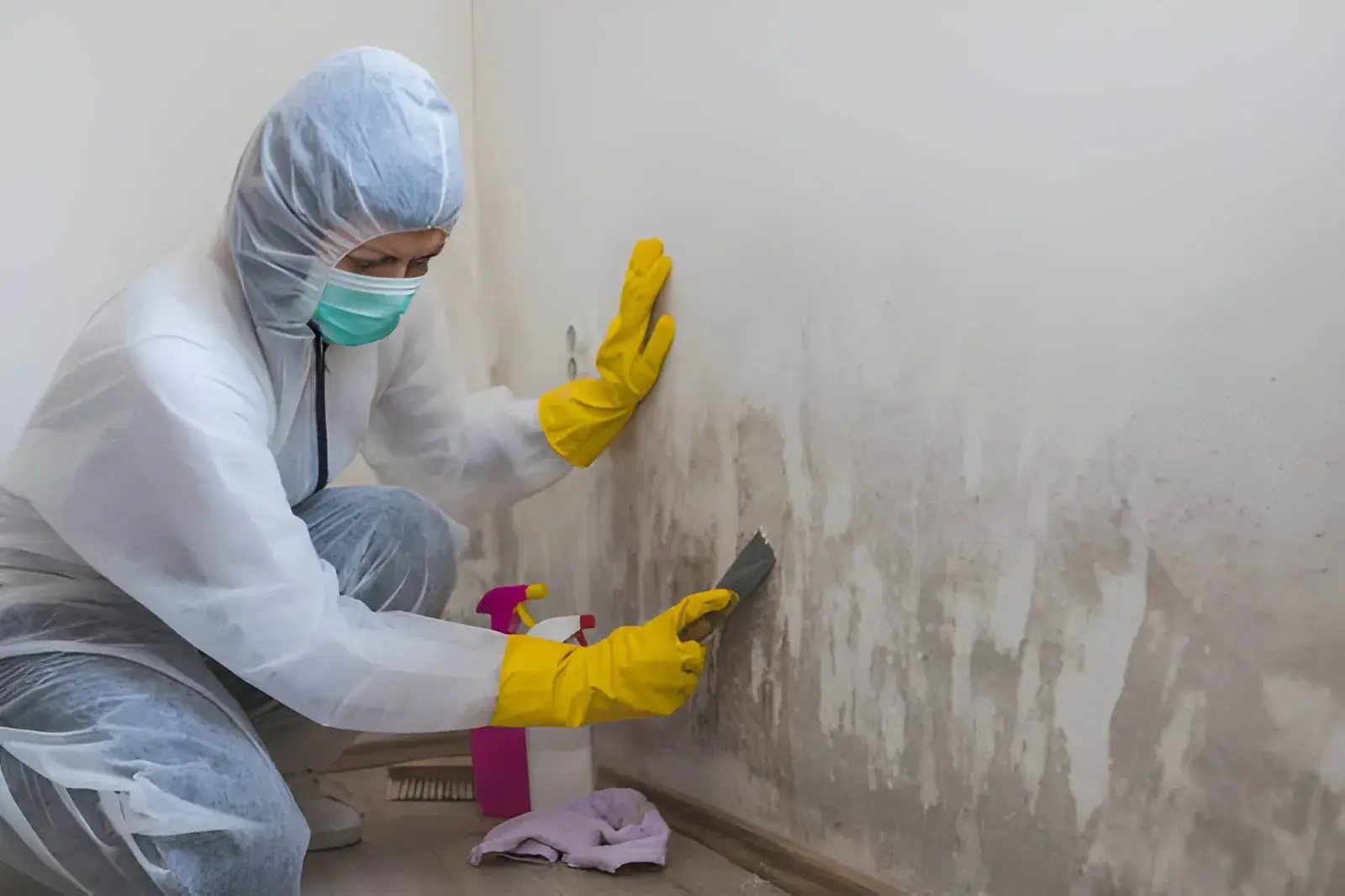
Contaminated porous materials that cannot be effectively cleaned are removed and disposed of following proper protocols. This typically includes affected drywall, insulation, carpet, and any wood materials where mold has penetrated below the surface. In Deltona's concrete block homes, we often need to remove drywall to access mold growing on the interior face of the CMU blocks themselves. Non-porous surfaces like concrete, metal, and tile are cleaned using HEPA vacuuming followed by antimicrobial treatment. All removed materials are bagged inside the containment area before being transported out to prevent spore release.
Antimicrobial Treatment and Moisture Correction
After contaminated materials are removed, all remaining surfaces in the work area are treated with EPA-registered antimicrobial agents to eliminate residual mold and prevent regrowth. For concrete block walls, we apply treatment directly to the block surface and use directed airflow to ensure cavities are fully dried. Critically, we identify and correct the moisture source that caused the mold in the first place. Whether it is a plumbing leak, inadequate ventilation, HVAC condensation, or post-storm water intrusion, the moisture problem must be resolved or the mold will return regardless of how thorough the remediation was.
Clearance Testing and Verification
After remediation is complete, post-remediation air sampling and surface sampling are collected and sent to the laboratory. These clearance samples must show that airborne mold spore concentrations have returned to normal background levels and that no active mold growth remains on treated surfaces. If any area does not pass clearance, we continue work until it does. You receive a complete remediation report with before-and-after lab results, photos, moisture readings, and a summary of all work performed. This documentation supports your insurance claim and provides a verified record that your home has been restored to safe conditions.
The X Response Difference
When you contact X Response, you get a certified remediation team that follows the ANSI/IICRC S520 standard from inspection through clearance. One team, one standard of work, verified results.
Insurance Claim Guidance for Mold Remediation in Deltona
Mold coverage is one of the most complicated and contentious areas of homeowner's insurance in Florida. Most standard policies either exclude mold entirely or impose sub-limits that cap mold-related payouts between $1,000 and $10,000, often far less than the actual cost of professional remediation. The key factor in most coverage decisions is whether the mold resulted from a "covered peril." Mold caused by a sudden pipe burst (a covered event) is more likely to receive coverage than mold from a gradual leak, deferred maintenance, or chronic humidity. Citizens Property Insurance, which now covers a growing share of Volusia County homeowners as private carriers have pulled back from the Florida market, has specific mold sub-limits that vary by policy type.
How X Response Helps
- Document the mold contamination with professional lab results, moisture readings, and a detailed scope of work from the initial inspection
- Connect the mold damage to the original water event or moisture source, which is critical for establishing coverage under most policies
- Provide documentation formatted the way insurance adjusters expect to receive it, reducing back-and-forth and processing delays
- Explain your policy's likely mold coverage and sub-limits before you file, so you understand your options and potential out-of-pocket costs
- Guide you on timing and documentation requirements specific to your carrier
X Response does not file claims on your behalf, adjust claims, or make coverage determinations. We provide documentation and guidance to help you make informed decisions about your property and your policy. Coverage decisions are made solely by your insurance carrier.
Certified Mold Remediation Specialists Serving Deltona
When you contact X Response for mold remediation in Deltona, your team is drawn from certified professionals who work in Volusia County and understand the specific challenges of remediating mold in this area. They know concrete block construction and how moisture behaves inside CMU wall cavities. They understand how Florida's persistent humidity affects remediation timelines and equipment requirements. They have handled post-hurricane mold contamination in homes throughout this community. This is not a crew dispatched from across the state. It is a local team with local knowledge, operating under national quality standards.
Every technician on your team holds current IICRC certification in mold remediation and applied microbial remediation. Equipment includes commercial HEPA air scrubbers, negative air machines, professional moisture meters, thermal imaging cameras, and EPA-registered antimicrobial treatment systems. When your team arrives, they bring everything needed to establish containment and begin work immediately.
Mold Remediation FAQ, Deltona, FL
Our certified remediation team serving Deltona and Volusia County can typically schedule an inspection within 24 hours of your call. For situations involving active water damage where mold risk is imminent, we prioritize same-day response to begin mitigation. Full remediation begins immediately after laboratory testing results confirm the scope of contamination, usually within 48 to 72 hours of the initial inspection.
Most Florida homeowner's policies either exclude mold entirely or cap mold-related payouts between $1,000 and $10,000 through sub-limits. The critical factor is whether the mold resulted from a covered peril. Mold caused by a sudden pipe burst is more likely to be covered than mold from gradual leaks, deferred maintenance, or chronic humidity. Citizens Property Insurance, which covers a growing share of Volusia County homeowners, has specific mold sub-limits that vary by policy type. X Response documents the mold damage and connects it to the original water event to support your claim.
Deltona's combination of year-round humidity averaging above 80% in the mornings, concrete block construction that traps moisture in wall cavities, a high water table, and frequent hurricane-related water intrusion creates ideal conditions for mold growth. Most homes were built between 1962 and the early 1990s without modern vapor barriers or adequate ventilation in wall assemblies. The porous concrete block absorbs moisture and creates hidden reservoirs where mold colonies establish long before visible signs appear on interior surfaces.
Small-scale remediation affecting a single area typically takes 2 to 3 days of active work. Moderate projects involving multiple rooms or wall cavities take 3 to 7 days. Large-scale remediation exceeding 100 square feet with full containment and structural repairs can take 1 to 3 weeks. Florida's high ambient humidity can extend drying times after material removal, and the project is not considered complete until post-remediation clearance testing confirms safe spore levels. Timeline also depends on laboratory turnaround for testing results.
If the mold is confined to a small area and proper containment with negative air pressure is in place, you can usually remain in unaffected parts of the home. The HEPA air scrubbers running inside containment are loud but the work area is sealed off from living spaces. If contamination is widespread, involves HVAC systems that serve the whole home, or if household members have respiratory conditions, asthma, or compromised immune systems, temporary relocation is recommended until clearance testing confirms safe air quality levels throughout the home.
Other Emergency Services in Deltona
Water Damage Restoration
Emergency water extraction, structural drying, and full property restoration. We respond within 60 minutes.
Learn more
Fire Damage Restoration
Structural damage, soot, debris. We stabilize, clean, and rebuild what fire destroyed.
Learn more
Smoke Damage Restoration
Wildfire impingement, soot, chemical odors. We decontaminate surfaces, eliminate odors, and restore air quality.
Learn more

Sewage Cleanup
Biohazard situations handled safely with full sanitation, disinfection, and structural restoration.
Learn more