
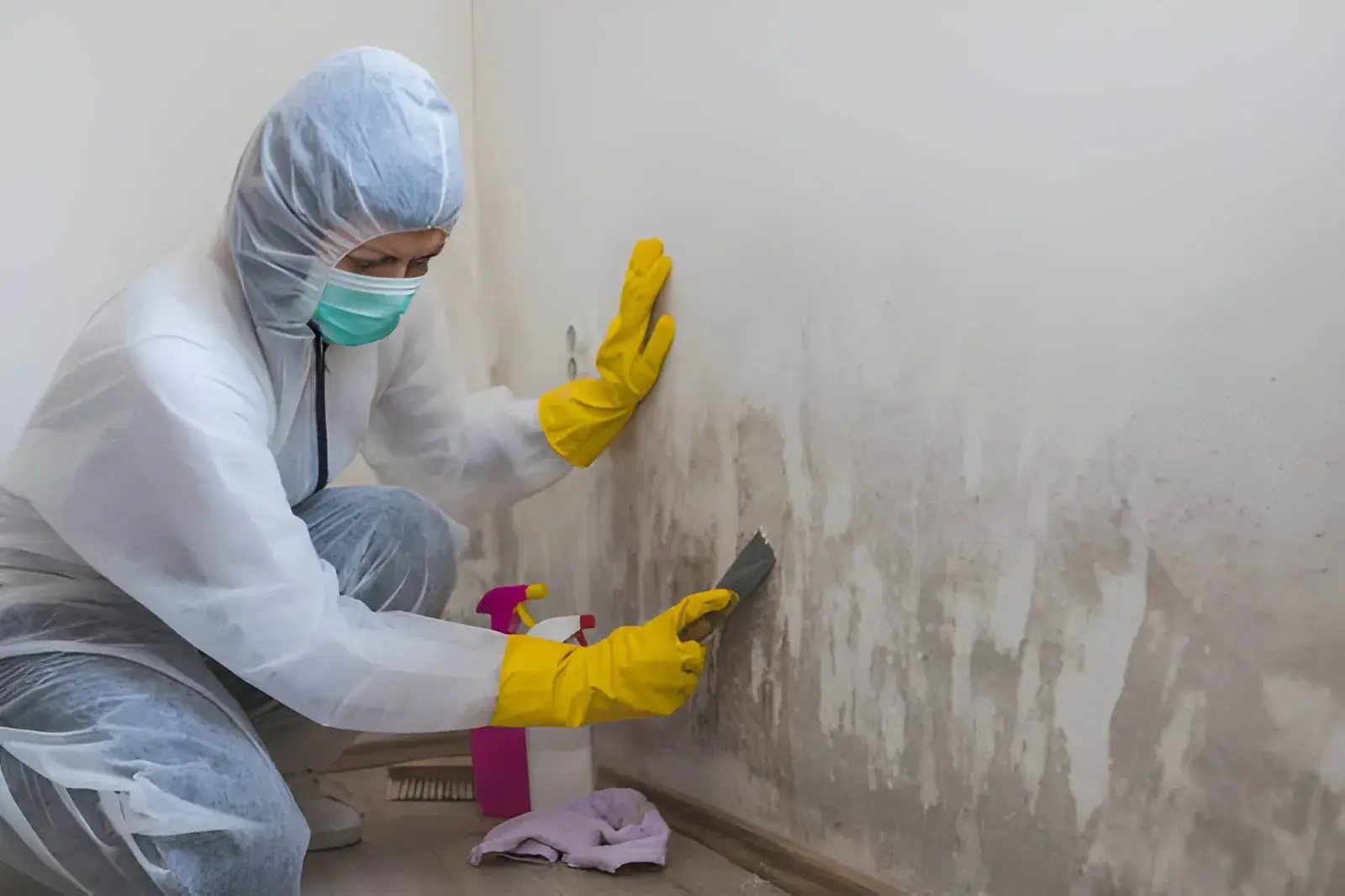
Mold Remediation in East Point, GA
Mold colonies expand exponentially in North Georgia's humid climate, releasing toxic airborne spores within 24 to 48 hours. Our East Point mold specialists respond within 60 minutes.
What Happens When You Call
A live indoor environmental specialist answers your call, assesses your mold concerns, and immediately dispatches our South Fulton remediation team.
Technicians arrive within 60 minutes with infrared thermal cameras, precision moisture meters, and air-sampling equipment to map hidden fungal growth.
We erect sealed polyethylene containment barriers and establish negative air pressure with HEPA filtration to prevent spore dispersal into clean living areas.
Active fungal colonies are physically removed, structural framing is treated with EPA-registered botanical antimicrobials, and indoor air is scrubbed to safe baseline levels.
Discovering active mold growth in your East Point home or commercial facility is a serious indoor environmental hazard that indicates an underlying moisture intrusion. In South Fulton County's warm, humid climate, mold colonies proliferate rapidly on damp drywall, timber floor joists, crawl space subflooring, and central HVAC systems. X Response provides certified, scientific mold remediation strictly adhering to the IICRC S520 standard. When you reach out, our local remediation team mobilizes within minutes and arrives on site within 60 minutes to isolate the affected area, identify the moisture trigger, and begin safe fungal removal. Call now for expert mold remediation in East Point.
Why East Point Homes Are Vulnerable to Mold
East Point is an established community in southwest Fulton County, bordered by Atlanta, College Park, and Hapeville. The city features a diverse residential architectural inventory, including 1920s to 1950s craftsman bungalows and cottages in historic Jefferson Park and Colonial Hills, mid-century ranch homes along Washington Road, and modern multi-story developments near Camp Creek Parkway. Natural drainage across the city flows through the Camp Creek and Utoy Creek basins. Many historic homes in East Point are built over unconditioned, vented crawl spaces, while newer subdivisions feature concrete slab foundations or daylight basements set into dense Piedmont red clay. During North Georgia's long, humid summers, outdoor relative humidity regularly runs high, allowing moist air to enter unsealed crawl spaces and condense on cooler subfloor timbers, creating an ideal breeding ground for widespread fungal colonization.
The Georgia Department of Public Health Environmental Health Section notes that indoor air quality is not a regulated program in Georgia with no state regulatory authority or enforcement mandates for residential mold inspections, leaving property owners to rely on professional industry standards for remediation. Because Georgia lacks state-mandated mold licensing, property owners in East Point must ensure their remediation contractor adheres strictly to recognized national standards such as the IICRC S520 Standard for Professional Mold Remediation. Without rigorous physical containment, negative air pressure, and certified post-remediation verification testing, improper remediation efforts often aerosolize millions of microscopic fungal spores, cross-contaminating living spaces and creating persistent respiratory hazards.
Subtropical Summer Humidity and Dew Point Condensation
From late spring through early autumn, East Point experiences sustained high ambient relative humidity levels. When warm, humid outdoor air enters air-conditioned living spaces, vented crawl spaces, or attics, moisture condenses on drywall, subfloors, and cold ductwork, triggering rapid mold growth.
Vented Crawl Spaces and High Ground Moisture
Many older homes in Jefferson Park and Colonial Hills feature traditional vented crawl spaces over bare soil. Rainwater pooling in dense Piedmont red clay evaporates upward, saturating floor joists and fiberglass insulation batts, leading to heavy growth of Cladosporium, Aspergillus, and Penicillium species.
Piedmont Red Clay Hydrostatic Pressure and Basement Seepage
Dense Georgia red clay expands when wet and retains water against foundation footings. This creates significant hydrostatic pressure that drives moisture through micro-cracks in concrete block walls and basement slabs, keeping lower-level walls continuously damp and mold-prone.
Attic HVAC Condensation and Air Handler Leaks
In many East Point residences, HVAC air handlers and ductwork are routed through unconditioned attics. During peak summer heat, temperature differentials cause intense condensation on evaporator coils and drain pans, which can overflow into ceiling framing and cultivate hidden mold colonies.
Plumbing Failures Behind Historic Plaster and Drywall
Aging galvanized and copper plumbing runs in older homes often develop slow, hidden pinhole leaks inside wall cavities. By the time water stains appear on paint or plaster, extensive fungal colonization has already developed on the wood framing and drywall backing.
Effective mold remediation in East Point requires rigorous containment, source-level moisture correction, and medical-grade air filtration. X Response combines advanced forensic diagnostics with IICRC S520 compliant remediation protocols, restoring safe indoor air quality across Fulton County properties.
What Happens to Your Home While You Wait
Within 1 Hour
Moisture intrusion saturates porous building materials such as drywall, subfloor sheathing, and wood framing. Microscopic mold spores naturally present in indoor air adhere to damp surfaces and begin the germination cycle.
1-24 Hours
Fungal spores absorb moisture and develop microscopic root networks (hyphae) that penetrate deep into porous drywall paper and wood fibers. Ambient relative humidity inside enclosed wall cavities climbs.
24-48 Hours
Active fungal colonies become established and begin reproducing. In East Point's humid summer climate, visible mold clusters appear on baseboards, crawl space joists, and ceiling panels, accompanied by faint musty odors.
48-72 Hours
Mold colonies release millions of microscopic spores and volatile organic compounds (VOCs) into the indoor air. Spores infiltrate central HVAC systems, contaminating ductwork and spreading throughout the entire home.
One Week and Beyond
Extensive fungal colonization causes structural wood decay and drywall degradation. Indoor spore concentrations reach hazardous levels, creating severe air quality risks and requiring extensive demolition and biohazard containment.
Rapid intervention within the first 24 to 48 hours prevents widespread spore distribution and protects structural timbers. Contact X Response immediately. Our East Point remediation crew responds within 60 minutes.
How We Restore Mold-Affected East Point Homes
Our mold remediation methodology follows strict IICRC S520 protocols, ensuring complete physical containment, safe removal of contaminated materials, and certified air purification across East Point.
Comprehensive Moisture Diagnostic and Thermal Inspection
Upon arriving at your East Point property, our certified technicians use infrared thermal imaging cameras, pinless moisture meters, and air-sampling tools to locate the moisture source and define the boundary of fungal contamination.
Sealed Polyethylene Containment and Negative Air Pressure
We isolate the work zone using six-mil polyethylene sheeting and spring-loaded containment poles. Industrial HEPA-filtered air scrubbers run continuously, creating negative air pressure to ensure spores cannot escape into clean living areas during removal.
Removal and Disposal of Non-Salvageable Porous Materials
Saturated drywall, acoustic ceiling tiles, and contaminated crawl space insulation are misted with antimicrobial solution to prevent spore release, carefully removed under containment, and double-bagged for safe disposal in compliance with environmental standards.
HEPA Vacuuming and Botanical Antimicrobial Decontamination
All remaining structural timbers, masonry walls, and subfloors are thoroughly vacuumed using critical-filter HEPA equipment, followed by hand-wiping with EPA-registered botanical antimicrobials to eliminate residual spores and prevent fungal regrowth.
Post-Remediation Verification and Structural Sealing
Once physical cleaning is complete, we apply a clear, vapor-permeable antimicrobial encapsulant to structural wood framing to prevent future moisture absorption. Independent third-party air sampling is recommended to verify that indoor spore counts have returned to normal baseline levels.
The X Response Difference
When mold threatens your East Point home or commercial facility, choose the certified specialists with the training, containment protocols, and equipment to restore your environment safely. Call X Response today.
Insurance Claim Guidance for East Point Homeowners
Navigating mold damage insurance claims in Georgia requires demonstrating that fungal growth directly resulted from a sudden and accidental covered water loss, such as a burst supply line, water heater failure, or appliance malfunction. Georgia homeowner policies typically exclude mold caused by long-term humidity, continuous seepage, or deferred maintenance, and many policies impose specific monetary limits on mold remediation coverage. X Response provides forensic documentation, moisture mapping, and itemized estimating to establish the causal connection between the initial water loss and subsequent mold colonization.
How X Response Helps
- Document the original point of water intrusion using high-resolution infrared thermal imaging and moisture readings
- Compile itemized Xactimate estimates adhering to standard insurance pricing structures for South Fulton County
- Differentiate between covered structural drying scopes and policy-limited mold remediation line items
- Coordinate directly with your insurance adjuster, providing daily moisture logs and containment protocols
- Deliver comprehensive clearance documentation to support your claim closure and property value protection
X Response does not adjust insurance claims or make legal policy determinations. We provide detailed scope estimates, photographic records, and mitigation logs to assist you and your insurance carrier.
Certified Restoration Specialists Serving East Point
Our East Point mold remediation team consists of certified indoor environmental specialists serving South Fulton County. Our technicians bring extensive experience treating fungal contamination across local residential architectures, from historic crawl space homes in Jefferson Park to modern slab-on-grade properties along Camp Creek Parkway. We understand how Georgia's subtropical climate and Piedmont clay soils interact with building envelopes to create localized moisture pockets.
Every lead technician holds certifications from the Institute of Inspection, Cleaning and Restoration Certification (IICRC) in Applied Microbial Remediation (AMRT) and Water Damage Restoration (WRT). Equipped with commercial HEPA air scrubbers, negative air machines, thermal imaging cameras, and EPA-registered botanical biocides, our team restores your East Point property safely, thoroughly, and permanently.
In East Point, X Response works with Boss Contracting, an independent local restoration partner serving Fulton County.
Mold Remediation FAQ for East Point Homeowners
Other Emergency Services in East Point

Water Damage Restoration
Burst pipes, storm flooding, standing water. We extract, dry, and restore before mold sets in.
Learn more
Fire Damage Restoration
Structural damage, soot, debris. We stabilize, clean, and rebuild what fire destroyed.
Learn more
Smoke Damage Restoration
Soot residue, chemical odors, HVAC contamination. We decontaminate surfaces, eliminate odors, and restore air quality.
Learn more
Sewage Cleanup
Sewer backups, contaminated water, biohazard. We extract, sanitize, and restore safely.
Learn more