
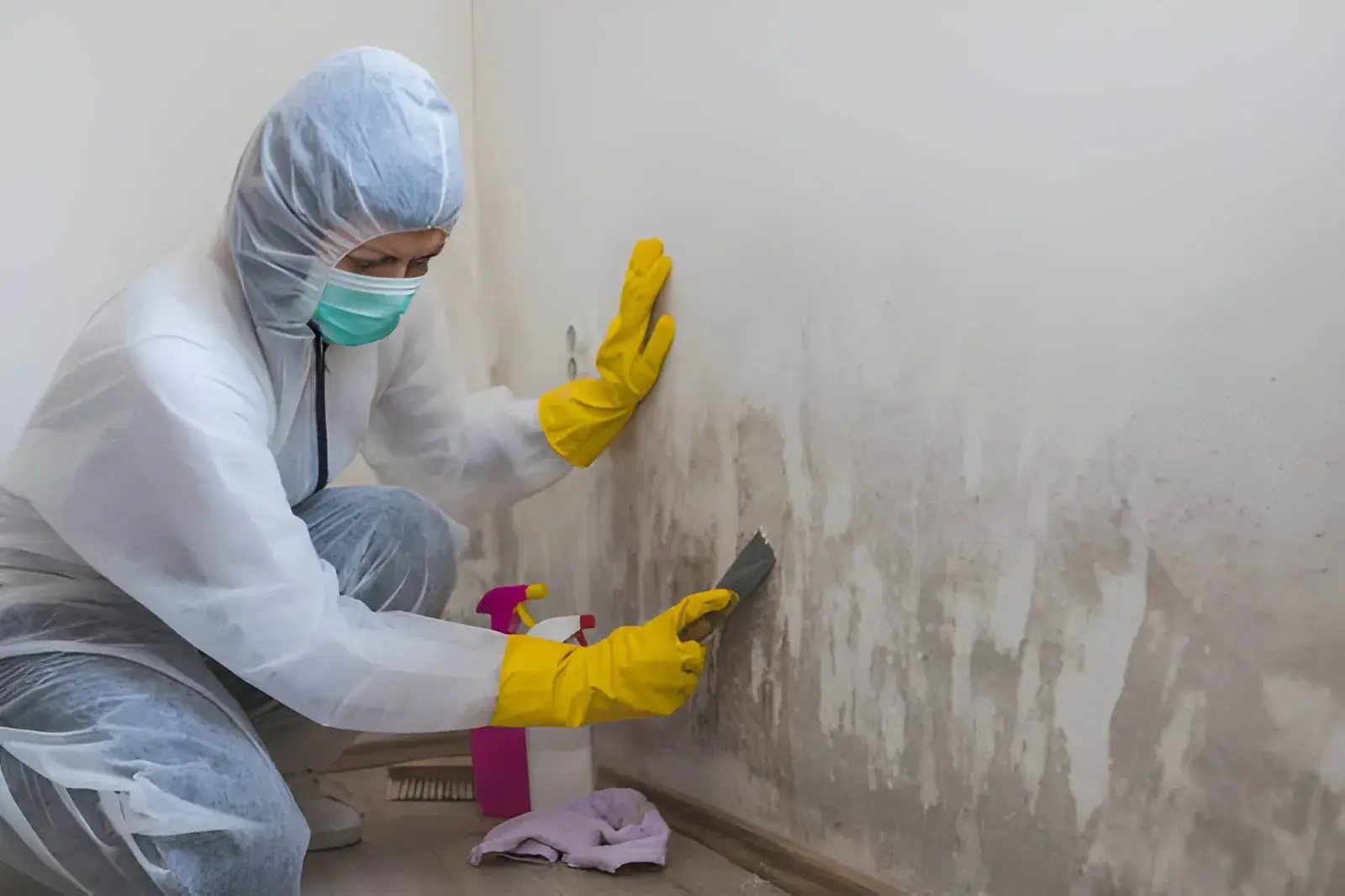
Mold Remediation in Mableton, GA
Mold spreads rapidly in Mableton's humid climate, releasing spores into your living space through floor systems and HVAC returns. Our local team responds within 60 minutes to contain the problem before it expands.
What Happens When You Call
A real person answers, not a call center. We assess your situation, ask about moisture sources and visible signs, and begin coordinating your response immediately.
Your dedicated remediation team is dispatched from our local base serving Mableton and the surrounding south Cobb County communities.
Team arrives with containment materials, HEPA filtration, moisture meters, and remediation equipment. Assessment and containment begin immediately.
Contamination extent mapped, containment established, remediation plan documented with clear scope and timeline. You know exactly what comes next.
Mold does not wait. In Mableton's warm, humid climate, a moisture source that goes unaddressed for 48 hours becomes a mold colony that continues expanding and releasing spores into your living environment every day. By the time you see visible growth or smell that musty odor, the contamination is already established in materials you cannot see. X Response exists for this moment. When you reach out, your remediation team is mobilized within minutes. Call now. Your team is standing by.
Why Mableton Homes Are Vulnerable to Mold
Mableton's mold risk is fundamentally a climate and construction story. The community sits in south Cobb County on Georgia's Piedmont plateau, where the humid subtropical climate delivers average annual rainfall near 53 inches and summer relative humidity that routinely runs high outdoors. Much of Mableton's housing stock was built between the 1960s and 1990s with crawl space foundations on Piedmont clay soil, a construction method that creates a moisture trap beneath the living space. Metro Atlanta mold inspection firms report that roughly 6 out of every 10 homes they inspect with elevated indoor mold levels have an active moisture problem in the crawl space. In Mableton specifically, the combination of clay soil that holds moisture against foundations, a creek corridor that elevates the local water table, and decades of homes built with vented crawl spaces on that saturated clay creates conditions where mold growth beneath the floor system is not an anomaly but a predictable outcome of the environment.
Nickajack Creek runs through the center of Mableton, and its floodplain influences groundwater levels across the surrounding neighborhoods. Properties within several hundred yards of the creek corridor sit on soil that remains saturated for longer periods after rain, elevating humidity beneath crawl space homes even during periods without flooding. The September 2009 flood that crested Nickajack Creek at 19.30 feet pushed contaminated water into homes and crawl spaces across the community, and any property that was not professionally dried within 48 hours of that event developed mold growth that may have been remediated at the time or may still persist in concealed spaces. Beyond flood events, the ongoing interaction between Mableton's humid air, its clay soils, its creek-influenced water table, and its crawl space housing stock produces chronic moisture conditions that support mold growth year after year without any dramatic triggering event.
Crawl Space Moisture and Piedmont Clay Foundations
The dominant mold pathway in Mableton is moisture rising from saturated Piedmont clay through vented crawl spaces into the floor system above. Piedmont clay is nearly impermeable: it absorbs water slowly during rain, saturates, and then releases moisture into the air space above it for days or weeks afterward. In a vented crawl space, the traditional building practice was to allow outside air to circulate beneath the home to carry moisture away. In practice, during Mableton's humid summers, the incoming air is already carrying high relative humidity, and when it contacts the cooler surfaces of the crawl space (earth, foundation walls, floor joists), it condenses. The result is a perpetually damp environment where wood framing stays at moisture content levels well above the 19 percent threshold that supports mold colonization. Floor joists, band boards, sill plates, and subfloor sheathing develop mold colonies that release spores upward through gaps, plumbing penetrations, and HVAC returns located in the floor system. Residents notice musty odor, unexplained respiratory symptoms, or elevated humidity in the living space without understanding that the source is beneath their feet.
Nickajack Creek Corridor and Elevated Water Tables
Properties near Nickajack Creek in Mableton experience elevated groundwater influence that compounds the baseline moisture from clay soils. The creek corridor acts as a drainage collector for the surrounding terrain, and the water table in adjacent neighborhoods rises during wet periods and remains elevated longer than in areas farther from the creek. For crawl space homes within several hundred yards of the creek, this means the soil beneath the house releases moisture more continuously and the crawl space humidity stays higher for longer periods. After heavy rain events, groundwater can rise enough to pond on crawl space vapor barriers or saturate the exposed soil floor in homes without barriers. The September 2009 flood pushed Nickajack Creek to 19.30 feet and inundated crawl spaces with contaminated water containing organic material that provides ideal nutrients for mold growth. Any crawl space that flooded during that event and was not professionally dried and treated within 48 hours almost certainly developed mold on structural framing, and some of those colonies persist today in homes where the contamination was never discovered or was incompletely remediated.
HVAC Systems and Mold Distribution
Mableton homes rely on forced-air HVAC systems that cycle air continuously through the building, and in homes with crawl space mold problems, the HVAC system becomes the primary pathway distributing spores from the contaminated crawl space into the living environment. Return air ducts in crawl space homes are often located at floor level or within the crawl space itself, drawing air directly from the area where mold colonies are actively releasing spores. Supply ducts running through the crawl space may develop condensation on their exterior surfaces in summer (when cold conditioned air meets hot humid crawl space air), creating additional mold growth surfaces within the mechanical system. The evaporator coil in the air handler operates wet during cooling season and can develop mold on its surface and in the condensate drain pan if not properly maintained. Once mold establishes in any HVAC component, it distributes spores to every room the system serves with every cycle, contaminating surfaces and degrading indoor air quality building-wide regardless of where the original colony resides.
Post-Water-Damage Mold in Hidden Cavities
Every water damage event in Mableton that is not professionally dried within 48 hours produces mold growth in concealed spaces: inside wall cavities, beneath flooring, behind cabinetry, and in ceiling assemblies above leaks. In Cobb County's warm climate, mold colonization begins within 24 to 48 hours on damp organic materials, and once established in a concealed cavity it can grow indefinitely as long as moisture remains available. Sources include undetected plumbing leaks behind walls, condensation from improperly insulated HVAC ducts, roof leaks that wet ceiling insulation without visible staining, and water intrusion around windows that channels into wall cavities. The mold in these hidden locations is not visible from the living space but continuously releases spores into the indoor environment through air pathways, electrical penetrations, and gaps at baseboards and trim. Residents often experience symptoms or notice musty odor for months before the concealed colony is discovered.
Seasonal Humidity Cycles and Growth Patterns
Mold growth in Mableton follows a seasonal pattern driven by humidity and temperature. The primary growth season runs from April through October, when outdoor humidity consistently runs high and temperatures support rapid fungal reproduction. During this period, crawl spaces reach peak moisture levels, condensation forms on cool surfaces inside the building, and any existing moisture problem produces accelerated growth. Summer is the worst: humidity peaks, HVAC systems create temperature differentials that promote condensation, and the long days provide warmth that fuels metabolic activity in fungal colonies. Winter brings lower humidity and slower growth, but mold does not die; it goes dormant and resumes when conditions improve in spring. This seasonal cycle means that a mold problem identified in winter is already smaller than it will become by the following August if not addressed. The warm, humid season that defines Mableton's climate is also the season that feeds mold most aggressively.
These factors create Mableton's mold environment: Piedmont clay that holds moisture against foundations and releases it into crawl spaces continuously, a creek corridor that elevates groundwater in surrounding neighborhoods, decades of crawl space construction that traps humidity against structural framing, HVAC systems that distribute spores from contaminated spaces into the living environment, hidden growth from unaddressed water damage in concealed cavities, and a humid subtropical climate that feeds fungal growth aggressively for seven months of the year. Effective mold remediation in Mableton requires addressing both the visible contamination and the moisture source that created it, because removing mold without fixing the moisture condition only delays the next colony.
What Happens to Your Home While You Wait
Within 48 Hours of Moisture
Mold spores, which are always present in outdoor and indoor air, begin germinating on damp organic surfaces. In Mableton's warm climate, this window is tight: temperatures above 70 degrees and relative humidity above 60 percent on a surface provide ideal conditions year-round indoors and for seven months outdoors. Germination is invisible. There is no odor yet, no discoloration, and no indication that colonization has begun. This is the window where drying a wet material prevents mold entirely, and why the 48-hour drying standard exists.
48 Hours to One Week
Visible colonies begin forming on organic surfaces: drywall paper, wood framing, carpet backing, insulation facing, and cardboard. Growth appears as small spots of discoloration, often in corners, behind furniture, or in areas with poor air circulation. Musty volatile organic compounds become detectable by smell in enclosed spaces. Spore production begins, releasing reproductive particles into the air that can colonize new damp surfaces elsewhere in the structure. In crawl spaces, growth typically appears first on floor joists and band boards where humidity from the clay soil condenses.
One to Four Weeks
Colonies expand across affected surfaces and penetrate deeper into porous materials. Drywall paper is consumed by fungal hyphae that extend through the paper facing into the gypsum core. Wood framing develops surface colonization that requires mechanical removal (sanding or media blasting) rather than surface wiping. Spore counts in indoor air rise measurably above outdoor baseline levels. Residents with allergies or respiratory sensitivity begin reporting symptoms: congestion, eye irritation, coughing, or exacerbation of asthma. The affected area expands daily in Mableton's humid conditions.
One to Three Months
Established colonies produce heavy spore loads that circulate through the HVAC system and contaminate surfaces building-wide. Wood rot begins where mold has been established longest, weakening structural capacity of affected framing members. The musty odor permeates the living space and does not dissipate with ventilation. Drywall and insulation are contaminated beyond salvage and require removal. The remediation scope has expanded from a localized treatment to multi-area demolition, containment, and reconstruction.
Six Months and Beyond
Structural compromise of affected framing. Floor systems above heavily contaminated crawl spaces begin sagging as joists lose structural capacity. Extensive contamination through multiple building systems requires large-scale remediation with full containment, negative air, and substantial material removal. The project becomes a significant reconstruction effort. Property value is materially affected, and disclosure obligations apply to future transactions. What could have been a contained remediation at discovery becomes a major restoration project that disrupts occupancy for weeks.
Mold damage is progressive and accelerating. What is a small colony today becomes a building-wide problem within weeks in Mableton's climate. Contact X Response now. Our team responds within 60 minutes to contain the contamination before it spreads further.
How We Restore Mold-Affected Mableton Homes
From the moment our team arrives, every step is documented, measured, and verified. Here is exactly what professional mold remediation involves for Mableton properties.
Assessment and Moisture Source Identification
Our team arrives with professional moisture meters, thermal imaging cameras, and air sampling equipment to determine the full extent of contamination and identify the moisture source that created it. In Mableton, we immediately check the crawl space because it is the most common mold source in this community: clay-soil moisture rising into floor framing through a vented crawl space. We also inspect for plumbing leaks, HVAC condensation issues, roof penetrations, and any prior water damage that was not fully dried. Thermal imaging reveals temperature anomalies that indicate hidden moisture behind walls and above ceilings. Air sampling establishes spore counts and species identification when needed. The assessment produces a written scope of work identifying every affected area, the moisture source, and the remediation protocol required. No work begins until you understand the full scope and approve the plan.
Containment and Environment Control
Before any mold is disturbed, we establish engineering controls to prevent cross-contamination to unaffected areas. Containment barriers (polyethylene sheeting sealed with tape) isolate the work area from the living space. Negative air machines maintain lower air pressure inside the containment zone, ensuring that any spores released during removal flow toward HEPA filtration rather than into clean spaces. HVAC systems are shut down and registers sealed to prevent the mechanical system from distributing disturbed spores through ductwork. For crawl space remediation, the crawl space access is contained and negative air is established to prevent spore migration upward through the floor system during removal work. These controls remain in place throughout the remediation process.
Mold Removal and Material Demolition
Contaminated materials are removed using methods that minimize spore release. Porous materials with embedded growth, including drywall, insulation, carpet, and severely contaminated wood surfaces, are removed and disposed of as contaminated waste. Wood framing that retains structural integrity but has surface colonization is treated with mechanical removal methods (HEPA-vacuum sanding or media blasting) to remove the colonized surface layer while preserving the structural member. Non-porous surfaces are cleaned with appropriate antimicrobial solutions and HEPA-vacuumed. All removed material is bagged inside the containment zone before being transported out of the building to prevent cross-contamination during disposal. For crawl space remediation in Mableton, this typically involves treating floor joists, band boards, sill plates, and subfloor sheathing while working in confined space with respiratory protection and portable lighting.
Moisture Source Correction
Removing mold without fixing the moisture source guarantees recurrence. For Mableton crawl spaces, moisture correction typically involves crawl space encapsulation: sealing the earth floor with heavy-gauge vapor barrier, sealing foundation vents to eliminate humid air intrusion, insulating foundation walls, and installing a commercial dehumidifier to maintain humidity below 55 percent year-round. For wall cavity mold from plumbing leaks, the leak is repaired before reconstruction. For HVAC condensation issues, ductwork is insulated or replaced to eliminate the temperature differential that produces condensation. We identify and correct the specific moisture pathway for each affected area, because Mableton's climate will re-establish growth on any surface where moisture conditions persist.
Verification and Clearance
After remediation is complete and containment is still in place, we conduct final verification. Visual inspection confirms that all visible contamination has been removed from accessible surfaces. Moisture readings confirm that treated areas and corrected moisture sources are at acceptable levels. When the scope warrants it, post-remediation air sampling is conducted by an independent third party to verify that spore counts inside the containment zone have returned to levels consistent with or below outdoor ambient conditions. Only after verification confirms successful remediation is containment removed and the space returned to normal use. Final documentation includes photos of all treated areas, moisture readings, air sampling results when applicable, and a written completion report.
The X Response Difference
When you contact X Response for mold in Mableton, you get a team that treats the entire problem: source identification, containment, removal, moisture correction, and verified outcomes. Complete remediation, not a surface treatment that guarantees recurrence.
Insurance Claim Guidance for Mableton Homeowners
Mold insurance coverage in Georgia depends on the cause. If mold results from a sudden, covered water damage event (burst pipe, appliance failure, storm-driven roof leak) and the homeowner took prompt action to mitigate, mold remediation is generally covered under the water damage claim. If mold results from long-term moisture conditions like crawl space humidity, gradual plumbing leaks, or maintenance failures, most Georgia homeowner's policies exclude coverage under maintenance and gradual deterioration exclusions. Many policies also carry specific mold sublimits (often 10,000 to 25,000 dollars) that cap coverage regardless of actual remediation cost. The distinction is between sudden/accidental and gradual/maintenance, and carriers scrutinize this boundary aggressively because mold claims can be expensive. Proper documentation of the moisture source and timeline is what determines whether your claim falls inside or outside coverage.
How X Response Helps
- Document the moisture source and timeline clearly: sudden event (burst pipe on a specific date) versus gradual condition (crawl space humidity over months)
- Photograph all visible mold growth, affected materials, and the moisture source with timestamps establishing when the condition was discovered
- Record professional moisture readings that demonstrate the connection between the identified source and the mold location
- Document prompt response and mitigation once the condition was discovered, because carriers can deny claims where the homeowner delayed action after becoming aware
- Identify your policy's mold sublimit and understand how it applies before approving a remediation scope that may exceed that cap
X Response does not file claims on your behalf, adjust claims, or make coverage determinations. We provide thorough documentation and professional guidance to help you understand your options. Coverage decisions are made solely by your insurance carrier.
Certified Restoration Specialists Serving Mableton
When you contact X Response for mold in Mableton, your remediation team is drawn from certified professionals who work across south Cobb County and understand the specific conditions that produce mold in this community. They have remediated crawl spaces beneath homes along the Nickajack Creek corridor where clay-soil moisture and elevated water tables create chronic humidity. They have treated wall cavity mold from slow plumbing leaks in 1970s-era homes with original copper supply lines. They have addressed post-flood growth in homes that were inundated during the 2009 event and incompletely dried. They understand that mold in Mableton is almost always a crawl space and moisture problem first, and that remediation without source correction is a temporary measure that guarantees the next call.
Every technician on your team holds current IICRC certification in mold remediation and carries appropriate Georgia state licensing. Equipment includes HEPA air scrubbers for containment zones, negative air machines, professional moisture meters and thermal imaging cameras, air sampling equipment, media blasting tools for structural wood treatment, and commercial dehumidification systems for post-remediation moisture control. When your team arrives, they bring everything needed to assess, contain, and begin remediation immediately.
In Mableton, X Response works with Atlanta's Best Restoration, an independent local restoration partner serving Cobb County.
Mold Remediation FAQ for Mableton Homeowners
Other Emergency Services in Mableton

Water Damage Restoration
Burst pipes, storm flooding, standing water. We extract, dry, and restore before mold sets in.
Learn more
Fire Damage Restoration
Structural damage, soot, debris. We stabilize, clean, and rebuild what fire destroyed.
Learn more
Smoke Damage Restoration
Soot residue, chemical odors, HVAC contamination. We decontaminate surfaces, eliminate odors, and restore air quality.
Learn more
Sewage Cleanup
Sewer backups, contaminated water, biohazard. We extract, sanitize, and restore safely.
Learn more