
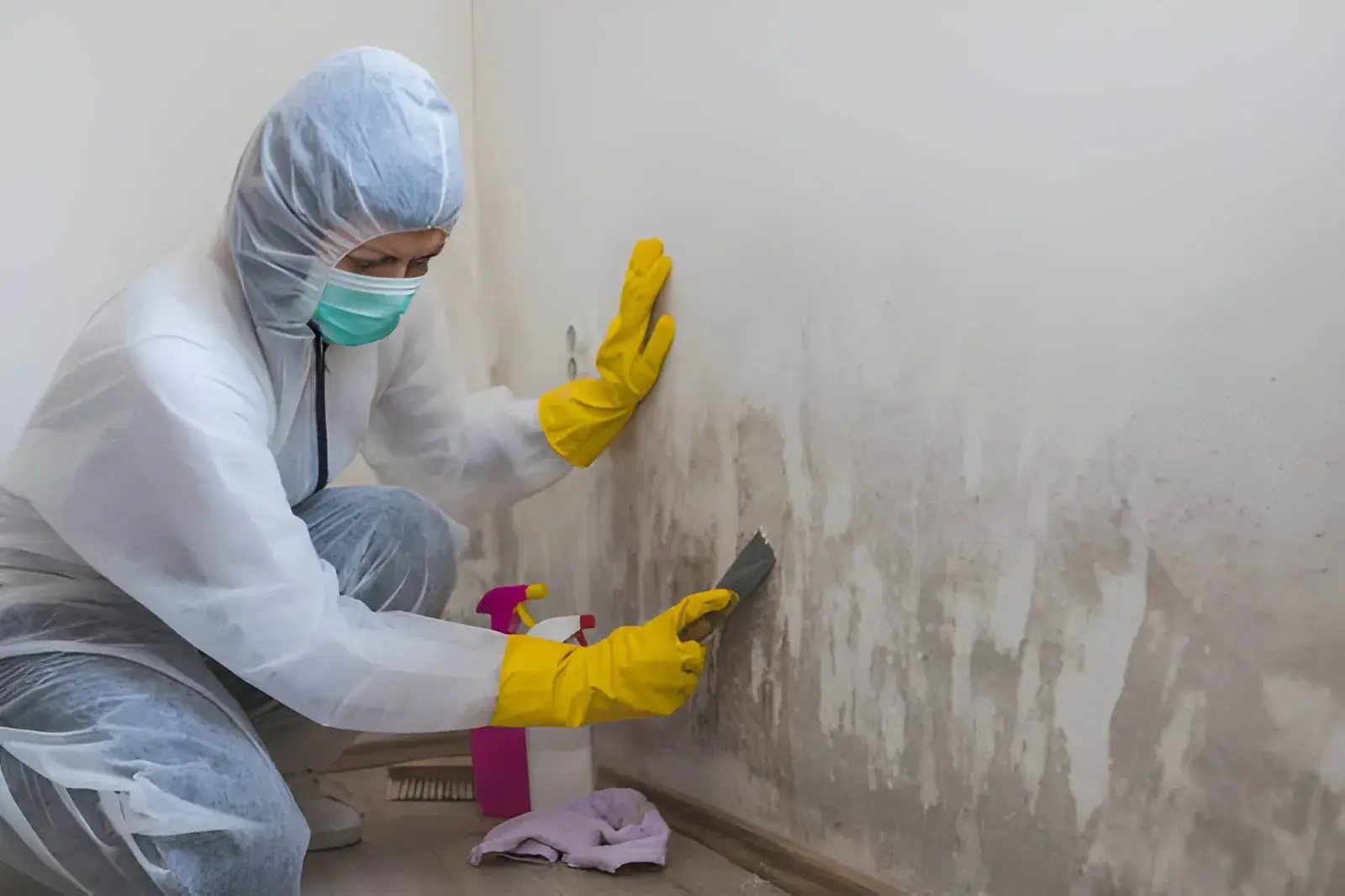
Mold Remediation in Plainfield, IN
Mold spreads behind walls and beneath floors where you cannot see it. Our certified local team responds to Plainfield mold emergencies within 60 minutes to contain the growth before it spreads further.
What Happens When You Call
A real person answers. We assess your situation, ask about visible growth, moisture history, and health concerns, then begin coordinating your response.
Your dedicated remediation team is dispatched from our local base serving Plainfield and Hendricks County.
Team arrives with moisture meters, thermal imaging, air sampling equipment, and containment materials. Assessment begins immediately.
Scope defined, containment established, remediation plan documented. You know exactly what the problem is, how we will address it, and what your insurance options are.
You have discovered mold in your home, or you suspect it based on a musty smell, visible staining, or health symptoms that worsen indoors. You need professionals who will identify the full scope, contain it, remove it safely, and prevent it from returning. X Response exists for exactly this situation. When you reach out, your remediation team is mobilized and on site quickly. Call now. Your team is standing by.
Why Plainfield Homes Are Vulnerable to Mold
Plainfield is a town of approximately 35,000 residents in Hendricks County, positioned in a humid continental climate (IECC Climate Zone 5A). Summer dewpoints regularly exceed 65 degrees Fahrenheit, creating a sustained ambient moisture environment that drives year-round mold risk. Plainfield's rapid residential expansion over the past two decades has resulted in thousands of homes built on the dense clay soils typical of Hendricks County, which trap groundwater against foundations and necessitate heavy reliance on sump pumps; when these fail during severe central Indiana thunderstorms, the resulting basement moisture frequently leads to widespread mold colonization. Additionally, the White Lick Creek corridor, which runs directly through the town, keeps the local groundwater table elevated during wet seasons, exerting continuous hydrostatic pressure on nearby basements.
Indiana does not require a state-specific mold remediation license, meaning any contractor can advertise mold services without specialized training. For Plainfield homeowners, this makes verifying credentials vital: requiring current IICRC AMRT certification and adherence to IICRC S520 protocols ensures the mold is safely removed rather than simply painted over. In Plainfield's rapidly built subdivisions, construction defects such as improper flashing or inadequate crawl space vapor barriers often create hidden moisture pathways that allow mold to grow unseen inside wall cavities for years.
Clay Soils and Sump Pump Failures
Hendricks County is characterized by dense clay soils that absorb water very slowly. During rain events, water pools against home foundations. The vast majority of Plainfield homes with basements rely on sump pumps to manage this continuous groundwater pressure. When severe thunderstorms knock out power-a common occurrence in central Indiana-these pumps fail. The resulting basement flooding, if not dried immediately and thoroughly with commercial dehumidifiers, creates the perfect humid environment for mold colonization in drywall, framing, and carpeting within 48 hours.
White Lick Creek Groundwater
White Lick Creek flows through Plainfield and is prone to flooding. Even when the creek does not overtop its banks, sustained high water levels elevate the surrounding groundwater table. Homes near the creek corridor experience chronic moisture pressure against their foundations. This keeps the relative humidity in basements and crawl spaces above the 60 percent threshold required for mold growth, even without active flooding or visible standing water.
Rapid Subdivision Construction Defects
Plainfield has experienced explosive residential growth, leading to the rapid construction of massive subdivisions. High-volume construction can sometimes lead to moisture management defects: improperly installed window flashing, inadequate grading that directs water toward the foundation instead of away, or incomplete vapor barriers in crawl spaces. These defects introduce sustained moisture into the building envelope without producing visible interior leaks, allowing mold to colonize inside walls and beneath siding long before it is detected by the homeowner.
Finished Basements Without Moisture Control
Many Plainfield homeowners value finished basement space for entertainment and home offices. However, when drywall and flooring are installed directly against concrete foundation walls without adequate vapor barriers or exterior waterproofing, the moisture naturally wicking through the porous concrete becomes trapped. This trapped humidity creates a hidden incubator between the foundation and the finished wall, resulting in extensive concealed mold growth that is often only discovered when a musty odor permeates the home.
HVAC Condensation in Attics
In many newer Plainfield homes, HVAC ductwork is routed through unconditioned attic spaces. During humid Indiana summers, cold supply air creates condensation on the exterior of the ducts if insulation is damaged or inadequate. This condensation drips onto the surrounding ceiling drywall and insulation, supporting mold growth. Additionally, oversized HVAC systems that short-cycle cool the air too quickly without removing enough humidity, leaving indoor moisture levels high enough to support mold growth on interior surfaces.
Mold in Plainfield thrives because the necessary moisture conditions are driven by the town's dense clay soils, reliance on vulnerable sump pumps, White Lick Creek's groundwater influence, and the realities of rapid subdivision construction. Effective remediation requires more than surface cleaning; it demands identifying the moisture source, establishing strict containment, removing the growth safely according to industry protocols, and correcting the underlying moisture pathway so the mold does not return.
What Happens to Your Home While You Wait
Within 24 Hours
Following water intrusion or sustained humidity above 60 percent, naturally occurring mold spores begin germinating on damp surfaces. In Plainfield's warm, humid summers, this process accelerates. No visible growth is present yet, but rapid drying at this stage prevents colonization entirely.
24–48 Hours
Visible mold growth begins on organic materials like drywall paper, wood framing, and carpet backing. Growth typically starts in concealed, poorly ventilated areas: inside wall cavities, beneath flooring, and in basement framing. By the time mold is visible, it has likely been growing hidden for hours.
48–72 Hours
Mold colonies expand and produce airborne spores. If the HVAC system runs, spores distribute throughout the home, seeding new colonies and degrading indoor air quality. Occupants with allergies or asthma may begin experiencing noticeable symptoms.
One Week
Established colonies spread extensively across wall cavities and framing. Structural materials begin showing degradation. The remediation scope expands significantly compared to earlier intervention.
One Month and Beyond
Extensive colonization occurs throughout concealed building cavities. Structural wood damage compromises framing connections. What started as a moisture issue becomes a major remediation and reconstruction project.
The difference between preventing mold and remediating it is often just 24 to 48 hours of drying time. Contact X Response now. Our Plainfield team responds within 60 minutes.
How We Restore Mold-Affected Plainfield Homes
From the moment our team arrives, every step follows established IICRC S520 protocols for safe, effective mold remediation.
Inspection and Moisture Mapping
Our team uses thermal imaging, professional moisture meters, and visual inspection to identify the full scope of mold growth and its driving moisture source. In Plainfield homes, we scrutinize foundation seepage, sump pump functionality, attic ventilation, and HVAC components to trace the exact moisture pathway.
Containment and Isolation
Before any mold is disturbed, we establish engineering controls to prevent cross-contamination. Polyethylene barriers seal the work area, and negative air pressure machines with HEPA filtration ensure air flows into the containment zone, preventing spore migration.
Safe Mold Removal
Contaminated materials are removed following strict IICRC S520 protocols. Non-salvageable materials like mold-contaminated drywall are bagged within containment. Salvageable structural framing is cleaned using HEPA vacuuming and specialized antimicrobial treatments.
Structural Drying and Moisture Correction
After removal, we dry the affected structure using commercial dehumidifiers. We then advise on or address the moisture source: recommending sump pump battery backups, repairing plumbing, or improving ventilation. Without correcting the source, mold will return.
Post-Remediation Verification
We conduct a thorough verification to confirm all visible mold is removed and moisture levels are acceptable. Post-remediation air sampling is available to verify indoor air quality. Complete documentation is provided for your records.
The X Response Difference
When you contact X Response for mold remediation, you get a team that follows established protocols, eliminates the moisture source, and verifies results.
Insurance Claim Guidance for Plainfield Homeowners
Mold damage insurance coverage in Indiana varies significantly between policies and depends heavily on the moisture source. Most standard homeowner's policies cover mold remediation when it results from a covered peril, such as a sudden burst pipe or storm damage. However, mold resulting from long-term maintenance issues-like groundwater seepage or failing sump pumps without proper endorsements-is typically excluded. Many policies include mold-specific sublimits that cap coverage at $5,000 to $10,000.
How X Response Helps
- Document the moisture source that caused the mold to determine if it falls under a covered peril
- Record the full scope of mold contamination with photos and affected material inventory
- Identify your policy's mold-specific sublimit and sump pump endorsements before filing
- Document remediation methods and post-remediation verification results
- Explain coverage implications before you file so you understand potential out-of-pocket exposure
X Response does not file claims on your behalf, adjust claims, or make coverage determinations. We provide documentation and guidance to help you make informed decisions about your property and your policy. Coverage decisions are made solely by your insurance carrier.
Certified Restoration Specialists Serving Plainfield
Your Plainfield remediation team is drawn from certified professionals who understand the specific moisture dynamics driving mold growth in Hendricks County. They know how clay soils and sump pump failures lead to chronic basement dampness, how White Lick Creek elevates the local water table, and how rapid subdivision construction can hide moisture defects. This is a local team with direct experience in Plainfield's building conditions.
Every technician on your team holds current IICRC AMRT (Applied Microbial Remediation Technician) certification. Equipment includes moisture meters, thermal imaging cameras, HEPA air scrubbers, negative air machines, and commercial dehumidifiers sized for central Indiana's humidity levels.
In Plainfield, X Response works with The Cleaning Source, an independent local restoration partner serving Hendricks County.
Mold Remediation FAQ for Plainfield Homeowners
Other Emergency Services in Plainfield
Water Damage Restoration
Burst pipes, storm flooding, standing water. We extract, dry, and restore before mold sets in.
Learn more
Fire Damage Restoration
Structural damage, soot, debris. We stabilize, clean, and rebuild what fire destroyed.
Learn more
Smoke Damage Restoration
Soot residue, chemical odors, HVAC contamination. We decontaminate surfaces, eliminate odors, and restore air quality.
Learn more
Sewage Cleanup
Sewer backups, contaminated water, biohazard. We extract, sanitize, and restore safely.
Learn moreNearby Service Areas
Also serving nearby: