
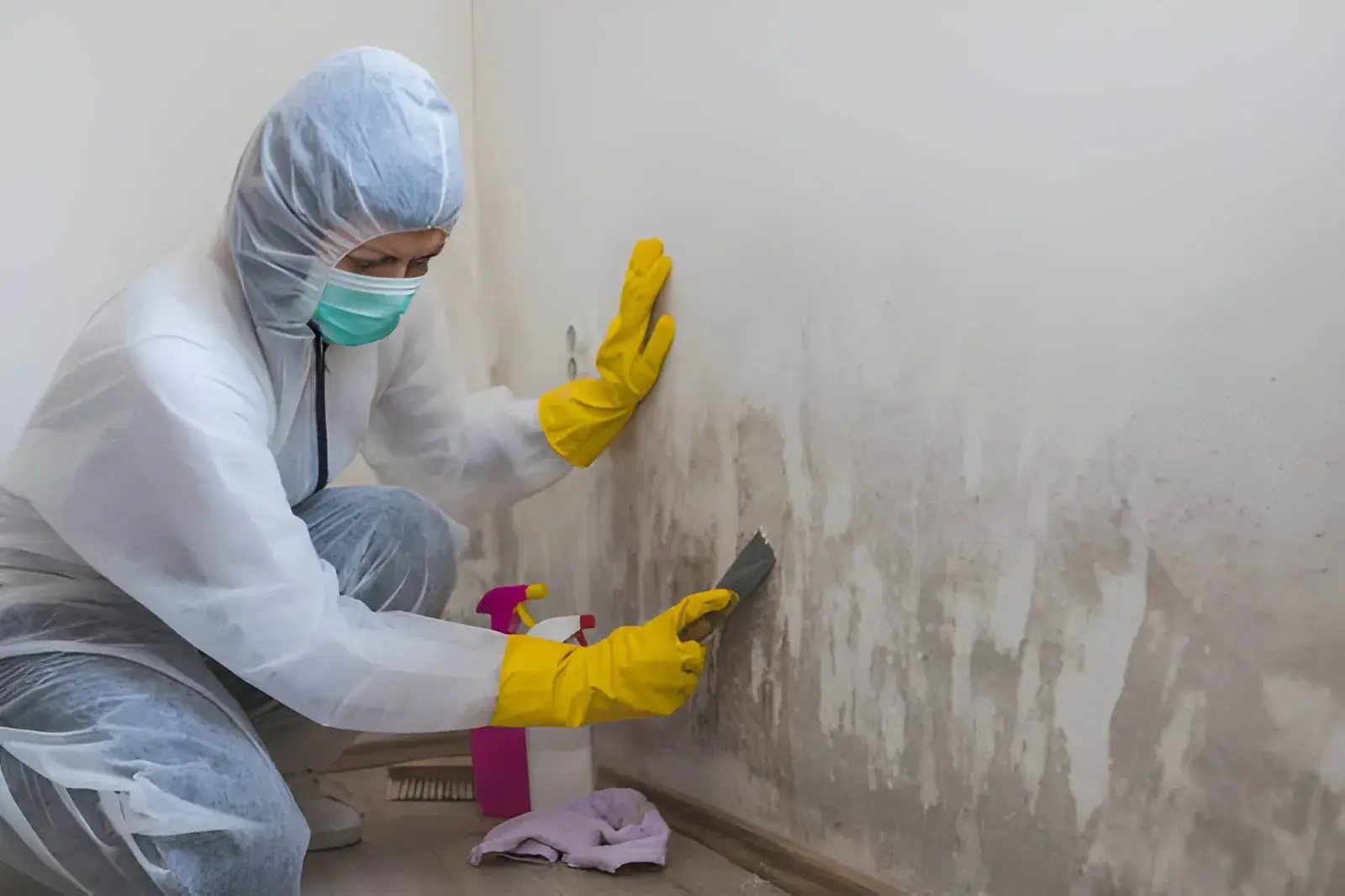
Mold Remediation in Chesterfield, MO
Hidden mold spores spread rapidly through HVAC systems and damp wall cavities, threatening structural lumber and indoor air. Our Chesterfield specialists respond quickly to contain and eradicate the infestation.
What Happens When You Call
Your inquiry connects directly to our St. Louis County dispatch to schedule an urgent remediation assessment.
Certified specialists arrive with infrared thermal cameras and moisture meters to locate active dampness zones.
Critical containment barriers and negative air pressure systems isolate contaminated rooms from clean areas.
Remediation technicians physically remove colonized materials, clean structural framing with HEPA vacuums, and apply antimicrobials.
Postponing mold remediation allows fungal hyphae to consume drywall paper and penetrate structural framing lumber. When you reach out to 911 Water Damage Experts LLC, our certified team acts immediately to restore healthy indoor conditions. Call now for certified mold remediation.
Why Chesterfield Homes Are Vulnerable to Mold
Chesterfield's position along the humid river bluffs and alluvial floodplains of western St. Louis County creates an environment uniquely conducive to fungal proliferation. Midwestern summers regularly bring prolonged stretches of high heat coupled with relative humidity exceeding 75 percent and dew points surging past 70 degrees. Along the Missouri River lowlands and valleys bordering Bonhomme Creek, shallow water tables generate constant subterranean vapor pressure against residential foundations. The EPA warns that water-damaged building materials must be dried within 24 to 48 hours to prevent rapid mold colonization and structural damage. When plumbing leaks, roof intrusions, or foundation seepages remain unaddressed past this narrow timeframe, microscopic airborne spores settle onto damp organic surfaces and begin colonizing building assemblies.
Residential construction throughout established Chesterfield communities, such as Shenandoah, Green Trails, and the subdivisions along Wildhorse Creek Road, prominently features finished walkout basements and poured concrete foundation slabs. While concrete appears solid, it is porous and naturally wicks moisture from surrounding damp soil into indoor spaces. When homeowners finish lower levels by placing carpeting over concrete slabs or installing drywall directly over furring strips without continuous vapor barriers, subterranean moisture gets trapped. This hidden condensation zone creates an ideal incubator for species like Aspergillus, Cladosporium, and Stachybotrys chartarum to feed on drywall paper backing and wooden baseplates unnoticed for months.
University of Missouri Extension research highlights that covering damp structural framing with new drywall or insulation traps moisture and guarantees fungal recurrence. Professional guidelines emphasize using calibrated moisture meters to ensure structural lumber falls below 13 percent moisture content before any area can be considered dry. Attempting to scrub active mold colonies with retail chlorine bleach is counterproductive; bleach is predominantly water, which evaporates more slowly than its active chemicals, leaving behind residual moisture that feeds deep fungal roots embedded in porous wall studs. Furthermore, mechanical agitation without containment releases millions of spores into central HVAC ductwork, contaminating upper floors.
Safe and permanent mold remediation requires strict environmental isolation. Our certified microbial remediation specialists erect airtight physical containment barriers using 6-mil poly sheeting and deploy negative air machines equipped with hospital-grade HEPA filtration. This engineering control ensures that airborne spores dislodged during structural cleaning are exhausted safely out of the home rather than dispersed into bedrooms or living rooms. We follow IICRC S520 professional standards, physically removing unsalvageable porous drywall and micro-cleaning structural framing before applying EPA-registered botanical antimicrobials.
River Bluff Summer Humidity
Prolonged stretches of intense heat and relative humidity above 75 percent along the Missouri River valley foster rapid condensation in unconditioned spaces.
Finished Basement Vapor Traps
Carpeting and drywall installed over porous concrete basement slabs trap subterranean ground moisture, creating ideal feeding grounds for hidden colonies.
Ineffective DIY Chemical Sprays
Surface wiping with household bleach fails to penetrate structural wood fibers and aerosolizes millions of microscopic fungal spores into central ventilation ducts.
Erasing mold contamination in St. Louis County demands rigorous physical containment, source moisture elimination, and certified structural remediation.
What Happens to Your Home While You Wait
24 to 48 Hours
Dormant mold spores germinate on water-exposed drywall, ceiling tiles, and carpet padding, developing microscopic root structures called hyphae.
48 to 72 Hours
Fungal colonies expand across surfaces, becoming visible as dark, discolored patches while producing sharp, musty odors in enclosed rooms.
One to Two Weeks
Colonies begin sporulating heavily. Airborne spore counts multiply exponentially, infiltrating central heating and cooling ductwork.
One to Three Months
Fungal enzymes degrade wood fibers and drywall cores, causing baseboards to soften, wallboards to sag, and indoor air quality to deteriorate significantly.
Beyond Three Months
Extensive fungal rot compromises structural subfloors and load-bearing studs, necessitating major structural demolition and costly rebuilds.
Prevent mold colonies from spreading through your home. Contact 911 Water Damage Experts LLC today for immediate certified inspection and containment.
How We Restore Mold-Affected Chesterfield Homes
Our IICRC-certified mold remediation process adheres to rigorous industry standards to safeguard your health and property.
Comprehensive Moisture Mapping and Visual Inspection
We inspect your Chesterfield property with thermal cameras and moisture meters to identify the hidden water source fueling mold growth.
Airtight HEPA Containment Setup
Using heavy 6-mil poly sheeting and commercial air scrubbers, we establish negative air pressure to keep disturbed spores strictly contained.
Selective Removal and Structural HEPA Cleaning
Heavily contaminated drywall and insulation are bagged and safely discarded, while wood framing is vacuumed with HEPA equipment and scrubbed.
Antimicrobial Treatment and Environmental Stabilization
We apply EPA-registered antimicrobial agents to prevent regrowth and run commercial dehumidifiers until ambient moisture levels stabilize permanently.
The X Response Difference
Trust 911 Water Damage Experts LLC for permanent, scientifically validated mold remediation across Chesterfield.
Insurance Claim Guidance for Chesterfield Homeowners
Filing a mold remediation insurance claim requires clear proof linking fungal colonization to a covered sudden water incident.
How X Response Helps
- Detailed pre-remediation inspection reports linking mold damage to covered water losses like pipe bursts
- Comprehensive photographic documentation detailing containment barriers, affected framing, and removed materials
- Itemized Xactimate estimates clearly separating emergency water mitigation from specialized mold remediation
Our staff coordinates directly with property adjusters and insurance carriers regulated by the Missouri Department of Commerce and Insurance.
Certified Restoration Specialists Serving Chesterfield
Our St. Louis County remediation specialists maintain advanced certification as Applied Microbial Remediation Technicians (AMRT) through the IICRC. Knowledgeable in building science, indoor air quality dynamics, and local Missouri climate factors, our team approaches every home with professionalism, restoring clean air and peace of mind to Chesterfield families.
In Chesterfield, X Response works with 911 Water Damage Experts LLC, an independent local restoration partner serving St. Louis County County.

