
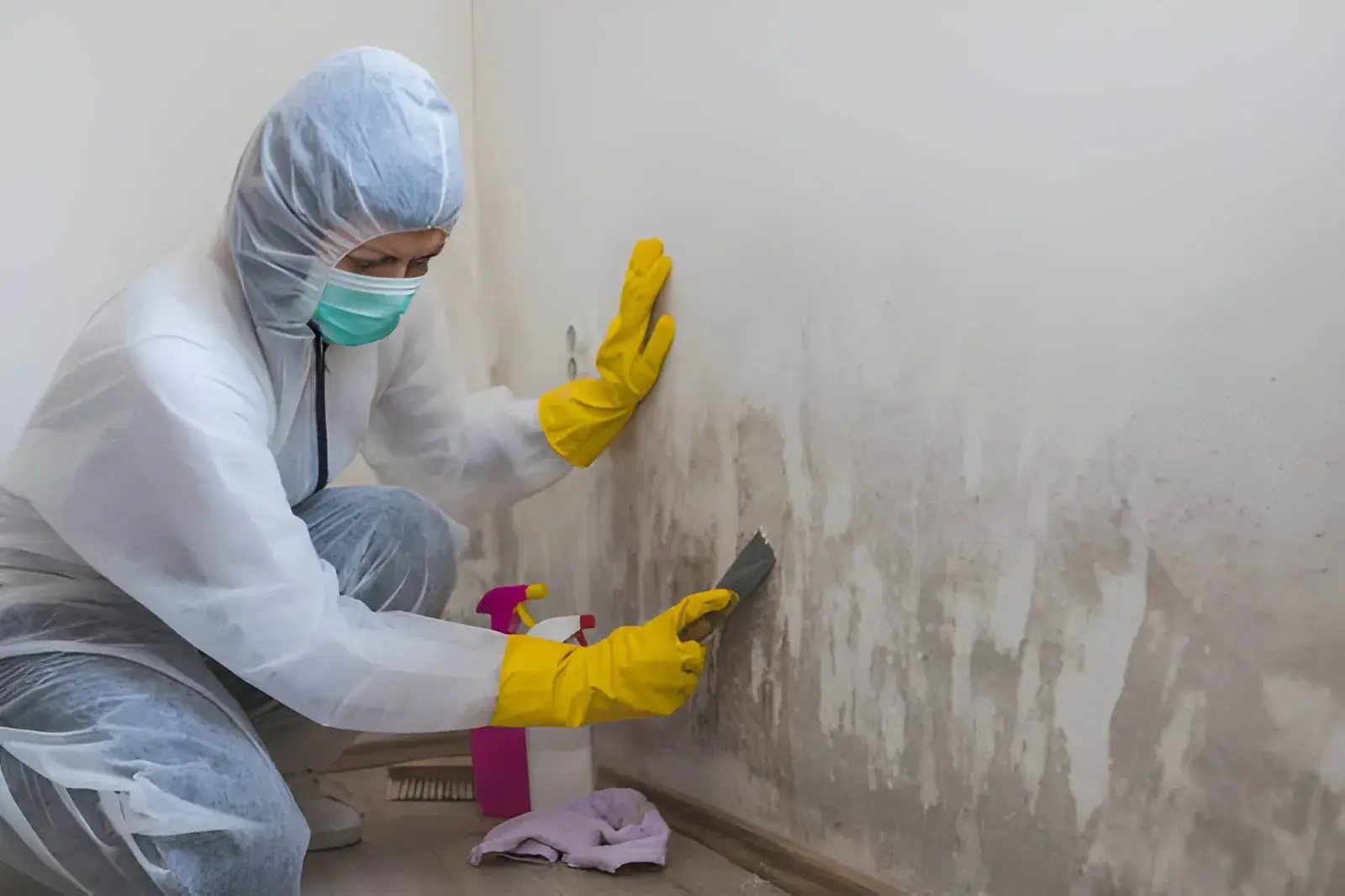
Mold Remediation in Monaca, PA
Microscopic mold spores colonize damp basement masonry, wood floor joists, and subflooring within 24 to 48 hours of moisture intrusion. Our certified Monaca mold remediation specialists arrive in 60 minutes to establish negative-pressure containment and eradicate fungal growth at the source.
What Happens When You Call
Direct emergency dispatch connects you with an experienced mold remediation specialist who gathers property details and schedules immediate inspection.
Our certified technician arrives at your Monaca property within 60 minutes to perform thermal moisture mapping, relative humidity assessments, and visual inspection.
We isolate the affected zone using heavy polyethylene containment walls, airlocks, and industrial HEPA air filtration units under negative pressure.
Technicians remove non-salvageable porous materials, HEPA-vacuum and sand framing timbers, apply EPA-registered antimicrobials, and conduct clearance verification.
Noticing persistent musty odors in your basement, discovering black fungal growth across foundation timbers, or experiencing unexplained respiratory irritation inside your home requires immediate, certified intervention. Household bleach or consumer sprays only wipe away surface discoloration while leaving invasive fungal hyphae rooted deep inside porous framing and mortar joints. X Response delivers scientific, complete mold remediation tailored specifically to western Pennsylvania homes. From airtight negative-pressure containment to HEPA filtration and moisture source elimination, we restore clean, healthy indoor environments. Call now. Your team is standing by.
Why Monaca Homes Are Vulnerable to Mold
Monaca, Pennsylvania, is an industrial river borough situated along the south bank of the Ohio River across from the Beaver River confluence in Beaver County, home to approximately 5,625 residents. The community features a lower river-terrace terrace neighborhood along Pennsylvania Avenue and steep hillside residential streets rising to bluffs overlooking the river valley. According to the U.S. Environmental Protection Agency, indoor relative humidity should be maintained below 60 percent, ideally between 30 and 50 percent, and damp materials must be dried within 24 to 48 hours to prevent mold growth. Western Pennsylvania's humid continental climate creates challenging indoor moisture dynamics, characterized by humid summer weather where outdoor dew points frequently surpass 65 to 70 degrees Fahrenheit.
The combination of high summer humidity and vintage masonry foundation architecture makes residential basements throughout Monaca prime breeding grounds for pervasive mold colonization. In neighborhoods along Pennsylvania Avenue, 9th Street, and Marshall Road, homes built in the early and mid-twentieth centuries feature porous sandstone, fieldstone, or early concrete block foundations set into dense, water-retaining clay subsoils and alluvial gravels. When warm, humid outdoor air enters these cool subterranean cellars during summer months, moisture rapidly condenses against cold masonry walls and bare concrete floor slabs. This persistent condensation, combined with slow capillary groundwater seepage through aging lime mortar joints, maintains relative humidity levels above 75 percent. Without continuous commercial dehumidification, toxic mold species such as Stachybotrys chartarum, Aspergillus, and Cladosporium flourish across structural floor joists, rim joists, and subflooring, releasing millions of microscopic spores into living quarters through central heating and air ducts.
Ohio River Basin Summer Humidity and Condensation
The Ohio River valley concentrates warm, humid air throughout the summer. When this damp air enters cool below-grade stone and concrete basements, moisture condenses rapidly on cold surfaces, feeding active mold colonies.
Porous Sandstone and Aging Lime Mortar Seepage
Turn-of-the-century stone foundations throughout Monaca feature weathered mortar joints. Groundwater in surrounding saturated soils wicks through masonry, transferring moisture directly into structural floor timbers.
Dense River Terrace Clay Soils Retaining Water
Clay-rich subsoils on the hillsides and river terraces absorb storm runoff slowly. Trapped moisture exerts continuous lateral hydrostatic pressure that keeps foundation walls damp for extended periods.
HVAC and Stack-Effect Spore Migration
When fungal colonies develop in a basement mechanical area or crawl space, natural upward stack effect and furnace blowers pull millions of microscopic spores into living quarters, degrading indoor air quality.
Eradicating mold in Monaca homes requires identifying the underlying moisture intrusion point, establishing airtight containment, and physically removing fungal colonies. Our certified crews deliver permanent, laboratory-verified remediation tailored to Beaver County architecture.
What Happens to Your Home While You Wait
Within 24 to 48 Hours
Microscopic mold spores settle onto damp masonry, wood framing, and stored cardboard boxes, germinating and developing early hyphal networks as relative humidity exceeds 60 percent.
3 to 7 Days
Active fungal colonies become visible as dark circular patches along baseboards, floor joists, and foundation mortar lines. Fungal hyphae penetrate deep into wood framing, and occupants begin noticing a distinct musty odor.
1 to 2 Weeks
Mature mold colonies release millions of microscopic spores and volatile organic compounds into ambient indoor air. Household occupants with allergies or asthma may experience sneezing, nasal congestion, eye irritation, and headaches.
2 to 4 Weeks
Mold growth spreads through wall cavities, colonizing fiberglass insulation batts and HVAC supply trunks. Wood framing begins surface degradation as fungal enzymes break down organic cellulose bonds, causing soft spots in subflooring.
One Month and Beyond
Chronic fungal contamination results in severe structural wood rot, pervasive dry-rot decay, and widespread indoor air contamination. Remediation requires extensive demolition of drywall, flooring, and insulation under full containment.
Ignoring visible mold or persistent musty odors leads to structural decay and respiratory health risks. Contact X Response immediately. Our certified mold specialists arrive within 60 minutes.
How We Restore Mold-Affected Monaca Homes
Effective mold remediation follows strict ANSI/IICRC S520 guidelines, focusing on absolute spore containment, physical removal, and moisture control. Here is our certified procedure.
Detailed Moisture Mapping and Air Quality Inspection
Our certified remediation technicians arrive in Monaca within 60 minutes to inspect the full extent of contamination. Using infrared thermal cameras, calibrated pinless moisture meters, and air-sampling equipment, we locate hidden moisture reservoirs and assess spore levels.
Airtight Negative-Pressure Containment
We construct heavy polyethylene containment barriers and airlocks to isolate the contaminated zone from living spaces. Commercial HEPA-filtered air scrubbers continuously pull clean air in while exhausting filtered air outside, preventing spore escape during demolition.
Removal of Contaminated Porous Building Materials
Drywall, insulation, carpet padding, and acoustic ceiling tiles that have supported mold colonization are carefully bagged in sealed disposal bags and removed from the structure under controlled negative pressure to prevent cross-contamination.
HEPA Vacuuming and Mechanical Surface Abrasion
Technicians abrade salvageable structural wood framing using wire brushing and sanding to eradicate deeply rooted hyphae. All structural surfaces are then thoroughly HEPA-vacuumed to capture fine settled fungal particulates.
Antimicrobial Treatment and Clear Air Verification
We apply EPA-registered botanical antimicrobial agents and specialized encapsulating coatings to all exposed structural timber to prevent future fungal growth. A final inspection and third-party clearance air testing confirm your home is clean and safe.
The X Response Difference
X Response provides definitive, science-based mold remediation throughout Monaca, protecting your property value and your family's health.
Insurance Claim Guidance for Monaca Homeowners
Mold damage insurance coverage in Pennsylvania depends heavily on the originating cause of the moisture. Standard homeowner policies generally cover mold remediation if it is the direct consequence of a covered sudden and accidental water peril, such as a ruptured copper pipe or failed water heater that was promptly reported. However, mold arising from long-term deferred maintenance, chronic foundation condensation, or ground seepage is typically excluded or subject to strict monetary coverage caps (often limited to $5,000 or $10,000). Careful, thorough documentation proving that fungal growth stemmed from an abrupt, covered water event is essential to maximizing insurance recovery.
How X Response Helps
- Document the exact water intrusion mechanism that triggered mold growth using moisture logs and infrared thermography.
- Establish a clear timeline demonstrating that the microbial growth was sudden and tied to a covered plumbing or storm event.
- Provide detailed line-item remediation scopes and containment estimates formatted to meet insurance adjuster standards.
- Itemize necessary structural repairs separately from antimicrobial cleaning to maximize applicable policy coverage limits.
- Review your policy endorsements for specific mold caps, helping you navigate your options and avoid out-of-pocket surprises.
X Response compiles technical moisture assessments and certified remediation scopes to support policyholder claims. We do not make coverage determinations or practice public adjusting; final claim settlements rest with your insurance provider.
Certified Restoration Specialists Serving Monaca
When you discover mold inside your Monaca home, you need a certified restoration partner who understands Beaver County architecture, vintage stone foundations, and regional humidity patterns. Our technicians have extensive hands-on experience addressing mold challenges throughout Monaca, Center Township, and Beaver, specializing in historic basements, crawl spaces, and residential construction.
Our remediation specialists hold active certifications from the Institute of Inspection, Cleaning and Restoration Certification (IICRC) as Applied Microbial Remediation Technicians (AMRT) and Water Damage Restoration Technicians (WRT). Equipped with hospital-grade HEPA filtration units, negative air machines, and thermal imaging cameras, we possess the specialized tooling required to safely eliminate toxic mold and restore healthy indoor air to your property.
In Monaca, X Response works with Restoworks Disaster Restoration, an independent local restoration partner serving Beaver County.
Mold Remediation FAQ for Monaca Homeowners
Other Emergency Services in Monaca

Water Damage Restoration
Burst pipes, storm flooding, standing water. We extract, dry, and restore before mold sets in.
Learn more
Fire Damage Restoration
Structural damage, soot, debris. We stabilize, clean, and rebuild what fire destroyed.
Learn more
Smoke Damage Restoration
Soot residue, chemical odors, HVAC contamination. We decontaminate surfaces, eliminate odors, and restore air quality.
Learn more