
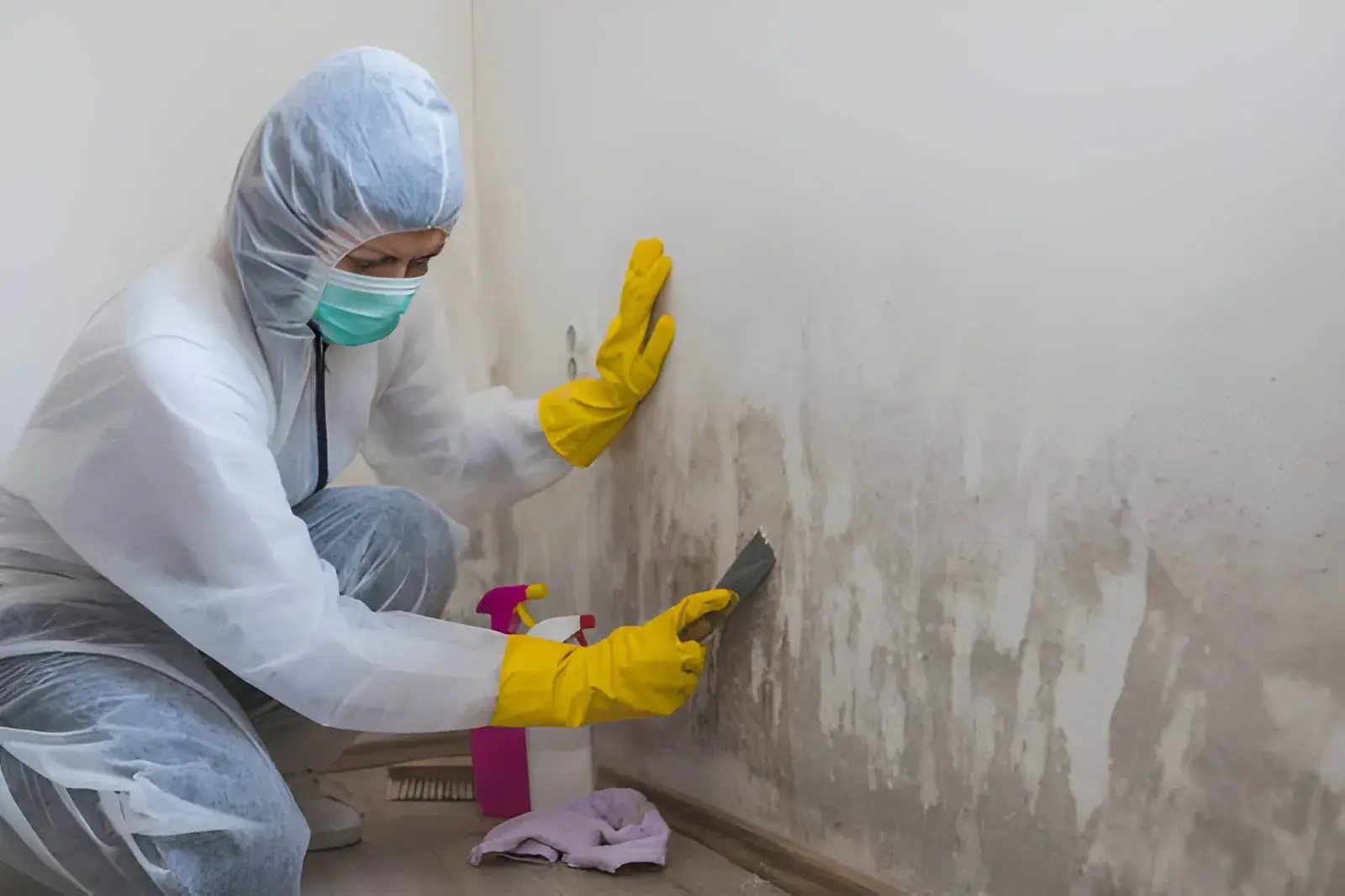
Mold Remediation in Pittsburgh, PA
Mold spreads rapidly in Pittsburgh's humid conditions, compromising indoor air quality and structural integrity. Our local team provides professional mold remediation across Allegheny County, addressing both the visible growth and the hidden moisture source driving it.
What Happens When You Call
A real person answers, not a call center. We assess your situation, ask the right questions, and begin coordinating your response immediately.
Your dedicated remediation team is dispatched from our local base serving Pittsburgh and surrounding Allegheny County communities.
Team arrives with containment barriers, HEPA air scrubbers, moisture detection equipment, and antimicrobial treatments. Assessment begins immediately.
Mold sources identified, containment established, remediation plan documented. You know exactly what comes next.
You have discovered mold in your home and need it handled safely and completely. X Response exists for exactly this moment. When you reach out, your remediation team is mobilized and on site quickly. From that point forward, one team manages everything: testing, containment, removal, moisture elimination, and documentation. You are never left guessing about the next step. Call now. Your team is standing by.
Why Pittsburgh Homes Are Vulnerable to Mold
Pittsburgh's geography and climate create ideal conditions for mold growth in residential properties. Pittsburgh's location at the confluence of three rivers contributes to ambient humidity levels that frequently exceed 70 percent, while the region's heavy clay soil retains water and increases hydrostatic pressure against basement foundations in thousands of older homes. Many homes in Allegheny County were built before 1950 with stone or block foundations that are porous and allow moisture to migrate into basements and crawlspaces. This chronic moisture, combined with the limited ventilation typical of older basement construction, creates the perfect environment for aggressive mold colonization.
Pennsylvania does not require state licensing for mold remediation contractors, which means homeowners must evaluate companies based on certifications and proven methodology rather than state credentials. Mold in Pittsburgh homes is frequently discovered after water damage events, such as the recurring flash flooding and sewer backups that affect low-lying neighborhoods, or during the spring freeze-thaw cycle when foundation cracks open and allow groundwater intrusion. Left untreated, mold spreads through HVAC systems using the stack effect, where warm air rising through the home draws damp, spore-laden air from the basement into upper living spaces.
High Ambient Humidity and River Valley Climate
Pittsburgh's river valley geography traps humid air, especially during summer months. Indoor relative humidity in homes without active dehumidification regularly exceeds levels where mold can thrive. Basements and below-grade spaces are particularly vulnerable as cool concrete surfaces create condensation points where moisture accumulates.
Pre-1950 Foundation Construction
Thousands of Pittsburgh homes feature stone, block, or poured concrete foundations from the early 1900s. These older foundation types are porous and develop cracks over time, allowing groundwater and soil moisture to migrate into the basement. The resulting chronic dampness feeds mold growth that often goes undetected behind finished walls and stored belongings.
Post-Flood Mold Colonization
After the frequent flooding events that affect Pittsburgh neighborhoods, mold can begin growing within 24 to 48 hours in saturated building materials. Drywall, insulation, and carpet padding that are not dried rapidly become colonized with mold that spreads through wall cavities and into adjacent spaces.
HVAC Stack Effect Distribution
Warm air rising through the home creates negative pressure in the basement, drawing mold spores upward through the structure. Central HVAC systems then distribute these spores to every room in the house. Addressing mold in the basement without cleaning the ductwork allows recontamination throughout the home.
These factors make mold remediation in Pittsburgh a multi-layered challenge that requires addressing the moisture source, removing the growth safely under containment, and preventing recurrence through environmental controls.
What Happens to Your Home While You Wait
Within 24 Hours
After a water intrusion event, moisture begins saturating porous materials like drywall, insulation, and carpet padding. Mold spores that are naturally present in the air begin to activate on these damp surfaces, though visible growth has not yet appeared.
24 to 48 Hours
Mold colonization begins on saturated materials. Microscopic growth starts inside wall cavities, behind baseboards, and under flooring where it is not visible. Early intervention at this stage can prevent the growth from spreading beyond the initial affected area.
3 to 7 Days
Visible mold growth appears on surfaces. Spores become airborne and begin migrating through HVAC systems and natural air currents. Musty odor becomes noticeable. Occupants with allergies or respiratory conditions may begin experiencing symptoms.
1 to 2 Weeks
Mold colonies expand aggressively into wall cavities, behind cabinetry, and into structural framing. Mycotoxins produced by certain mold species create health hazards. Remediation scope expands significantly as contamination spreads beyond the original moisture source.
One Month and Beyond
Extensive mold growth compromises structural integrity as fungal enzymes break down wood and organic materials. Indoor air quality deteriorates to levels requiring full environmental remediation. Remediation costs escalate dramatically as demolition and reconstruction become necessary.
Mold in Pittsburgh's humid environment spreads faster than most homeowners expect. Contact X Response now for professional assessment and remediation.
How We Restore Mold-Affected Pittsburgh Homes
From the moment our team arrives in Pittsburgh, every step follows IICRC S520 protocols for professional mold remediation. Here is exactly what the process involves.
Mold Assessment and Moisture Mapping
Our team uses thermal imaging cameras, pin-type moisture meters, and professional mold testing to identify the full extent of contamination and locate the underlying moisture source. We map moisture levels throughout the affected area and document findings with timestamped photos and detailed notes.
Containment and Air Filtration
We establish negative-pressure containment using polyethylene barriers and HEPA air scrubbers to prevent mold spores from spreading to unaffected areas during removal. All contaminated zones are isolated from the rest of the home before any disturbance of mold-affected materials begins.
Safe Mold Removal
Mold-contaminated materials are removed following strict protocols. Non-salvageable porous materials like drywall and insulation are cut away and disposed of in sealed bags. Salvageable structural surfaces are cleaned using HEPA vacuuming and antimicrobial treatments. Wire brushing is used on wood surfaces to remove surface growth.
Moisture Source Elimination
The underlying moisture source that caused the mold growth is identified and corrected. This may involve plumbing repairs, foundation waterproofing, drainage improvements, or dehumidifier installation. Without eliminating the moisture source, mold will return regardless of how thorough the removal process was.
Clearance Testing and Documentation
After remediation, post-clearance air testing verifies that mold spore counts have returned to acceptable levels. All work is documented with before-and-after photos, moisture readings, and testing results. This documentation provides evidence for your insurance claim and confirms that your home meets safe occupancy standards.
The X Response Difference
When you contact X Response, you get a dedicated mold remediation team that follows IICRC protocols to permanently resolve mold problems in Allegheny County.
Insurance Claim Guidance for Pittsburgh Homeowners
Mold remediation insurance coverage in Pennsylvania depends on what caused the mold. If mold resulted from a covered water damage event, such as a burst pipe or storm damage, your homeowner's policy may cover remediation. However, mold from chronic maintenance issues, gradual leaks, or high humidity is typically excluded. Understanding the cause and your policy language is the critical first step.
How X Response Helps
- Document the mold contamination and its connection to a covered water damage event with timestamped photos.
- Identify the moisture source that caused the mold to establish the causal link required by most policies.
- Prepare a remediation scope of work aligned with IICRC S520 standards for professional documentation.
- Structure our documentation to demonstrate the connection between the covered event and the resulting mold growth.
- Explain your policy's mold coverage limits and exclusions before you file, helping you understand your options.
X Response does not file claims on your behalf or make coverage determinations. We provide documentation to help you make informed decisions. Coverage decisions are made solely by your insurance carrier.
Certified Restoration Specialists Serving Pittsburgh
When you contact X Response for a mold remediation project in Pittsburgh, your team consists of certified professionals who understand the specific moisture challenges of Western Pennsylvania. They know how homes in Allegheny County are constructed, from stone-foundation row houses to newer suburban builds, and the common moisture pathways that lead to mold growth. This is a local team, positioned and ready to respond.
Every technician holds current IICRC certification in mold remediation. We use professional-grade containment systems, HEPA air scrubbers, thermal imaging cameras, and antimicrobial treatments to safely and permanently resolve mold contamination in your home.
In Pittsburgh, X Response works with Restoworks Disaster Restoration, an independent local restoration partner serving Allegheny County.
Mold Remediation FAQ for Pittsburgh Homeowners
Other Emergency Services in Pittsburgh

Water Damage Restoration
Burst pipes, storm flooding, standing water. We extract, dry, and restore before mold sets in.
Learn more
Fire Damage Restoration
Structural damage, soot, debris. We stabilize, clean, and rebuild what fire destroyed.
Learn more
Smoke Damage Restoration
Soot residue, chemical odors, HVAC contamination. We decontaminate surfaces, eliminate odors, and restore air quality.
Learn more