
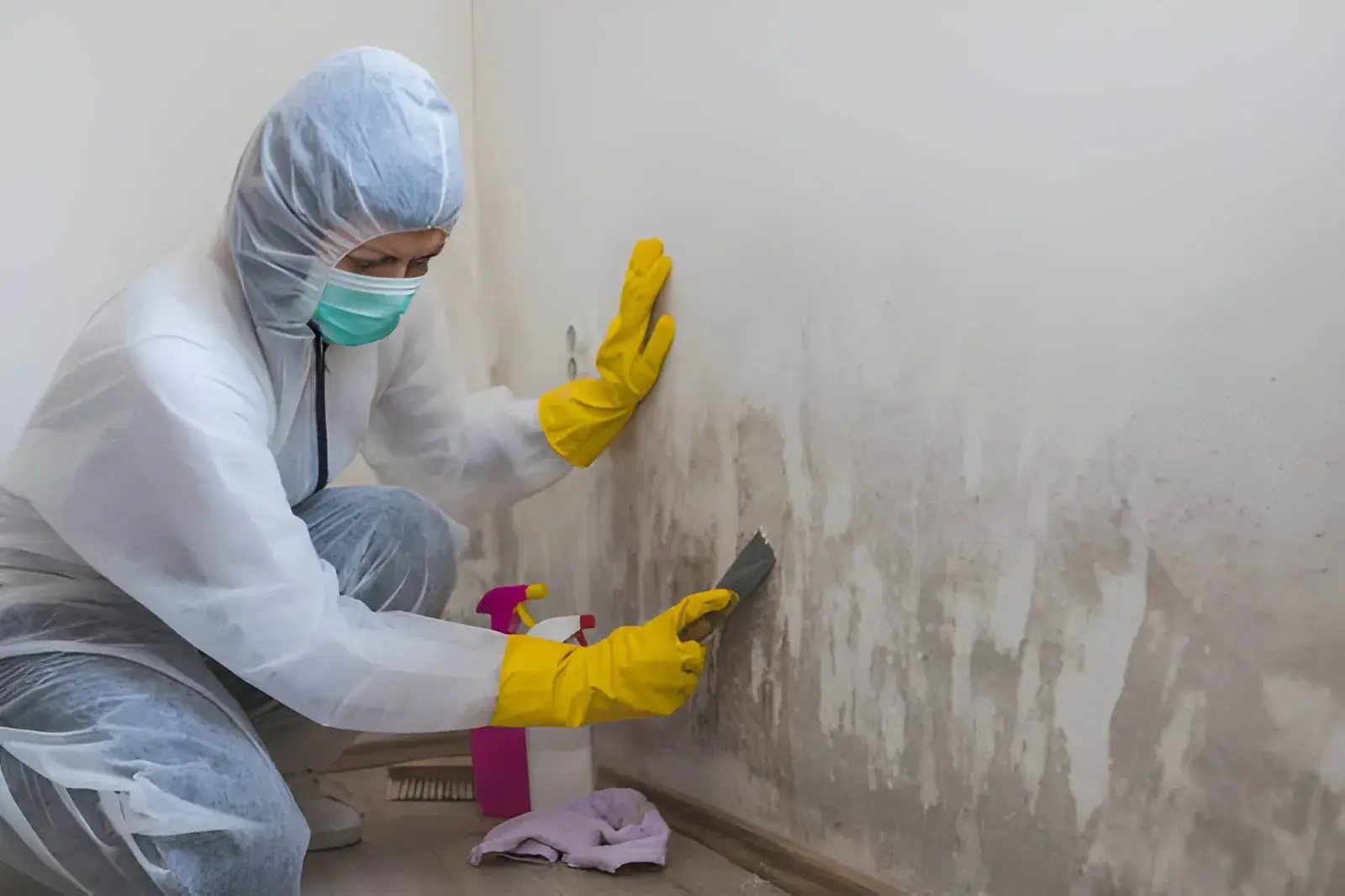
Mold Remediation in Cold Springs, TX
Persistent Piney Woods humidity and Lake Livingston moisture fuel rapid mold proliferation across Cold Springs. Our licensed remediation specialists respond 24/7 within 60 minutes.
What Happens When You Call
An emergency remediation coordinator gathers property details and schedules immediate assessment by licensed personnel.
Technicians inspect moisture patterns with thermal imaging cameras and calibrated moisture probes to locate hidden microbial growth.
Crews seal the work zone with heavy-duty polyethylene barriers and commercial negative air machines with HEPA filtration.
Unsalvageable contaminated drywall and insulation are removed under containment, while structural framing is cleaned and treated with EPA-registered biocides.
Microscopic fungal spores multiply rapidly in damp East Texas climates, colonizing drywall, attic sheathing, and subflooring within 24 to 48 hours of moisture intrusion. X Response delivers licensed mold remediation in Cold Springs, arriving on site within 60 minutes to establish negative air containment, halt active spore dispersal, and systematically eliminate toxic colonies. Call now. Your team is standing by.
Why Cold Springs Homes Are Vulnerable to Mold
Cold Springs, the county seat of San Jacinto County, is situated amidst the dense pine and hardwood forests of East Texas, adjacent to the southeastern shoreline of Lake Livingston. The community's diverse housing stock includes historic timber residences near the town square, lakeside homes elevated on timber pilings, rural cabins shaded beneath mature forest canopies, and contemporary slab-on-grade homes. In this humid subtropical region, elevated dew points, regular thunderstorms, and persistent shade create an environment where moisture accumulates on exterior surfaces and infiltrates building envelopes. When roof leaks, plumbing failures, or crawl space condensation go unnoticed, warm indoor temperatures provide ideal conditions for aggressive fungal amplification.
Coldspring is situated in San Jacinto County bordering the Sam Houston National Forest and Lake Livingston, where dense timber canopies and heavy annual rainfall create persistent ambient humidity levels that accelerate indoor mold colonization on damp building assemblies. Under the Texas Department of Licensing and Regulation (TDLR) Mold Remediation Program rules, remediation projects involving contiguous areas exceeding 25 square feet require formal protocol compliance, clear separation of assessment and remediation contractors, and independent post-remediation clearance testing. Our certified specialists operate under strict TDLR standards and IICRC S520 guidelines, ensuring safe containment, scientific removal, and complete regulatory compliance for San Jacinto County property owners.
Dense Forest Shading and Chronic Surface Moisture
Heavy tree canopies from the adjacent national forest shield roofs and exterior walls from drying sunlight. Persistent exterior dampness promotes fungal colonization on siding and trim, creating moisture pathways that penetrate interior wall cavities.
Lakeside Crawl Space Condensation and Elevated Humidity
Waterfront residences along Lake Livingston frequently experience high vapor pressure beneath elevated pier-and-beam foundations. Unencapsulated soil and ambient dampness drive moist air upward through subfloors, causing mold growth beneath vinyl flooring and hardwood planks.
Attic Condensation and Inadequate Roof Ventilation
Extreme East Texas summer heat combined with high ambient humidity causes severe attic condensation when soffit and ridge vents are obstructed. Moisture condensates on roof decking and ceiling drywall, creating concealed microbial colonies.
HVAC Coil Condensation and Biofilm Accumulation
Air conditioning systems run continuously throughout humid summer months. Saturated evaporator coils and clogged condensation drain pans foster fungal biofilms that disperse spores directly into conditioned supply air streams.
Historic Wood Framing and Porous Building Substrates
Historic wood-framed residences near the courthouse square feature porous timber framing that readily absorbs ambient humidity. When exposed to persistent dampness, these framing members sustain active colonies of Aspergillus, Penicillium, and toxic Stachybotrys chartarum.
Safe and lawful mold remediation in Cold Springs requires strict containment, negative pressure filtration, and adherence to Texas administrative regulations. Our licensed remediation team protects your family's health and structural investments throughout San Jacinto County.
What Happens to Your Home While You Wait
Within 24 to 48 Hours
Microscopic mold spores germinate on wet drywall, subflooring, and acoustic insulation. Initial vegetative hyphae spread beneath paint coatings and behind wallpaper.
48 to 72 Hours
Visible black or green fungal colonies emerge on surfaces. Spores release microbial volatile organic compounds (mVOCs), generating characteristic musty odors.
3 to 7 Days
Colonies penetrate deeply into cellulose materials and unsealed timber framing. HVAC air currents distribute spores into adjacent unaffected rooms.
1 to 2 Weeks
Extensive fungal colonization causes drywall softening, paint blistering, and structural wood degradation. Indoor air quality deteriorates, triggering allergic reactions.
Beyond 2 Weeks
Severe mycotoxin contamination permeates porous furnishings and subflooring. TDLR-regulated structural demolition and extensive chemical decontamination become necessary.
Early containment halts spore migration and lowers remediation expenses. Contact X Response immediately for licensed mold remediation in Cold Springs.
How We Restore Mold-Affected Cold Springs Homes
We follow comprehensive IICRC S520 guidelines and Texas Department of Licensing and Regulation protocols to eliminate mold colonies safely and legally.
Licensed Visual Assessment and Moisture Mapping
We identify moisture intrusion points using forward-looking infrared thermal imaging and moisture meters, evaluating the full geographic spread of fungal contamination.
Critical Barrier Containment and Negative Air Filtration
Technicians construct 6-mil polyethylene containment barriers equipped with zippered airlocks. Industrial negative air machines exhaust filtered air through true HEPA stages to maintain negative pressure.
Controlled Demolition and Material Removal
Irremediable mold-damaged drywall, acoustic ceiling tiles, and contaminated insulation are misted to prevent spore dispersion, carefully bagged inside containment, and safely disposed of.
HEPA Vacuuming and Antimicrobial Bio-Washing
Structural timber framing is thoroughly HEPA-vacuumed, scrubbed with EPA-registered antimicrobial fungicides, and wire-brushed to eliminate embedded fungal hyphae down to clean wood.
Encapsulation and TDLR Clearance Protocol
Treated structural framing is sealed with an antimicrobial fungal-resistant coating. An independent licensed mold assessment consultant performs post-remediation clearance testing before containment removal.
The X Response Difference
Rely on state-licensed mold remediation professionals who ensure legal compliance, structural integrity, and verified indoor air safety.
Insurance Claim Guidance for Cold Springs Homeowners
Navigating mold damage insurance claims in Texas requires detailed technical documentation and an understanding of policy limitations. Many Texas homeowners policies include specific mold coverage sublimits or exclude mold resulting from long-term seepage. However, mold colonization resulting directly from a sudden, covered water loss, such as a burst supply pipe or appliance failure, is frequently covered under standard property provisions. Our licensed team provides forensic documentation to clearly substantiate your claim.
How X Response Helps
- Independent TDLR mold assessment protocol detailing exact contamination boundaries
- High-resolution photographic documentation of moisture sources and active fungal colonization
- Moisture mapping logs proving the direct link between covered water intrusion and fungal growth
- Itemized Xactimate estimates aligned with authorized insurance mitigation line items
- Official Certificate of Mold Damage Remediation (MDR-1) upon successful clearance testing
X Response performs professional mold remediation under Texas regulatory guidelines. Final insurance coverage determinations and settlement figures depend entirely on your specific policy terms and insurer approval.
Certified Restoration Specialists Serving Cold Springs
Our Cold Springs mold remediation team provides specialized expertise in addressing the unique environmental conditions of San Jacinto County. From historic frame buildings in downtown Cold Springs to secluded lakefront properties on Lake Livingston, our technicians execute precise, compliant remediation procedures. Our response units carry heavy-duty containment supplies, HEPA air filtration equipment, and advanced moisture diagnostic instruments ready for immediate service.
Every project is supervised by technicians holding certifications from the Institute of Inspection, Cleaning and Restoration Certification (IICRC), including Applied Microbial Remediation Technician (AMRT) and Water Damage Restoration Technician (WRT), operating under Texas Department of Licensing and Regulation standards. We prioritize safety, structural durability, and indoor air health.
In Cold Springs, X Response works with First Response Restoration, an independent local restoration partner serving San Jacinto County.
Mold Remediation FAQ for Cold Springs Homeowners
Other Emergency Services in Cold Springs

Water Damage Restoration
Burst pipes, storm flooding, standing water. We extract, dry, and restore before mold sets in.
Learn more
Fire Damage Restoration
Structural damage, soot, debris. We stabilize, clean, and rebuild what fire destroyed.
Learn more
Smoke Damage Restoration
Soot residue, chemical odors, HVAC contamination. We decontaminate surfaces, eliminate odors, and restore air quality.
Learn more
Sewage Cleanup
Sewer backups, contaminated water, biohazard. We extract, sanitize, and restore safely.
Learn more