
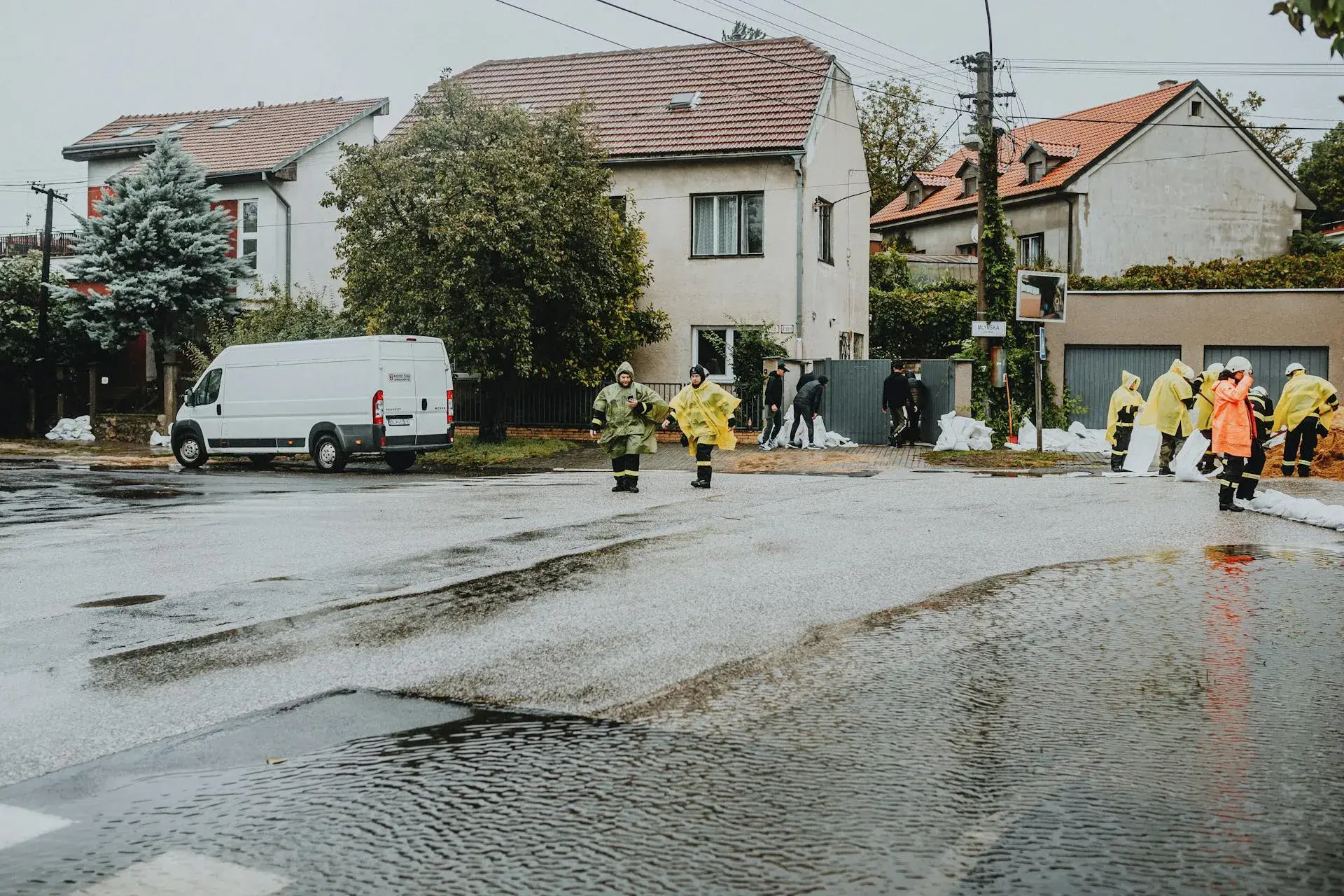
Sewage Cleanup in McDonough, GA
Raw sewage contains severe viral and bacterial pathogens that saturate framing within hours. Our McDonough biohazard team mobilizes within 60 minutes.
What Happens When You Call
A live biohazard coordinator answers your call 24/7 and immediately dispatches our Henry County sewage extraction team.
Our crew arrives on site within 60 minutes with truck-mounted black water extractors, HEPA air scrubbers, and hospital-grade biocides.
We extract raw wastewater, contain airborne bio-aerosols, and safely remove all contaminated porous materials under sealed containment.
Structural framing is washed with EPA-registered disinfectants, dried with industrial dehumidifiers, and cleared with ATP hygiene testing.
A sewage backup in your McDonough home or commercial facility is a dangerous biohazard crisis that demands immediate, specialized containment and professional decontamination. Raw sewage is classified as Category 3 black water, carrying severe biological pathogens including E. coli, Salmonella, Norovirus, hepatitis viruses, and parasitic organisms. Beyond dangerous health risks, sewage wastewater rapidly saturates porous building materials, contaminating subflooring, drywall, and structural framing. X Response provides 24/7 certified sewage cleanup and decontamination across Henry County. Our biohazard crews arrive within 60 minutes in full personal protective equipment to extract raw wastewater, safely remove contaminated materials, and perform hospital-grade sanitization. Call now for 24/7 sewage cleanup in McDonough.
Why McDonough Homes Are Vulnerable to Sewage
McDonough is the county seat of Henry County, featuring a historic downtown district surrounded by extensive modern suburban developments along GA 20, GA 81, Jonesboro Road, and Keys Ferry Road. The city's wastewater collection infrastructure is managed in coordination with the Henry County Water Authority (HCWA) and the City of McDonough Water Pollution Control Plant, operating regional trunk lines and lift stations along the Walnut Creek and Big Cotton Indian Creek basins. In older neighborhoods near the downtown square, municipal and private sewer lateral lines include aging cast-iron and clay pipes that are susceptible to mature tree root intrusions, ground settling in dense Piedmont red clay, and structural joint collapses. During heavy convective downpours and tropical storm remnants, intense stormwater infiltration enters municipal sewer mains along low-lying drainage paths near Walnut Creek and Highway 155, overwhelming line capacity and pushing raw sewage backward through residential basement floor drains, crawl spaces, and lower-level plumbing fixtures.
The U.S. Environmental Protection Agency estimates that between 23,000 and 75,000 sanitary sewer overflows occur annually nationwide, releasing raw wastewater and dangerous biological contaminants that threaten public health when lines back up into residential properties. When raw sewage overflows into a McDonough home, water containing fecal matter, chemical contaminants, and harmful microbes saturates porous flooring, baseboards, and drywall. Attempting to clean sewage with standard household tools exposes building occupants to hazardous bio-aerosols and fails to sanitize moisture trapped inside wood framing and concrete block foundations.
Stormwater Infiltration and Saturated Sewer Mains
During severe summer storms in Henry County, massive volumes of rainwater infiltrate sanitary sewer lines through surface manholes and unsealed pipe joints. Surcharged sewer mains lose gravitational flow capacity, forcing black water backward through low-lying residential lateral lines and basement fixtures.
Aging Lateral Infrastructure and Tree Root Obstructions
Many residences in older sections of McDonough feature original clay or cast-iron lateral sewer connections. Over decades, aggressive root systems from mature oak and pine trees penetrate pipe joints, creating severe clogs that cause sudden catastrophic sewage backups into living areas.
Category 3 Biological and Viral Contaminant Hazards
Raw sewage contains millions of hazardous biological pathogens, including bacteria (E. coli, Shigella), viruses (Norovirus, Rotavirus), and fungal toxins. Contact with raw wastewater or inhalation of airborne bio-aerosols presents immediate health risks, requiring professional personal protective equipment (PPE) and containment.
Dense Piedmont Red Clay Soil Drainage Resistance
The heavy, iron-rich Piedmont clay underlying McDonough prevents rapid natural soil drainage. When sewage overflows outdoors or seeps beneath foundation footings, contaminated wastewater pools around basement slabs and crawl spaces rather than percolating away, creating persistent biohazard conditions.
Porous Building Material Saturation and Mold Acceleration
Sewage water penetrates deeply into carpet padding, hardwood subflooring, base framing, and drywall. The combination of moisture and organic waste creates an optimal growth medium for aggressive bacterial and fungal proliferation, triggering severe mold colonization within 24 hours if not professionally mitigated.
Sewage cleanup in McDonough requires certified biohazard extraction, hospital-grade environmental sanitization, and controlled structural drying. X Response delivers rapid, IICRC-compliant black water remediation, restoring safe and sterile living conditions for Henry County property owners.
What Happens to Your Home While You Wait
Within 1 Hour
Raw black water spreads across floors, soaking into carpets, porous tile grout, and hardwood subfloors. Dangerous bio-aerosols enter indoor air, while noxious sewer gases and bacteria spread throughout the property.
1-24 Hours
Sewage water wicks upward into drywall partitions, wood baseboards, and structural sill plates. Microbial bacteria multiply exponentially within building materials, creating intense odors and hazardous contamination zones.
24-48 Hours
Organic matter in wastewater accelerates fungal growth, producing active mold colonies on damp drywall backing and subfloor joists. Saturated porous materials such as carpet padding and base trim degrade permanently.
48-72 Hours
Pathogens penetrate deep into structural timber framing and masonry block foundations. Unmitigated bio-aerosols contaminate HVAC ductwork, requiring complete system decontamination and extensive structural demolition.
One Week and Beyond
Severe biological and structural decay. Subflooring loses structural load capacity, framing members become permanently colonized by fungal rot and bacteria, requiring major biohazard abatement and structural rebuilding.
Immediate intervention within the first 24 hours stops the spread of dangerous pathogens and limits structural demolition. Call X Response now. Our McDonough sewage recovery crew responds within 60 minutes.
How We Restore Sewage-Damaged McDonough Homes
Our sewage remediation protocol adheres strictly to IICRC S500 Category 3 standards, providing emergency extraction, complete biohazard containment, and certified sanitization across McDonough.
Emergency Biohazard Containment and Personal Safety Setup
Upon arriving at your McDonough property, our technicians establish sealed isolation barriers using heavy polyethylene sheeting and set up negative air pressure zones with HEPA air scrubbers. Technicians operate in full Category 3 PPE, including respirators and impervious bio-suits.
Industrial Black Water Extraction and Waste Disposal
We utilize commercial truck-mounted extraction systems equipped with sanitary containment tanks to remove raw sewage, solid waste, and contaminated wastewater from living spaces, basements, and crawl spaces for legal disposal at licensed waste treatment facilities.
Removal and Safe Disposal of Contaminated Porous Materials
In accordance with IICRC standards, saturated porous building materials that cannot be safely sanitized, such as carpet padding, drywall, acoustic tiles, and insulation, are carefully cut out under containment, sealed in biohazard disposal bags, and removed from the premises.
Multi-Stage Hospital-Grade Disinfection and Antimicrobial Treatment
All remaining non-porous structural assemblies, concrete foundations, and timber framing are deep-cleaned using high-pressure sanitizing washes and treated with EPA-registered broad-spectrum hospital-grade biocides to eliminate all bacteria, viruses, and parasites.
Structural Drying and ATP Clearance Verification
We deploy industrial LGR dehumidifiers and axial air movers to dry framing timbers to verified dry standards. Once dry, our technicians perform adenosine triphosphate (ATP) bioluminescence surface testing to confirm that all treated surfaces are fully sterilized and free of biological contamination.
The X Response Difference
When a sewage backup endangers your McDonough property, trust the certified biohazard specialists with the equipment and protocols to restore complete safety. Contact X Response today.
Insurance Claim Guidance for McDonough Homeowners
Navigating sewage backup insurance claims in Georgia requires understanding specific policy language and endorsements. Standard Georgia homeowner insurance policies generally exclude damage caused by sewage or drain backups unless the policyholder has purchased a specific Water Backup and Sump Overflow endorsement. When this endorsement is in place, claims require thorough photographic documentation, proof of Category 3 contamination, and itemized biohazard remediation invoices. X Response provides complete documentation to support your claim and ensure proper insurance reimbursement.
How X Response Helps
- Document the exact point of sewage origin and capture high-resolution photographic evidence of black water contamination
- Compile itemized Xactimate estimates adhering to standard insurance pricing structures for Henry County
- Differentiate between covered internal drain backups and separate surface water flooding exclusions
- Coordinate directly with your insurance adjuster, providing disposal manifests, drying logs, and sanitization protocols
- Deliver comprehensive ATP bioluminescence clearance reports to verify full biohazard remediation for your carrier
X Response does not adjust insurance claims or make legal policy determinations. We provide detailed forensic documentation, scope estimates, and decontamination logs to assist you and your insurance provider.
Certified Restoration Specialists Serving McDonough
Our McDonough sewage remediation specialists are certified biohazard recovery professionals serving Henry County. Our crews bring deep local experience resolving complex black water emergencies across local properties, from historic residences near the courthouse square to modern suburban subdivisions along GA 20 and Jonesboro Road. We understand the specific plumbing and drainage challenges associated with older lateral networks, municipal main surcharges, and dense Piedmont clay soils.
Every lead technician holds certifications from the Institute of Inspection, Cleaning and Restoration Certification (IICRC) in Water Damage Restoration (WRT) and Applied Microbial Remediation (AMRT), along with specialized biohazard cleanup training. Equipped with heavy extraction units, commercial air scrubbers, hospital-grade disinfectants, and ATP testing equipment, our team restores your McDonough property safely, cleanly, and completely.
In McDonough, X Response works with Boss Contracting, an independent local restoration partner serving Henry County.
Sewage Cleanup FAQ for McDonough Homeowners
Other Emergency Services in McDonough

Water Damage Restoration
Burst pipes, storm flooding, standing water. We extract, dry, and restore before mold sets in.
Learn more
Fire Damage Restoration
Structural damage, soot, debris. We stabilize, clean, and rebuild what fire destroyed.
Learn more
Smoke Damage Restoration
Soot residue, chemical odors, HVAC contamination. We decontaminate surfaces, eliminate odors, and restore air quality.
Learn more
Mold Remediation
Testing, containment, removal, prevention. We find the source, eliminate the growth, and stop it from returning.
Learn moreNearby Service Areas
Also serving nearby: