
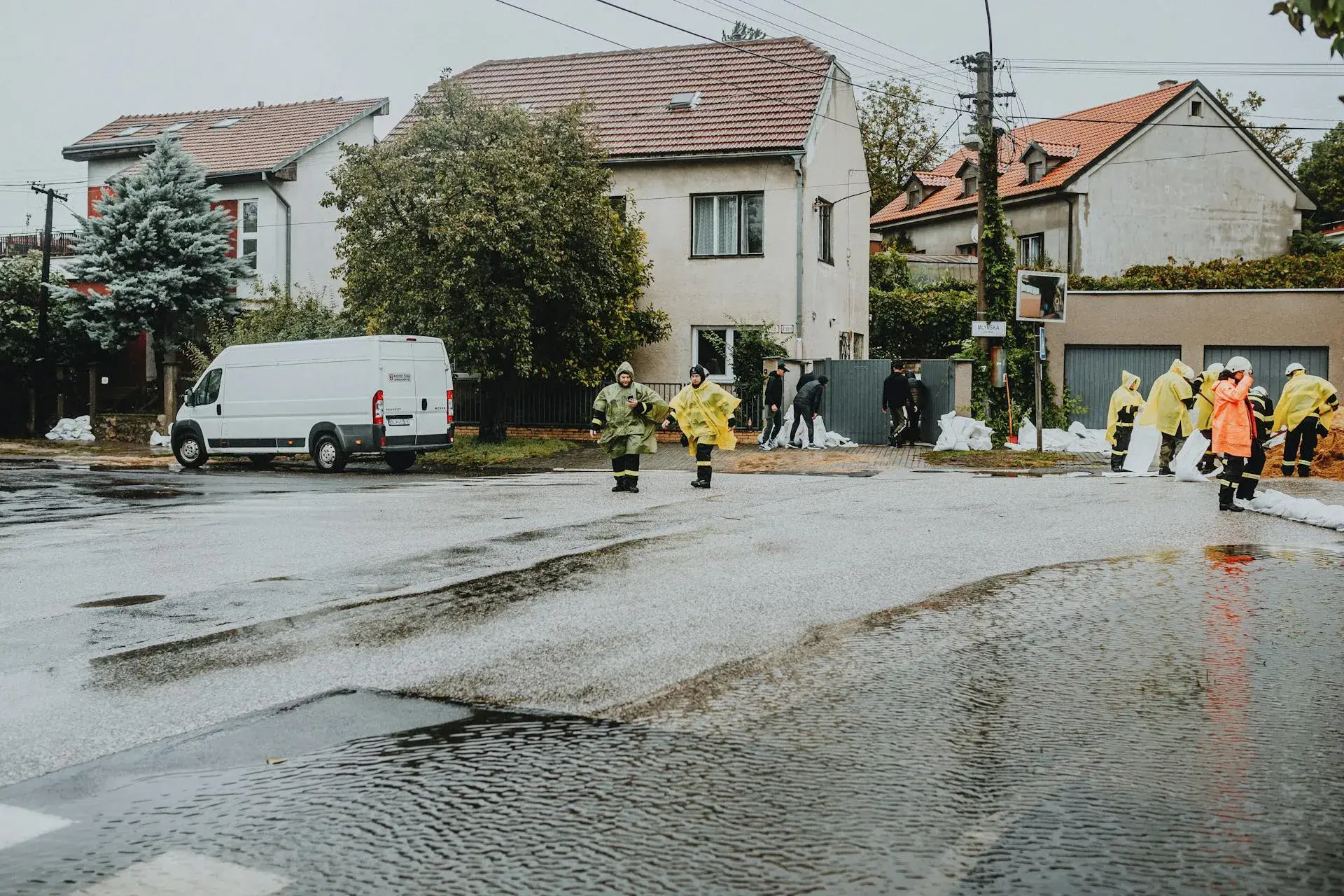
Sewage Cleanup in Mableton, GA
Sewage contamination is a biological hazard that worsens every hour. Bacteria multiply, odor intensifies, and materials absorb contaminants deeper with every passing minute. Our local team responds to Mableton emergencies within 60 minutes.
What Happens When You Call
A real person answers, not a call center. We assess your situation, ask the right questions about the sewage source and extent, and begin coordinating your response immediately.
Your dedicated decontamination team is dispatched from our local base serving Mableton and the surrounding south Cobb County communities.
Team arrives with extraction equipment, antimicrobial agents, personal protective equipment, and containment materials. Emergency mitigation begins immediately.
Sewage extracted, affected area contained and treated, restoration plan documented. You know exactly what comes next and your family is safe.
Sewage in your property is not just property damage. It is a biological hazard that demands immediate professional response. Raw sewage contains bacteria, viruses, parasites, and chemical contaminants that pose direct health risks to anyone in the affected space. Every hour of contact increases contamination depth, expands the affected area, and makes restoration more expensive and complex. X Response exists for exactly this moment. When you reach out, your decontamination team is mobilized within minutes and on site within the hour. Call now. Your team is standing by.
Why Mableton Homes Are Vulnerable to Sewage
Mableton's sewage risk is anchored by a single event that exposed the vulnerability of the entire south Cobb wastewater system. In late December 2018, a catastrophic pump failure at the South Cobb Water Reclamation Facility discharged an estimated 113 million gallons of raw sewage and stormwater into Nickajack Creek over nine days, just yards from the Chattahoochee River. The Chattahoochee Riverkeeper documented the mega spill, which flowed from a manhole near the treatment facility into the creek that runs directly through the Mableton community. Cobb County described the failure as significant and catastrophic, deploying emergency crews around the clock to restore the pumping infrastructure. The county later sued the contractors responsible for the pump installation and authorized a 30 million dollar settlement in 2025. That event discharged into the same Nickajack Creek corridor that defines Mableton's geography, the same waterway that flooded neighborhoods during the September 2009 event, demonstrating that the wastewater infrastructure serving this community carries enormous volume through systems that can fail at scale.
Beyond that headline event, the Cobb County Water System operates under a CMOM (Capacity, Management, Operations, and Maintenance) program that requires public reporting of sanitary sewer overflows. A January 2026 CMOM press release documented wastewater overflowing into Smyrna Branch near the Mableton area, confirming that overflows in the collection system serving this community are not historical artifacts but ongoing occurrences. The south Cobb wastewater collection network, a system of pipes, lift stations, manholes, and force mains that feeds the treatment facility, serves a growing population through infrastructure that includes aging components vulnerable to the same failure modes that produced the 2018 catastrophe. For Mableton property owners, the risk manifests not as a creek-scale mega spill but as individual residential backups through floor drains, toilet connections, and lateral failures during heavy rain when the system exceeds capacity.
The 2018 Nickajack Creek Mega Spill and South Cobb Infrastructure
The December 2018 discharge of 113 million gallons of raw sewage into Nickajack Creek from the South Cobb Water Reclamation Facility remains the largest single sewer infrastructure failure in Cobb County history. A pump failure at the facility allowed untreated wastewater and stormwater to flow uncontrolled from a manhole into Nickajack Creek for nine days before the system was repaired. The spill occurred during a period of heavy rain that added stormwater volume to the system, overwhelming the compromised facility. Cobb County sued the contracting companies responsible for the pump installation, describing the failure as massive and catastrophic, and authorized a 30 million dollar settlement in 2025. For Mableton property owners along the Nickajack Creek corridor, the event demonstrated two things: the volume of sewage that moves through the infrastructure beneath their community is enormous, and when that infrastructure fails the consequences flow through the same creek that already threatens their properties during flood events. The facility has been repaired, but the aging collection system that feeds it serves a growing population and remains susceptible to capacity exceedances during the heavy rain events that stress every component simultaneously.
Storm-Driven Sewer Backups During Heavy Rain
Cobb County's wastewater collection system experiences inflow and infiltration during heavy rain, a common problem in metro Atlanta where aging pipe joints, cracked manholes, and deteriorated seals allow stormwater to enter the sanitary sewer. When rainfall exceeds the system's design capacity, the combined volume of wastewater and infiltrated stormwater backs up through the path of least resistance: residential lateral connections that discharge through floor drains, toilet connections, and shower drains at the lowest points in a building. In Mableton, where the September 2009 flood demonstrated that local rainfall can vastly exceed design assumptions (Nickajack Creek crested nearly 3 feet above the previous record), the sanitary sewer system is most vulnerable during the same storm events that also produce surface flooding. Property owners along the creek corridor may face simultaneous creek flooding from above and sewer backup from below, creating Category 3 contamination from multiple entry points that compounds the decontamination challenge.
Aging Residential Sewer Laterals
The pipe connecting a home to the county's sewer main, called the lateral, is the homeowner's responsibility to maintain. In Mableton's older neighborhoods built during the 1960s through 1980s, these laterals were installed using materials that deteriorate over time: clay pipe that cracks and separates at joints, cast iron that corrodes internally and scales to reduced diameter, and early PVC that is vulnerable to root intrusion at connection points. As laterals degrade, they develop the same inflow and infiltration problems as the main system: tree roots penetrate cracked joints and block flow, separated joints allow groundwater in (adding volume) and sewage out (contaminating surrounding soil), and internal corrosion reduces capacity until the pipe cannot carry peak flows. A partially blocked lateral backs up into the home during any heavy-use period, rain event that adds groundwater infiltration, or even routine peak morning usage when multiple fixtures discharge simultaneously. The older the neighborhood and the larger the trees near the sewer line, the higher the probability of lateral failure.
Nickajack Creek Flood Contamination
When Nickajack Creek floods in Mableton, the water that enters homes and properties is not clean rainwater. Creek flood water picks up everything in its path as it rises and overflows: sediment, organic debris, petroleum from roads and parking lots, agricultural chemicals, animal waste, and critically, sewage from overwhelmed manholes and lift stations along the creek corridor. The IICRC classifies this as Category 3 water, the most contaminated category, requiring the most aggressive decontamination protocols. During the September 2009 flood, the volume and velocity of Nickajack Creek overflow meant that contaminated water reached structures far beyond the normal floodplain, introducing biological hazards into homes that had no history of sewage exposure. The 2018 mega spill demonstrated that even without flooding, the Nickajack Creek corridor can carry massive sewage contamination. Any flood event that overbanks the creek carries sewage-level contamination potential, and properties affected by creek flooding require full decontamination protocols regardless of whether a direct sewer backup occurred at the property.
Cobb County CMOM Program and Documented Overflows
The Cobb County Water System operates under a CMOM program that requires public reporting of sanitary sewer overflows, including location, estimated volume, and receiving waterway. A January 2026 report documented wastewater overflowing into Smyrna Branch at a location near the Mableton area, confirming that the collection system continues to experience capacity exceedances during wet weather. These documented events represent the overflows the county identifies and reports publicly. They do not capture every residential backup that occurs when a lateral fails, a localized blockage develops, or a specific section of the collection system exceeds capacity at a point that affects one or two homes rather than producing a visible overflow to a waterway. For Mableton property owners, the CMOM reports confirm that the system overflows during heavy rain and that the south Cobb service area remains part of the active overflow geography. Individual residential backups from lateral failures, root intrusion, or localized blockages add to this documented baseline in ways that are invisible until they happen to a specific property.
These factors define sewage risk in Mableton: a south Cobb wastewater system with a documented history of catastrophic failure and a 113-million-gallon discharge into the creek that runs through the community, storm-driven capacity exceedances that back sewage into homes during the same rain events that flood Nickajack Creek, aging residential laterals in older neighborhoods vulnerable to root intrusion and material failure, creek flooding that carries Category 3 contamination regardless of sewer system performance, and ongoing documented overflows under the county's CMOM program. Effective sewage cleanup in Mableton means treating every intrusion as a biological hazard from the first moment regardless of apparent volume, because even a small backup introduces the same pathogen load as a catastrophic overflow.
What Happens to Your Home While You Wait
Within 1 Hour
Raw sewage spreads across flooring, saturates carpet and padding, and wicks into porous materials including drywall, wood baseboards, and cabinetry. Bacteria begin multiplying rapidly in the warm, nutrient-rich environment. The affected area is immediately a health hazard to occupants and pets. In Mableton's warm climate, bacterial reproduction rates are accelerated compared to cooler environments, meaning the contamination intensifies faster than in northern regions. Every square foot of additional spread multiplies the decontamination scope and cost.
1–24 Hours
Sewage wicks into wall cavities and climbs drywall through capillary action, moving contamination above the visible water line. Bacteria and pathogens penetrate deeper into porous materials, moving beyond the reach of surface cleaning into the material substrate. Odor intensifies as anaerobic bacteria produce hydrogen sulfide and other volatile compounds. In Mableton homes with crawl spaces, sewage that reached the crawl space saturates the vapor barrier, underlying soil, and any exposed framing, creating a contamination reservoir beneath the entire floor system. Materials that could be decontaminated in place at 2 hours require demolition and replacement at 12.
24–48 Hours
Porous materials are contaminated beyond salvage. Drywall, insulation, carpet, padding, and particleboard must be removed and disposed of as biohazardous waste. Bacteria in wall cavities and beneath flooring continue multiplying and cannot be reached without demolition. Mold colonization begins on top of the bacterial contamination, creating a dual biological hazard that requires both sewage decontamination and mold remediation protocols. The sewage odor permeates the entire structure through air circulation and molecular diffusion into materials well beyond the wet footprint. The restoration scope has expanded from cleanup to demolition and reconstruction.
48–72 Hours
Structural wood begins absorbing contamination that surface treatment cannot reverse. Floor joists, sill plates, and subfloor sheathing in crawl spaces saturated with sewage require aggressive antimicrobial treatment or replacement depending on saturation depth. Mold growth on sewage-contaminated surfaces is particularly aggressive because the organic content of sewage provides abundant nutrients that accelerate fungal metabolism. HVAC systems that operated after the backup distributed contaminated air and particles throughout the building. The property requires full decontamination including mechanical systems, not just the visibly affected area.
One Week and Beyond
Extensive biological contamination through structural materials, established mold colonies feeding on sewage nutrients, and odor that has permeated the building envelope beyond the reach of surface treatment. Structural wood members may require replacement rather than treatment. The project becomes a gut renovation with biohazard protocols: full demolition of affected materials, structural treatment, mechanical system decontamination, and complete reconstruction. Insurance claims grow complex and expensive as the scope expands beyond initial estimates. Health risks to occupants escalate with every day of exposure to the contaminated environment.
Sewage contamination is a health emergency, not a maintenance issue. Every hour of delay increases both the health risk and the restoration cost exponentially. Contact X Response now. Our Mableton team responds within 60 minutes.
How We Restore Sewage-Damaged Mableton Homes
From the moment our team arrives, every step is documented, measured, and verified. Here is exactly what professional sewage cleanup involves for Mableton properties.
Hazard Assessment and Containment
Our team arrives in full personal protective equipment and immediately assesses the contamination extent, identifies the sewage source (sewer backup through drains, lateral failure, creek flooding, or system overflow), and establishes containment to prevent cross-contamination to unaffected areas. In Mableton properties, we determine whether sewage entered from below (backup through floor drains and toilet connections), from outside (Nickajack Creek flooding or manhole overflow), or from a lateral break beneath the foundation. Each source indicates a different contamination pattern, a different affected area, and a different required treatment scope. We document the affected area with photos, written assessment, and contamination mapping, establish containment barriers between affected and unaffected spaces, and shut down HVAC systems to prevent the mechanical system from distributing contaminated air and particles throughout the building.
Sewage Extraction and Gross Decontamination
All sewage and contaminated water is extracted using commercial pumps and extraction equipment designed for biohazardous material handling. Solid waste is removed and disposed of according to Georgia Department of Natural Resources regulations for biohazardous waste. Affected porous materials that cannot be decontaminated are removed: carpet, padding, contaminated drywall below the wicking line, saturated insulation, and any material where sewage has penetrated beyond the surface layer. Removed materials are bagged inside the containment zone as biohazardous waste before being transported out of the building to prevent cross-contamination during disposal. For Mableton homes with crawl spaces where sewage has pooled on the vapor barrier or saturated exposed soil, we pump the standing waste, remove contaminated soil as needed, and prepare the space for antimicrobial treatment of all exposed surfaces including floor joists and foundation walls.
Antimicrobial Treatment and Decontamination
Every surface that contacted sewage or sewage-contaminated water receives professional antimicrobial treatment using EPA-registered products labeled for use against the specific pathogen categories present in raw sewage: bacteria (E. coli, Salmonella, Campylobacter), viruses (Hepatitis A, Norovirus), and parasites (Giardia, Cryptosporidium). Treatment is applied to structural framing, subfloor sheathing, foundation walls, sill plates, and any hard surface that contacted contamination. In Mableton's warm climate, bacterial reproduction is rapid, so the antimicrobial application must achieve verified kill levels, not just surface contact. We apply at manufacturer-specified concentrations and required dwell times, verifying complete coverage of every affected surface. For Nickajack Creek flood events that introduced Category 3 water with both sewage and organic sediment, treatment addresses both the biological contamination and the organic material that would support regrowth if left in place.
Structural Drying
After extraction and antimicrobial treatment, the structure requires thorough mechanical drying using commercial dehumidifiers and high-velocity air movers, exactly as with a clean-water loss but with the added requirement that the drying environment remain contained and that HEPA filtration capture any bioaerosols released during the process. In Mableton's humid subtropical climate, mechanical dehumidification is essential; opening windows or crawl space vents only introduces more moisture-laden air and can allow contaminated odors to affect neighboring properties or draw humid air that defeats the drying effort. We monitor moisture levels daily with professional meters and do not release containment or consider the drying complete until the structure reaches its dry standard and antimicrobial treatments have fully cured on all treated surfaces.
Verification and Clearance
Before the property is returned to occupants, we conduct final verification: visual inspection of all treated surfaces confirming complete decontamination, moisture readings confirming dry conditions throughout the affected area, and documentation of the complete scope of work including extraction volumes, materials removed, treatments applied, and drying data. For severe contamination events involving creek flooding or extended backup duration, post-remediation testing can confirm that bacterial counts on surfaces have returned to acceptable levels. Final documentation includes before-and-after photos, moisture data, treatment records, material disposal manifests, and a written completion report that supports your insurance claim and provides proof that the property meets safe occupancy standards. The property is not cleared for re-occupancy until every metric confirms safe conditions.
The X Response Difference
When you contact X Response for sewage in Mableton, you get a biohazard remediation team, not a cleaning crew. Full extraction, decontamination, and verified clearance before anyone re-occupies the space.
Insurance Claim Guidance for Mableton Homeowners
Sewage damage insurance coverage in Georgia depends on the source and your specific policy endorsements. Standard homeowner's policies typically exclude sewer backup and drain overflow unless you have purchased a specific sewer backup endorsement, which many Georgia policies offer as an optional add-on with its own sublimit (commonly 5,000 to 25,000 dollars). If sewage enters your home because Nickajack Creek flooded and overwhelmed the sewer system simultaneously, the creek flooding component requires separate flood insurance through the NFIP or a private carrier, while the sewer backup component falls under your backup endorsement if you have one. Many Mableton homeowners discover the gap after the event: they have neither flood insurance nor a sewer backup endorsement, and the resulting contamination is entirely out-of-pocket. The December 2018 mega spill into Nickajack Creek, while it discharged into the waterway rather than directly into homes, illustrated the scale of contamination the local system can produce and the financial exposure property owners face from infrastructure they cannot control.
How X Response Helps
- Document the sewage source clearly: backup through home drains (endorsement coverage), creek flooding (flood policy), lateral failure (may fall under homeowner's or require endorsement depending on carrier)
- Photograph all contamination, affected materials, and the entry point with timestamps establishing when the event occurred and was discovered
- Record the scope of professional extraction, decontamination, and material removal with detailed documentation your adjuster needs to process the claim under the correct coverage
- Identify your policy's sewer backup endorsement status and sublimit before approving a remediation scope, so you understand potential out-of-pocket exposure
- Document prompt response and mitigation to demonstrate that you fulfilled your duty to prevent further damage once the condition was discovered
X Response does not file claims on your behalf, adjust claims, or make coverage determinations. We provide thorough documentation and professional guidance to help you understand your coverage options. Coverage decisions are made solely by your insurance carrier.
Certified Restoration Specialists Serving Mableton
When you contact X Response for a sewage emergency in Mableton, your decontamination team is drawn from certified professionals who work across south Cobb County and understand the specific sewage risks in this community. They know the Nickajack Creek corridor and how the south Cobb wastewater infrastructure behaves during heavy rain events. They have handled residential backups from aging laterals in the older neighborhoods along Floyd Road, storm-driven overflows during the same weather events that flood the creek, and the Category 3 contamination that Nickajack Creek flooding delivers to properties along its corridor. They understand that sewage cleanup is not a cleaning job but a biohazard remediation requiring containment, respiratory protection, EPA-registered antimicrobials, and verified clearance. This is a specialized team, not a general water damage crew applying extra disinfectant.
Every technician on your team holds current IICRC certification in water damage restoration with specific training in Category 3 contaminated water handling. Equipment includes commercial extraction systems rated for biohazardous material, negative air machines with HEPA filtration, EPA-registered antimicrobial application systems, personal protective equipment meeting OSHA bloodborne pathogen standards, and professional moisture monitoring instruments. When your team arrives, they bring everything needed to begin safe extraction and decontamination immediately, because in sewage situations the health hazard to your family begins the moment contamination enters the living space.
In Mableton, X Response works with Atlanta's Best Restoration, an independent local restoration partner serving Cobb County.
Sewage Cleanup FAQ for Mableton Homeowners
Other Emergency Services in Mableton

Water Damage Restoration
Burst pipes, storm flooding, standing water. We extract, dry, and restore before mold sets in.
Learn more
Fire Damage Restoration
Structural damage, soot, debris. We stabilize, clean, and rebuild what fire destroyed.
Learn more
Smoke Damage Restoration
Soot residue, chemical odors, HVAC contamination. We decontaminate surfaces, eliminate odors, and restore air quality.
Learn more
Mold Remediation
Testing, containment, removal, prevention. We find the source, eliminate the growth, and stop it from returning.
Learn more