
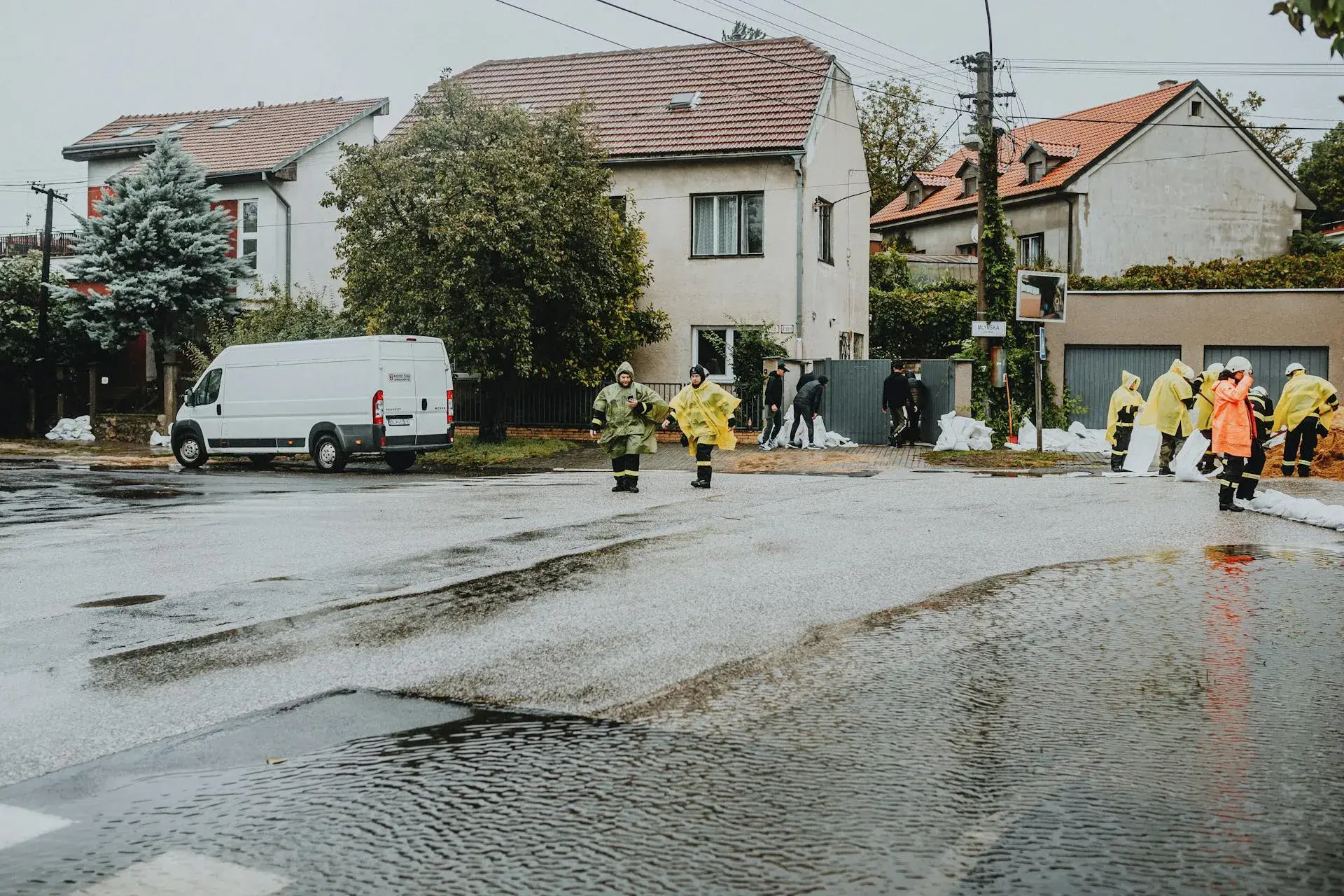
Sewage Cleanup in Rochester Hills, MI
A sewage backup in a Rochester Hills basement is a Category 3 biohazard that threatens your household every hour it goes untreated. Our local Oakland County team responds within 60 minutes.
What Happens When You Call
A real person answers, not a call center. We assess your situation, pin down the sewage source and the extent of contamination, and begin coordinating your biohazard response immediately.
Your dedicated decontamination team is dispatched from our local base serving Rochester Hills and the surrounding Oakland County communities.
The team arrives with sewage extraction equipment, antimicrobial treatment systems, personal protective equipment, and commercial drying gear. Emergency mitigation begins immediately.
Sewage extracted, contaminated materials removed, antimicrobial treatment applied, drying equipment deployed. You know exactly what comes next.
Sewage has backed up into your home, which makes this a biohazard emergency that cannot wait. Whether the source is a blocked lateral, an overwhelmed municipal line, or a failed septic system, the bacteria, viruses, and parasites in sewage threaten your household with every minute of exposure. X Response exists for exactly this moment. When you reach out, your decontamination team is mobilized within minutes, and from there one team manages everything: extraction, decontamination, drying, and restoration. Call now. Your team is standing by.
Why Rochester Hills Homes Are Vulnerable to Sewage
A sewage backup is one of the most hazardous emergencies a Rochester Hills homeowner can face, turning a finished basement into a contaminated biohazard zone in minutes. This Oakland County city sits in the Clinton River watershed, a heavily developed, flashy basin that rises and falls fast in storms because so much of the land around it sheds water rather than absorbing it. When that runoff overwhelms the sewers during a downpour or a rapid spring snowmelt, pressure forces raw sewage backward through the lowest openings in the house, the basement floor drains, and up into the finished space below grade. During the historic storm of June 25 and 26, 2021, rainfall far beyond the sewer system's design capacity surcharged the regional network and pushed sewage up into thousands of basements across Oakland County. Whether the source is a blocked lateral, a surcharged municipal main, or a failed septic system on the city's rural edge, a sewage backup demands an immediate, methodical response. X Response provides 24/7 emergency sewage cleanup, dispatching certified technicians who understand the health risks and carry the equipment to decontaminate a home safely and completely.
Restoration professionals rank water damage by contamination level, and sewage sits at the top of the scale as Category 3, or black water. It is far more than dirty water. It is a slurry of human waste, chemicals, and rotting organic matter loaded with bacteria, viruses, and parasites such as E. coli, Salmonella, Rotavirus, and Hepatitis. Even short or indirect exposure without a proper respirator, full-body protection, and training can trigger serious gastrointestinal, respiratory, and skin illness. Those pathogens multiply fastest in the warm, still air of a closed Rochester Hills basement, so a shop vacuum and household bleach cannot come close to making the space safe.
The hazard of Category 3 water forces a protocol that has nothing in common with a clean-water dry-out. Under the standards of the Institute of Inspection, Cleaning and Restoration Certification (IICRC), any porous material that has absorbed raw sewage cannot be trusted once cleaned and must be removed. In a finished Rochester Hills basement that typically means carpet and padding, the lower drywall and insulation, and any particleboard furniture or cabinetry the sewage reached. We build a sealed containment around the work area so contamination cannot travel into clean rooms, cut the affected drywall well above the water line, and double-bag, seal, and remove the debris for disposal under Oakland County and state environmental rules.
After the solids are extracted and the ruined porous materials are out, we move to sanitizing. Crews pressure-wash and scrub the exposed concrete, foundation walls, and framing, then apply EPA-registered, hospital-grade antimicrobials formulated to kill sewage pathogens on contact. Disinfection still leaves the drying problem, because a damp basement can grow mold inside 48 hours. We deploy commercial dehumidifiers and high-velocity air movers to draw moisture out of the framing and the concrete floor, and we verify with documented meter readings that the structure has reached its dry standard before we call the job done.
Aging Sewer Laterals and Tree-Root Intrusion
The lateral that connects a Rochester Hills home to the municipal sewer is usually the homeowner's responsibility from the property line to the house, and in many neighborhoods that pipe has been buried for decades. Clay and older plastic laterals crack and shift with the winter freeze-thaw cycle, and tree roots push into the joints looking for water and nutrients, tightening the pipe until a normal flush backs up. When the lateral clogs, sewage rises to the lowest opening in the house, which in a Rochester Hills home is almost always a basement floor drain, toilet, or laundry standpipe, and because it enters below grade it can cover a finished basement floor with Category 3 contamination before anyone upstairs notices.
The Clinton River, Flash Runoff, and Sewer Surcharge
Because the Clinton River watershed is so developed, storm runoff reaches the sewers fast and in volume. Older parts of the southeast Michigan network still carry stormwater and sewage in shared pipes, and even the separated sanitary systems here take on stormwater through cracked pipe, groundwater infiltration, and improperly connected downspouts. A hard summer downpour or a fast spring snowmelt surcharges the system and drives sewage back toward the lowest connected drains, which sit in basements. June 2021 showed how far it can go, with rain beyond the sewers' design capacity backing sewage into thousands of Oakland County basements. Michigan EGLE tracks and reports these combined sewer overflow events, and a flashy watershed like the Clinton's feels that pressure quickly whenever a major storm lands.
Septic Failures on the Rural Edge in Clay Soils
On the rural edges of Rochester Hills where homes are not connected to municipal sewer, septic systems carry the load, and southeast Michigan's heavy clay works against them. Clay drains slowly, so a field soaked by a wet spring cannot accept more effluent and sewage backs up into the house or surfaces in the yard. Winter adds a hard freeze that heaves and cracks distribution lines and shuts a frozen field down entirely. An older tank or an undersized field can simply be past its service life, and a septic failure delivers the same Category 3 biohazard to the home as any municipal backup, demanding the same full response.
Finished Basement Backups and Category 3 Spread
The full basement that makes a Rochester Hills home so comfortable is also its most vulnerable point in a sewage event. When contaminated water rises through a floor drain, it runs across the lowest level of the house, the very place people finish as rec rooms and use to store carpet, furniture, and belongings. Sewage climbs the base of drywall, saturates carpet and padding, slips under baseboards, and soaks into particleboard cabinet cores. Every material that took on that Category 3 water must be removed and discarded as contaminated waste, and the concrete floor and foundation walls then require cleaning and disinfection, because pathogens left in a damp, sealed basement do not simply dry out and vanish.
Biohazard Urgency and Rapid Bacterial Growth
A sewage backup is hazardous the instant it occurs and grows more dangerous by the hour. The basement it collects in is dark, humid, and cut off from fresh air, the perfect setting for the bacteria, viruses, and parasites in sewage to multiply. Decomposing waste releases hydrogen sulfide and other noxious gases, and mold starts to colonize the wet materials the sewage soaked. A backup that could be a contained cleanup on day one becomes a demolition as the contamination spreads and mold sets in, which is why sewage cleanup in Rochester Hills is counted in hours, not days.
These factors reinforce one another in a Rochester Hills home. Aging laterals and tree roots block the line, a flashy Clinton River watershed drives storm runoff and snowmelt into the sewers, and a finished basement gives the backup a living space to ruin. A sewage backup is a Category 3 biohazard, and in the warm, closed air of a basement the gap between a targeted cleanup and a full demolition is narrow. Effective sewage cleanup here means stopping the source, removing every contaminated porous material, disinfecting the structure, and drying it to a verified standard before any rebuild.
What Happens to Your Home While You Wait
Within 1 Hour
Sewage rises through the lowest basement drains and spreads across the floor, soaking carpet and padding and wicking into drywall and baseboards at the base of the walls. In a finished Rochester Hills basement it reaches the rec room, stored belongings, and any furniture on the floor. Bacteria, viruses, and parasites are active on every contaminated surface, the health hazard is immediate, and decomposing waste starts releasing hydrogen sulfide and other gases. No one should enter without respiratory and skin protection.
1 to 24 Hours
Bacterial counts rise fast in the warm, damp, enclosed basement. Contamination penetrates deeper into drywall paper, carpet backing, and particleboard, and the smell grows stronger as decomposition speeds up. Mold begins colonizing the organic materials the sewage soaked, and the contaminated area expands as water wicks along the floor and up the walls into neighboring basement rooms.
24 to 48 Hours
The porous materials the sewage reached are now beyond saving under any professional standard, and drywall, carpet, padding, and particleboard have to come out as contaminated waste. Mold shows on organic surfaces, wood at the base of the walls reads saturated, and the hazard has moved past the original backup point. Professional antimicrobial treatment of every hard surface is now required before the space can be reoccupied.
48 to 72 Hours
Secondary contamination is set throughout the affected basement. Mold is actively growing on every damp organic surface, and sewage that crept under baseboards and into wall cavities has contaminated insulation and framing. The scope has expanded far beyond an immediate response, the risks now include both sewage pathogens and mold spores, and the basement cannot be occupied without respiratory protection.
One Week and Beyond
Extensive biological contamination runs through the basement and any connected spaces. Structural materials degrade under prolonged sewage contact, and mold has moved through wall cavities and possibly into the HVAC system feeding the rest of the house. The job has shifted from targeted decontamination to full demolition and reconstruction, and the insurance claim gets more complex as the carrier evaluates whether faster action would have limited the loss.
Sewage is a Category 3 biohazard, and in a warm, damp basement every one of these processes accelerates. The window for holding down damage and cost is measured in hours, not days. Contact X Response now. Our Rochester Hills team responds within 60 minutes.
How We Restore Sewage-Damaged Rochester Hills Homes
Sewage cleanup is a biohazard operation with specialized equipment, protocols, and protective gear. Here is what the process involves in a Rochester Hills home.
Biohazard Assessment and Safety Protocols
Our team arrives in full protective equipment, respirators, suits, gloves, and boot covers, and before starting we gauge how far the contamination reached, pin down the source, and confirm whether the backup is still active. In a Rochester Hills home that means determining whether a lateral is blocked, the municipal system is surcharged, or a septic system has failed. If sewage is still coming in, we work with the right party, the City of Rochester Hills for municipal problems or a licensed plumber for lateral and septic failures, to stop the source before cleanup can be effective. We map and photograph the contamination zone for your insurance file.
Sewage Extraction and Contaminated Material Removal
Standing sewage is removed with pumps and vacuums made for contaminated water. All porous materials the sewage contacted are taken out: carpet and padding, drywall cut at least a foot above the highest water mark, particleboard cabinetry, baseboards, and insulation in the affected wall cavities. In a Rochester Hills basement that covers the whole path the backup traveled, from the floor drain across the finished floor and up the walls. Everything removed is bagged, sealed, and disposed of as contaminated waste under Oakland County regulations.
Antimicrobial Treatment and Decontamination
With the contaminated porous materials gone, every remaining hard surface receives antimicrobial treatment, the concrete floor, the framing behind removed drywall, the drywall above the cut line, fixtures, and any salvageable non-porous items. We use EPA-registered products at concentrations rated for the full spectrum of Category 3 pathogens, and where sewage may have entered floor cracks or the joint where the floor meets the foundation wall we treat and verify those areas specifically. We check the HVAC system too, and if sewage reached a return-air path or the system circulated contaminated air, duct cleaning and decontamination join the scope.
Structural Drying
Once decontaminated, the exposed structure must be dried to a standard that stops mold and allows safe rebuilding. We set commercial dehumidifiers and high-velocity air movers to dry the floor, the open wall cavities, and the framing. Mechanical dehumidification is essential in a closed Michigan basement, since opening windows in humid weather only adds moisture and the enclosed cavities and concrete will not dry on their own. We log daily moisture readings at multiple points until they all confirm the space is dry.
Reconstruction and Verification
With a dry, decontaminated structure, reconstruction starts. New drywall, insulation, baseboards, and flooring are installed to current standards, and in a Rochester Hills basement that often means moisture-resistant materials at the base of the walls and flooring chosen to survive a future water event. A final inspection verifies clean, dry, finished surfaces and a permanently addressed source, and you receive complete documentation, contamination mapping, antimicrobial records, moisture logs, and reconstruction details, for your insurer and your records.
The X Response Difference
Sewage cleanup requires biohazard-level protocols, not standard water damage procedures. X Response brings the specialized training, equipment, and systematic process that a Category 3 contamination event demands.
Insurance Claim Guidance for Rochester Hills Homeowners
Sewage backup coverage in Michigan depends on your specific policy and the source of the backup. Many standard homeowner's policies exclude sewer and drain backup unless a specific endorsement has been added, and that gap is what left so many Oakland County homeowners uncovered when the Great Lakes Water Authority denied the June 2021 basement flood claims. The endorsement is usually inexpensive, but it must be in place before the event. If you carry it, coverage typically includes extraction, decontamination, structural drying, and reconstruction of the affected area. If sewage entered because of a municipal system failure rather than a problem on your property, you may also have a claim against the responsible authority, though Michigan's governmental immunity rules make those claims difficult. The key is carrying the sewer backup endorsement and documenting the event thoroughly from the moment it happens.
How X Response Helps
- Verify whether your policy includes a sewer and drain backup endorsement before filing, as standard policies often exclude this coverage
- Document the backup source (lateral failure, municipal surcharge, septic failure) as this affects which coverage or liability applies
- Photograph all contamination before any cleanup begins, establishing the full scope of the event
- Maintain a record of all health-related expenses if occupants were exposed to sewage pathogens
- Prepare a scope of work that separates extraction, decontamination, drying, and reconstruction into standard categories
X Response does not file claims on your behalf, adjust claims, or make coverage determinations. We provide documentation and guidance to help you make informed decisions about your property and your policy. Coverage decisions are made solely by your insurance carrier.
Certified Restoration Specialists Serving Rochester Hills
When you contact X Response for sewage cleanup in Rochester Hills, your team is drawn from certified biohazard professionals who understand what a backup does to a home built on a full basement. They know how sewage rises through the lowest basement drain and spreads across a finished lower level, how a warm, humid basement accelerates bacterial growth, how a flashy Clinton River watershed drives storm runoff and snowmelt into the sewers until they surcharge, and how to coordinate with the City of Rochester Hills when municipal infrastructure is involved. They have handled lateral backups in established neighborhoods, septic failures on the rural edge, and storm-driven surcharge events that struck many homes at once. This is a local team built for biohazard-level response.
Every technician on your sewage cleanup team holds current IICRC certification in water damage restoration with specific training in Category 3 contaminated water. Their equipment includes sewage-rated extraction pumps, EPA-registered antimicrobial systems, full personal protective equipment, commercial dehumidifiers, and HEPA air scrubbers. When your team arrives in full PPE, they carry everything needed to start biohazard mitigation right away, with no wait for more equipment or crews.
In Rochester Hills, X Response works with Snyder Mitigation Restoration, an independent local restoration partner serving Oakland County.
Sewage Cleanup FAQ for Rochester Hills Homeowners
Other Emergency Services in Rochester Hills

Water Damage Restoration
Burst pipes, storm flooding, standing water. We extract, dry, and restore before mold sets in.
Learn more
Fire Damage Restoration
Structural damage, soot, debris. We stabilize, clean, and rebuild what fire destroyed.
Learn more
Smoke Damage Restoration
Soot residue, chemical odors, HVAC contamination. We decontaminate surfaces, eliminate odors, and restore air quality.
Learn more
Mold Remediation
Testing, containment, removal, prevention. We find the source, eliminate the growth, and stop it from returning.
Learn more