
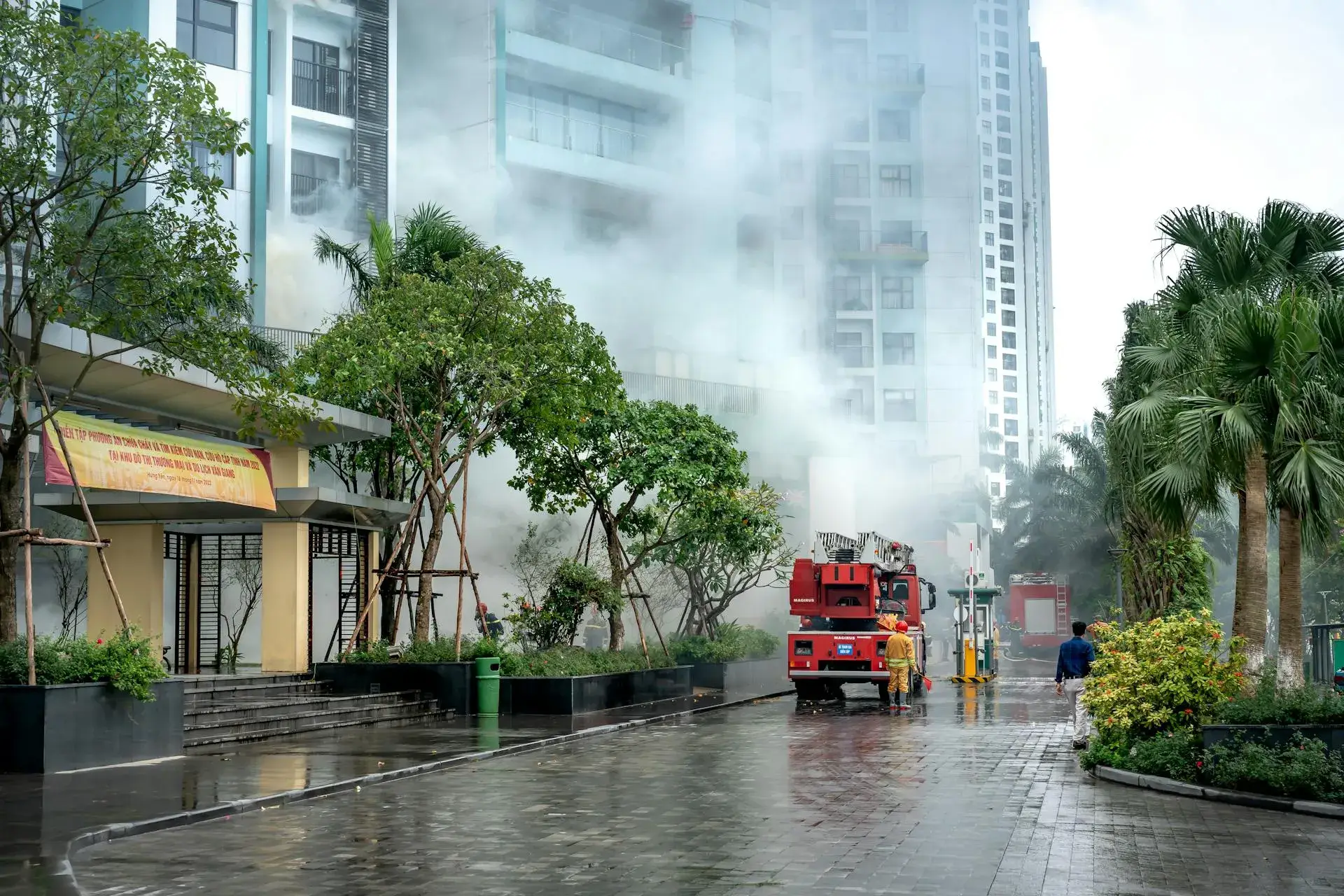
Smoke Damage Restoration in College Park, GA
Microscopic soot particles penetrate HVAC ducts, drywall, and insulation within hours. Our College Park smoke restoration team responds within 60 minutes.
What Happens When You Call
A restoration coordinator answers your call 24/7, determines the smoke classification, and immediately dispatches our College Park response vehicle.
Our certified technicians arrive on site within 60 minutes equipped with HEPA air filtration equipment, chemical sponges, and diagnostic air meters.
We seal off affected rooms with plastic containment barriers and establish negative air pressure to stop soot particle migration.
Soot is chemically removed, HVAC ductwork is decontaminated, and industrial hydroxyl generators neutralize all odor compounds.
Smoke damage is an insidious hazard that permeates deep into hidden wall cavities, subflooring, electrical switches, and central air systems long after flames are extinguished. Whether triggered by a kitchen grease flare-up in an apartment along Godby Road, an electrical wiring failure in a historic Craftsman bungalow near Woodward Academy, or a furnace puffback on Main Street, microscopic soot particles cling aggressively to every surface. Attempting to wipe down walls with standard household cleaning sprays only forces acidic oils deeper into paint and historic plaster, permanently locking in acrid odors. X Response provides scientific smoke mitigation and advanced molecular deodorization throughout College Park and surrounding Fulton and Clayton County neighborhoods. Our certified technicians deploy commercial HEPA air scrubbers, specialized chemical soot sponges, and industrial hydroxyl neutralizers to restore clean, healthy indoor air quality. Call now for expert smoke damage response in College Park.
Why College Park Homes Are Vulnerable to Smoke Damage
College Park is an established municipality of approximately 13,930 residents situated across northern Clayton and southern Fulton Counties, adjacent to Hartsfield-Jackson Atlanta International Airport. Featuring nearly 900 historic structures in its renowned historic district, College Park's architectural landscape spans 1920s Craftsman bungalows, early-twentieth-century Queen Anne homes, mid-century brick ranches, and modern commercial hotel properties along Virginia Avenue. Because of Georgia's humid subtropical climate, residential and commercial HVAC networks operate continuously throughout the year, cycling conditioned air through extensive duct networks. When smoke occurs from a stove fire, faulty appliance, or electrical malfunction, central air handlers rapidly pull fine soot particles into return plenums, dispersing acidic contaminants throughout every room in the structure.
Exposure to inhalable particles can affect both your lungs and your heart. Many studies directly link the size of particles to their potential for causing health problems. This public health warning from the U.S. Environmental Protection Agency underscores the critical risks of microscopic particulate matter deposited during structure fires. In College Park properties, fine smoke particles containing carbon, volatile organic compounds, synthetic resins, and toxic chemical residues settle into porous textures, wall cavities, and ceiling insulation. Beyond posing severe respiratory risks to occupants, untreated smoke residues react with ambient summer humidity to form corrosive acids that rapidly etch glass window panes, tarnish polished brass and chrome fixtures, and permanently discolor delicate fabrics.
Forced-Air HVAC Circulation and Ductwork Contamination
Central air conditioning and heating systems in College Park residences run constantly to manage regional temperature and humidity swings. When smoke enters the return air plenum, soot is forced through duct registers, coating ductwork insulation and distributing airborne soot into bedrooms and common living spaces.
Differentiation of Soot Types and Specialized Chemical Cleaning
Kitchen grease fires generate sticky protein soot, while smoldering synthetic furnishings create heavy black oil soot, and electrical fires produce fine dry carbon residues. Each soot classification requires specialized cleaning chemistry; using improper water-based cleaners smears oily films and causes permanent surface staining.
High Ambient Humidity and Acidic Chemical Reactions
South Metro Atlanta's high ambient humidity accelerates the chemical reaction between soot and moisture. Acidic soot residues resting on bathroom chrome, stainless steel appliances, and window glass cause permanent microscopic pitting if not chemically neutralized within 24 to 48 hours.
Multi-Story Stack Effect and Vertical Smoke Migration
In College Park's historic multi-story homes and commercial buildings, thermal buoyancy forces hot smoke upward through open stairwells and utility chases, concentrating severe soot and odor damage in upper-floor ceilings and attic insulation.
Deep Odor Absorption in Porous Building Envelope Materials
Drywall, historic plaster, unsealed framing studs, carpet padding, and attic fiberglass readily absorb volatile smoke compounds. Simple surface cleaning leaves deep odor reservoirs untouched; complete elimination requires gas-phase hydroxyl or thermal fogging treatment.
Complete smoke damage recovery across College Park requires scientific soot removal, specialized air scrubbing, and molecular odor neutralization. X Response combines certified IICRC methodologies with commercial HEPA technology to return your College Park property to a pristine, odor-free environment.
What Happens to Your Home While You Wait
Within Minutes
Smoke particles coat ceilings, walls, and furnishings. Acidic residues begin reacting with porous surfaces, and pungent chemical odors permeate carpet fibers, drapes, and clothing.
1-24 Hours
Acidic soot begins discoloring painted walls, wood finishes, and fiberglass fixtures. Polished metal hardware and appliance trims start pitting from chemical corrosion. Central HVAC ductwork becomes thoroughly contaminated.
24-48 Hours
Soot residues penetrate deeper into porous drywall paper and subfloors. Vinyl flooring and laminate surfaces experience permanent yellowing. Corrosion on electronic circuits and metal switches accelerates.
3-7 Days
Smoke odors become deeply embedded in structural framing studs, insulation, and subflooring. Painted walls require heavy chemical sealing and repainting rather than simple cleaning. Unsalvageable textiles must be discarded.
One Week and Beyond
Permanent chemical bonding occurs between soot and building components. Severe structural deodorization and aggressive demolition of contaminated drywall and insulation are required to restore indoor air quality.
Rapid intervention within hours of smoke exposure prevents permanent etching and expensive material replacement. Contact X Response immediately for 24/7 smoke mitigation in College Park.
How We Restore Smoke-Damaged College Park Homes
Our IICRC-certified smoke restoration process follows a scientific approach to isolate contaminated zones, eliminate toxic residues, and neutralize airborne odors.
Air Quality Assessment and Smoke Classification
Upon arriving at your College Park property, our technicians inspect all affected areas to determine the specific smoke type (wet smoke, dry smoke, protein smoke, or fuel oil soot) and map the depth of particulate penetration across walls, ceilings, and ductwork.
Containment and Negative Air Pressure Setup
We erect heavy-duty plastic containment barriers and install commercial HEPA air filtration devices (air scrubbers) to create negative air pressure. This prevents loose soot particles and toxic odors from migrating into unaffected living areas during cleaning.
Precision Surface Decontamination and Chemical Sponging
Technicians clean all salvageable hard surfaces using specialized vulcanized rubber chemical sponges and tailored alkaline soot detergents. We methodically remove dry carbon residues, oily protein films, and soot stains from walls, trim, and cabinetry.
Complete HVAC Ductwork and Air System Sanitization
We inspect and thoroughly clean your central heating and cooling ductwork, removing trapped soot deposits from supply trunks, return plenums, and blower assemblies to prevent recontamination of indoor air when your system runs.
Gas-Phase Thermal Fogging and Hydroxyl Neutralization
To permanently eliminate embedded burnt odors, we deploy industrial hydroxyl generators and thermal foggers. These systems dispense microscopic neutralizing agents that penetrate porous building materials, dismantling odor molecules at the molecular level.
The X Response Difference
Eliminate toxic soot and stubborn odors with College Park's certified smoke restoration specialists. Call X Response today.
Insurance Claim Guidance for College Park Homeowners
Smoke damage claims in Georgia require precise documentation to prove the extent of contamination. Standard homeowners and commercial insurance policies cover structural cleaning, contents deodorization, and HVAC remediation caused by smoke. However, adjusters require forensic proof that odors and soot have penetrated structural elements and air systems. X Response provides complete documentation, including photo logs, soot mapping, and itemized repair schedules, to ensure full coverage under your policy.
How X Response Helps
- Document all soot-affected surfaces and structural elements with high-resolution photographic evidence
- Itemize damaged textiles, upholstery, and personal belongings for off-site cleaning or replacement
- Provide detailed HVAC inspection reports demonstrating ductwork contamination
- Coordinate directly with your insurance adjuster during on-site inspections
- Deliver transparent, line-item estimates using industry-standard pricing software accepted across Georgia
X Response does not act as a licensed insurance adjuster. We provide forensic restoration documentation, air quality monitoring logs, and detailed repair estimates to assist you and your insurer throughout the claim process.
Certified Restoration Specialists Serving College Park
Our College Park smoke restoration team consists of IICRC-certified technicians in Fire and Smoke Restoration (FSRT) and Odor Control (OCT). Serving neighborhoods from Historic College Park and Woodward Academy to Virginia Avenue, Main Street, and Godby Road, our specialists have extensive experience resolving complex smoke challenges in historic homes and modern commercial buildings.
We operate fully equipped restoration vehicles stocked with commercial HEPA air scrubbers, chemical soot removal products, thermal fogging machines, and hydroxyl generators. Our dedication to scientific restoration and prompt communication ensures your College Park property is restored to a safe, clean, and odor-free condition.
In College Park, X Response works with Boss Contracting, an independent local restoration partner serving Fulton County.
Smoke Damage Restoration FAQ for College Park Homeowners
Other Emergency Services in College Park

Water Damage Restoration
Burst pipes, storm flooding, standing water. We extract, dry, and restore before mold sets in.
Learn more
Fire Damage Restoration
Structural damage, soot, debris. We stabilize, clean, and rebuild what fire destroyed.
Learn more
Mold Remediation
Testing, containment, removal, prevention. We find the source, eliminate the growth, and stop it from returning.
Learn more
Sewage Cleanup
Sewer backups, contaminated water, biohazard. We extract, sanitize, and restore safely.
Learn more