
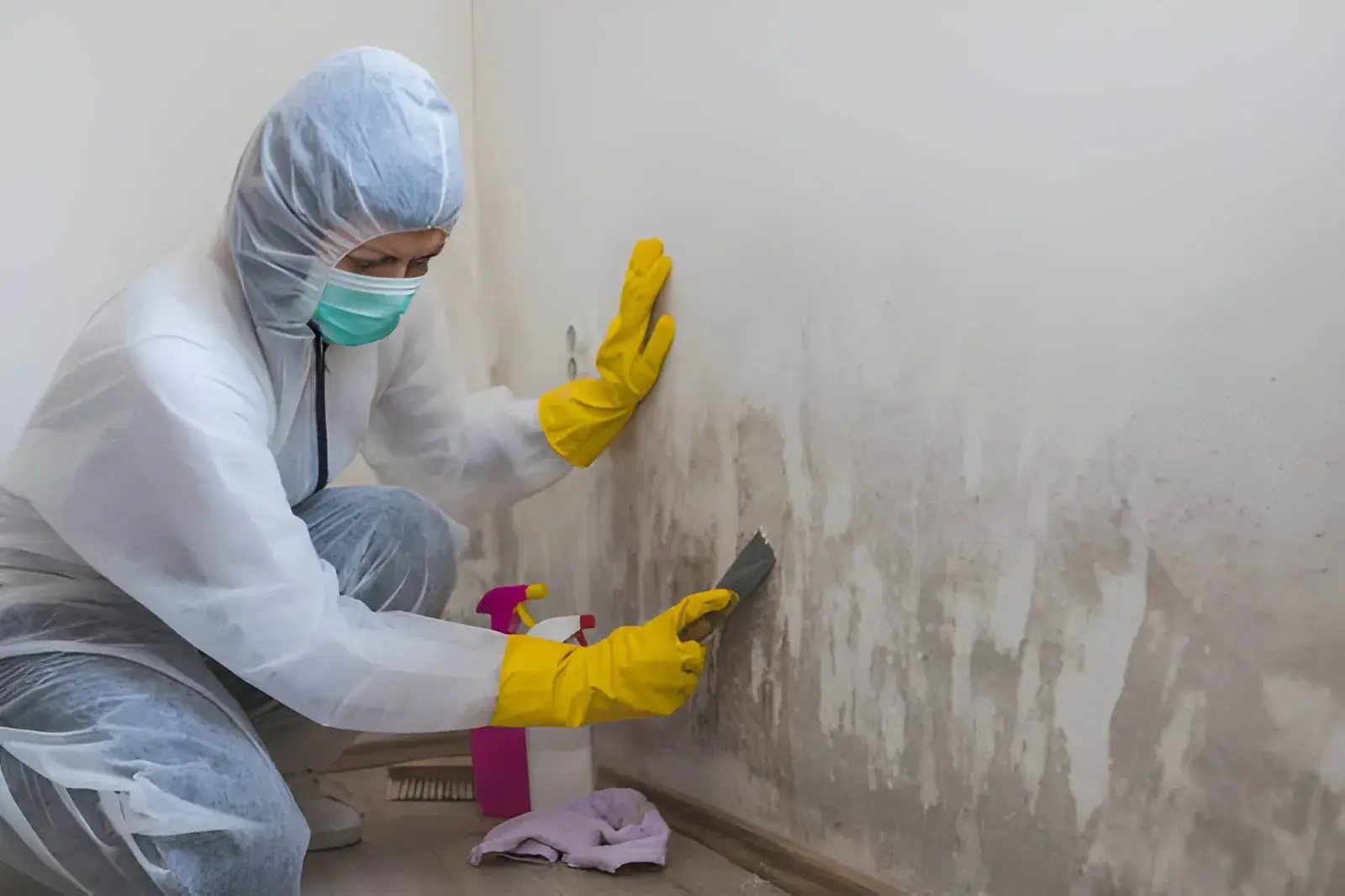
Mold Remediation in College Park, GA
College Park's intense summer humidity accelerates fungal colonization in as little as 24 hours. Our certified mold crews arrive on site within 60 minutes.
What Happens When You Call
A certified remediation coordinator takes your call 24/7, evaluates your property moisture history, and immediately dispatches our local College Park crew.
Our response truck arrives within 60 minutes equipped with thermal imaging cameras, pinless moisture meters, and HEPA air scrubbers.
Technicians build sealed polyethylene containment barriers with HEPA-filtered negative air machines to prevent cross-contamination into clean living areas.
Contaminated porous materials are safely removed under containment, structural framing is HEPA-vacuumed and treated with EPA-registered antimicrobials, and post-remediation clearance testing is completed.
Discovering mold inside your College Park residence or commercial property signals an ongoing, unaddressed moisture issue that threatens indoor air quality and structural integrity. Whether caused by chronic crawl space humidity in a historic Victorian near Woodward Academy, an unconditioned basement leak on Main Street, an attic air conditioning condensation line overflow along Virginia Avenue, or condensation behind bathroom drywall in an apartment near Godby Road, active fungal colonies release millions of microscopic spores into the air you breathe. Surface spraying with bleach only temporarily masks discoloration while leaving root hyphae embedded deep in wood framing, drywall paper, and subfloors. X Response provides certified, scientific mold remediation throughout College Park and surrounding Fulton and Clayton County communities. Our IICRC-certified specialists construct strict negative-pressure containment zones, utilize commercial HEPA air filtration, and eliminate microbial contamination at the source. Call now for 60-minute mold remediation response in College Park.
Why College Park Homes Are Vulnerable to Mold
College Park is an established municipality of approximately 13,930 residents located in southern Fulton and northern Clayton Counties, directly southwest of Atlanta. Recognized for its rich architectural heritage encompassing nearly 900 historic buildings in one of Georgia's largest historic districts, College Park features early-twentieth-century Queen Anne and Victorian homes, Craftsman bungalows, and mid-century crawl space ranches. College Park experiences a humid subtropical climate marked by long, hot summers with average relative humidity regularly running high, alongside over 50 inches of annual precipitation. This severe ambient moisture load, combined with dense Piedmont red clay soil that retains water and impedes drainage around foundations, creates an environment where indoor moisture readily accumulates inside unconditioned crawl spaces, daylight basements, and attic assemblies.
Check the indoor humidity levels with a moisture meter or humidistat. If over 50%, you should consider using a dehumidifier. This practical moisture control guidance from the University of Georgia Extension is especially vital in College Park, where humid summer air and damp red clay soil combine to elevate indoor relative humidity. When humidity remains above 50 to 60 percent, fungal species such as Stachybotrys chartarum, Aspergillus, and Cladosporium readily colonize paper-faced drywall, organic carpet backing, and structural floor joists, threatening indoor air quality and structural integrity.
Subtropical Summer Humidity and Inward Vapor Drive
During College Park's long summer cooling season, high outdoor humidity creates a powerful inward vapor drive toward air-conditioned indoor spaces. Warm, moisture-laden outdoor air enters structural wall cavities and crawl spaces, condensing on cooler subflooring and drywall surfaces to create an ideal microclimate for mold growth.
Vented Crawl Space Moisture and Red Clay Evaporation
Many older homes in Historic College Park feature traditional vented crawl spaces over exposed Piedmont red clay soil. Ground moisture continuously evaporates into the crawl space, raising humidity to high levels and causing widespread fungal colonization on floor joists, subflooring, and fiberglass insulation.
Attic HVAC Condensation Line Backups and Overflow
Central air handlers located in hot College Park attics generate gallons of condensation daily during summer cooling. When primary drain lines clog with algae or emergency drain pans rust through, hidden water leaks into ceiling drywall and joist framing, fostering concealed mold colonies before water stains become visible.
Daylight Basement Foundation Moisture Infiltration
Rolling terrain across College Park leads to widespread daylight basement construction. Heavy seasonal rains saturate surrounding clay soil, generating hydrostatic pressure that pushes moisture through masonry block joints and concrete foundation walls, trapping dampness behind finished basement drywall.
Inadequate Bathroom and Kitchen Mechanical Ventilation
High daily indoor moisture generated by showers and cooking in multi-resident homes elevates interior relative humidity. When exhaust fans are undersized or ductwork vents improperly into attic spaces rather than outside, mold rapidly colonizes bathroom ceilings, closets, and window frames.
Effective mold remediation across College Park requires scientific moisture diagnostics, strict engineering containment, and thorough structural sanitization. Saturated red clay, unconditioned crawl spaces, and humid summers require a comprehensive remediation strategy. X Response provides certified protocols to ensure your indoor environment is clean and safe.
What Happens to Your Home While You Wait
24-48 Hours
Fungal spores germinate on damp drywall, carpet backing, and crawl space joists. Microscopic hyphae penetrate porous organic materials, establishing permanent fungal colonies.
3-7 Days
Visible black or green colonies appear along baseboards, behind wallpaper, and under sinks. Musty fungal odors spread through the living area as mold releases microbial volatile organic compounds (MVOCs).
1-2 Weeks
Colonies mature and produce millions of airborne spores. Spores enter central HVAC ductwork, spreading microbial contamination to unaffected bedrooms and living areas across the home.
2-4 Weeks
Drywall cores soften and delaminate as fungal enzymes break down cellulose materials. Crawl space floor joists begin suffering structural degradation from wood-decay fungi.
One Month and Beyond
Extensive structural weakening of subfloors and framing timbers occurs. Large-scale structural demolition and specialized air filtration are required to eliminate widespread contamination.
Early remediation stops fungal spread and protects indoor air quality. Contact X Response immediately for certified mold removal in College Park.
How We Restore Mold-Affected College Park Homes
Our mold remediation protocol follows strict IICRC S520 guidelines, ensuring safe spore containment, thorough removal, and long-term moisture control.
Comprehensive Visual Inspection and Moisture Diagnostics
Our certified technicians conduct a meticulous property inspection using infrared thermal cameras, calibrated pinless moisture meters, and relative humidity hygrometers to pinpoint hidden moisture sources and map all areas of fungal colonization.
Containment Engineering and Negative Air Pressure
We construct critical containment barriers using 6-mil flame-retardant polyethylene sheeting around all work zones. Commercial HEPA air filtration units vent outside, establishing negative air pressure that prevents mold spores from escaping into unaffected living spaces during remediation.
Safe Removal of Non-Salvageable Porous Materials
Heavily contaminated materials that cannot be restored, such as water-damaged drywall, fiberglass insulation, and saturated carpet padding, are carefully bagged in sealed 6-mil waste bags within containment and removed according to safety regulations.
HEPA Vacuuming and Abrasive Structural Cleaning
Remaining framing lumber, subflooring, and concrete surfaces are thoroughly cleaned using industrial HEPA-filtered vacuums, wire brushing, and specialized antimicrobial wash solutions to remove all surface mold and embedded hyphae.
Antimicrobial Treatment and Air Scrubbing
We apply EPA-registered botanical antimicrobials and commercial fungal-resistant sealants to exposed framing to prevent future colonization. HEPA air scrubbers run continuously to filter airborne spores, and independent clearance testing is coordinated to verify complete sanitization.
The X Response Difference
Ensure complete, safe mold removal for your College Park property with our certified specialists. Call X Response today.
Insurance Claim Guidance for College Park Homeowners
Navigating mold insurance claims in Georgia requires a clear understanding of policy provisions and moisture causes. Standard Georgia homeowners insurance policies generally cover mold remediation only when it directly results from a covered peril, such as sudden and accidental pipe bursts or water heater failures. Mold resulting from long-term deferred maintenance, chronic humidity, or unaddressed roof leaks is typically excluded, and many policies place strict dollar caps on mold coverage. X Response provides comprehensive moisture mapping and forensic origin documentation to help you present a clear claim to your insurer.
How X Response Helps
- Perform thorough moisture mapping that clearly connects mold colonization to a specific covered water loss event
- Provide detailed line-item remediation estimates using industry-standard pricing schedules
- Supply comprehensive photographic documentation of contaminated areas and containment setup
- Coordinate directly with your insurance adjuster to review the remediation protocol
- Deliver post-remediation documentation and clearance test results to verify complete restoration
X Response does not act as an insurance adjuster or provide legal coverage determinations. We supply forensic inspection data, moisture logs, and itemized remediation scopes to support your property claim.
Certified Restoration Specialists Serving College Park
Our College Park mold remediation team consists of IICRC-certified Applied Microbial Remediation Technicians (AMRT) and Water Damage Restoration Technicians (WRT). Serving communities across Fulton and Clayton Counties from Historic College Park and Woodward Academy to Main Street, Virginia Avenue, and Godby Road, our specialists possess extensive expertise in safely removing fungal contamination from historic properties and modern structures.
We operate fully equipped remediation vehicles stocked with commercial HEPA air scrubbers, negative air machines, containment lumber, and EPA-registered botanical antimicrobials. Our commitment to strict safety standards, transparent communication, and scientific verification makes X Response the trusted choice for mold remediation throughout College Park.
In College Park, X Response works with Boss Contracting, an independent local restoration partner serving Fulton County.
Mold Remediation FAQ for College Park Homeowners
Other Emergency Services in College Park

Water Damage Restoration
Burst pipes, storm flooding, standing water. We extract, dry, and restore before mold sets in.
Learn more
Fire Damage Restoration
Structural damage, soot, debris. We stabilize, clean, and rebuild what fire destroyed.
Learn more
Smoke Damage Restoration
Soot residue, chemical odors, HVAC contamination. We decontaminate surfaces, eliminate odors, and restore air quality.
Learn more
Sewage Cleanup
Sewer backups, contaminated water, biohazard. We extract, sanitize, and restore safely.
Learn more