
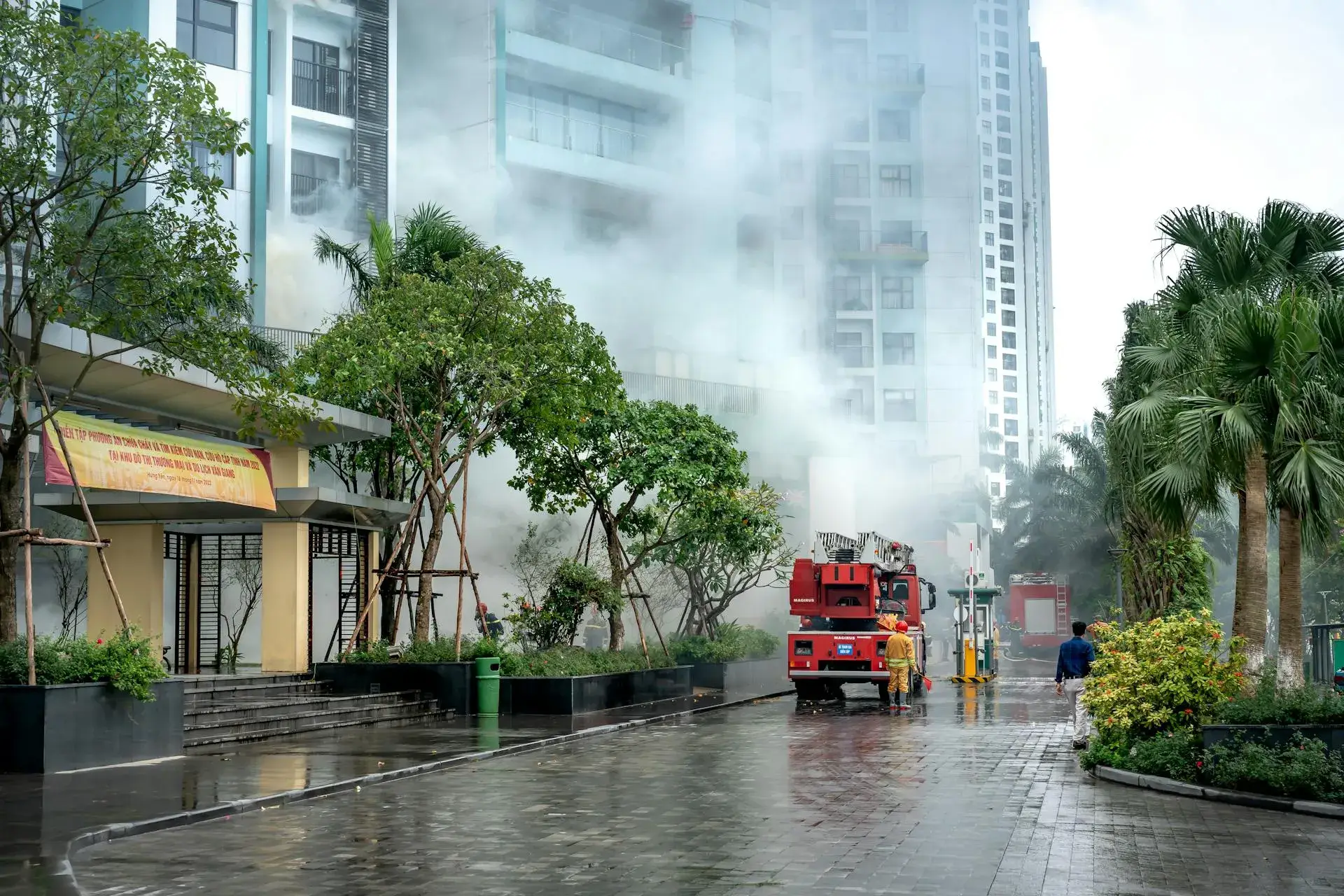
Smoke Damage Restoration in Louisville, OH
Microscopic soot particles and toxic combustion gases penetrate drywall, plaster, and HVAC systems across Louisville properties. Our Stark County specialists arrive within 60 minutes to neutralize odors and restore indoor air.
What Happens When You Call
A regional dispatcher receives your call directly, records property details, and dispatches our local Stark County smoke mitigation specialists.
Field technicians arrive on site with specialized testing kits, industrial air filtration scrubbers, and chemical soot removal equipment.
We conduct comprehensive soot mapping to classify deposits as dry, wet, or protein-based, establishing negative-pressure containment barriers immediately.
Technicians deploy HEPA air scrubbers, sanitize HVAC ductwork, and execute molecular thermal fogging to permanently eliminate smoke odors.
Even when a fire in Louisville is quickly extinguished or confined to a single appliance, smoke and aerosolized soot spread rapidly throughout the entire structure. Toxic combustion particles ride thermal air currents through wall cavities, cling to cool exterior walls, and embed deeply into carpeting, draperies, and central ductwork. Postponing professional smoke removal allows acidic soot to permanently etch glass windowpanes, corrode household metals, and cause enduring odors in living areas. When you contact X Response, our certified Stark County smoke restoration specialists arrive on site within 60 minutes. From detailed particulate testing and HEPA air scrubbing to multi-stage thermal deodorization and complete duct cleaning, we restore clean, healthy indoor air quality. Call now. Your local Louisville smoke restoration team is ready to respond.
Why Louisville Homes Are Vulnerable to Smoke Damage
Louisville, Ohio, known as Constitution Town, is a vibrant community of 9,521 residents in northeastern Stark County situated along the East Branch of Nimishillen Creek. The U.S. Environmental Protection Agency reports that indoor particulate matter from combustion sources contains microscopic inhalable particles that penetrate deeply into building materials and living spaces. In Louisville, the behavior of airborne soot and combustion odors is strongly influenced by local geography and weather conditions. Dense creek valley morning fog and seasonal temperature inversions frequently trap cool, damp air near the ground, preventing smoke particulates from venting freely and driving acidic soot residues deep into porous plaster walls, structural lumber, and soft furnishings throughout local homes.
The structural layout of Louisville's housing stock also affects how smoke disperses through an interior. Many established residences built during the 19th and 20th centuries along Main Street and Chapel Street feature multi-story layouts, unsealed wall cavities, and retrofitted forced-air heating systems. During freezing northeast Ohio winter weather, the natural stack effect draws hot smoke and volatile organic compounds upward into attic spaces and upper-floor bedrooms before circulating through central return ducts. In addition to structural fires, Louisville homeowners frequently encounter oily furnace puff-backs during sudden winter temperature drops, as well as invisible protein residues from kitchen grease fires that leave sticky, pungent films on cabinets and appliances. Successfully eliminating smoke damage in Louisville requires targeted chemical counter-agents, specialized dry sponging, and commercial air scrubbers operated by certified local professionals.
Nimishillen Creek Valley Inversions
Valley microclimates trap humid air and combustion residues near ground level, causing acidic soot particles to bond tightly with interior surfaces.
Winter Heating Stack Effect
Sub-zero winter temperatures create strong interior thermal updrafts, pulling smoke and soot through wall cavities into upper-story living spaces.
Central Ductwork Contamination
Forced-air heating networks circulate microscopic soot particles across all rooms within minutes of ignition, requiring deep HVAC sanitization.
Complex Residue Chemistry
Varying fuel sources, from synthetic plastics to kitchen cooking oils and furnace fuel oil, create distinct soot varieties that each require specific chemical treatments.
Whether you face furnace puff-back soot or extensive smoke contamination from a residential fire, Louisville properties require scientific cleaning. X Response provides certified Stark County technicians and industrial air purifiers to restore your property.
What Happens to Your Home While You Wait
Within 1 Hour
Fine soot particles settle over furniture, counters, and flooring. Porous painted walls, raw woodwork, and synthetic draperies begin absorbing volatile organic chemical odors deeply into their fibers.
1 to 24 Hours
Acidic combustion residues begin yellowing light-colored plastics and acrylic bathroom fixtures. Unprotected metal hardware, appliances, and electronics begin to tarnish and pit from acid exposure.
24 to 48 Hours
Soot chemically etches unprotected glass windowpanes, mirrors, and porcelain plumbing fixtures. Unsealed wood trim absorbs smoke odors so deeply that regular surface cleaning becomes ineffective.
48 to 72 Hours
Soot deposits bond firmly with drywall and painted trim, causing permanent staining. HVAC duct systems accumulate sticky combustion residues that continually recirculate smoky odors whenever the furnace fan runs.
One Week and Beyond
Prolonged chemical exposure results in permanent corrosion of electrical and mechanical systems. Remediating smoke odors at this stage requires intensive thermal fogging, structural sealing, and selective material demolition.
In Louisville, prompt smoke mitigation protects your home from permanent surface etching and persistent chemical odors. Contact X Response immediately for emergency smoke decontamination.
How We Restore Smoke-Damaged Louisville Homes
Eliminating smoke and soot contamination in a Louisville property requires a methodical protocol that addresses both visible residues and microscopic airborne particles.
Residue Identification and Containment
Our technicians test soot samples to determine whether deposits are wet, dry, or protein-based, establishing negative-pressure containment barriers to protect unaffected living spaces.
HEPA Air Scrubbing and Particulate Capture
We deploy commercial-grade air scrubbers equipped with three-stage filtration, including pre-filters, carbon odor adsorbents, and HEPA filters that capture particulates down to 0.3 microns.
Chemical Surface Decontamination
Technicians use specialized dry chemical sponges, heavy-duty alkaline cleaners, and targeted degreasers to lift soot residues from walls, ceilings, fixtures, and trim without driving stains into surfaces.
HVAC and Ductwork Sanitization
We thoroughly clean and sanitize furnace coils, blower assemblies, and ductwork channels using mechanical agitation whips, high-powered negative-air vacuums, and EPA-registered treatments.
Molecular Odor Neutralization
Using industrial thermal fogging units and hydroxyl generators, we disperse odor-counteracting vapor that penetrates porous building materials, neutralizing embedded smoke odors at the molecular level.
The X Response Difference
When smoke and soot compromise your Louisville property, depend on a local team dedicated to scientific decontamination, advanced air purification, and complete customer satisfaction.
Insurance Claim Guidance for Louisville Homeowners
Documenting smoke and soot damage for an insurance claim in Stark County requires meticulous attention to detail. Smoke particles often travel into hidden spaces, including wall cavities, drop ceilings, and attic crawlspaces, that insurance adjusters may overlook during a brief inspection. Most Ohio homeowners and commercial policies cover smoke and soot damage resulting from accidental fires or heating system puff-backs. X Response assists property owners by compiling clear, verifiable documentation from day one.
How X Response Helps
- Comprehensive photographic documentation capturing soot patterns on structural materials, contents, and mechanical equipment.
- Detailed particle swab testing reports identifying soot type and the full perimeter of smoke migration throughout the building.
- Itemized contents inventories documenting non-restorable personal property, complete with replacement estimates and photographs.
- Standardized Xactimate estimates detailing required soot mitigation, HVAC sanitization, and thermal deodorization procedures.
- Direct collaboration with your local insurance claims adjuster to provide all necessary technical proof of smoke penetration.
X Response is an emergency mitigation and restoration contractor. We do not act as public adjusters or interpret insurance policy legal language. Coverage determinations are made exclusively by your insurance provider.
Certified Restoration Specialists Serving Louisville
Our Louisville smoke restoration crew consists of dedicated professionals who live and work across Stark County and the greater Canton area. Having restored numerous properties throughout the region, from historic downtown commercial buildings to residential dwellings along Route 44, our technicians understand how regional construction styles and climate conditions influence smoke movement.
Every field technician maintains active certification from the Institute of Inspection, Cleaning and Restoration Certification (IICRC) in Fire and Smoke Restoration (FSRT) and Odor Control (OCT). Supported by commercial HEPA air scrubbers, thermal foggers, and ultrasonic contents cleaning technology, our crew provides dependable, around-the-clock restoration.
In Louisville, X Response works with Restoworks Disaster Restoration, an independent local restoration partner serving Stark County County.
Smoke Damage Restoration FAQ for Louisville Homeowners
Other Emergency Services in Louisville

Water Damage Restoration
Burst pipes, storm flooding, standing water. We extract, dry, and restore before mold sets in.
Learn more
Fire Damage Restoration
Structural damage, soot, debris. We stabilize, clean, and rebuild what fire destroyed.
Learn more
Mold Remediation
Testing, containment, removal, prevention. We find the source, eliminate the growth, and stop it from returning.
Learn more