
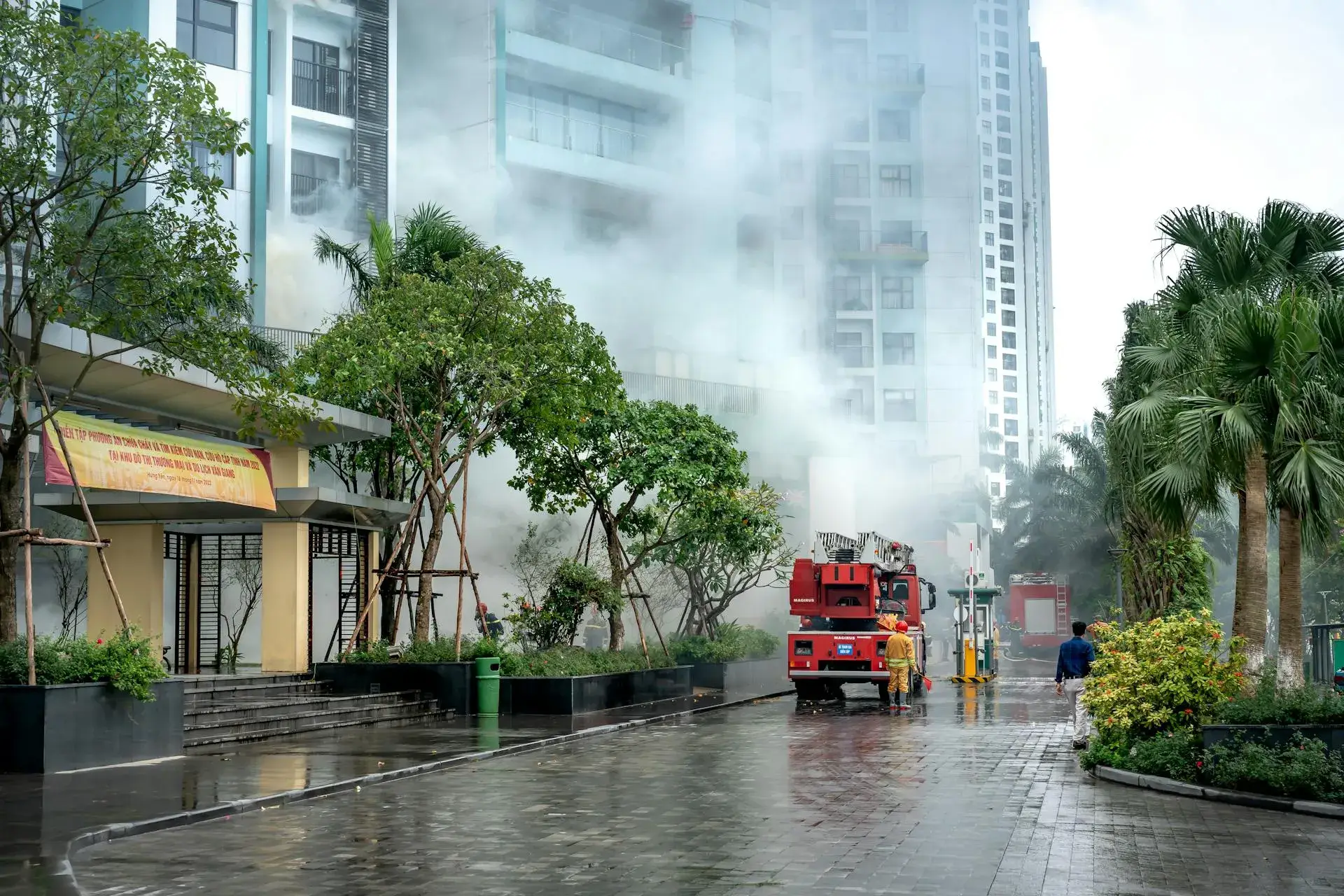
Smoke Damage Restoration in Pearland, TX
Smoke residue bonds permanently to surfaces within hours in humid conditions. Our local team responds to Pearland emergencies within 60 minutes.
What Happens When You Call
A real person answers, not a call center. We assess the smoke source, determine the contamination type, and dispatch your restoration team immediately.
Your dedicated team is dispatched from our local base serving Pearland and the surrounding Brazoria County communities.
Team arrives with industrial air scrubbers, HEPA filtration, and specialized cleaning equipment. Smoke containment and air quality improvement begin immediately.
Contamination mapped, cleaning protocols initiated, HVAC system assessed. You know exactly what comes next.
Smoke has entered your home. Whether from a nearby fire, a wildfire event, a furnace malfunction, or a cooking incident, the particulate and odor compounds are bonding to every surface they touch. In Pearland's humidity, moisture on walls and furnishings accelerates that bonding process. You need professional intervention before the residue becomes permanent. When you contact X Response, your team is mobilized within minutes. One team handles assessment, cleaning, deodorization, and HVAC decontamination from start to finish. Call now. Your team is standing by.
Why Pearland Homes Are Vulnerable to Smoke Damage
Pearland is a city of approximately 130,000 residents in Brazoria County, Texas, located 15 miles south of downtown Houston along the State Highway 288 corridor. The city sits within the Greater Houston airshed, where industrial emissions, vehicle exhaust, and seasonal wildfire smoke combine to produce some of the poorest air quality in the state. Pearland's residential housing stock, built predominantly between 2000 and 2020, relies on forced-air HVAC systems that run eight to ten months annually to manage the subtropical heat. These systems create direct pathways for outdoor smoke to enter and circulate throughout homes, pulling contaminated air through return vents and distributing it to every room through supply ductwork.
In March 2025, the Pauline Road wildfire burned over 2,400 acres in Sam Houston National Forest approximately 50 miles north of Houston, forcing evacuation of 900 homes in Montgomery and San Jacinto counties and sending visible smoke across the northern Houston metro area. The fire originated from a prescribed burn that escaped containment and required multi-agency response to suppress. While Pearland sits south of Houston rather than north, prevailing wind patterns during wildfire events regularly carry smoke plumes across the entire metro area. Each spring and summer, agricultural burns in Mexico and Central America send transboundary smoke across the Gulf of Mexico into Southeast Texas, compounding the region's existing air quality challenges and introducing particulate matter into homes through ventilation intakes, open doors, and building envelope gaps.
Wildfire Smoke Intrusion from Regional Events
Southeast Texas faces wildfire smoke exposure from multiple sources across the year. The March 2025 Pauline Road wildfire in Sam Houston National Forest demonstrated that wildland fires within 50 miles of Houston produce smoke visible across the metro area and detectable inside homes throughout the region. Beyond local events, the Texas Panhandle's Smokehouse Creek Fire in February 2024, the largest wildfire in Texas history at over one million acres, generated smoke that traveled hundreds of miles downwind. Agricultural burns from Mexico and Central America produce transboundary smoke plumes that reach the Houston area annually during spring and early summer, degrading air quality for days to weeks at a time. For Pearland homeowners, wildfire smoke enters through HVAC fresh-air intakes, bathroom and kitchen exhaust fan backdrafts, attic ventilation, garage door seals, and every gap in the building envelope. Once inside, fine particulate matter settles on horizontal surfaces, embeds in soft furnishings, and circulates through ductwork with every HVAC cycle.
HVAC-Driven Smoke Distribution in Cooling-Dominant Homes
Pearland homes run air conditioning for eight to ten months of the year, with the system cycling continuously during summer months when outdoor temperatures exceed 90 degrees daily. The forced-air system pulls return air from throughout the home, passes it through a filter that captures only a fraction of sub-micron smoke particles, and distributes it back through supply vents into every room. During a wildfire smoke event or a nearby structural fire that sends smoke into the neighborhood, the HVAC system actively draws contaminated outdoor air into the home through fresh-air intakes, supply ductwork leaks in unconditioned attic spaces, and the pressure differential created by exhaust fans. The result is uniform smoke contamination throughout the entire home, including closets, bedrooms, and spaces far from any window or door. Standard residential HVAC filters rated MERV 8 or below, which are typical in Pearland subdivision homes, cannot capture the fine particulate matter in wildfire or structural fire smoke.
Furnace Puffback Events During Brief Heating Season
Pearland's heating season runs approximately December through February, a brief window during which gas furnaces that have sat idle for nine to ten months must reignite and operate reliably. A furnace puffback occurs when fuel accumulates in the combustion chamber during a failed ignition sequence and then ignites all at once, producing a pressure wave that forces soot and combustion byproducts backward through the heat exchanger, into the supply plenum, and out through every supply vent in the home. The result is instantaneous soot contamination of every room on the supply side of the system. Puffbacks are more common in heating systems that sit unused for extended periods, making Pearland's short heating season following nine months of dormancy a specific risk factor. The oil-based soot from a puffback is chemically different from fire smoke residue, requiring different cleaning chemistry and methods.
Humidity-Accelerated Soot Bonding
Smoke particles that enter a Pearland home encounter surfaces that carry a thin moisture film from the region's high average relative humidity. That moisture acts as an adhesive, causing soot and smoke residue to bond to walls, ceilings, countertops, and fixtures faster and more permanently than in drier climates. In an arid environment, a homeowner might have 48 to 72 hours before smoke residue permanently stains surfaces. In Pearland's humidity, permanent bonding can occur within 12 to 24 hours, particularly on porous surfaces like drywall paper facing, unsealed grout, natural stone, and unfinished wood. This compressed timeline means that a wildfire smoke event or a neighborhood structural fire requires professional cleaning to begin within the first day to prevent permanent damage that would otherwise require full material replacement.
Smoke Odor Embedding in Slab-on-Grade Construction
Pearland homes are built on concrete slab foundations with no basement or crawl space below. When smoke enters the home, odor compounds settle on and absorb into the concrete slab surface, particularly in areas where the slab is exposed at transitions between flooring types, under cabinets, and around plumbing penetrations. Unlike a home with a ventilated crawl space or basement where odor trapped below the living floor can dissipate over time, a slab-on-grade home holds odor compounds in the concrete indefinitely. The slab cannot be ventilated from below because it sits directly on Beaumont Formation clay. Deodorization of a slab-on-grade home after significant smoke exposure requires sealing the slab surface with an odor-encapsulating primer to prevent compounds from off-gassing back into the living space, a step that homes with ventilated subfloor assemblies do not require.
Smoke damage in Pearland arrives from multiple vectors: regional wildfire events that send particulate across the metro, transboundary agricultural smoke from Mexico and Central America, furnace puffbacks during the brief heating season, kitchen incidents, and nearby structural fires. The city's cooling-dominant HVAC systems distribute contamination uniformly through every room. The humid subtropical climate accelerates permanent surface bonding. And slab-on-grade construction traps odor compounds with no ventilation pathway for release. Effective smoke restoration requires identifying the source type, mapping how the contamination traveled through the home, cleaning surfaces before bonding becomes permanent, decontaminating the HVAC system that distributed the particulate, and addressing odor at the structural level rather than masking it with surface treatments.
What Happens to Your Home While You Wait
Within 1 Hour
Smoke particles settle on horizontal surfaces and begin bonding to walls and ceilings. In Pearland's humidity, the thin moisture film on surfaces accelerates chemical bonding between soot and the underlying material. HVAC systems that are running during a smoke event actively distribute contamination to every supply vent in the home. The longer the system runs, the more uniformly contaminated the interior becomes.
1–24 Hours
Soot residue penetrates the paper facing on drywall, settles into carpet fibers and pad, and embeds in soft furnishings. Smoke odor compounds absorb into porous materials including wood trim, unsealed grout, and the concrete slab. In Southeast Texas humidity, what would be removable surface contamination in a drier climate begins forming permanent chemical bonds with substrate materials. Yellow and brown discoloration develops on light-colored walls and ceilings.
24–48 Hours
Surface staining becomes permanent on porous materials that were not cleaned in the first day. Smoke odor embeds at a molecular level in drywall, insulation, and carpet that require replacement rather than cleaning. HVAC ductwork that was not isolated develops interior soot deposits that will re-contaminate the home with every future cycle. Contents that could have been professionally cleaned in the first 24 hours, including clothing, upholstery, and electronics, sustain corrosive damage from acidic smoke compounds.
48–72 Hours
Metal surfaces develop visible corrosion from acidic soot compounds. Electronics sustain circuit board damage from conductive particulate. Nickel and chrome fixtures tarnish permanently. The scope of contents loss expands significantly as items cross from cleanable to unsalvageable. Odor compounds penetrate the concrete slab at expansion joints and plumbing penetrations, creating long-term off-gassing sources that surface cleaning cannot address.
One Week and Beyond
Permanent staining throughout the home on surfaces that could have been cleaned with prompt intervention. HVAC system requires complete ductwork replacement rather than cleaning. Odor becomes structurally embedded and requires encapsulation, thermal fogging, and potentially ozone treatment in unoccupied conditions. What started as a cleaning project becomes a material replacement and reconstruction project. Insurance claims become significantly more complex as the line between cleanable and total-loss shifts with each day of delay.
Smoke damage is uniquely time-sensitive in Pearland's humid climate because the moisture accelerates permanent bonding that cannot be reversed with cleaning. Contact X Response now. Our team responds within 60 minutes to begin containment and air quality improvement.
How We Restore Smoke-Damaged Pearland Homes
From the moment our team arrives, every step follows a systematic protocol designed for Pearland's specific climate conditions. Here is exactly what the smoke damage restoration process involves.
Source Identification and Contamination Mapping
Our team identifies the smoke source type because different sources require different cleaning chemistry and protocols. Wildfire smoke contains cellulose-based particulate. Structural fire smoke contains synthetic compounds from burning plastics, wire insulation, and engineered materials. Furnace puffback produces oil-based soot. Kitchen fires produce protein-based or grease-based residue. We map how smoke traveled through the home, including HVAC distribution paths, and document the extent of contamination on every surface. This assessment drives the cleaning protocol selection and produces the scope of work your insurance company needs.
Air Quality Stabilization and HVAC Isolation
Industrial HEPA air scrubbers are positioned to begin filtering particulate from the indoor air immediately. We shut down the home's HVAC system to prevent further distribution of contamination and seal supply vents in unaffected areas if the contamination is localized. Negative air pressure may be established in heavily contaminated zones to prevent migration to cleaner spaces during the restoration process. Air quality monitoring with particle counters tracks progress and determines when the indoor environment is safe for extended occupancy.
Surface Cleaning and Soot Removal
Soot and smoke residue are removed using source-appropriate methods. Dry chemical sponges lift particulate from walls and ceilings without smearing. HEPA vacuuming removes settled particulate from horizontal surfaces, carpet, and upholstery. Wet cleaning with appropriate chemistry follows for surfaces where dry methods cannot fully remove bonded residue. In Pearland's humidity, we work on a compressed timeline because soot bonds to moisture-laden surfaces faster than in drier climates. Porous materials where residue has already bonded permanently, including affected drywall sections, insulation, and saturated soft goods, are removed and documented for insurance replacement.
HVAC Decontamination
The forced-air system that distributed smoke throughout the home must be thoroughly decontaminated before it can operate again. We clean accessible ductwork using HEPA-rated vacuum equipment with agitation tools that dislodge particulate from duct walls. The air handler, evaporator coil, blower assembly, and filter rack are cleaned individually. Supply boots and return grilles are removed and cleaned. For severe contamination where soot has penetrated duct liner or accumulated in inaccessible sections, ductwork sections are replaced. The system is not restarted until testing confirms it will not re-contaminate the cleaned interior.
Structural Deodorization and Verification
Surface cleaning removes visible residue but does not eliminate odor compounds embedded in structural materials. Thermal fogging introduces deodorant particles the same size as smoke particles, allowing them to penetrate the same pathways and neutralize odor at the source. Hydroxyl generators break down odor compounds through advanced oxidation without requiring evacuation. For Pearland's slab-on-grade homes where odor has penetrated the concrete, we apply odor-encapsulating sealers to the slab surface before new flooring is installed. Final verification includes air quality testing and an odor evaluation to confirm the home meets habitability standards before your family returns.
The X Response Difference
When you contact X Response for smoke damage in your Pearland home, you get a team that understands smoke as a system-wide contamination event, not a surface cleaning job. We address the source, the distribution pathway, the surfaces, the HVAC system, and the embedded odor in the correct sequence.
Insurance Claim Guidance for Pearland Homeowners
Smoke damage insurance coverage in Texas depends on the source of the smoke and the type of policy in force. Smoke from a fire that originated on your property or an adjacent property is typically covered under the fire and smoke provisions of your standard homeowner's policy. Smoke intrusion from a wildfire event may be covered under the same provisions if you can demonstrate the smoke caused actual damage to your property and contents. Furnace puffback damage is generally covered as a sudden and accidental mechanical failure. The challenge with smoke claims is documenting the full extent of contamination, including HVAC system damage, contents loss, and structural odor that is not visible but makes the home uninhabitable. Without professional documentation of the contamination extent from day one, carriers often approve only visible surface damage and deny the deeper remediation that the home actually requires.
How X Response Helps
- Document contamination extent with photos, air quality readings, and contamination mapping before any cleaning begins
- Identify the smoke source clearly, which determines which coverage provision applies under your Texas homeowner's policy
- Capture HVAC contamination with interior duct photos and particle count readings that demonstrate the system is compromised
- Document contents damage including electronics, clothing, and soft goods that sustained invisible but real smoke contamination
- Prepare a detailed scope that separates surface cleaning, HVAC decontamination, structural deodorization, and material replacement into distinct line items
X Response does not file claims on your behalf, adjust claims, or make coverage determinations. We provide documentation and guidance to help you make informed decisions about your property and your policy. Coverage decisions are made solely by your insurance carrier.
Certified Restoration Specialists Serving Pearland
When you contact X Response for smoke damage in Pearland, your restoration team includes certified specialists who understand the specific challenges of decontaminating homes in Southeast Texas. They know how humidity accelerates soot bonding to surfaces, how cooling-dominant HVAC systems distribute contamination uniformly through every room, and how slab-on-grade construction traps odor compounds with no ventilation pathway for natural dissipation. They have worked through wildfire smoke intrusion events, furnace puffbacks in homes with dormant heating systems, grease fires in open-concept kitchens, and the complex multi-source contamination that occurs when a neighbor's structural fire sends smoke into adjacent homes through shared attic spaces and HVAC intakes.
Every technician on your team holds current IICRC certification in fire and smoke restoration with specific training in odor identification, chemical source differentiation, and deodorization protocols. Equipment includes industrial HEPA air scrubbers, particle counters for air quality verification, thermal fogging systems, hydroxyl generators, and HVAC cleaning equipment capable of reaching every section of your home's distribution system. When your team arrives, they bring the tools and expertise to identify the source, map the distribution, clean the surfaces, decontaminate the system, and verify the result.
In Pearland, X Response works with First Response Restoration, an independent local restoration partner serving Brazoria County.
Smoke Damage Restoration FAQ for Pearland Homeowners
Other Emergency Services in Pearland
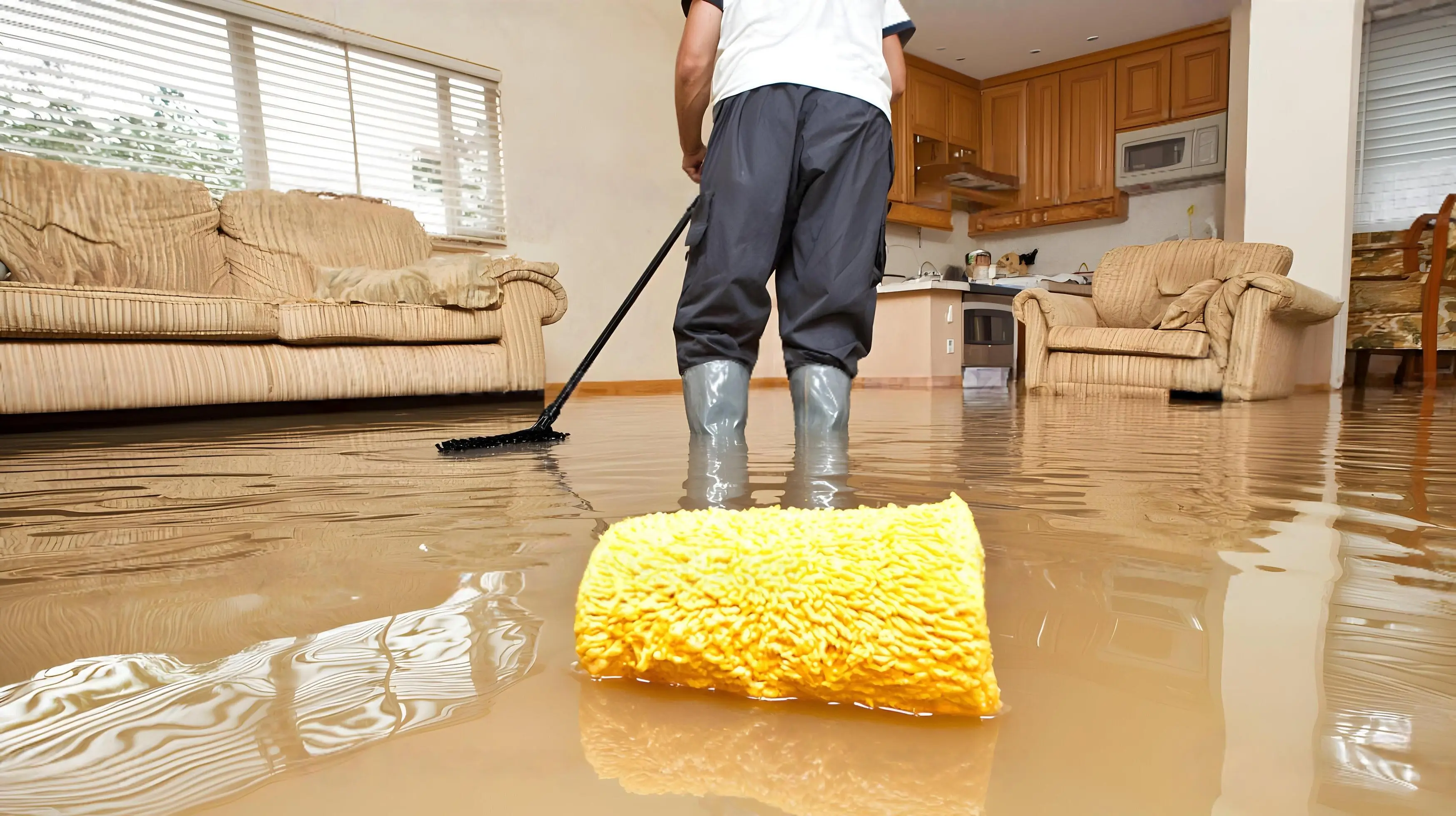
Water Damage Restoration
Burst pipes, storm flooding, standing water. We extract, dry, and restore before mold sets in.
Learn more
Fire Damage Restoration
Structural damage, soot, debris. We stabilize, clean, and rebuild what fire destroyed.
Learn more
Mold Remediation
Testing, containment, removal, prevention. We find the source, eliminate the growth, and stop it from returning.
Learn more
Sewage Cleanup
Sewer backups, contaminated water, biohazard. We extract, sanitize, and restore safely.
Learn moreNearby Service Areas
Also serving nearby: