
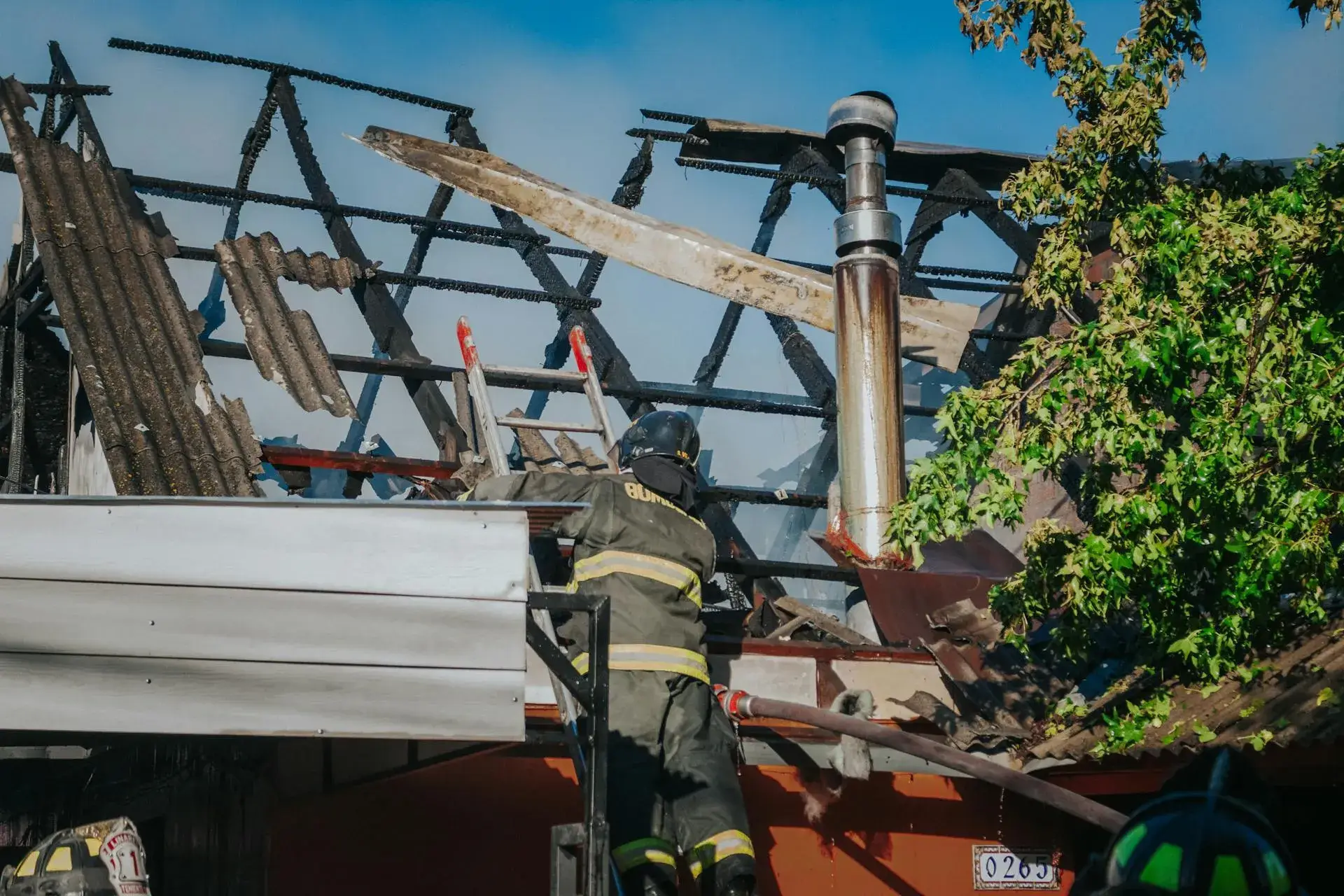
Fire Damage Restoration in New Orleans, LA
New Orleans' historic French Quarter buildings and dense wood-frame construction create extreme fire spread risk through shared party walls and connected attic spaces. After a fire, immediate professional intervention prevents further structural loss and smoke migration. Our Orleans Parish team responds around the clock.
What Happens When You Call
A real person takes your emergency call and dispatches our New Orleans fire restoration team immediately.
Specialists arrive to assess structural integrity, identify safety hazards, and secure the property with emergency board-up.
We begin systematic soot removal and apply treatments to halt corrosion on metal surfaces, fixtures, and historic architectural elements.
Full reconstruction planning begins with detailed documentation for your insurance carrier, including historic preservation considerations where applicable.
Fire leaves behind more than visible charring. Acidic soot and toxic residues continue attacking surfaces long after flames are extinguished. In New Orleans' aging historic structures with porous plaster walls and irreplaceable cypress millwork, fire damage compounds rapidly as humidity drives corrosive residues deeper into materials that cannot be replaced. Call now. Your local team is standing by.
Why New Orleans Homes Are Vulnerable to Fire Damage
Fire damage restoration in New Orleans operates within a built environment unlike any other American city. The French Quarter, Marigny, Bywater, and Garden District contain thousands of structures built between the 1790s and the 1890s, many featuring century-old cypress framing, lath-and-plaster walls, and party-wall construction where adjacent buildings share a common wall with no firebreak between them. These buildings were constructed in an era before fire codes, before sprinkler systems, and before electrical wiring existed. Their accumulated modifications over two centuries often include substandard electrical work layered over previous generations of wiring, creating hidden ignition risks inside walls and ceilings. On November 19, 2024, a three-alarm fire destroyed the Quarterhouse bar on Bourbon Street, requiring 20 NOFD units and 52 firefighters to contain flames that spread from between the second and third floors into the attic of the historic building. The incident demonstrated how rapidly fire moves through old-growth wood framing and how the shared-wall construction of French Quarter commercial buildings allows flames and heat to threaten entire blocks. Just one year earlier, on November 30, 2023, another three-alarm fire at the 500 block of Dauphine Street in the French Quarter required 17 NOFD units and 46 personnel to control, reinforcing the pattern of concentrated fire risk in the city's densest historic neighborhoods.
The New Orleans Fire Department covers 299 square miles and serves approximately 364,000 residents across Orleans Parish. The department responds to structure fires throughout neighborhoods ranging from the tightly packed shotgun doubles of Uptown and Mid-City to the sprawling brick ranch homes of New Orleans East and the raised Creole cottages of Treme. On September 27, 2023, a three-alarm tire shop fire on St. Claude Avenue damaged or destroyed four surrounding homes, with 21 units and 60 personnel responding. That incident illustrated how commercial fires in mixed-use corridors can rapidly threaten the residential structures packed tightly around them. Each of these incidents creates restoration challenges that extend far beyond the building where the fire originated. Radiant heat chars siding and melts vinyl windows on adjacent structures. Smoke plumes carry acidic soot across entire blocks, contaminating homes that never saw direct flame contact. In New Orleans' dense urban fabric, a single structure fire routinely affects multiple neighboring properties that require professional assessment and treatment even when the fire itself never reached their walls.
The party-wall construction prevalent in the French Quarter and Marigny presents a restoration challenge specific to New Orleans. When fire penetrates a party wall, the damage extends into the adjacent building's structural system, requiring coordinated restoration across multiple property owners and insurance carriers. These shared walls are typically constructed of soft brick covered in multiple layers of plaster accumulated over centuries, and heat transfer through masonry can char framing on the opposite side without any visible flame crossing the wall surface. Historic structures also fall under the jurisdiction of the Vieux Carre Commission or the Historic District Landmarks Commission, which mandate that restoration work maintain period-appropriate materials and architectural character. This means that standard modern reconstruction materials, such as vinyl windows, fiber cement siding, or composite millwork, may not be permitted in designated historic districts. Restoration professionals working in these areas must source historically compatible materials including custom-milled cypress, hand-forged hardware, and lime-based plaster systems. They must also employ traditional construction techniques and navigate the permitting process with the appropriate preservation commission, all while addressing the urgent timeline that fire damage demands before soot and humidity cause irreversible material loss.
After a fire in New Orleans, secondary water damage from suppression efforts becomes an immediate concern compounded by the city's subtropical humidity. Fire suppression typically introduces thousands of gallons of water into a structure, saturating plaster ceilings, heart-pine flooring, and interior wall cavities. The NOFD's aggressive interior attack strategy, necessary given the density of French Quarter and neighborhood construction, means that large volumes of water are deployed to prevent fire from spreading to adjacent structures through party walls. In Orleans Parish's year-round humidity averaging 75 to 85 percent, this suppression water creates ideal conditions for mold growth within 48 hours if not addressed through professional extraction and dehumidification. Acidic soot residues also become increasingly difficult to remove as humidity draws them deeper into porous plaster, exposed brick, and unfinished wood surfaces. The chemical interaction between moisture, acidic soot, and organic building materials creates a corrosive environment that permanently stains and degrades surfaces far more rapidly than soot alone would in a dry climate. Our restoration protocol addresses both fire and water damage simultaneously, preventing the common scenario where inadequate post-fire drying leads to a secondary mold crisis that causes more long-term structural damage than the fire itself.
Party-Wall Construction
French Quarter and Marigny buildings share common walls with no firebreak between structures, allowing fire to spread laterally into adjacent properties and complicating restoration across multiple ownership boundaries.
Century-Old Wood Framing
Historic New Orleans structures use old-growth cypress and pine framing that, while resistant to rot, burns intensely once ignited and allows fire to travel rapidly through balloon-framed wall cavities.
Historic Preservation Requirements
Restoration in designated historic districts must comply with Vieux Carre Commission or HDLC guidelines, requiring period-appropriate materials and traditional construction methods that add complexity and timeline.
Post-Fire Humidity Complications
Firefighting water combined with New Orleans' persistent subtropical humidity creates rapid secondary damage. Saturated plaster and wood in these conditions support mold germination within 48 hours.
Fire restoration in New Orleans demands expertise in both modern damage science and historic preservation. The city's irreplaceable architectural heritage requires restoration professionals who understand how to save what can be saved while meeting the timeline that soot and humidity impose.
What Happens to Your Home While You Wait
Within 1 Hour
Acidic soot begins etching metal surfaces, corroding antique hardware, and permanently staining historic plaster and millwork.
1 to 24 Hours
Soot residues penetrate deeper into porous surfaces. Firefighting water saturates plaster ceilings, heart-pine floors, and interior wall cavities.
24 to 48 Hours
Corrosion accelerates on HVAC components and electrical connections. Saturated building materials in New Orleans' humidity begin supporting mold germination.
48 to 72 Hours
Smoke odor permeates soft furnishings, drapery, and ductwork. Soot-coated plaster and exposed brick become increasingly difficult to clean without causing surface damage.
One Week and Beyond
Permanent material damage becomes widespread. Historic millwork and plaster may become unrestorable. Mold colonization from firefighting water compounds total restoration costs.
Fire damage intensifies every day it goes untreated, especially in historic structures with irreplaceable materials. Contact X Response immediately for professional fire restoration in New Orleans.
How We Restore Fire-Damaged New Orleans Homes
Our fire damage restoration process in New Orleans addresses structural, cosmetic, and environmental concerns while respecting the city's historic character and meeting the standards of local preservation commissions.
Emergency Stabilization and Assessment
We secure your property with board-up services, tarp compromised roof sections, assess structural integrity of fire-affected framing, and identify areas where heat may have compromised load-bearing members or party walls shared with adjacent structures.
Water Extraction and Soot Removal
We remove firefighting water with commercial extractors and begin structural drying immediately, then systematically clean soot from surfaces using dry sponges, HEPA vacuuming, and chemical treatments matched to each material type, including specialized protocols for historic plaster, exposed brick, and antique wood.
Smoke Odor Elimination
Thermal fogging and hydroxyl generators neutralize smoke particles embedded in porous plaster, wall cavities, and ductwork. For historic structures with delicate decorative finishes and antique patina, we select treatment methods that will not cause surface damage or discoloration.
Structural Reconstruction
Our team handles careful demolition of irreparable materials and complete reconstruction, sourcing period-appropriate materials for historic districts and meeting both current building codes and historic district commission requirements where applicable. We coordinate with the Vieux Carre Commission or HDLC on permit applications.
The X Response Difference
X Response provides the coordinated expertise required to restore fire-damaged New Orleans properties, whether a shotgun cottage in the Bywater, a commercial building on Bourbon Street, or a Garden District mansion with irreplaceable period details.
Insurance Claim Guidance for New Orleans Homeowners
Fire damage claims in New Orleans involve documenting structural damage, smoke contamination extent, secondary water damage from suppression efforts, and the additional costs associated with historic preservation compliance when working in designated districts.
How X Response Helps
- Detailed photographic documentation of fire origin, char patterns, and structural damage throughout the property
- Smoke penetration mapping showing the extent of soot and odor migration beyond the immediate fire area, including through party walls
- Water damage documentation from firefighting efforts, including moisture readings in adjacent rooms and structures
- Historic material replacement cost documentation when preservation commission requirements mandate period-appropriate materials
X Response does not adjust claims or guarantee coverage, but our thorough documentation supports efficient processing of your fire damage claim, including supplemental claims for preservation-mandated materials that exceed standard replacement costs.
Certified Restoration Specialists Serving New Orleans
Our New Orleans fire restoration team combines IICRC Fire and Smoke Restoration (FSRT) certification with deep familiarity with Orleans Parish construction types, from French Quarter party-wall commercial buildings to Uptown shotgun doubles and Garden District mansions. Our technicians understand how fire behaves differently in balloon-framed historic structures versus platform-framed modern homes, and they coordinate with historic district commissions to ensure restoration meets both safety codes and preservation standards. When your property requires period-appropriate materials or traditional construction methods, our team has established supplier relationships and craft expertise to deliver results that satisfy both the restoration timeline and the commission approval process.
In New Orleans, X Response works with PowerPro Remediation, an independent local restoration partner serving Orleans Parish County.
Fire Damage Restoration FAQ for New Orleans Homeowners
Other Emergency Services in New Orleans

Water Damage Restoration
Burst pipes, storm flooding, standing water. We extract, dry, and restore before mold sets in.
Learn more
Smoke Damage Restoration
Soot residue, chemical odors, HVAC contamination. We decontaminate surfaces, eliminate odors, and restore air quality.
Learn more
Mold Remediation
Testing, containment, removal, prevention. We find the source, eliminate the growth, and stop it from returning.
Learn more