
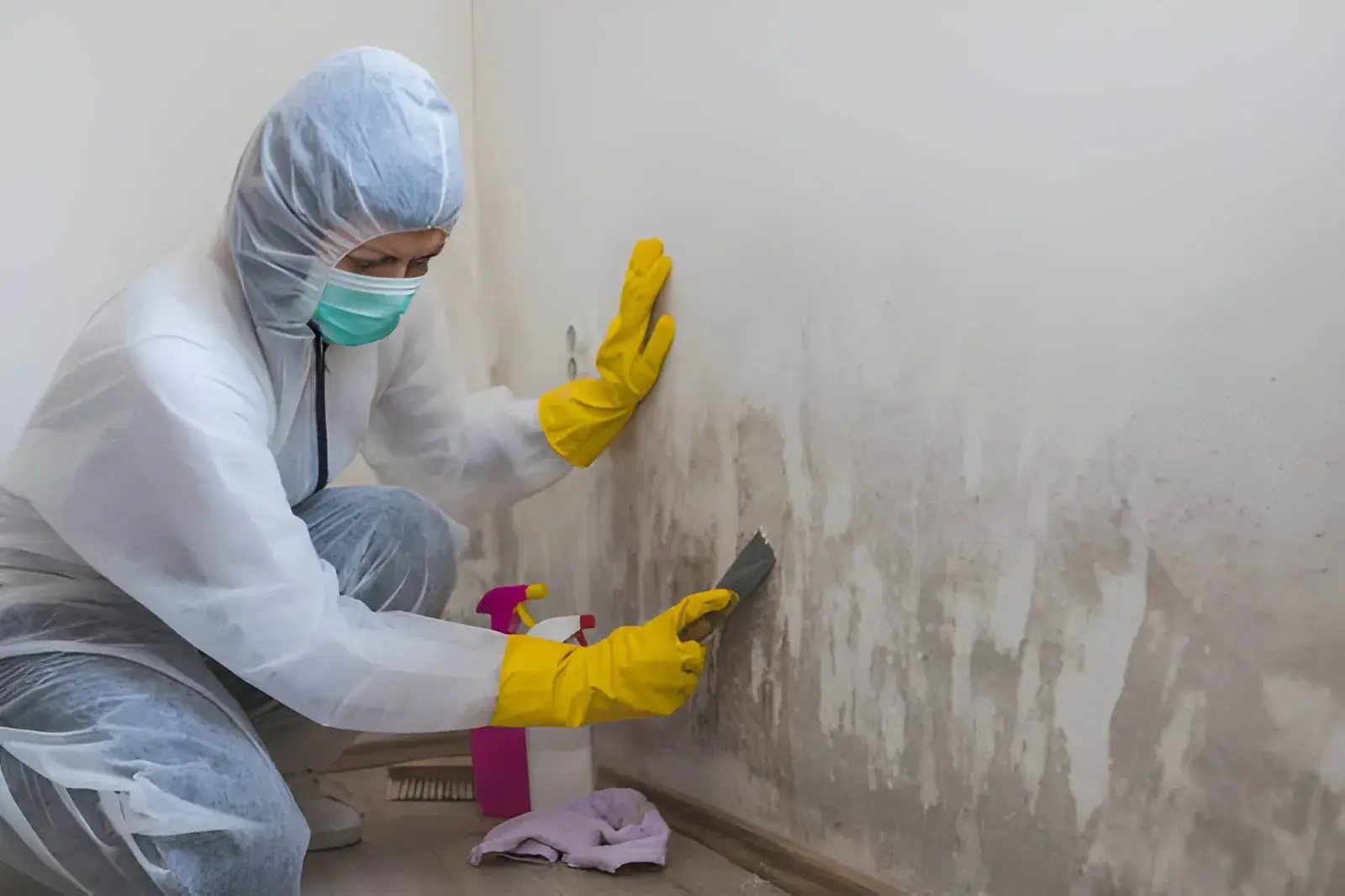
Mold Remediation in Lawrence, IN
Mold spreads behind walls and beneath floors where you cannot see it. Our certified local team responds to Lawrence mold emergencies within 60 minutes to contain the growth before it spreads further.
What Happens When You Call
A real person answers. We assess your situation, ask about visible growth, moisture history, and health concerns, then begin coordinating your response.
Your dedicated remediation team is dispatched from our local base serving Lawrence and the surrounding Marion County communities.
Team arrives with moisture meters, thermal imaging, air sampling equipment, and containment materials. Assessment begins immediately.
Scope defined, containment established, remediation plan documented. You know exactly what the problem is, how we will address it, and what your insurance options are.
You have discovered mold in your home, or you suspect it based on a musty smell, visible staining, or health symptoms that worsen indoors. You need professionals who will identify the full scope, contain it, remove it safely, and prevent it from returning. X Response exists for exactly this situation. When you reach out, your remediation team is mobilized and on site quickly. Call now. Your team is standing by.
Why Lawrence Homes Are Vulnerable to Mold
Lawrence is a city of approximately 49,600 residents in Marion County, Indiana, positioned in a humid continental climate where summer dewpoints regularly exceed 65 degrees Fahrenheit. This sustained ambient moisture creates year-round mold risk for Lawrence homes. In summer, high humidity condenses on cooled indoor surfaces and inside HVAC ductwork. In winter, daily household moisture condenses on cold surfaces in attics, exterior wall cavities, and basements. Lawrence's housing stock is heavily concentrated in the 1960s through 1990s era, built during and after Fort Benjamin Harrison's operational period, and these homes typically have poured concrete or block basements with original drain tile systems and foundation waterproofing that have deteriorated over 30 to 60 years, creating persistent moisture intrusion pathways that support mold colonization in basement and foundation materials.
Indiana does not require a state-specific mold remediation license. Any contractor can advertise mold remediation services with no mold-specific training, certification, or state oversight. For Lawrence homeowners, this regulatory gap makes verifying credentials essential: asking for current IICRC AMRT certification, confirming insurance covering mold work, and requiring a written scope of work referencing IICRC S520 protocols are critical consumer protections. Furthermore, Lawrence sits on the Tipton Till Plain, characterized by clay soils that hold moisture against foundations rather than draining it away, compounding the moisture issues in aging basements.
Aging Foundation Waterproofing
Much of Lawrence's housing was built between the 1960s and 1990s. The exterior foundation waterproofing applied during original construction, typically an asphalt-based damp-proofing, degrades over decades. As this barrier fails and original exterior drain tiles clog with sediment, groundwater from Lawrence's clay soils penetrates poured concrete and block foundation walls. This steady moisture migration keeps basement relative humidity above the 60 percent threshold required for mold growth, even without active flooding.
Fall Creek Corridor Groundwater
Fall Creek flows through Lawrence and Fort Harrison State Park. The creek's elevation directly influences the local groundwater table. During wet seasons or after significant regional rainfall, the elevated water table exerts hydrostatic pressure on basements throughout the creek corridor and low-lying areas. This chronic moisture exposure keeps foundation materials perpetually damp, providing an ideal environment for mold colonization in below-grade spaces.
Finished Basements Without Vapor Barriers
Many Lawrence homeowners have renovated their 1970s and 1980s basements into finished living spaces. When drywall, insulation, and flooring are installed directly against concrete foundation walls or slabs without proper vapor barriers, the moisture naturally migrating through the concrete becomes trapped. This creates a hidden incubator for mold between the foundation and the finished surfaces, often growing unnoticed for years until musty odors permeate the home or staining appears on baseboards.
HVAC Condensation and Attic Mold
Lawrence homes frequently feature forced-air HVAC systems with ductwork routed through unconditioned attic spaces or crawl spaces. During humid Indiana summers, cold supply air creates condensation on duct exteriors if insulation is damaged or inadequate. This condensation supports mold growth on the ducts, surrounding insulation, and roof decking. Furthermore, bathroom exhaust fans improperly vented into attics rather than to the exterior introduce significant moisture that condenses on cold roof sheathing in winter, driving widespread attic mold colonization.
Post-Flood Mold Development
The August 2026 storms, including intense flash flooding and a derecho, pushed water into many Lawrence homes. Homeowners who addressed visible surface water without verifying that concealed areas-such as wall cavities and beneath flooring-were fully dry often face delayed mold growth. In Marion County's summer conditions, mold begins colonizing damp materials within 24 to 48 hours. What appears to be a resolved water issue frequently emerges as a significant mold problem weeks later.
Mold in Lawrence thrives because the necessary moisture conditions are driven by the city's aging 1960s-1990s housing stock, deteriorating foundation waterproofing, clay soils, and Fall Creek's influence on the groundwater table. Finished basements that trap moisture and inadequately dried storm events compound the risk. Effective remediation requires more than surface cleaning; it demands identifying the moisture source, containing the affected area, removing the growth safely, and correcting the underlying pathway so the mold does not return.
What Happens to Your Home While You Wait
Within 24 Hours
Following water intrusion or sustained humidity above 60 percent, mold spores naturally present indoors begin germinating on damp surfaces. In Lawrence's humid climate, this process accelerates. No visible growth is present yet, but rapid drying at this stage prevents colonization entirely.
24–48 Hours
Visible mold growth begins on organic materials like drywall paper, wood framing, and carpet backing. Growth typically starts in concealed, poorly ventilated areas: inside wall cavities, beneath flooring, and in basement framing. By the time mold is visible, it has likely been growing hidden for hours.
48–72 Hours
Mold colonies expand and produce airborne spores. If the HVAC system runs, spores distribute throughout the home, seeding new colonies and degrading indoor air quality. Occupants with allergies or asthma may begin experiencing symptoms.
One Week
Established colonies spread extensively across wall cavities and framing. Structural materials begin showing degradation. The remediation scope expands significantly compared to earlier intervention.
One Month and Beyond
Extensive colonization throughout concealed building cavities. Structural wood damage compromises framing connections. What started as a moisture issue becomes a major remediation and reconstruction project.
The difference between preventing mold and remediating it is often just 24 to 48 hours of drying time. Contact X Response now. Our Lawrence team responds within 60 minutes.
How We Restore Mold-Affected Lawrence Homes
From the moment our team arrives, every step follows established IICRC S520 protocols for safe, effective mold remediation. Here is exactly what the process involves.
Inspection and Moisture Mapping
Our team uses thermal imaging, professional moisture meters, and visual inspection to identify the full scope of mold growth and its driving moisture source. In Lawrence homes, this means scrutinizing aging basement foundations, attic ventilation, and HVAC components. We trace the moisture pathway-whether foundation seepage, plumbing leak, or condensation-because eliminating the source is essential.
Containment and Isolation
Before any mold is disturbed, we establish engineering controls to prevent cross-contamination. Polyethylene barriers seal the work area. Negative air pressure machines with HEPA filtration ensure air flows into the containment zone, preventing spore migration. HVAC systems serving the area are isolated.
Safe Mold Removal
Contaminated materials are removed following strict IICRC S520 protocols. Non-salvageable materials like mold-contaminated drywall and insulation are bagged within containment. Salvageable structural framing is cleaned using HEPA vacuuming and specialized antimicrobial treatments.
Structural Drying and Moisture Correction
After removal, we dry the affected structure using commercial dehumidifiers and air movers. We then advise on or address the moisture source: recommending foundation waterproofing updates, repairing plumbing, or improving ventilation. Without correcting the source, mold will return.
Post-Remediation Verification
We conduct a thorough verification to confirm all visible mold is removed, moisture levels are acceptable, and the containment area is clean. Post-remediation air sampling is available to verify indoor air quality. We provide complete documentation of the remediation process.
The X Response Difference
When you contact X Response for mold remediation, you get a team that follows established protocols, eliminates the moisture source, and verifies results.
Insurance Claim Guidance for Lawrence Homeowners
Mold damage insurance coverage in Indiana varies significantly between policies and depends heavily on the moisture source. Most standard homeowner's policies cover mold remediation when it results from a covered peril, such as a sudden burst pipe or storm damage. However, mold resulting from long-term maintenance issues-like deteriorating foundation waterproofing common in Lawrence's older homes-is typically excluded. Many policies include mold-specific sublimits that cap coverage at $5,000 to $10,000. Understanding your specific policy's provisions before filing is essential.
How X Response Helps
- Document the moisture source that caused the mold to determine if it falls under a covered peril
- Record the full scope of mold contamination with photos and affected material inventory
- Identify your policy's mold-specific sublimit before filing the claim
- Document remediation methods and post-remediation verification results
- Explain coverage implications before you file so you understand potential out-of-pocket exposure
X Response does not file claims on your behalf, adjust claims, or make coverage determinations. We provide documentation and guidance to help you make informed decisions about your property and your policy. Coverage decisions are made solely by your insurance carrier.
Certified Restoration Specialists Serving Lawrence
When you contact X Response for mold remediation in Lawrence, your team is drawn from certified professionals who understand the specific moisture dynamics driving mold growth in Marion County. They know how aging foundation waterproofing in 1960s-1990s homes leads to chronic basement dampness, how clay soils trap water against foundations, and how the Fall Creek corridor elevates the local water table. They have remediated concealed mold in finished basements, addressed attic condensation issues, and handled post-flood growth following the August 2026 storms. This is a local team with direct experience in Lawrence's building conditions.
Every technician on your team holds current IICRC AMRT (Applied Microbial Remediation Technician) certification and follows IICRC S520 protocols for every project. Equipment includes moisture meters, thermal imaging cameras, HEPA air scrubbers, negative air machines, and commercial dehumidifiers sized for central Indiana's humidity levels.
In Lawrence, X Response works with The Cleaning Source, an independent local restoration partner serving Marion County.
Mold Remediation FAQ for Lawrence Homeowners
Other Emergency Services in Lawrence

Water Damage Restoration
Burst pipes, storm flooding, standing water. We extract, dry, and restore before mold sets in.
Learn more
Fire Damage Restoration
Structural damage, soot, debris. We stabilize, clean, and rebuild what fire destroyed.
Learn more
Smoke Damage Restoration
Soot residue, chemical odors, HVAC contamination. We decontaminate surfaces, eliminate odors, and restore air quality.
Learn more
Sewage Cleanup
Sewer backups, contaminated water, biohazard. We extract, sanitize, and restore safely.
Learn more