
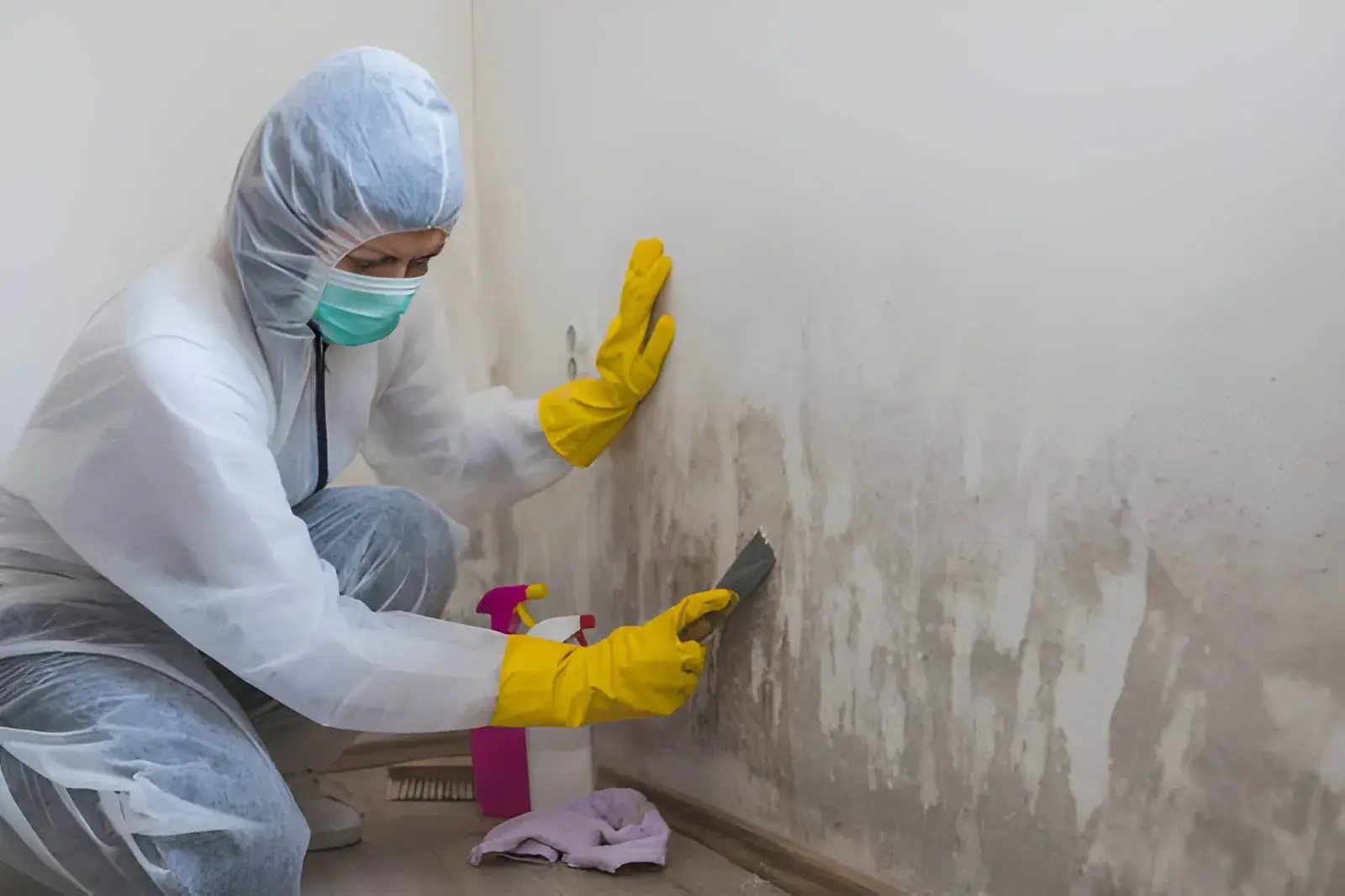
Mold Remediation in Westfield, IN
Hidden mold spreads through wall cavities and HVAC systems in Hamilton County's humid climate. Our certified Westfield team arrives within 60 minutes.
What Happens When You Call
A certified mold remediation specialist takes your call, evaluates your property's symptoms, and schedules an immediate assessment.
Technicians arrive equipped with calibrated moisture meters, thermal imaging cameras, and bio-containment equipment.
We establish critical containment zones and negative air pressure systems to prevent cross-contamination to clean living areas.
Active fungal colonies are physically removed, structural framing is HEPA vacuumed and treated, and antimicrobial sealants are applied.
Discovering mold in your Westfield home requires prompt, professional action to safeguard indoor air quality and prevent structural decay. Mold is a symptom of underlying moisture intrusion that must be addressed at its root cause. X Response delivers certified, scientific mold remediation following strict IICRC S520 guidelines. From initial containment through HEPA air scrubbing, physical removal, and structural encapsulation, our local Hamilton County team restores a healthy living environment. Contact us 24/7 to schedule an on-site inspection.
Why Westfield Homes Are Vulnerable to Mold
Westfield is an expanding suburban community of over 64,000 residents in Hamilton County, Indiana, situated in central Indiana's humid continental climate zone. The city experiences prolonged summer periods characterized by outdoor relative humidity levels regularly exceeding 70 to 80 percent, coupled with intense convective rainstorms. In modern, tightly sealed residential constructions across developments like Chatham Hills, Harmony, Centennial, Maple Knoll, and Bridgewater, these high ambient humidity levels create significant challenges for moisture control. When warm, moisture-laden outdoor air infiltrates cooler subterranean basements or vented crawl spaces, the air rapidly reaches its dew point, depositing condensation along exposed foundation walls, cold water supply lines, and wood floor joists.
Local geological conditions significantly compound subsurface residential moisture risks. The USGS studied the hydraulic characteristics of unconsolidated glacial deposits in Hamilton County under Water-Resources Investigations Report 76-46, showing that glacial drift with high clay content creates persistent moisture retention around residential foundations across the Carmel and Westfield area. Because dense clay soils absorb water very slowly, rainfall and surface runoff pool against exterior foundation walls rather than draining freely into deeper subsoil strata. This persistent soil saturation creates chronic hydrostatic pressure that drives water vapor through porous concrete basement walls and unsealed crawl space floors. Left unchecked, this constant subterranean moisture elevation creates ideal conditions for aggressive fungal species, such as Cladosporium, Aspergillus, Penicillium, and Stachybotrys chartarum, to colonize drywall paper backing, carpet padding, and structural framing.
Glacial Clay Soils and Chronic Foundation Moisture
The heavy clay content of Hamilton County's glacial till creates a perched water table that holds moisture against basement walls and crawl space perimeters for weeks following heavy rain events. This constant moisture contact drives water vapor migration through concrete pores via capillary action, keeping indoor relative humidity in subterranean spaces above the 60 percent threshold required for fungal spore germination.
Summer Condensation in Subterranean Basements
During central Indiana's hot, humid summers, outdoor air carrying high dew points enters air-conditioned Westfield homes. When this humid air comes into contact with cool basement slabs or uninsulated concrete foundation walls, moisture condenses out of the air. This chronic surface condensation creates damp microclimates behind finished basement drywall and beneath wall-to-wall carpeting, fostering extensive hidden mold growth.
Vented Crawl Space Moisture and Subfloor Rot
Older homes and transitional developments in Washington Township built over vented crawl spaces face severe humidity problems. Warm summer air entering foundation vents hits cool subflooring and air conditioning ductwork, causing condensation to saturate fiberglass insulation and floor joists. Over time, this leads to heavy fungal colonization on wood subflooring and structural sag.
Sump Pump Failures and Incomplete Drying
Because Westfield homes rely heavily on sump pumps to evacuate perimeter groundwater, pump mechanical failures or power outages during severe storms often lead to basement flooding. If property owners rely solely on household fans rather than commercial dehumidifiers, moisture remains trapped within baseboard cavities and drywall, sparking widespread mold growth within 48 to 72 hours.
HVAC Duct Condensation and Spore Distribution
Air conditioning ductwork routed through unconditioned attics, basements, or crawl spaces can develop exterior condensation if insulation is missing or damaged. When mold colonizes around duct boots or inside air handling plenums, the forced-air system continuously circulates microscopic fungal spores and mycotoxins throughout multi-story living areas.
Successful mold remediation in Westfield requires identifying and correcting the underlying moisture source while physically eliminating fungal contamination. Our certified technicians combine scientific containment, HEPA filtration, and structural drying to ensure permanent, safe mold removal.
What Happens to Your Home While You Wait
24–48 Hours
Following water intrusion or persistent high humidity above 60 percent, dormant mold spores absorb moisture and begin germination on organic substrates like drywall paper, subflooring, and ceiling tiles. Microscopic hyphae begin penetrating the material surface.
3–7 Days
Visible fungal colonies appear as small discolored spots on baseboards, framing, or carpet backing. Musty, earthy odors become noticeable in confined areas. Fungal colonies begin releasing millions of microscopic spores into the surrounding indoor air.
1–2 Weeks
Mold growth spreads across broad surface areas, penetrating deep into porous wood framing and drywall cores. Mycotoxins and microbial volatile organic compounds (MVOCs) trigger allergic reactions, asthma flare-ups, and respiratory irritation in sensitive occupants.
3–4 Weeks
Fungal digestion of cellulose fibers weakens structural wood joists, causing drywall to crumble and subflooring to soften. Mold infiltrates HVAC return ducts, spreading contamination into unaffected upper-level bedrooms.
Months and Beyond
Extensive structural deterioration requires complete tear-out of drywall, subfloors, and mechanical systems. Remediating widespread contamination requires full industrial containment, extensive clearance testing, and major reconstruction.
Stopping mold early protects your family's health and prevents costly structural repairs. Contact X Response immediately. Our certified Westfield remediation team responds within 60 minutes.
How We Restore Mold-Affected Westfield Homes
Our mold remediation protocol follows strict ANSI/IICRC S520 standards, ensuring thorough physical removal and verified environmental safety.
Comprehensive Inspection and Thermal Moisture Mapping
Our certified inspectors utilize non-invasive FLIR infrared cameras, digital moisture meters, and cavity borescopes to locate hidden mold colonies and map the exact moisture sources fueling growth behind walls, beneath floors, and inside crawl spaces.
Critical Containment and Negative Air Pressure
We construct 6-mil polyethylene containment barriers with zippered airlocks to completely isolate the contaminated work zone. Commercial negative air machines equipped with HEPA filtration vent outdoors, preventing mold spores from migrating into clean living areas.
HEPA Air Scrubbing and Environmental Filtration
Continuous multi-stage HEPA air scrubbers capture 99.97 percent of airborne particulates down to 0.3 microns. Air scrubbers run throughout the remediation process to scrub the ambient air and remove circulating spores and dust.
Controlled Material Removal and Source Cleaning
Non-salvageable porous materials (such as water-damaged drywall and saturated insulation) are carefully bagged within containment and removed. Structural framing timbers are aggressively cleaned using HEPA vacuuming, mechanical wire brushing, and specialized antimicrobial washes.
Antimicrobial Encapsulation and Post-Remediation Verification
All cleaned structural framing is treated with an EPA-registered fungicidal encapsulant that seals wood surfaces and prevents future fungal attachment. Independent third-party air sampling and surface clearance testing verify that spore counts meet normal indoor air quality standards.
The X Response Difference
X Response delivers thorough, certified mold removal that permanently protects your family's health and your property's value. We do not cut corners.
Insurance Claim Guidance for Westfield Homeowners
Mold damage insurance claims in Indiana depend heavily on the underlying cause of moisture intrusion. Standard homeowner policies generally cover mold remediation if the fungal growth resulted directly from a covered, sudden and accidental peril, such as a burst interior plumbing pipe or an abrupt water heater failure. Mold resulting from long-term deferred maintenance, chronic foundation groundwater seepage, or unmitigated humidity is typically excluded or subject to strict coverage caps (often limited to $5,000 to $10,000). Our team assists property owners by providing detailed documentation that establishes the direct timeline and water source connecting the mold to a covered loss.
How X Response Helps
- Document the precise moisture origin and water migration pathway with thermal imaging
- Provide detailed photo logs showing the progression and boundaries of fungal growth
- Compile itemized Xactimate estimates adhering to standard insurance remediation codes
- Coordinate documentation directly with your insurance adjuster to expedite claim processing
- Clarify policy endorsements and coverage limitations before work commences
X Response provides professional inspection, remediation, and insurance documentation. We do not act as public adjusters or make coverage determinations. All insurance claims are subject to the terms and exclusions of your specific policy.
Certified Restoration Specialists Serving Westfield
Our mold remediation specialists have extensive experience solving complex moisture and fungal problems across Westfield and Hamilton County. From encapsulating damp crawl spaces in Washington Township to eliminating hidden mold behind finished basement drywall in Chatham Hills, our technicians understand the unique environmental challenges of central Indiana homes.
Every crew leader maintains active certification from the IICRC as an Applied Microbial Remediation Technician (AMRT). Equipped with advanced personal protective equipment, commercial HEPA air scrubbers, and industrial desiccant dehumidifiers, our team delivers safe, permanent mold solutions.
In Westfield, X Response works with The Cleaning Source, an independent local restoration partner serving Hamilton County.
Mold Remediation FAQ for Westfield Homeowners
Other Emergency Services in Westfield

Water Damage Restoration
Burst pipes, storm flooding, standing water. We extract, dry, and restore before mold sets in.
Learn more
Fire Damage Restoration
Structural damage, soot, debris. We stabilize, clean, and rebuild what fire destroyed.
Learn more
Smoke Damage Restoration
Soot residue, chemical odors, HVAC contamination. We decontaminate surfaces, eliminate odors, and restore air quality.
Learn more
Sewage Cleanup
Sewer backups, contaminated water, biohazard. We extract, sanitize, and restore safely.
Learn more