
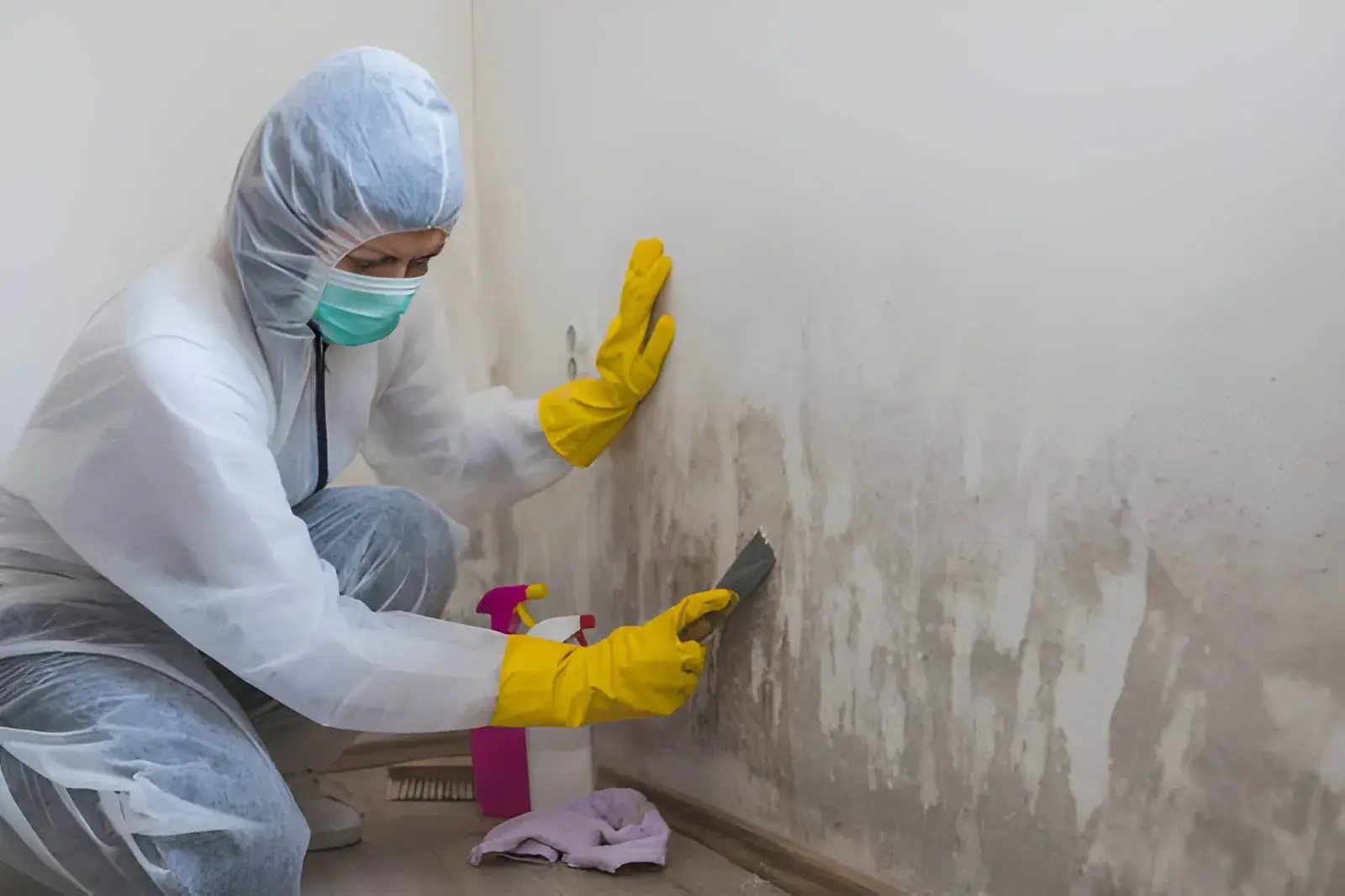
Mold Remediation in Lenexa, KS
Mold doubles its colony size every 24 to 48 hours under favorable conditions. Our local team responds to Lenexa mold emergencies immediately to contain the spread.
What Happens When You Call
A real person answers, not a call center. We assess your situation, ask targeted questions about moisture history and visible growth, and begin coordinating your response immediately.
Your dedicated remediation team is dispatched from our local base serving Lenexa and the surrounding Johnson County communities.
Team arrives with containment materials, negative air machines, and professional assessment equipment. Containment is established before any disturbance of affected materials.
Affected area contained, moisture source identified, remediation scope documented with photos. You know exactly what the project involves and what comes next.
You found mold in your home. Maybe it appeared after the basement flooded, maybe you noticed a musty smell that grew stronger over weeks, or maybe a contractor discovered it behind a wall during a renovation. Regardless of how you found it, what you can see is only part of the colony. Mold grows behind surfaces, inside wall cavities, and within materials you cannot inspect without demolition. It is releasing spores into the air you are breathing right now. You need containment, professional assessment, and removal that follows a recognized standard. Call now. Your team is standing by.
Why Lenexa Homes Are Vulnerable to Mold
Lenexa is a city of approximately 59,427 residents in Johnson County, Kansas, where residential construction relies heavily on finished basements that extend the living space below grade. This basement reliance creates a persistent mold vulnerability because below-grade walls and floors are in constant contact with soil moisture, and any interruption in the waterproofing system allows water intrusion that homeowners may not detect until mold has established. The city sits within the Mill Creek watershed, and the Rain to Recreation stormwater program that created Lake Lenexa (a 35-acre retention lake built after catastrophic 1998 flooding) demonstrates how elevated water tables and stormwater management challenges define the local hydrology. Homes in neighborhoods surrounding Lake Lenexa and along the Mill Creek corridor exist in a landscape engineered to hold water, which means the soil stays saturated longer after rain events and the moisture load on below-grade construction is consistently higher than in areas with faster drainage.
Kansas does not require a state-specific mold remediation license, meaning Lenexa homeowners must rely on a contractor's adherence to the published IICRC S520 standard to distinguish professional remediation from cosmetic cleanup. Without state licensing, there is no government body verifying that a company performing mold removal follows containment protocols, uses appropriate personal protective equipment, or confirms clearance through independent post-remediation testing. Any contractor can advertise mold removal services regardless of training or methodology. The IICRC S520 Standard for Professional Mold Remediation is the industry's published reference for scope, containment, removal, and verification. It requires isolation of the affected area, negative air pressure to prevent spore migration, HEPA filtration during removal, and third-party clearance testing after work is complete. In an unregulated state, the homeowner bears the responsibility of verifying credentials, and the difference between a contractor who follows S520 and one who simply sprays bleach and paints over the area is the difference between remediation and concealment.
In July 2025, a low-water bridge overflow flooded a Lenexa neighborhood, sending water into basements and causing more than 1,700 power outages across the area. When basements flood and power fails simultaneously, the conditions for mold colonization become nearly ideal: standing water provides unlimited moisture, the loss of HVAC removes dehumidification, and summer temperatures in the high 80s to low 90s provide warmth. Mold can begin colonizing damp drywall and carpet within 24 to 48 hours under these conditions. Homes that experienced the July 2025 flooding and did not receive professional water extraction and structural drying within that window are now dealing with mold growth that established during the days or weeks of elevated moisture that followed. The flooding event demonstrated how Lenexa's stormwater infrastructure, even with the Rain to Recreation improvements, can still be overwhelmed by intense rainfall events that exceed design capacity.
Rain to Recreation and Elevated Water Tables
Lenexa's Rain to Recreation program, launched after severe 1998 flooding, created Lake Lenexa with an engineered dam and spillway system designed to detain stormwater and release it gradually rather than allowing rapid downstream flooding. The program won a United States Society on Dams (USSD) award for its innovative approach to regional retention. However, the engineering reality of regional detention means that water is held at elevation in the surrounding soil for longer periods after rain events. Homes in neighborhoods adjacent to Lake Lenexa, along Mill Creek, and near Flat Rock Creek (a tributary to Indian Creek) experience soil moisture levels that remain elevated for days after significant rainfall. This sustained moisture migrates through foundation walls via capillary action, accumulates against waterproofing membranes that degrade over decades, and creates the persistent humidity conditions in basements and crawl spaces where mold thrives. The water management approach that protects downstream areas from flooding simultaneously creates conditions in surrounding neighborhoods where below-grade moisture control requires active, year-round dehumidification.
Mill Creek Corridor Moisture and Basement Vulnerability
Mill Creek flows through Lenexa's northern boundary between the city and Shawnee, and the creek corridor creates a drainage landscape where adjacent residential properties sit at relatively low elevation compared to the surrounding terrain. During rain events, the water table rises quickly along the Mill Creek corridor, and homes with basements in these areas experience hydrostatic pressure against foundation walls that can force moisture through hairline cracks, cold joints, and deteriorated sealant. Even without visible flooding, this pressure-driven moisture intrusion maintains relative humidity above 60% in basements, which is the threshold above which most mold species can colonize building materials. Many Lenexa homes along the Mill Creek corridor have sump pump systems that manage groundwater, but pump failure during power outages (as occurred in July 2025 with 1,700+ outages) removes the only active moisture defense and allows rapid water accumulation in the lowest areas of the home.
July 2025 Flooding and Delayed Mold Growth
The July 2025 low-water bridge overflow that flooded a Lenexa neighborhood created conditions for mold growth that may not become visible for weeks or months after the event. When floodwater enters a finished basement, it saturates drywall from the bottom up, wicks into the paper facing that serves as mold's preferred food source, and soaks carpet padding that remains wet long after surface water recedes. If professional water extraction and structural drying did not occur within 24 to 48 hours, mold colonization began behind baseboards, beneath carpet, and inside wall cavities where it grows without visible indication until the colony is well established. Homes affected by the July 2025 event that received only surface cleanup, had carpet dried in place rather than removed, or relied on consumer dehumidifiers rather than commercial drying equipment are at high risk for active mold growth behind finished surfaces. The first visible sign is often a musty odor that grows stronger over weeks, followed by discoloration at baseboard level.
Humid Continental Climate and Seasonal Mold Pressure
Lenexa's humid continental climate (Dfa classification) delivers 37 to 41 inches of annual precipitation and summer conditions with sustained high humidity. From May through September, outdoor dew points regularly reach the mid-60s to low-70s Fahrenheit, and basements without active dehumidification equilibrate toward high indoor relative humidity levels, well above the 60% threshold for mold colonization. This means that even homes without acute water intrusion events face chronic mold risk in below-grade spaces simply from atmospheric moisture that condenses on cool basement walls and accumulates in enclosed cavities. The seasonal cycle is predictable: mold that established during summer humidity may become dormant during dry winter months but reactivates each spring as humidity returns. A musty smell that appears every May and fades by October is not a seasonal nuisance, it is an active mold colony responding to seasonal moisture availability.
Unregulated Market and the IICRC S520 Standard
Because Kansas has no state mold remediation license, the Lenexa market includes operators ranging from IICRC-certified remediation firms following published protocols to general contractors who treat mold as a cleaning task. The difference in outcomes is significant. A company following IICRC S520 will establish physical containment (polyethylene barriers sealed with tape), maintain negative air pressure within the containment zone to prevent spore migration, use HEPA-filtered air scrubbers during removal, remove affected materials to clean substrate, apply antimicrobial treatment, and require independent third-party clearance testing before releasing the area. A company not following S520 may simply spray the visible mold with a biocide, encapsulate it with paint, and declare the problem resolved. The mold remains viable beneath the coating, continues to grow when moisture returns, and the homeowner believes the problem was addressed until it breaks through again months later. In an unregulated state, the homeowner must verify IICRC certification, request a written scope referencing S520 protocols, and require independent clearance testing as the standard of completion.
Mold remediation in Lenexa operates within a landscape defined by engineered water retention, a high water table along the Mill Creek corridor, basement-reliant housing construction, humid continental summers, and the absence of state licensing oversight. The July 2025 flooding demonstrated how quickly conditions can shift from normal to ideal for mold colonization, and the lack of state regulation means homeowners must verify that any contractor they hire follows published remediation standards rather than performing cosmetic cleanup that conceals rather than resolves the problem.
What Happens to Your Home While You Wait
Within 24 Hours
After water intrusion or sustained humidity above 60%, mold spores that are always present in indoor air begin germinating on damp organic materials. Drywall paper facing, carpet backing, wood framing, and cardboard storage materials all provide food sources. Growth is not yet visible, but the colonization process has begun at the microscopic level. This is the window for prevention through professional drying.
24–48 Hours
Mold colonies become established on saturated materials. Hyphal networks penetrate into the surface of drywall paper, carpet fibers, and wood grain. In Lenexa's summer temperatures (80s to low 90s), growth is accelerated compared to cooler conditions. The first faint musty odor may become detectable in enclosed spaces. Materials that are dried within this window can often be salvaged.
48–72 Hours
Visible mold growth appears on surfaces. Colonies expand rapidly, doubling in area every one to two days under favorable conditions. Spore production begins, releasing reproductive particles into the air that colonize additional surfaces throughout the home via air currents and the HVAC system. Materials with visible growth generally require removal rather than cleaning.
One Week
Mold penetrates deep into building materials: through drywall paper into the gypsum core, into the grain structure of wood framing, and throughout carpet padding. Spore counts in indoor air may be significantly elevated. Secondary colonization sites establish wherever spores have landed on damp surfaces. Remediation scope expands substantially as growth moves from surfaces to structural materials.
Two Weeks and Beyond
Extensive structural colonization. Framing members, subfloor sheathing, and insulation may require removal and replacement. The HVAC system distributes spores throughout the home, creating conditions for colony establishment in every room. Health impacts increase with sustained spore exposure. What might have been contained with early intervention becomes whole-home remediation with significant demolition and reconstruction.
Mold growth accelerates every day it goes unaddressed. The conditions that allowed colonization, whether flooding, chronic moisture, or humidity, are still feeding the colony right now. Contact X Response now. Our Lenexa team establishes containment and stops the spread immediately.
How We Restore Mold-Affected Lenexa Homes
Mold remediation requires containment, removal, and verification following established protocols. In an unregulated state like Kansas, adherence to the IICRC S520 standard is what separates professional remediation from cosmetic cleanup. Here is how our team handles each phase for Lenexa homes.
Assessment and Moisture Source Identification
Our team arrives with moisture meters, thermal imaging, and hygrometers to identify both visible mold and concealed moisture that feeds it. We map moisture intrusion pathways: foundation wall seepage, sump pump failure, plumbing leaks, or condensation from inadequate ventilation. In Lenexa homes along the Mill Creek corridor, we inspect for hydrostatic pressure intrusion. Along Lake Lenexa, we assess whether elevated soil moisture from regional retention is migrating through foundation walls. The moisture source must be identified and addressed, or remediation provides only temporary results.
Containment and Negative Air Pressure
Before any mold-contaminated material is disturbed, we establish physical containment using polyethylene barriers sealed to walls, floors, and ceilings around the affected area. Negative air machines with HEPA filtration create pressure differential that prevents spores released during removal from migrating to unaffected areas. The HVAC system is shut down or sealed to prevent distribution through ductwork. This containment protocol, required by IICRC S520, is the step most commonly skipped by unqualified operators in Kansas's unregulated market. Without containment, removal sends billions of spores airborne throughout the home.
Removal and Antimicrobial Treatment
Affected materials are removed to clean substrate. Drywall is cut back to at least two feet beyond visible growth to account for hyphal networks that extend beyond the visible colony edge. Carpet, padding, and insulation with mold growth are disposed of as contaminated waste. Structural framing that cannot be removed is treated with antimicrobial agents after surface mold is mechanically removed. HEPA vacuuming captures spores on all surfaces within the containment zone. All removed materials are bagged within the containment area before transport through the home.
Structural Drying and Moisture Control
After contaminated materials are removed, the remaining structure must be dried to moisture content levels that will not support re-colonization. Commercial dehumidifiers and air movers target the exposed framing, subfloor, and foundation surfaces. We monitor with daily moisture readings until materials reach equilibrium appropriate for the season and climate. In Lenexa basements, this often includes recommendations for permanent dehumidification systems because the local hydrology maintains moisture levels that standard HVAC systems cannot adequately control in below-grade spaces.
Clearance Testing and Verification
After remediation is complete, an independent third-party inspector performs clearance testing by collecting air and surface samples from within the remediation area and comparing them to outdoor baseline and unaffected interior areas. This independent verification is required by IICRC S520 and is the standard that confirms successful remediation. We do not perform our own clearance testing because the entity that performed the work should not be the entity that verifies it. If clearance fails, we identify the remaining contamination source and repeat treatment until independent testing confirms acceptable spore levels.
The X Response Difference
When you contact X Response for mold remediation in Lenexa, you get a team that follows IICRC S520 from containment through independent clearance. In a state with no licensing requirement, our adherence to published protocol is your assurance of professional results.
Insurance Claim Guidance for Lenexa Homeowners
Mold damage insurance coverage in Kansas depends on the moisture source that caused the growth. Standard homeowner's policies cover mold that results from a covered peril (burst pipe, appliance failure, storm damage) but exclude mold from maintenance failures, chronic moisture, and gradual deterioration. In Lenexa, where much mold growth relates to basement moisture from the high water table, foundation seepage, or sump pump failure during storms, coverage determinations hinge on whether the moisture event was sudden and accidental versus gradual and foreseeable. Many Kansas policies also carry specific mold coverage limits (often $5,000 to $10,000) that cap remediation coverage regardless of actual cost. Professional documentation of the moisture source, timeline of discovery, and scope of contamination is critical.
How X Response Helps
- Document when and how you discovered the mold, including the moisture event that caused it if identifiable
- Photograph all visible mold, moisture damage, and the suspected intrusion source before any cleanup is attempted
- Obtain professional moisture readings that demonstrate the intrusion source and distinguish sudden events from chronic conditions
- Review your policy's specific mold coverage provisions, including any dollar caps or exclusions for below-grade water intrusion
- Maintain records of maintenance activities (sump pump testing, dehumidifier operation) that demonstrate the condition was not caused by neglect
X Response does not file claims on your behalf, adjust claims, or make coverage determinations. We provide documentation and guidance to help you make informed decisions about your property and your policy. Coverage decisions are made solely by your insurance carrier.
Certified Restoration Specialists Serving Lenexa
When you contact X Response for mold remediation in Lenexa, your team arrives trained in IICRC S520 protocols and equipped for full containment remediation. They understand the moisture dynamics specific to Johnson County: the elevated water table along Mill Creek, the soil saturation patterns around Lake Lenexa's retention system, the hydrostatic pressure that forces moisture through basement walls during rain events, and the chronic humidity that makes active dehumidification a year-round necessity in below-grade spaces. They have managed remediation after basement flooding, sump pump failures, plumbing leaks, and the chronic moisture conditions that produce mold without any acute water event.
Every technician holds current IICRC certification in mold remediation. Equipment includes commercial dehumidifiers, HEPA air scrubbers, negative air machines, antimicrobial application systems, moisture meters, thermal imaging cameras, and hygrometers for ongoing monitoring. In Kansas's unregulated market, our team's adherence to IICRC S520 from containment through independent clearance testing is the credential that distinguishes professional remediation from cosmetic treatment. Kansas handles contractor licensing at the local level through Johnson County, and our team meets all applicable requirements.
In Lenexa, X Response works with Best Option Restoration, an independent local restoration partner serving Johnson County.
Mold Remediation FAQ for Lenexa Homeowners
Other Emergency Services in Lenexa
Water Damage Restoration
Burst pipes, storm flooding, standing water. We extract, dry, and restore before mold sets in.
Learn more
Fire Damage Restoration
Structural damage, soot, debris. We stabilize, clean, and rebuild what fire destroyed.
Learn more
Smoke Damage Restoration
Soot residue, chemical odors, HVAC contamination. We decontaminate surfaces, eliminate odors, and restore air quality.
Learn more
Sewage Cleanup
Sewer backups, contaminated water, biohazard. We extract, sanitize, and restore safely.
Learn moreNearby Service Areas
Also serving nearby: