
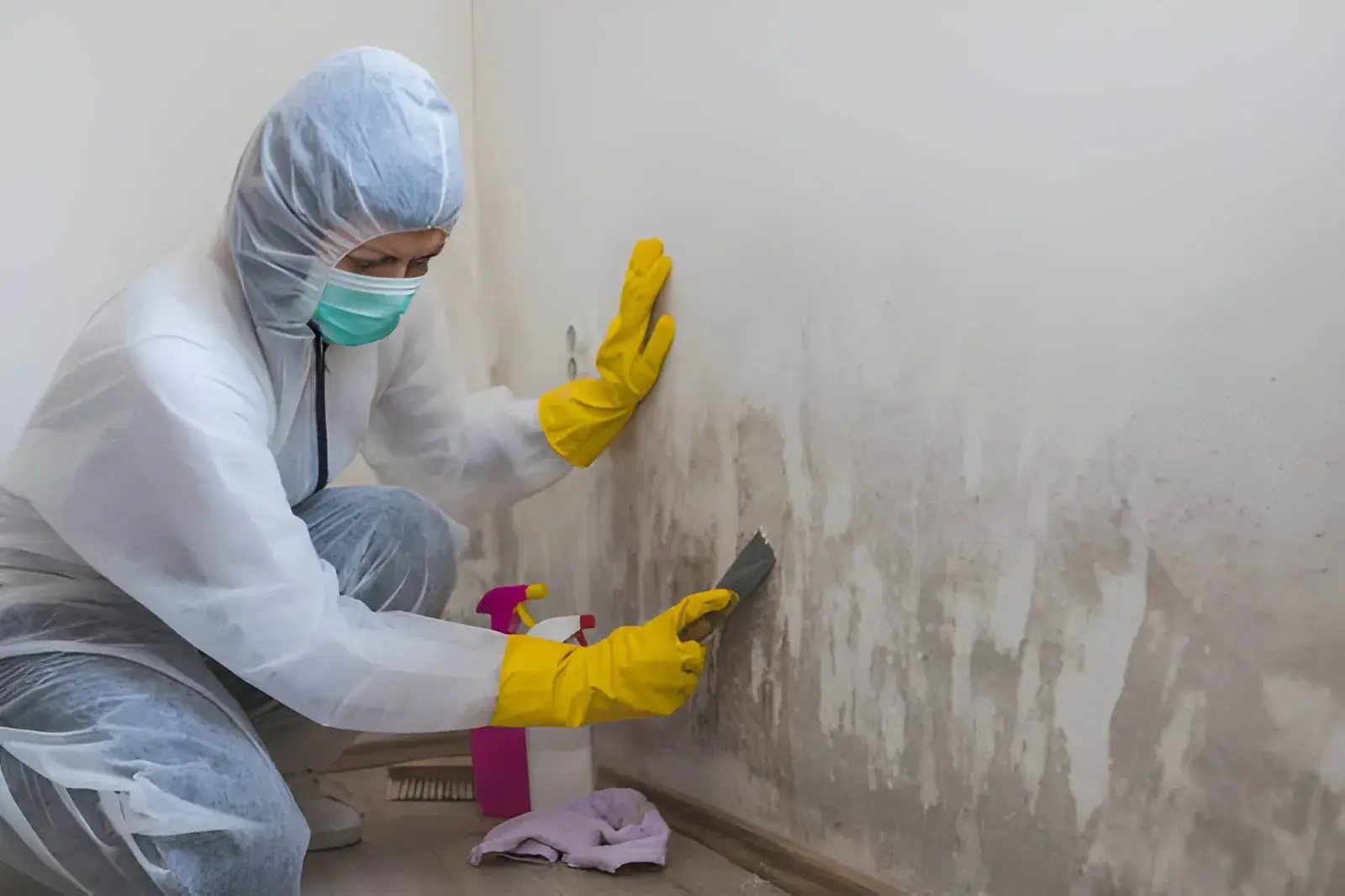
Mold Remediation in Owings Mills, MD
Mold destroys your property and threatens your family's health. Our local team responds to Owings Mills emergencies within 60 minutes.
What Happens When You Call
A real person answers, not a call center. We assess your situation, ask the right questions, and begin coordinating your response immediately.
Your dedicated restoration team is dispatched from our local base serving Owings Mills and the surrounding Baltimore County communities.
Team arrives with commercial HEPA air scrubbers, containment barriers, and moisture detection equipment. Emergency mitigation begins immediately.
Mold contained, structural moisture identified, remediation plan documented. You know exactly what comes next.
You found mold growing in your home, and you need it removed safely and permanently. X Response exists for exactly this moment. When you reach out, your restoration team is mobilized within minutes and on site within the hour. From that point forward, one team manages everything: containment, removal, drying, and insurance guidance. You are never left wondering what happens next. Call now. Your team is standing by.
Why Owings Mills Homes Are Vulnerable to Mold
The constant battle against mold in Owings Mills is largely dictated by the region's oppressive summer weather and the dense architectural landscape of Baltimore County. The humid subtropical climate in Maryland drives average summer relative humidity to high levels, making natural evaporation nearly impossible in enclosed spaces. In the many townhome communities and established single-family neighborhoods built during the suburban booms of the 1980s and 90s, this humidity becomes a severe liability. When aging plumbing fixtures develop slow, hidden leaks behind drywall or when HVAC condensate lines overflow into utility closets, the trapped moisture creates a perfect incubation chamber for toxic mold colonies, which can explode across the framing in just 48 hours.
Furthermore, the heavy clay soils prevalent throughout the Owings Mills area retain massive amounts of groundwater after intense spring rains. This hydrostatic pressure forces moisture through the porous concrete block foundations common in local basements. Without robust, actively maintained dehumidification systems, this constant subterranean dampness inevitably leads to pervasive mold growth on stored belongings, carpet padding, and drywall. Eradicating mold in this environment demands far more than surface bleaching; it requires strict negative-air containment, physical removal of the fungal roots, and aggressive mechanical drying to eliminate the underlying moisture source permanently.
Mid-Atlantic Summer Humidity
During the long, muggy summer months, the ambient moisture in the air provides the exact conditions mold spores need to colonize. If a home's HVAC system fails to adequately dehumidify the interior, that ambient moisture alone can trigger widespread biological growth on porous surfaces, even without a direct plumbing leak.
Suburban Basement Seepage
Many homes in Owings Mills feature basements built into the heavy local clay soils. Over time, hydrostatic pressure forces groundwater through the porous concrete blocks. This constant seepage creates the perfect dark, damp environment for extensive mold growth in unfinished basements and crawl spaces.
Hidden Plumbing Leaks
As the residential plumbing in Baltimore County's older suburbs continues to age, pinhole leaks in copper supply lines and weeping joints in drains become increasingly common. These leaks often go unnoticed behind drywall or under cabinetry until the mold finally blooms through the paint or creates a strong, musty odor.
Improperly Vented Attics
Proper airflow is critical to preventing mold. In many homes, bathroom exhaust fans improperly vent directly into the attic rather than outside, pumping warm, moist air directly against the cool roof decking. This condensation leads to massive mold colonization across the attic structure over several seasons.
The Danger of Bleach
A common mistake is attempting to kill mold with household bleach. Bleach only removes the surface stain; it does not penetrate porous materials like wood or drywall. In fact, the water content in the bleach feeds the microscopic roots of the mold, causing it to return rapidly. Professional, EPA-registered biocides are required for true remediation.
These factors compound each other. The humid climate provides the catalyst, the aging infrastructure provides the moisture source, and the structural vulnerabilities provide the perfect breeding ground. Effective mold remediation in Owings Mills means understanding how to control the environment, properly contain the hazard, and eliminate the moisture source permanently. It rewards a team that has actually worked across Baltimore County's diverse housing stock.
What Happens to Your Home While You Wait
Within 24 Hours
Microscopic mold spores locate a damp, porous surface in your home. Whether fed by a slow leak or high humidity, the spores settle and begin the germination process. The first signs are often just a faint, musty odor in a basement or bathroom.
24 to 48 Hours
The mold roots (hyphae) begin to penetrate deep into porous materials like drywall, wood framing, and carpet backing. The visible colonies may appear as small black, green, or white specks. The organism is actively consuming the structural material of your home.
48 to 72 Hours
The mold colony matures and begins actively releasing thousands of new spores into the indoor air to find new areas to colonize. In Maryland's humid climate, this rapid expansion can quickly overtake an entire room. Health risks increase as the concentration of airborne spores rises.
One Week to One Month
The mold growth becomes pervasive and highly visible. Drywall becomes soft and structurally compromised as the mold consumes the paper backing. The HVAC system may pull the spores into the ductwork, distributing the contamination throughout the entire house.
One Month and Beyond
Severe structural damage occurs as wood framing rots and loses its load-bearing capacity. The indoor air quality is severely compromised, presenting a long-term respiratory hazard. What might have been a focused cleanup escalates into a massive demolition project requiring extensive containment.
The difference between localized cleaning and gutting your home to the studs is often just a matter of days. Contact X Response now. Our Owings Mills team responds within 60 minutes.
How We Restore Mold-Affected Owings Mills Homes
From the moment our team arrives, every step is documented, measured, and verified. Here is exactly what the mold remediation process involves.
Emergency Assessment and Containment
Our team arrives and immediately identifies the source of the moisture feeding the mold. Before any removal begins, we construct heavy-duty plastic containment barriers and establish negative air pressure using commercial HEPA air scrubbers. This critical step ensures that toxic mold spores are not spread to clean areas.
Safe Material Removal
Porous materials that are heavily infested with mold, such as drywall, insulation, and carpet, cannot be salvaged. Our technicians safely cut away and remove these contaminated materials while wearing full personal protective equipment (PPE), sealing them in heavy-duty bags.
Antimicrobial Treatment and Cleaning
Once the unsalvageable materials are removed, we treat the remaining structural framing with powerful, EPA-registered biocides. We use specialized techniques like wire brushing or HEPA vacuuming to physically remove the mold roots from the wood grain, ensuring the organism is completely eradicated.
Structural Drying and Dehumidification
Mold cannot survive without moisture. We position commercial dehumidifiers and high-velocity air movers to dry the remaining structural materials. In Maryland's humid climate, this step is absolutely essential to prevent the mold from returning. We monitor the moisture levels daily.
Quality Verification and Completion
Before we consider the job complete, a final inspection verifies that all mold has been removed, the moisture source is resolved, and the air quality is safe. We hand you completion documentation including before-and-after photos and a summary of all work performed.
The X Response Difference
When you contact X Response, you get a dedicated restoration team that manages everything, from emergency containment through safe removal to final quality verification.
Insurance Claim Guidance for Owings Mills Homeowners
Mold remediation insurance claims in Maryland are notoriously complex. Unlike sudden water damage, mold is often viewed by insurance carriers as a maintenance issue resulting from long-term neglect, which is typically excluded from standard policies. However, if the mold is the direct result of a sudden, covered peril, such as a burst pipe or a storm-driven roof leak, the resulting mold remediation may be covered. Because the line between covered and denied claims is so thin, the key to a successful claim is meticulous documentation proving the sudden nature of the moisture source. Having a restoration team that understands how to present this evidence to your adjuster is vital.
How X Response Helps
- Document all damage with professional photos, moisture readings, and a detailed scope of work from day one
- Clearly identify and document the sudden, accidental moisture source that caused the mold outbreak
- Prepare documentation that meets Baltimore County environmental safety requirements
- Align our restoration scope with standard insurance coverage categories so your adjuster can process the claim efficiently
- Explain your policy's likely coverage limitations before you file, so you understand your options and potential out-of-pocket exposure
X Response does not file claims on your behalf, adjust claims, or make coverage determinations. We provide documentation and guidance to help you make informed decisions about your property and your policy. Coverage decisions are made solely by your insurance carrier.
Certified Restoration Specialists Serving Owings Mills
When you contact X Response for a mold remediation emergency in Owings Mills, your restoration team is drawn from certified professionals who work across Baltimore County. They understand the distinct challenges of restoring properties in this area, from managing the damp foundations of suburban basements to handling the complex HVAC contamination issues in modern townhomes. This is not a crew dispatched from hours away with no local knowledge. It is a local team with local expertise, operating under strict national environmental standards.
Every technician on your team holds current IICRC certification in Applied Microbial Remediation and carries the appropriate Maryland licensing for the work being performed. Equipment is commercial-grade and maintained to strict environmental specifications. When your team arrives, they bring everything needed to begin containment immediately, including heavy-duty plastic barriers, commercial HEPA air scrubbers, and specialized EPA-registered biocides.
In Owings Mills, X Response works with Green Clean Restoration LLC, an independent local restoration partner serving Baltimore County.
Mold Remediation FAQ for Owings Mills Homeowners
Other Emergency Services in Owings Mills

Water Damage Restoration
Burst pipes, storm flooding, standing water. We extract, dry, and restore before mold sets in.
Learn more
Fire Damage Restoration
Structural damage, soot, debris. We stabilize, clean, and rebuild what fire destroyed.
Learn more
Smoke Damage Restoration
Soot residue, chemical odors, HVAC contamination. We decontaminate surfaces, eliminate odors, and restore air quality.
Learn more
Sewage Cleanup
Sewer backups, contaminated water, biohazard. We extract, sanitize, and restore safely.
Learn moreNearby Service Areas
Also serving nearby: