Mold Remediation in Fenton, MO
Airborne fungal spores spread rapidly through residential HVAC ductwork and colonize damp basement drywall within 48 hours. Our Fenton remediation team sets up strict negative pressure containment to cleanse your indoor air immediately.
What Happens When You Call
Your inquiry connects directly with our regional remediation manager to schedule a thorough on-site evaluation.
Technicians map hidden moisture pockets inside walls and basements using thermal imaging and electronic moisture meters.
Specialists isolate affected work zones using heavy plastic poly barriers under continuous negative air pressure with HEPA scrubbers.
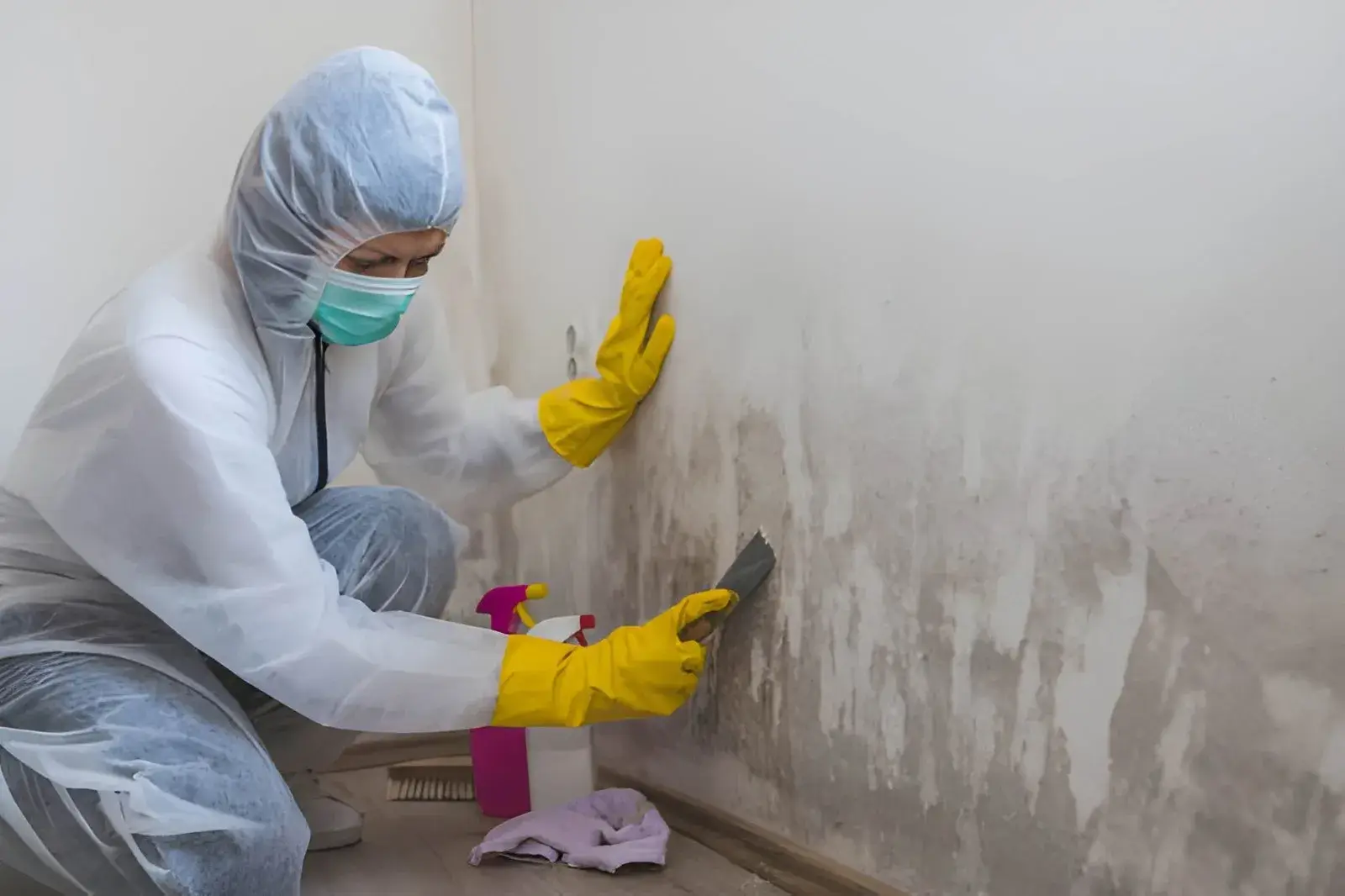
Crews safely remove contaminated porous materials, treat remaining framing with EPA-registered fungicides, and HEPA vacuum all surfaces.
Ignoring persistent musty odors or discolored wall spots allows fungal colonies to compromise structural framing, wood subfloors, and indoor air quality. When you detect moisture or mold, our certified team acts promptly. Request a Fenton mold assessment today.
Why Fenton Homes Are Vulnerable to Mold
The U.S. Environmental Protection Agency advises that indoor materials and surfaces dried within 24 to 48 hours after a leak or spill typically will not grow mold. In Fenton and the surrounding communities of southwest St. Louis County, elevated summer humidity generated by the adjacent Meramec River basin combines with heavy clay soils to create persistent indoor moisture challenges. When hidden plumbing leaks, river backwater, or roof seepage are left unaddressed beyond this critical window, opportunistic fungal species such as Aspergillus, Penicillium, and Stachybotrys chartarum readily colonize interior drywall, carpeting, and wood assemblies.
Fenton's topography features rolling bluffs, river terraces, and hillside hollows where many residential properties incorporate full basements, daylight walkouts, or sunken split-level living rooms. The surrounding St. Louis County soil consists of dense clay with high water retention capacity resting on limestone strata. During prolonged wet spring months, subterranean hydrostatic pressure forces moisture vapor through porous concrete foundation blocks and cold joints. When this vapor contacts finished drywall, baseboard trim, or fiberglass insulation in finished basement rooms, indoor relative humidity climbs well past 60 percent, fostering aggressive, hidden mold blooms.
Summer climate conditions in southwest St. Louis County generate persistent heat waves accompanied by high ambient humidity. Residential central air conditioning systems operate under heavy loads, producing gallons of condensation daily inside drip pans and evaporator coils. When supply air ducts routed through unconditioned crawlspaces, basements, or attics have compromised insulation seams, cold metal surfaces sweat profusely against warm, humid air. This condensation drips onto ceiling joists and wallboard, creating secluded mold nurseries that circulate spores throughout the home whenever the central air fan kicks on.
Crawlspace foundations under older ranch homes across Fenton represent another critical moisture hazard. Bare dirt floors without continuous, sealed 10-mil vapor barriers allow earth moisture to evaporate continuously into floor cavities. Wood floor joists, rim joists, and subflooring slowly absorb this ambient dampness until their wood moisture content exceeds 20 percent, triggering wood decay fungi and surface mold colonies. Our comprehensive remediation approach tackles both active colonies and root moisture causes, pairing negative air containment and HEPA air scrubbing with commercial dehumidification and subfloor encapsulation.
Meramec River Valley Humidity
undefined
undefined
Proximity to the Meramec River keeps ambient humidity elevated, reducing natural evaporation and promoting mold spore growth in unconditioned spaces.
Subterranean Clay Vapor Pressure
undefined
undefined
Dense clay soils push moisture through concrete foundation walls into finished basement wall cavities, triggering concealed mold blooms.
HVAC Condensation and Duct Sweating
undefined
undefined
Cold supply ducts in humid attics or crawlspaces generate condensation that saturates insulation and ceiling drywall, creating hidden mold reservoirs.
Completely eliminating indoor mold in Fenton requires isolating airborne spores, removing damaged materials, and restoring indoor humidity to safe levels.
What Happens to Your Home While You Wait
First 24 Hours
undefined
undefined
Excess moisture saturates cellulose materials such as drywall backing, wallpaper, and carpet padding, activating dormant mold spores.
24 to 48 Hours
undefined
undefined
Fungal spores germinate and send microscopic hyphae into porous surfaces, releasing faint musty odors throughout the immediate area.
48 to 72 Hours
undefined
undefined
Visible dark colonies spread across drywall and baseboard surfaces, while airborne spore concentrations rise in surrounding rooms.
1 to 2 Weeks
undefined
undefined
Mycelial networks penetrate deep into wooden wall studs and subflooring, breaking down cellulose fibers and releasing pungent volatile compounds.
Beyond One Month
undefined
undefined
Severe fungal decay threatens structural joists and wall framing, requiring structural demolition, extensive framing replacement, and higher repair costs.
Do not allow hidden mold to compromise your family's health or property value. Reach out to 911 Water Damage Experts LLC right away for certified remediation.
How We Restore Mold-Affected Fenton Homes
Our IICRC S520-compliant mold remediation framework guarantees strict containment, safe removal of contaminated materials, and lasting moisture control.
Diagnostic Moisture and Mold Inspection
undefined
undefined
We inspect your Fenton residence using thermal imaging cameras and digital moisture meters to locate active leaks and concealed fungal colonies.
Negative Pressure HEPA Containment
undefined
undefined
We construct sealed poly barriers and run HEPA-filtered negative air machines to prevent disturbed mold spores from escaping into unaffected rooms.
HEPA Vacuuming and Surface Abatement
undefined
undefined
Crews remove unsalvageable porous drywall and carpeting, HEPA-vacuum structural framing, and apply EPA-registered antimicrobial fungicides.
Long-Term Humidity Stabilization
undefined
undefined
We deploy commercial low-grain refrigerant dehumidifiers to lower relative humidity below 50 percent, creating conditions that prevent future mold recurrence.
The X Response Difference
For scientifically verified, lasting mold remediation across Fenton, trust the experienced specialists at 911 Water Damage Experts LLC.
Insurance Claim Guidance for Fenton Homeowners
Filing an insurance claim for mold remediation requires clear proof that the fungal growth resulted from a covered, sudden water loss.
How X Response Helps
- Comprehensive pre-mitigation digital photographs detailing fungal colonization and the underlying water source
- Daily psychrometric logs recording ambient relative humidity, temperature, and structural moisture readings
- Standard Xactimate line-item estimates structured to conform directly to insurance carrier requirements
We work directly with insurance adjusters and carriers regulated by the Missouri Department of Commerce and Insurance to support your claim.
Certified Restoration Specialists Serving Fenton
Our Fenton mold remediation technicians hold certifications from the Institute of Inspection, Cleaning and Restoration Certification (IICRC), including Applied Microbial Remediation Technician (AMRT) and Water Damage Restoration (WRT). Serving homeowners across southwest St. Louis County with dedication, we bring meticulous containment standards and dependable service to every restoration project.
In Fenton, X Response works with 911 Water Damage Experts LLC, an independent local restoration partner serving St. Louis County County.