Mold Remediation in Imperial, MO
Airborne mold spores travel rapidly through central HVAC ductwork and colonize damp basement framing within 48 hours. Our Imperial remediation specialists set up airtight containment barriers to cleanse your indoor air immediately.
What Happens When You Call
Your inquiry connects directly with our regional remediation manager to schedule a detailed on-site inspection.
Technicians map hidden moisture behind walls and below subfloors using diagnostic infrared cameras and moisture meters.
Crews isolate affected rooms using sealed plastic barriers under continuous negative air pressure with HEPA scrubbers.
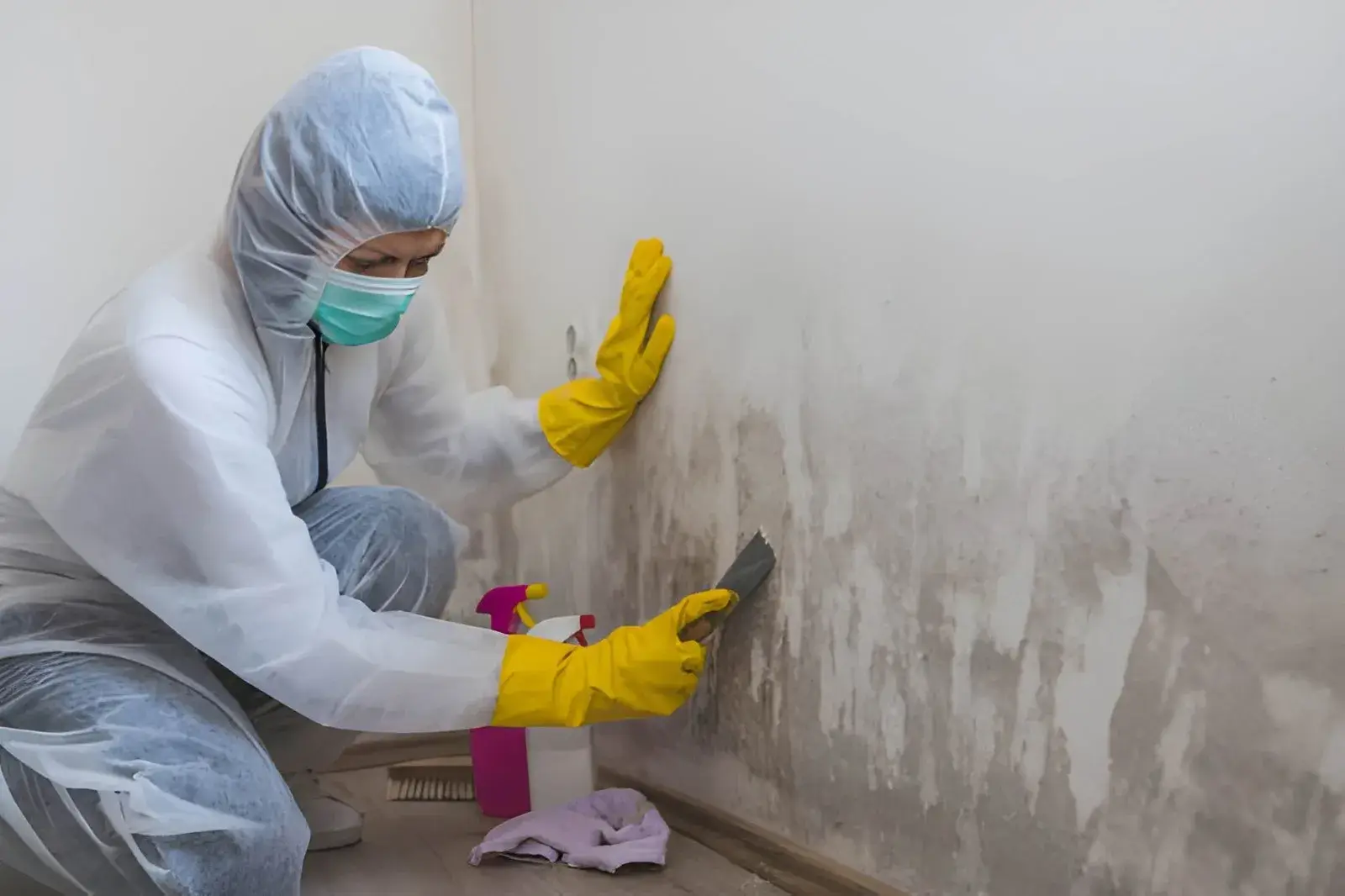
Specialists remove unsalvageable porous materials, treat structural lumber with EPA-registered fungicides, and HEPA vacuum all surfaces.
Ignoring damp odors or dark mold patches allows fungal colonies to degrade wood subflooring, drywall assemblies, and indoor air quality. When you detect moisture or mold, our certified crew acts quickly. Schedule an Imperial mold inspection today.
Why Imperial Homes Are Vulnerable to Mold
The Missouri Department of Health and Senior Services stresses that controlling indoor moisture is the key to mold control, recommending that damp materials be dried within 24 to 48 hours. In Imperial and throughout the river valley communities of northern Jefferson County, elevated outdoor humidity from the Mississippi River basin combines with moisture-rich clay soils to foster persistent indoor dampness issues. When undetected plumbing seepage, foundation moisture, or storm runoff remains unmitigated past this critical window, opportunistic fungal strains like Aspergillus, Penicillium, and Stachybotrys chartarum readily colonize interior drywall, carpeting, and wood framing.
Imperial's rolling topography features wooded ridges and steep stream valleys where many single-family homes incorporate full basements, daylight walkouts, or split-level floor plans. The surrounding Jefferson County soil consists of dense clay with high water retention capacity resting on limestone bedrock. During prolonged wet spring months, subterranean hydrostatic pressure forces moisture vapor through porous concrete foundation blocks and cold pour joints. When this vapor hits finished drywall, baseboard trim, or fiberglass insulation in finished basement rooms, indoor relative humidity climbs well above 60 percent, creating ideal breeding grounds for hidden mold colonies.
Summer atmospheric conditions across northern Jefferson County produce prolonged periods of high heat and oppressive humidity. Residential central air conditioning units run constantly, generating substantial condensation inside drip pans and cooling coils. When supply air ducts routed through unconditioned crawlspaces, basements, or attics have unsealed joints or thin insulation, cold metal surfaces sweat profusely against warm, humid air. This condensation drips onto ceiling joists and wallboard, cultivating concealed fungal growth that is subsequently circulated across the entire home whenever the blower motor engages.
Crawlspace foundations under older ranch homes throughout Imperial present another major moisture trap. Dirt floors without continuous, sealed 10-mil vapor retarders constantly exhale damp soil moisture into subfloor framing. Floor joists, OSB subflooring, and sill plates absorb this dampness until wood moisture content exceeds 20 percent, triggering wood-destroying fungi and surface mold blooms. Our remediation protocol targets both the living space and the subterranean foundation, utilizing negative air containment, HEPA air scrubbers, HEPA vacuuming, and long-term crawlspace dehumidification to stop future fungal reoccurrence.
River Valley Ambient Humidity
undefined
undefined
Proximity to the Mississippi River maintains elevated outdoor humidity levels that hinder natural indoor evaporation and feed mold growth.
Subsurface Clay Vapor Pressure
undefined
undefined
Dense Jefferson County clay soils drive groundwater vapor through concrete foundation walls into finished basement wall cavities.
HVAC Condensation Sweating
undefined
undefined
Chilled ductwork in unconditioned crawlspaces generates heavy condensation, fueling hidden fungal colonies in ceiling assemblies.
Eradicating indoor mold in Imperial requires isolating airborne spores, removing damaged materials, and applying commercial fungicidal treatments.
What Happens to Your Home While You Wait
First 24 Hours
undefined
undefined
Excess moisture saturates porous drywall, wallpaper backing, or wooden framing, activating dormant fungal spores.
24 to 48 Hours
undefined
undefined
Microscopic hyphae spread across damp cellulose materials, releasing faint musty odors throughout the immediate area.
48 to 72 Hours
undefined
undefined
Visible dark green and black colonies expand across sheetrock, and airborne spore counts surge in adjacent living spaces.
1 to 2 Weeks
undefined
undefined
Fungal roots penetrate deep into structural lumber and subflooring, breaking down wood fibers and releasing volatile organic compounds.
Beyond One Month
undefined
undefined
Extensive fungal decay compromises structural framing, requiring structural demolition, framing replacements, and higher repair costs.
Do not let hidden mold compromise your family's health or property value. Reach out to 911 Water Damage Experts LLC right away for certified remediation.
How We Restore Mold-Affected Imperial Homes
Our IICRC S520-certified remediation framework ensures complete containment, safe material removal, and permanent moisture control.
Moisture Mapping and Diagnostic Assessment
undefined
undefined
We inspect your Imperial residence using non-invasive thermal imaging and moisture meters to locate active leaks and mold reservoirs.
Negative Pressure HEPA Containment
undefined
undefined
We construct sealed poly barriers and establish negative air pressure using HEPA scrubbers to prevent cross-contamination to clean rooms.
HEPA Vacuuming and Surface Abatement
undefined
undefined
Technicians remove unsalvageable porous items, HEPA-vacuum structural framing, and apply EPA-registered antimicrobial biocides.
Post-Remediation Dehumidification
undefined
undefined
We run high-capacity commercial dehumidifiers to stabilize relative humidity below 50 percent, creating an environment hostile to mold.
The X Response Difference
For thorough, scientifically proven mold remediation across Imperial, trust the professionals at 911 Water Damage Experts LLC.
Insurance Claim Guidance for Imperial Homeowners
Navigating mold damage insurance coverage requires precise causation records proving water intrusion origins.
How X Response Helps
- Comprehensive photographic documentation detailing microbial colonies and source moisture issues
- Detailed psychrometric moisture logs showing relative humidity and structural moisture readings
- Industry-standard Xactimate line-item estimates aligned with carrier claim formatting
We collaborate with insurance adjusters and providers regulated by the Missouri Department of Commerce and Insurance to support your claim.
Certified Restoration Specialists Serving Imperial
Our Imperial remediation specialists maintain premier credentials from the Institute of Inspection, Cleaning and Restoration Certification (IICRC), including Applied Microbial Remediation Technician (AMRT) and Water Damage Restoration (WRT). Serving Jefferson County homeowners with integrity, we bring precision containment and compassionate care to every mold remediation project.
In Imperial, X Response works with 911 Water Damage Experts LLC, an independent local restoration partner serving Jefferson County County.