
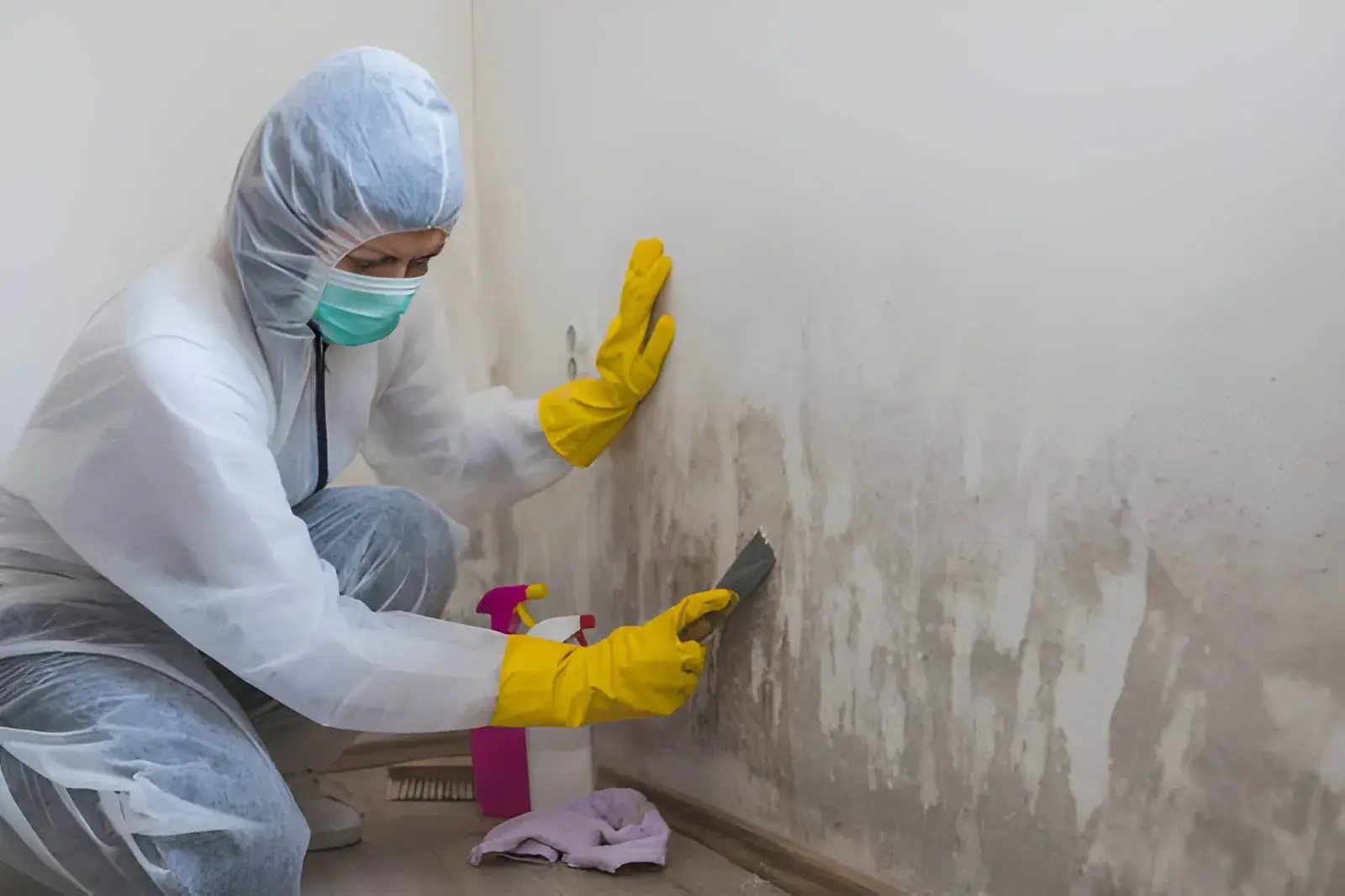
Mold Remediation in Missouri City, TX
Missouri City's subtropical heat and 80%+ summer humidity enable toxic mold spores to colonize wall cavities within 24 to 48 hours of moisture intrusion. Our licensed team responds in 60 minutes.
What Happens When You Call
Call our local dispatch desk to schedule an immediate on-site consultation and moisture diagnostic evaluation.
A licensed Mold Assessment Consultant (MAC) performs visual inspection, thermal imaging, and air/surface sampling.
Upon protocol approval, our licensed remediation crew establishes sealed containment with commercial HEPA negative-air scrubbers.
Contaminated materials are safely removed, framing is decontaminated, and final third-party clearance testing is performed.
Discovering mold growth inside your home or business is an alarming environmental health and structural concern. In Southeast Texas's humid climate, visible mold is rarely an isolated cosmetic issue; it almost always indicates concealed moisture inside wall cavities, beneath flooring, or within attic ductwork. X Response delivers complete, state-licensed mold remediation throughout Missouri City, operating under strict Texas Department of Licensing and Regulation (TDLR) standards. We remove fungal colonies, remediate the underlying moisture source, and provide verified third-party clearance certificates. Schedule a licensed mold assessment in Missouri City today.
Why Missouri City Homes Are Vulnerable to Mold
Missouri City is a master-planned suburban community of over 75,000 residents situated across northeastern Fort Bend County and southwestern Harris County. The city lies within a humid subtropical climate zone (Köppen Cfa) characterized by long, oppressively hot summers with average temperatures in the 90s, high dew points, and persistent relative humidity levels ranging from 75% to over 90%. Annual precipitation exceeds 50 inches, delivered through intense convective thunderstorms, tropical systems, and coastal depressions. These climatic factors, combined with extensive neighborhood lake networks in Sienna, Lake Olympia, and Quail Valley, create an environment where indoor fungal growth can establish and proliferate with minimal moisture introduction.
The Texas Department of Licensing and Regulation enforces Texas Occupations Code Chapter 1958 requiring licensed Mold Assessment Consultants and Mold Remediation Contractors to perform independent inspection and clearance for projects affecting more than 25 contiguous square feet of visible mold. In Missouri City's slab-on-grade homes, plumbing leaks within slab-penetrating utility walls, roof leaks from high-wind tropical storms like Hurricane Beryl in 2024, and chronic AC condensation drain pan overflow in unconditioned attics frequently trigger large-scale mold outbreaks. Because Texas law strictly prohibits the same company from performing both the initial assessment and the remediation work on regulated projects, X Response works in seamless coordination with independent licensed assessment consultants to execute compliant remediation protocols and issue official Certificates of Mold Remediation (Form MDR-1).
Subtropical Coastal Humidity and Dew Point Condensation
During Missouri City's extended cooling season from April through October, outdoor air is saturated with moisture. When homeowners run central air conditioning to keep indoor spaces chilled to 70 degrees Fahrenheit, interior drywall assemblies cool significantly. In uninsulated wall cavities or poorly sealed attic knee-walls, warm outdoor air contacts these cold surfaces, causing condensation to accumulate behind drywall paper and baseboards, creating an ideal breeding ground for Stachybotrys chartarum and Aspergillus species.
Attic HVAC Condensation and Overflow Drain Line Clogs
Virtually all single-family homes in Missouri City house primary air handlers and evaporator coils in unconditioned attics where summer temperatures exceed 130 degrees Fahrenheit. The high volume of moisture extracted from humid indoor air produces gallons of condensate daily. When primary drain lines clog with algae or emergency secondary drain pans corrode through, acidic condensate water drips into ceiling drywall and attic insulation, fostering massive hidden mold colonies before stains appear on ceiling surfaces below.
Slab-on-Grade Moisture Vapor Transmission
The heavy, water-retaining Beaumont Formation clay and alluvial silt soils underlying Missouri City maintain high moisture content year-round. Monolithic concrete slabs without intact sub-slab vapor barriers allow ground moisture to transmit upward via capillary action. When impermeable floor coverings like luxury vinyl plank (LVP) or sheet vinyl are installed over damp slabs without proper underlayment barriers, trapped vapor condenses beneath the flooring, leading to subfloor fungal colonization and floor adhesive decomposition.
Recurrent Flood History and Hidden Structural Moisture
With a significant history of major flood events, including Hurricane Harvey in 2017 and localized creek flash floods along Oyster Creek, many older Missouri City homes contain historical moisture pockets within structural wall assemblies. If previous water mitigation was performed without commercial desiccant dehumidification or sufficient flood cuts, dormant fungal spores inside wall framing reactivate as soon as seasonal humidity rises, emitting persistent earthy odors.
Closed-Envelope Energy-Efficient Construction
Modern homes built in newer Missouri City developments like Riverstone feature tightly sealed building envelopes designed for thermal efficiency. However, without dedicated whole-home dehumidification or mechanical fresh-air ventilation, daily household moisture from cooking, showers, and human respiration remains trapped indoors, elevating indoor relative humidity above 60% and enabling mold proliferation across closets, baseboards, and furniture.
Managing mold in Missouri City requires specialized structural diagnostics, state-licensed remediation execution, and proper legal clearance documentation. X Response combines advanced containment technology with absolute adherence to Texas regulatory statutes to restore healthy indoor air to your property.
What Happens to Your Home While You Wait
24–48 Hours
Microscopic mold spores absorb moisture from wet drywall, carpet padding, or wood framing and begin germination. Hyphae structures penetrate paper facing and subfloor adhesives, beginning organic digestion.
3–7 Days
Visible fungal colonies appear as black, green, or white speckled patches behind baseboards, under sinks, and on attic ceiling joists. Active microbial VOCs (mVOCs) are released into the air, creating distinct musty odors.
1–2 Weeks
Fungal colonies expand into mature mycelial networks, producing millions of airborne spores. Drywall core gypsum loses structural integrity and crumbles. Mold infiltrates HVAC return ducts, distributing spores into bedrooms and living areas.
3–4 Weeks
Extensive fungal penetration degrades structural wood studs and plywood subflooring. Occupants often report allergy symptoms, sinus congestion, respiratory irritation, and headaches due to mycotoxin and spore exposure.
Months and Beyond
Widespread structural rot takes hold inside wall framing. Property values face severe impairment, real estate disclosure liabilities emerge, and remediation costs escalate from simple containment cleanup to total interior gutting and structural framing replacement.
Early detection and certified containment prevent widespread structural decay and protect indoor air quality. Contact X Response today for licensed mold remediation in Missouri City.
How We Restore Mold-Affected Missouri City Homes
Our Texas-licensed remediation process strictly adheres to Texas Administrative Code Title 16 and IICRC S520 guidelines, guaranteeing safe, thorough, and legally compliant mold removal.
1. Protocol Review and State Notification
We review the formal Mold Remediation Protocol prepared by a licensed third-party Mold Assessment Consultant (MAC). For projects exceeding 25 contiguous square feet, we submit the mandatory Mold Remediation Notification to the TDLR at least five working days prior to beginning work, as required by Texas state law.
2. Critical Containment and Negative Air Pressure
Our technicians establish heavy-duty 6-mil polyethylene containment barriers equipped with zippered airlock entry chambers around the remediation zone. Commercial HEPA-filtered negative-air machines continuously exhaust air outside, preventing cross-contamination to unaffected areas of your Missouri City home.
3. Precision Removal of Non-Salvageable Materials
Under continuous negative air pressure, contaminated drywall, porous insulation batts, acoustic ceiling tiles, and rotted baseboards are carefully cut, double-bagged in 6-mil hazardous waste bags, sealed with duct tape, and wiped down before removal from the containment area.
4. HEPA Vacuuming and Controlled Surface Abrasion
Exposed wood framing, concrete slab surfaces, and structural components undergo thorough HEPA vacuuming followed by manual wire brushing, sanding, or dry ice blasting to physically dislodge embedded fungal hyphae from timber grain.
5. Antimicrobial Wash and EPA-Registered Sanitization
All exposed framing and structural surfaces are treated with hospital-grade, EPA-registered botanical antimicrobial and fungicidal washes. Technicians wipe down all horizontal surfaces within containment to capture fine settling spores.
6. Clear Coating and Third-Party Clearance Testing
Structural framing is sealed with an antimicrobial, moisture-resistant clear encapsulation coating. The independent Mold Assessment Consultant performs visual inspection and air clearance sampling. Upon passing clearance, TDLR Form MDR-1 (Certificate of Mold Remediation) is issued, providing official legal certification of completed remediation.
The X Response Difference
X Response delivers gold-standard mold remediation that permanently protects your property value and your family's health.
Insurance Claim Guidance for Missouri City Homeowners
Mold insurance coverage in Texas varies widely depending on policy forms and specific endorsements. Standard Texas homeowner policies frequently exclude general mold remediation unless resulting from a covered 'sudden and accidental' water discharge, such as a burst copper supply line or water heater rupture. Many Texas homeowners carry specialized mold endorsements (typically providing $5,000 to $25,000 in remediation coverage) or separate flood policy riders.
How X Response Helps
- Thorough documentation connecting mold growth directly to a covered sudden water loss event
- Comprehensive TDLR-compliant Mold Remediation Work Plan and line-item estimates formatted in Xactimate
- Verification of proper licensing credentials and independent third-party assessment protocols to satisfy carrier requirements
- Direct coordination with insurance adjusters to document structural demolition, containment costs, and clearance testing fees
- Delivery of official TDLR Form MDR-1 (Certificate of Mold Remediation) upon project completion to protect property insurability
X Response is a licensed Mold Remediation Company. We coordinate closely with your insurance adjuster to provide comprehensive protocol and scope documentation, while final coverage decisions remain subject to your specific Texas insurance policy terms.
Certified Restoration Specialists Serving Missouri City
Our Missouri City mold remediation team is composed of licensed environmental remediation specialists who understand the unique structural building practices of Fort Bend and Harris counties. With extensive experience resolving complex mold challenges across established ranch homes in Quail Valley as well as modern executive residences in Sienna, our technicians treat every property with the utmost care, discretion, and technical rigor.
Every field supervisor holds an active Mold Remediation Contractor or Worker license from the Texas Department of Licensing and Regulation (TDLR) and maintains current IICRC Applied Microbial Remediation Technician (AMRT) certification. We prioritize safety, environmental health, and uncompromising quality on every project we undertake.
In Missouri City, X Response works with First Response Restoration, an independent local restoration partner serving Fort Bend County.
Mold Remediation FAQ for Missouri City Homeowners
Other Emergency Services in Missouri City

Water Damage Restoration
Burst pipes, storm flooding, standing water. We extract, dry, and restore before mold sets in.
Learn more
Fire Damage Restoration
Structural damage, soot, debris. We stabilize, clean, and rebuild what fire destroyed.
Learn more
Smoke Damage Restoration
Soot residue, chemical odors, HVAC contamination. We decontaminate surfaces, eliminate odors, and restore air quality.
Learn more
Sewage Cleanup
Sewer backups, contaminated water, biohazard. We extract, sanitize, and restore safely.
Learn moreNearby Service Areas
Also serving nearby: