
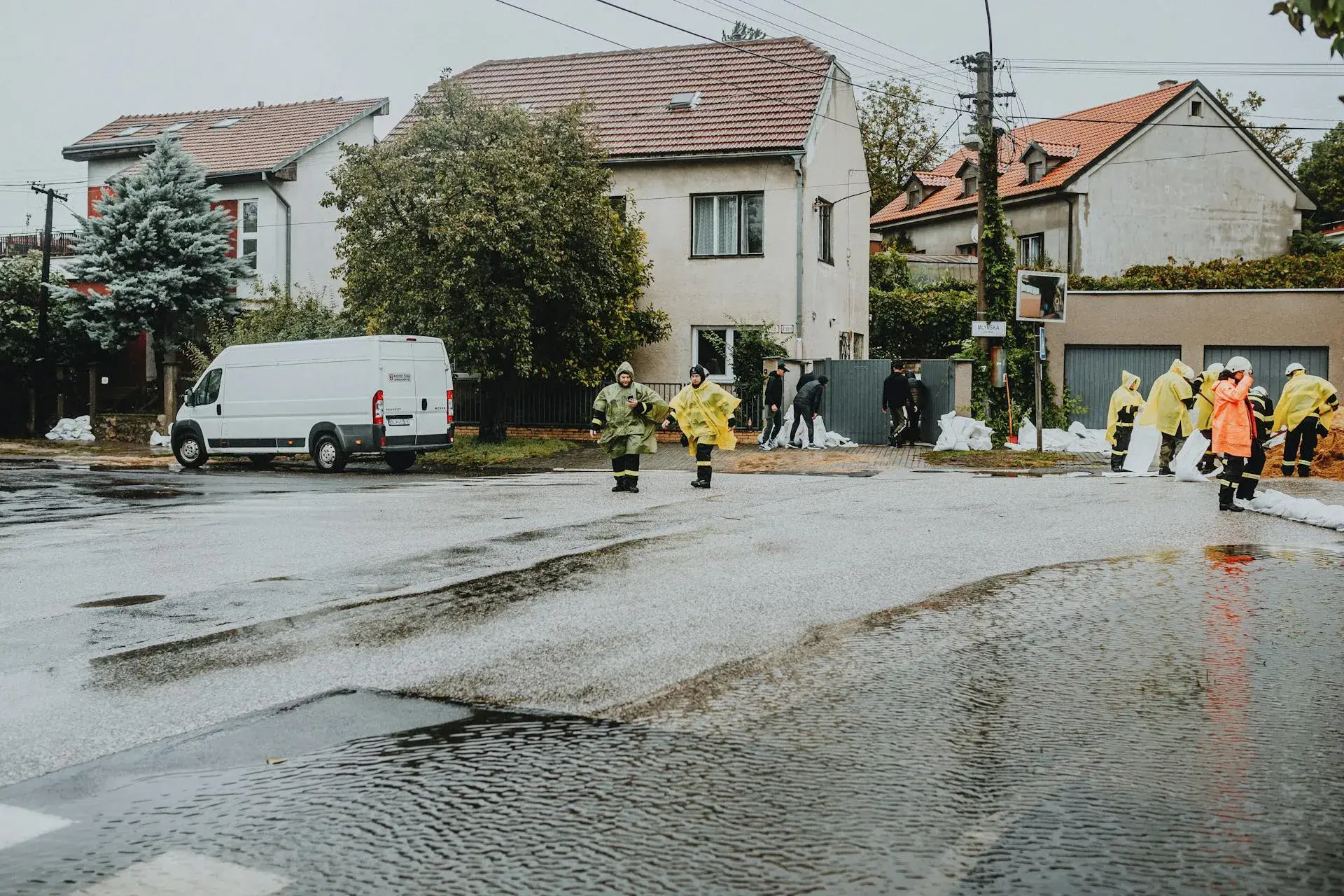
Sewage Cleanup in Lawrenceville, GA
Raw sewage contains severe viral and bacterial pathogens that saturate framing within hours. Our Lawrenceville biohazard team mobilizes within 60 minutes.
What Happens When You Call
A live biohazard coordinator answers your call 24/7 and immediately dispatches our certified Gwinnett County sewage extraction team.
Our crew arrives on site within 60 minutes with truck-mounted black water extractors, HEPA air scrubbers, and hospital-grade biocides.
We extract raw wastewater, contain airborne bio-aerosols, and safely remove all contaminated porous materials under sealed containment.
Structural surfaces are treated with EPA-registered disinfectants, dried with industrial dehumidifiers, and verified safe with ATP hygiene testing.
A sewage backup in your Lawrenceville home or commercial building is a hazardous biohazard emergency that demands immediate, specialized containment and professional decontamination. Raw sewage is classified as Category 3 black water, carrying dangerous biological pathogens including E. coli, Salmonella, Norovirus, and parasitic organisms. Beyond severe health risks, sewage water rapidly saturates porous building materials, contaminating subfloors, drywall, and structural framing. X Response provides 24/7 certified sewage cleanup and decontamination across central Gwinnett County. Our biohazard crews arrive within 60 minutes in full personal protective equipment to extract raw wastewater, safely remove contaminated materials, and perform hospital-grade sanitization. Call now for 24/7 sewage cleanup in Lawrenceville.
Why Lawrenceville Homes Are Vulnerable to Sewage
Lawrenceville's municipal wastewater collection is integrated with regional infrastructure managed by the Gwinnett County Department of Water Resources and City of Lawrenceville utilities, conveying sewage across rolling Piedmont topography toward treatment facilities like the Yellow River Water Reclamation Facility. The city's sewer network encompasses a combination of older vitrified clay and cast-iron collection mains in historic downtown neighborhoods alongside modern PVC mains in newer suburban subdivisions along SR 316, SR 20 (Buford Drive), and Scenic Highway. During North Georgia's severe convective thunderstorm season, intense stormwater inflow and infiltration (I&I) inundates municipal sewer lines. In low-lying subdivisions and hollows near Pew Creek and Redland Creek, surcharged sewer mains generate intense hydrostatic pressure, forcing raw sewage backwards through municipal lateral lines and overflowing residential basement floor drains, showers, and toilets.
The U.S. Environmental Protection Agency estimates that between 23,000 and 75,000 sanitary sewer overflows occur annually nationwide, releasing raw wastewater and dangerous biological contaminants that threaten public health when lines back up into residential properties. In Lawrenceville, residential sewage backups also frequently occur due to extensive tree root intrusion from mature hardwoods into aging private lateral lines, as well as fats, oils, and grease (FOG) accumulation from nearby commercial corridors. Because Category 3 black water contains dangerous concentrations of bacteria, viruses, and endotoxins, standard cleaning methods are inadequate. Total decontamination requires strict biohazard isolation, disposal of saturated porous substrates, and scientific application of broad-spectrum hospital-grade antimicrobials.
Stormwater Inflow and Infiltration in Surcharged Mains
Heavy rainfall events in central Gwinnett County routinely deliver 2 to 4 inches of rain in a single afternoon. Stormwater enters aging sewer mains through cracked pipes, damaged manhole covers, and illegal downspout connections. When municipal gravity mains exceed hydraulic capacity, the surcharged lines back up into the lowest plumbing fixtures of nearby Lawrenceville daylight basements.
Mature Tree Root Infiltration in Older Lateral Lines
Established neighborhoods in Lawrenceville feature extensive mature oak, pine, and maple tree canopies. Tree roots aggressively seek moisture and nutrients, penetrating tiny joint gaps in older clay and cast-iron residential sewer lines. Over time, root balls expand inside the pipe, trapping solid waste and causing sudden, catastrophic sewage overflows into finished lower levels.
Commercial Corridor Grease Blockages and Line Chokepoints
Lawrenceville's dense commercial corridors along SR 120, SR 316, and Buford Drive generate significant municipal wastewater volumes. When fats, oils, and grease (FOG) enter the sewer system, they solidify against interior pipe walls, creating downstream chokepoints that trigger unexpected sewer main backups in adjacent residential neighborhoods.
Porous Material Contamination and Pathogen Absorption
When black water overflows into a home, porous materials like drywall, carpet padding, baseboards, and fiberglass insulation act as sponges, absorbing wastewater and dangerous micro-organisms. Because pathogens penetrate deep into the material matrix, these contaminated items cannot be safely disinfected and must be safely removed and disposed of as biohazardous waste.
Bio-Aerosol Generation and Cross-Contamination Hazards
As raw sewage flows across hard surfaces or splashing occurs during a backup, microscopic bio-aerosols containing bacteria and endotoxins become airborne. Central HVAC systems quickly circulate these pathogens to unaffected living spaces, creating significant inhalation risks for building occupants unless physical plastic containment and HEPA negative air machines are established immediately.
Sewage cleanup in Lawrenceville requires certified biohazard technicians, industrial extraction systems, and hospital-grade disinfection protocols. X Response delivers rapid, safe Category 3 water mitigation strictly following IICRC S500 and IICRC S520 standards across central Gwinnett County.
What Happens to Your Home While You Wait
Within 1 Hour
Raw sewage covers floors, wicking into porous drywall, carpet padding, and wood baseboards. Dangerous bacteria and viral pathogens begin multiplying exponentially in the warm indoor environment, while bio-aerosols spread foul odors through central air ducts.
1-24 Hours
Black water penetrates deeply into structural subfloors and framing timber. Porous building materials become saturated with toxic bacteria, endotoxins, and organic waste. Pathogenic bacteria off-gas noxious hydrogen sulfide and methane vapors.
24-48 Hours
Microbial and fungal colonization accelerates across contaminated building assemblies. Subfloor wood begins swelling and delaminating. Saturated drywall softens, losing structural strength and creating severe indoor environmental hazards.
48-72 Hours
Extensive fungal colonies develop alongside bacterial contamination. Pathogens penetrate deep into concrete slab pores and floor joists. Unsalvaged porous materials suffer permanent structural and biological degradation.
One Week and Beyond
Severe biohazard contamination and structural decay. Framing timbers suffer deep dry rot from bacterial and fungal action. Indoor air becomes hazardous to human health, requiring full whole-house biohazard remediation, subfloor replacement, and structural rebuild.
Do not attempt to clean raw sewage with household tools. Contact X Response immediately. Our Lawrenceville biohazard team responds within 60 minutes.
How We Restore Sewage-Damaged Lawrenceville Homes
Our IICRC-certified sewage cleanup protocol ensures rapid biohazard extraction, safe disposal of contaminated substrates, hospital-grade sanitization, and verified hygiene testing across Lawrenceville.
Emergency Biohazard Containment and Safety Assessment
Our technicians arrive in full personal protective equipment (PPE), isolate the contaminated area with 6-mil plastic barriers, and establish negative air pressure with HEPA filtration to prevent toxic bio-aerosols from spreading into clean living areas.
Industrial Black Water Extraction
We deploy powerful truck-mounted extraction equipment and specialized waste pumps to remove all standing raw sewage, liquid effluent, and solid waste directly into secure holding tanks for legal, compliant disposal.
Safe Demolition and Porous Material Removal
All non-salvageable porous items (carpet, underlayment, contaminated drywall cut to 2 feet above the water line, and wet insulation) are carefully removed, sealed in heavy-duty biohazard bags, and transported to an authorized disposal facility.
Hospital-Grade Antimicrobial Sanitization and Pressure Cleaning
All remaining hard surfaces, concrete slabs, and structural framing timbers are detailed using multi-stage hot-water extraction, mechanical scrubbing, and EPA-registered hospital-grade botanical disinfectants that neutralize bacteria, viruses, and fungi.
Structural Drying, HEPA Filtration, and Hygiene Verification
We install industrial low-grain refrigerant (LGR) dehumidifiers and high-velocity air movers to dry framing to certified moisture standards. We conduct ATP (adenosine triphosphate) bioluminescence testing to scientifically verify that all surfaces are clean and sanitary before taking down containment.
The X Response Difference
Protect your family's health with certified, scientific biohazard sewage cleanup. Call X Response today.
Insurance Claim Guidance for Lawrenceville Homeowners
Sewage backup insurance claims in Georgia require specific policy language and precise documentation. Standard Georgia homeowner insurance policies typically exclude sewer and drain backups unless the policyholder has added a specific Water Backup of Sewers and Drains endorsement. When coverage is in place, carriers require detailed proof of the backup source (differentiating between external municipal sewer lines and internal plumbing failures), photographic evidence of all affected building materials, and complete disposal manifests for biohazardous items. X Response provides complete forensic documentation to assist policyholders and adjusters during claim processing.
How X Response Helps
- Document the exact origin of sewage intrusion with high-resolution photos and diagnostic plumbing assessments
- Itemize all biohazard extraction, containment, and structural demolition according to standard insurance pricing databases
- Coordinate directly with your insurance adjuster to verify coverage under your policy's water backup endorsement
- Provide detailed disposal manifests and psychrometric drying logs to validate all mitigation line items
- Deliver ATP surface testing verification proving that the property has been restored to safe, sanitary living standards
X Response does not adjust insurance claims or make legal coverage determinations. We provide scientific forensic documentation, biohazard remediation logs, and itemized billing to assist property owners and insurance providers.
Certified Restoration Specialists Serving Lawrenceville
Our Lawrenceville sewage cleanup specialists are dedicated biohazard remediation professionals serving central Gwinnett County. Trained in infectious disease containment, hazardous waste handling, and structural decontamination, our team has successfully resolved severe black water backups in historic homes, multi-story suburban properties, and commercial facilities.
Every crew leader holds advanced certification from the IICRC in Water Damage Restoration (WRT) and Applied Microbial Remediation (AMRT). Equipped with commercial truck-mounted extractors, negative air machines, hospital-grade biocides, and ATP testing units, our team restores biohazard-damaged properties to completely clean and sanitary standards.
In Lawrenceville, X Response works with Atlanta's Best Restoration, an independent local restoration partner serving Gwinnett County.
Sewage Cleanup FAQ for Lawrenceville Homeowners
Other Emergency Services in Lawrenceville

Water Damage Restoration
Burst pipes, storm flooding, standing water. We extract, dry, and restore before mold sets in.
Learn more
Fire Damage Restoration
Structural damage, soot, debris. We stabilize, clean, and rebuild what fire destroyed.
Learn more
Smoke Damage Restoration
Soot residue, chemical odors, HVAC contamination. We decontaminate surfaces, eliminate odors, and restore air quality.
Learn more
Mold Remediation
Testing, containment, removal, prevention. We find the source, eliminate the growth, and stop it from returning.
Learn more