
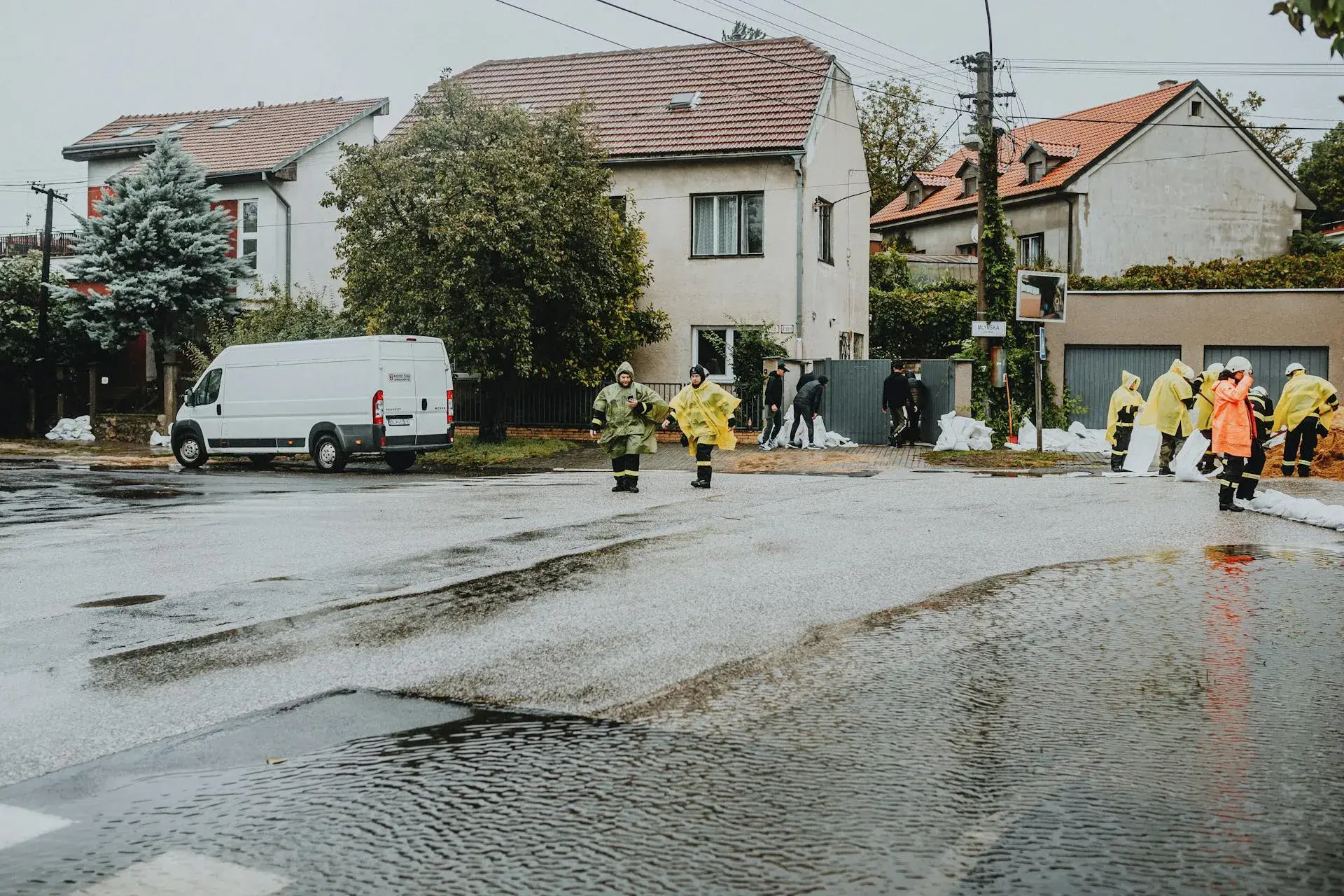
Sewage Cleanup in Johns Creek, GA
Sewage contamination is a Category 3 biohazard that becomes more dangerous with every hour of exposure. Our local team responds to Johns Creek sewage emergencies within 60 minutes.
What Happens When You Call
A real person answers, not a call center. We assess your situation, determine the contamination scope, and begin coordinating your emergency response immediately.
Your dedicated restoration team is dispatched from our local base serving Johns Creek and the surrounding Fulton County communities with specialized sewage extraction and sanitization equipment.
Team arrives in full PPE with sewage-rated extraction equipment, antimicrobial compounds, and containment materials. Contamination removal and sanitization begins immediately.
Sewage extracted, contaminated materials removed, antimicrobial treatment applied, structural drying initiated. You know exactly what comes next and your property is safe to re-enter.
Raw sewage in your home or business is not a maintenance problem you can schedule. It is a biohazard that demands immediate professional response. Every hour sewage remains in contact with building materials, it introduces pathogens deeper into porous surfaces, contaminates more of the structure, and increases the health risk to anyone in the building. X Response provides emergency sewage cleanup that removes the contamination, sanitizes the affected areas, and restores your property to a safe, habitable condition. Call now. Your team is standing by.
Why Johns Creek Homes Are Vulnerable to Sewage
Johns Creek's sewage infrastructure operates under a dual system that creates distinct backup risks depending on which part of the city a property sits in. The municipal sewer system is owned and operated by Fulton County (not the city itself), with wastewater flowing to the Johns Creek Environmental Campus, a $158 million membrane bioreactor facility built in 2009 on Holcomb Bridge Road. At the time of its opening, it was the largest MBR plant in the United States, treating up to 15 million gallons per day for approximately 150,000 people across Johns Creek, Alpharetta, Roswell, and Sandy Springs. In June 2026, Fulton County awarded a new $150 million five-year operations and maintenance contract to the Inframark-Slater joint venture, starting September 2026, to manage the JCEC and 28 pump stations throughout the North Fulton service area. That pump station network is where the residential risk concentrates: when a pump station fails, loses power during a storm, or is overwhelmed by stormwater infiltration into the sewer lines, raw sewage can back up through the collection system and into homes and businesses connected to that section of the network.
Separately, the city's stormwater division identifies that a portion of Johns Creek properties, particularly in older areas that predate the sewer system's extension into northeastern Fulton County, still rely on septic systems rather than municipal sewer. The city places responsibility for maintaining, repairing, and replacing septic system components squarely on the property owner, and warns that poorly functioning or failing septic systems can be a source of water pollution that leaks sewage into the stormwater system and is carried into rivers, lakes, and streams. For homeowners on septic, the backup risk is localized: an overloaded drain field, a failed pump in a low-pressure system, or a tank that has exceeded its pumping interval can push raw sewage back into the home through floor drains, toilets, and shower drains at the lowest plumbing point. Johns Creek's Piedmont clay soil complicates septic performance because the clay does not percolate well, reducing drain field efficiency and causing systems to fail sooner under heavy use or saturated ground conditions.
Fulton County Pump Station Failures
Johns Creek's municipal sewer collection system includes 28 pump stations in the North Fulton service area that lift sewage from low points in the collection network to higher elevations for gravity flow toward the treatment plant. These mechanical lift stations are single points of failure: when a pump fails, loses power, or is overwhelmed by volume, the sewage has nowhere to go except back into the collection lines feeding that station. During heavy rain events, stormwater can infiltrate the sanitary sewer system through cracked pipes, failed joints, and illicit connections, dramatically increasing the volume beyond the pump station's design capacity. When the station cannot keep up, sewage backs up through the lowest connected fixtures in nearby homes, typically floor drains, basement toilets, and ground-level shower drains. Properties at elevations below the pump station are most vulnerable because gravity works against them.
Septic System Failures on Clay Soil
Properties in Johns Creek that predate the extension of municipal sewer service rely on septic systems for wastewater treatment. The system depends on a drain field that disperses treated effluent into the surrounding soil for final filtration. On Johns Creek's Piedmont clay, that dispersal is inherently limited because clay percolates slowly. During wet seasons when the clay is saturated from heavy rain, the drain field's capacity drops further because the soil cannot accept additional liquid. When the drain field fails, untreated or partially treated sewage has nowhere to go: it surfaces in the yard, pools around the tank, or backs up through the plumbing into the home. The city warns property owners that they bear full responsibility for maintaining their septic systems, but many homeowners in older subdivisions have inherited systems that were sized for smaller homes and lower occupancy than the property currently supports.
Stormwater Infiltration During Heavy Rain
Johns Creek's aging sewer collection infrastructure, much of it installed during the 1980s and 1990s when the area was still unincorporated Fulton County, is susceptible to inflow and infiltration during heavy rain events. Cracked pipe joints, deteriorated manholes, and connections that have shifted as the clay soil expands and contracts over decades allow stormwater to enter the sanitary sewer system. During the intense summer thunderstorms North Georgia receives, this infiltration can multiply the volume in the collection system beyond its hydraulic capacity. The result is sewage backing up through low-point fixtures in homes or overflowing from manholes into streets, yards, and stormwater drainage that flows toward the creek system. Homes at the lowest elevations in a subdivision's sewer service area bear the brunt of these surcharge events because the backed-up sewage finds the path of least resistance, which is the lowest connected plumbing fixture.
Tree Root Intrusion in Residential Laterals
The sewer lateral, the pipe connecting a home to the Fulton County collection main, is the homeowner's responsibility to maintain in Georgia. Johns Creek's mature subdivisions, planted with large hardwood trees 25 to 40 years ago, now have root systems that actively seek the moisture in sewer lines. Roots enter through joints, cracks, and connection points in the lateral, particularly where clay pipe (common in 1980s construction) meets newer PVC at a repair or extension. Over time, roots grow inside the pipe and create blockages that catch solids and eventually produce a complete obstruction. When the lateral is fully blocked, sewage has nowhere to go except back into the home through the lowest fixture. The backup is sudden, often occurring without warning during heavy household use when the partially obstructed pipe is overwhelmed, and the resulting contamination is raw sewage that has been sitting in the blocked lateral.
Category 3 Contamination and Health Risk
All sewage backup events produce Category 3 (black water) contamination regardless of the source, whether a pump station failure, septic backup, lateral blockage, or sewer main surcharge. Category 3 water contains active pathogens including bacteria, viruses, parasites, and other organisms that pose immediate health risks to occupants. In Johns Creek's warm climate, pathogen activity accelerates compared to colder regions, meaning the contamination risk from sewage contact with building materials increases faster in summer months. Porous materials that contact Category 3 water, including carpet and pad, drywall below the flood line, insulation, particleboard, and unsealed wood, cannot be sanitized and must be removed. The longer sewage remains in contact with building materials, the more material must be removed and the deeper the contamination penetrates into structural assemblies that are more difficult and expensive to remediate.
These factors create a sewage risk environment specific to Johns Creek: a pump-station-dependent county sewer system serving tens of thousands of homes, aging collection infrastructure susceptible to stormwater infiltration during the heavy thunderstorms North Georgia receives, legacy septic systems on clay soil in older areas, and mature trees whose root systems actively penetrate residential sewer laterals. When a backup occurs, the contamination is immediately Category 3 biohazardous regardless of the cause, and Johns Creek's warm climate accelerates pathogen activity in affected materials. Effective sewage cleanup here requires immediate response to limit the contact time between raw sewage and building materials, complete removal of all contaminated porous materials, professional antimicrobial treatment of structural surfaces, and thorough drying to prevent secondary mold growth in the affected area.
What Happens to Your Home While You Wait
Within 1 Hour
Raw sewage spreads across flooring, saturates carpet and pad, and begins wicking into drywall and baseboards. Pathogens in Category 3 water are active and multiplying in Johns Creek's warm environment. Every porous material the sewage contacts becomes contaminated and will require removal. The contamination zone expands with every minute the sewage remains unaddressed. Health risk to occupants is immediate.
1–24 Hours
Sewage wicks deeper into wall cavities, beneath flooring assemblies, and into subfloor and framing materials. Drywall absorbs contaminated water upward well above the visible water line. The separation between salvageable and unsalvageable material moves higher up the walls and deeper into the structure with every hour. Bacterial activity intensifies in the warm, nutrient-rich environment. Airborne pathogen levels rise as contaminated materials off-gas. The structure becomes increasingly unsafe for unprotected occupancy.
24–48 Hours
Pathogenic contamination has penetrated deeply into all contacted materials. Salvage possibilities for any porous material below the contamination line are essentially zero. Mold begins colonizing in areas where sewage-saturated materials remain damp, compounding the biological hazard. Odor becomes severe and permeates soft furnishings, clothing, and materials in rooms above or adjacent to the affected area. Structural wood in contact with sewage begins absorbing contamination into the grain.
48–72 Hours
Mold growth accelerates on contaminated organic materials. The combination of sewage pathogens and active mold creates a compounded biological hazard that significantly increases remediation scope. Contamination has migrated into HVAC ductwork if the system ran during the event. Subfloor assemblies may require replacement rather than cleaning. The restoration project now includes both sewage remediation and mold remediation as parallel requirements.
One Week and Beyond
Extensive biological contamination throughout the affected area. Structural wood shows bacterial degradation at grain level. Mold growth is established and producing spores that distribute beyond the original contamination zone. The home or affected area may be condemned as uninhabitable until full remediation is complete. Restoration becomes a major project involving extensive demolition, antimicrobial treatment of all retained structural surfaces, complete drying, mold remediation, and full rebuild of the affected area.
Sewage contamination is the most time-critical restoration scenario because every hour increases both the health risk and the scope of required work. Contact X Response now. Our Johns Creek team responds within 60 minutes with full sewage extraction and sanitization capability.
How We Restore Sewage-Damaged Johns Creek Homes
Sewage cleanup follows strict protocols because of the biohazardous nature of the contamination. From the moment our team arrives, every step prioritizes safety and thoroughness over speed. Here is exactly what professional sewage cleanup involves for Johns Creek properties.
Safety Assessment and Contamination Mapping
Our team arrives in full personal protective equipment and immediately assesses the contamination extent. We identify the sewage source (pump station backup, septic failure, lateral blockage, or main-line surcharge), map the contamination boundary including areas where sewage has wicked into wall cavities and beneath flooring, and determine whether the source has been stopped or is still active. If sewage is still entering the structure, we coordinate with Fulton County utilities or address the septic or lateral issue to stop the inflow before cleanup begins. Occupants are advised to stay clear of contaminated areas until the space is sanitized and cleared. The contamination map guides every subsequent step: what must be removed, what can be treated in place, and where antimicrobial application is required.
Sewage Extraction and Contaminated Material Removal
All standing sewage is extracted using specialized pumps and extractors rated for contaminated water. In Johns Creek homes with crawl spaces, that means extracting from beneath the structure where sewage may have pooled against the clay subgrade. Once standing liquid is removed, we cut away and bag all contaminated porous materials: carpet and pad, drywall below the contamination line (typically cut 12 to 18 inches above the visible water mark to account for wicking), insulation, particleboard, and any organic material that absorbed Category 3 water. These materials are double-bagged, sealed, and removed from the structure immediately. Structural wood that contacted sewage (floor joists, sill plates, studs below the cut line) is retained for treatment because replacement would require structural engineering involvement.
Antimicrobial Treatment and Sanitization
Every retained surface that contacted sewage or was within the contamination zone receives professional antimicrobial treatment using EPA-registered compounds rated for Category 3 biological contamination. In crawl spaces, that includes floor joists, rim joists, sill plates, and foundation walls. For main-level contamination, it includes wall studs, bottom plates, subfloor surfaces, and any structural member exposed by material removal. Treatment is applied thoroughly, with full surface coverage confirmed visually. The antimicrobial compounds used are specifically rated for the bacterial and viral pathogens present in raw sewage, not general-purpose disinfectants. We treat generously because the consequence of insufficient coverage is pathogen survival in concealed areas that will be enclosed behind new drywall.
Structural Drying
After extraction and antimicrobial treatment, affected structural materials must be dried to prevent mold growth and ensure that the treatment compounds have maximum contact time at effective concentrations. We position commercial dehumidifiers and air movers in a calculated pattern, the same approach used for water damage drying but with the additional requirement that HEPA filtration remains in place to prevent airborne pathogen distribution during the drying phase. Johns Creek's humid climate makes mechanical drying essential. We monitor moisture levels daily and reposition equipment as needed until all retained structural materials reach their dry standard. Only then can reconstruction begin on a clean, dry, sanitized substrate.
Verification and Clearance
Before reconstruction begins, our team conducts a final inspection verifying that all contaminated materials have been removed, all retained surfaces have been treated, and moisture readings confirm complete drying. For severe contamination events, ATP (adenosine triphosphate) surface testing can verify that biological activity on treated surfaces has dropped to acceptable levels. You receive completion documentation including the contamination map, removal scope, treatment records, moisture readings, and before-and-after photos. This record supports your insurance claim and confirms that the affected area is safe for reconstruction and occupancy.
The X Response Difference
When you contact X Response for a sewage emergency in Johns Creek, you get a team that treats the event as a biohazard requiring immediate, thorough, documented remediation, not a plumbing inconvenience to be mopped up. Extraction, removal, antimicrobial treatment, drying, and verification, all from one team with one standard of work.
Insurance Claim Guidance for Johns Creek Homeowners
Sewage backup coverage in Georgia homeowner's policies requires specific attention. Standard policies typically exclude damage from sewer and drain backup unless the homeowner has purchased a specific endorsement (often called 'sewer backup' or 'water backup' coverage). This endorsement is not included by default and often carries its own sublimit, commonly $5,000 to $25,000, separate from the dwelling coverage limit. For Johns Creek homeowners on municipal sewer, a backup caused by a Fulton County pump station failure or main-line surcharge would fall under this endorsement. For homeowners on septic systems, coverage for septic backup is even less consistent and may be excluded entirely as a maintenance-related failure. The distinction between covered sewer backup and excluded groundwater intrusion becomes critical during heavy rain events when the backup was caused by stormwater overwhelming the system.
How X Response Helps
- Identify and document the backup source with professional evidence: pump station failure, lateral blockage, septic failure, or main-line surcharge
- Photograph the contamination extent before any removal begins to establish the full scope for the adjuster
- Document the contamination line on walls and materials to support the scope of removal above the visible water mark
- Provide a detailed scope of work that separates extraction, removal, treatment, and drying phases for clear cost allocation
- Explain the distinction between covered sewer backup and potentially excluded groundwater intrusion before you file
X Response does not file claims on your behalf, adjust claims, or make coverage determinations. We provide documentation and guidance to help you make informed decisions about your property and your policy. Coverage decisions are made solely by your insurance carrier.
Certified Restoration Specialists Serving Johns Creek
When you contact X Response for a sewage emergency in Johns Creek, your restoration team is drawn from certified professionals who work across Fulton County and understand the specific sewage risks this community faces. They know how the Fulton County pump station network behaves during heavy rain when stormwater infiltrates the collection system. They know which older neighborhoods are still on septic and how the clay soil affects drain field performance. They have responded to lateral blockages in mature subdivisions where decades of root growth finally produced a complete obstruction, and to pump station surcharges after summer thunderstorms overwhelmed the collection system. This is not a general cleaning crew with a shop-vac. It is a team trained specifically in biohazard remediation with the equipment, PPE, and protocols required to handle Category 3 contamination safely and thoroughly.
Every technician on your team holds current IICRC certification in water damage restoration with specific training in contaminated water categories, and carries the appropriate Georgia state licensing for the work being performed. Equipment includes sewage-rated extraction units, full PPE for biohazard environments, EPA-registered antimicrobial compounds rated for Category 3 pathogens, HEPA air filtration for airborne pathogen control, commercial dehumidifiers for structural drying, and the documentation tools to build your insurance file from the first hour on site.
In Johns Creek, X Response works with Atlanta's Best Restoration, an independent local restoration partner serving Fulton County.
Sewage Cleanup FAQ for Johns Creek Homeowners
Other Emergency Services in Johns Creek

Water Damage Restoration
Burst pipes, storm flooding, standing water. We extract, dry, and restore before mold sets in.
Learn more
Fire Damage Restoration
Structural damage, soot, debris. We stabilize, clean, and rebuild what fire destroyed.
Learn more
Smoke Damage Restoration
Soot residue, chemical odors, HVAC contamination. We decontaminate surfaces, eliminate odors, and restore air quality.
Learn more
Mold Remediation
Testing, containment, removal, prevention. We find the source, eliminate the growth, and stop it from returning.
Learn more