
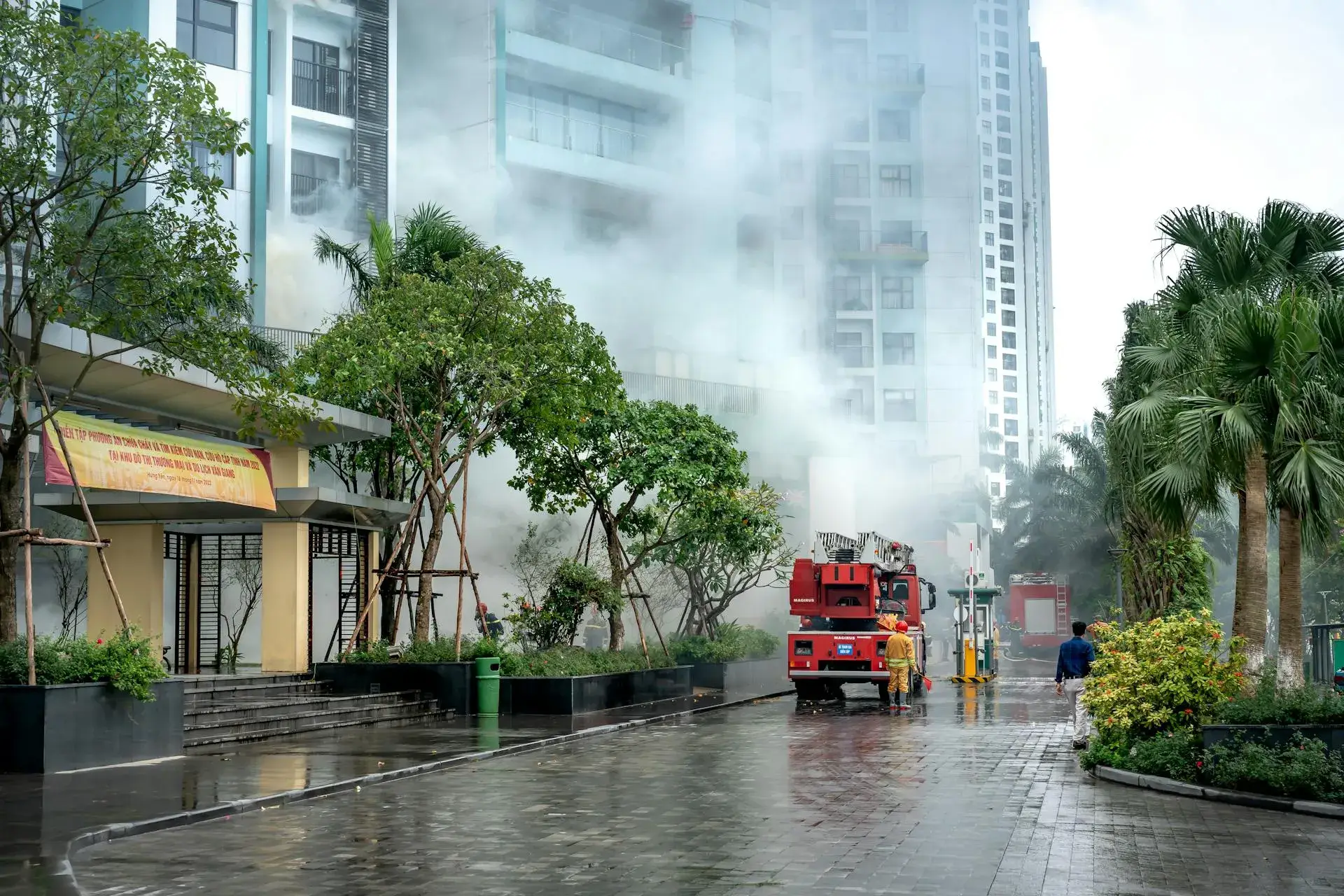
Smoke Damage Restoration in Lawrenceville, GA
Microscopic soot particles penetrate deep into porous drywall, upholstery, and ductwork within hours. Our Lawrenceville smoke recovery specialists respond within 60 minutes.
What Happens When You Call
A live smoke recovery specialist answers your call 24/7 and dispatches our certified Gwinnett County odor and soot mitigation team.
Technicians arrive within 60 minutes to inspect air handlers, test soot acidity, and establish negative air filtration zones.
All affected surfaces are detailed using specialized chemical sponges, HEPA vacuuming, and targeted soot-neutralizing solutions.
We decontaminate HVAC ductwork, deploy thermal fogging and hydroxyl generators, and verify total odor elimination.
Smoke and soot from a structural fire, kitchen cooking flare-up, or furnace puffback present an immediate threat to indoor air quality, structural surfaces, and respiratory health in your Lawrenceville property. Driven by intense thermal pressure, microscopic carbon particles and volatile chemical vapors penetrate deep into porous drywall, attic insulation, and central HVAC ductwork. Standard surface cleaning only smears oily residues and fails to neutralize embedded odor compounds. X Response delivers certified, scientific smoke remediation across central Gwinnett County. Our certified technicians arrive within the hour to decontaminate surfaces, cleanse air distribution systems, and eliminate noxious odors at the molecular level. Call now for expert smoke damage restoration in Lawrenceville.
Why Lawrenceville Homes Are Vulnerable to Smoke Damage
Lawrenceville features a wide diversity of residential architecture, from historic homes near the downtown square to sprawling two-story suburban neighborhoods flanking SR 316, Sugarloaf Parkway, Five Forks Trickum Road, and Scenic Highway. In modern multi-level Lawrenceville residences, central heating and air conditioning systems heavily influence how smoke spreads during a combustion event. Air handlers and extensive flexible duct networks located in unconditioned attics or crawl spaces quickly draw in airborne soot particles when return vents pull in smoke from a localized kitchen fire, electrical fault, or fireplace backdraft. Within minutes, the forced-air HVAC system circulates microscopic carbon black, polycyclic aromatic hydrocarbons, and acrid smoke vapors into every bedroom and living space across multiple floors.
The U.S. Environmental Protection Agency reports that particulate matter from combustion sources includes inhalable particles ten micrometers in diameter or smaller that penetrate deep into building cavities and HVAC systems, requiring specialized air filtration and surface decontamination to restore indoor air quality. In Lawrenceville homes, fine particulate soot settles into porous drywall, carpet fibers, acoustic ceiling tiles, and upholstered furniture. Because smoke residues from modern synthetic materials are chemically acidic, delaying professional decontamination leads to permanent discoloration of painted drywall, corrosion of metallic fixtures, and persistent toxic off-gassing that triggers respiratory irritation in occupants.
Central HVAC Distribution and Ductwork Contamination
Most suburban residences in Lawrenceville utilize split-system heat pumps or gas furnaces with central ductwork connecting all rooms. When a fire or heavy smoke incident occurs, the HVAC blower pulls combustion gases into the return plenum, coating the interior of flexible ducts, blower wheels, and evaporator coils with oily soot. Every subsequent system cycle circulates toxic particulate matter throughout the home until complete duct decontamination is performed.
Distinct Soot Chemistries and Material Interactions
Smoke damage in Lawrenceville properties involves distinct soot classifications that require specialized cleaning chemistry. Protein soot from kitchen grease fires leaves an invisible, intensely odorous film on cabinetry. Synthetic soot from burned electronics and plastics produces thick, smeary black residue that corrodes metals. Dry soot from wood-burning fireplaces creates powdery deposits across ceilings. Using improper cleaning agents drives soot deeper into porous substrates.
Thermal Pressure and Cavity Penetration
During a fire, heat generates intense positive pressure that pushes smoke molecules into cold exterior wall cavities, electrical outlets, subflooring gaps, and attic insulation. As the structure cools, these microscopic particles become trapped within building cavities, continuously releasing acrid smoke odors whenever indoor temperature or humidity rises during North Georgia summers.
Porous Material Adsorption and Chemical Off-Gassing
Drywall, unsealed timber, carpets, and soft furnishings readily absorb volatile organic compounds and gaseous combustion byproducts. Without molecular neutralization, these materials act as secondary sources of smoke odor, off-gassing hazardous compounds for months and degrading indoor air quality long after visible soot is cleaned.
Indoor Air Quality Health Risks in Gwinnett County
Combustion particulate matter smaller than 2.5 micrometers (PM2.5) bypasses the body's natural respiratory defenses, penetrating deep into the lungs. In closed, energy-efficient suburban Lawrenceville homes, trapped airborne soot presents ongoing respiratory hazards for children, the elderly, and individuals with asthma, requiring medical-grade HEPA air scrubbing.
Effective smoke damage restoration in Lawrenceville requires advanced chemical knowledge, industrial HEPA filtration, and molecular odor neutralization. X Response delivers comprehensive soot removal, duct decontamination, and structural deodorization engineered specifically for Gwinnett County residences and commercial facilities.
What Happens to Your Home While You Wait
Within Minutes
Hot smoke rises and spreads into adjacent rooms and upper stories. Microscopic carbon particles settle onto horizontal surfaces, while acidic vapors begin penetrating porous plastics, unsealed woodwork, and synthetic fabrics.
1-24 Hours
Acidic soot residues begin chemically reacting with household surfaces. Yellowing occurs on painted drywall, fiberglass bathtubs, and vinyl window frames. Unprotected metal fixtures and kitchen appliances begin tarnishing and pitting.
24-48 Hours
Corrosion deepens across metallic finishes, electrical contacts, and electronics. Etching on glass mirrors and windows becomes permanent if soot is not neutralized. Smoke odors penetrate deeply into structural wall framing and subfloors.
48-72 Hours
Porous fabrics, carpets, and upholstery become permanently stained and discolored. Wood furniture finishes blister and absorb chemical smoke oils. Soot embedded in HVAC ductwork creates severe, whole-house indoor air contamination.
One Week and Beyond
Severe, permanent structural contamination. Drywall and ceiling assemblies require complete removal. Embedded smoke odors become permanent without industrial thermal fogging and whole-house hydroxyl treatments.
Act quickly to neutralize acidic soot and protect your property's air quality. Contact X Response immediately. Our Lawrenceville smoke restoration specialists respond within 60 minutes.
How We Restore Smoke-Damaged Lawrenceville Homes
Our IICRC-certified smoke restoration protocol follows rigorous scientific procedures to remove soot deposits, clean HVAC distribution systems, and eliminate smoke odors permanently across Lawrenceville.
Comprehensive Soot Assessment and Air Quality Diagnostics
Upon arrival at your Lawrenceville property, our certified technicians inspect the extent of smoke migration using particulate counters, chemical test wipes, and borescope cameras to evaluate ductwork and wall cavities. We identify the exact soot composition to select the correct cleaning chemistry.
Airborne Particulate Containment and HEPA Air Scrubbing
We establish critical containment zones and deploy industrial HEPA air scrubbers equipped with activated carbon and potassium permanganate filters. These multi-stage units continuously capture airborne PM2.5 particulates, toxic chemical vapors, and volatile organic compounds.
Targeted Surface Decontamination and Chemical Neutralization
Technicians clean all affected structural surfaces using specialized dry chemical sponges to lift loose soot without smearing. Washable surfaces are treated with proprietary alkaline soot removers and degreasers, followed by hot-water extraction on carpets and upholstery.
Full HVAC Ductwork and Air Handler Decontamination
Our team mechanically cleans and sanitizes your central heating and cooling system, removing soot from supply lines, return plenums, blower assemblies, and evaporator coils. We apply EPA-registered antimicrobial sealants to encapsulate any residual duct liner fibers.
Molecular Odor Elimination and Final Air Verification
We deploy industrial thermal foggers that pair vaporized deodorants with smoke particles at a microscopic level. For occupied properties, high-output hydroxyl generators break down odor molecules without chemical residues, ensuring complete and permanent odor elimination.
The X Response Difference
Eliminate toxic smoke residues and restore clean indoor air in your Lawrenceville home or business. Call X Response today.
Insurance Claim Guidance for Lawrenceville Homeowners
Navigating smoke damage insurance claims in Georgia requires meticulous documentation of both visible soot accumulation and hidden particulate contamination inside building assemblies. Most standard Georgia homeowner and commercial property insurance policies cover smoke damage resulting from accidental structural fires, kitchen mishaps, or external combustion events. However, insurance adjusters frequently underestimate the scope of smoke penetration, often omitting critical line items like HVAC duct decontamination, attic insulation replacement, and molecular deodorization. X Response provides comprehensive forensic documentation and air quality data to ensure your claim reflects the complete scope of remediation.
How X Response Helps
- Conduct thorough photographic documentation and chemical wipe testing to prove the presence of soot on all affected surfaces
- Document HVAC ductwork and air handler contamination with high-resolution borescope imagery
- Itemize all necessary surface cleaning, thermal fogging, and hydroxyl treatments using standard insurance estimating software
- Coordinate directly with your insurance adjuster on site to verify scope requirements and containment protocols
- Provide comprehensive completion certificates and indoor air quality verification reports for full claim settlement
X Response does not adjust insurance claims or make legal coverage determinations. We provide detailed forensic documentation, scope evaluations, and environmental testing data to assist property owners and insurance providers.
Certified Restoration Specialists Serving Lawrenceville
Our Lawrenceville smoke restoration technicians are dedicated indoor air quality and structural decontamination specialists serving central Gwinnett County. With extensive training in smoke chemistry, HVAC systems, and molecular deodorization, our crews successfully resolve complex smoke losses in historic downtown properties, modern multi-story residences, and commercial facilities.
Every crew leader holds professional certifications from the IICRC in Fire and Smoke Restoration (FSRT) and Odor Control (OCT). Supported by medical-grade HEPA air filtration equipment, thermal fogging systems, and hydroxyl generators, our team restores healthy indoor environments with precision and care.
In Lawrenceville, X Response works with Atlanta's Best Restoration, an independent local restoration partner serving Gwinnett County.
Smoke Damage Restoration FAQ for Lawrenceville Homeowners
Other Emergency Services in Lawrenceville

Water Damage Restoration
Burst pipes, storm flooding, standing water. We extract, dry, and restore before mold sets in.
Learn more
Fire Damage Restoration
Structural damage, soot, debris. We stabilize, clean, and rebuild what fire destroyed.
Learn more
Mold Remediation
Testing, containment, removal, prevention. We find the source, eliminate the growth, and stop it from returning.
Learn more
Sewage Cleanup
Sewer backups, contaminated water, biohazard. We extract, sanitize, and restore safely.
Learn more