
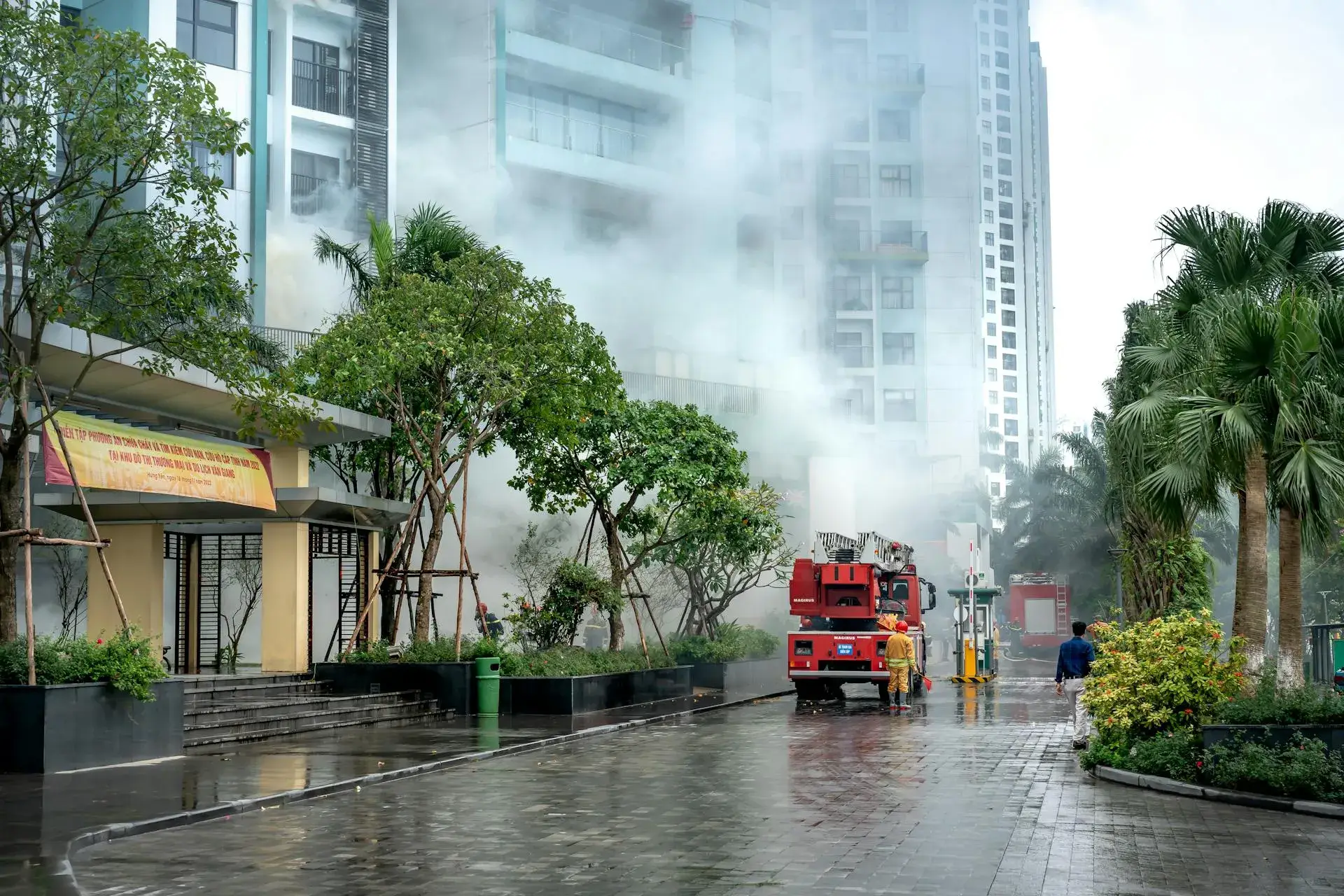
Smoke Damage Restoration in Gilbert, AZ
Smoke residue is acidic and corrosive. Every hour it sits on surfaces in Gilbert's heat, it bonds deeper into materials and becomes harder to remove. Our local team responds within 60 minutes.
What Happens When You Call
A real person answers, not a call center. We assess your situation, determine the smoke source and extent of contamination, and begin coordinating your response immediately.
Your dedicated restoration team is dispatched from our local base serving Gilbert and the surrounding East Valley communities in Maricopa County.
Team arrives with HEPA filtration, soot removal equipment, air quality monitoring tools, and odor treatment systems. Assessment and initial mitigation begin immediately.
Contamination mapped, critical surfaces protected, HVAC isolated, restoration plan documented. You know exactly what comes next.
Smoke has infiltrated your home. Whether from a structure fire, a neighboring property fire, or wildfire smoke during Arizona's extended fire season, the contamination is active and worsening. Soot particles are settling deeper into surfaces, odor compounds are bonding into porous materials, and your HVAC system may be distributing contamination to every room. X Response exists for exactly this moment. When you reach out, your restoration team is mobilized within minutes. From that point forward, one team manages everything: assessment, cleaning, decontamination, and odor elimination. Call now. Your team is standing by.
Why Gilbert Homes Are Vulnerable to Smoke Damage
Gilbert is a town of approximately 289,000 residents in Maricopa County, Arizona, situated in the East Valley where wildfire smoke, haboob-carried particulates, and neighbor-fire events create recurring residential smoke damage risk. The Arizona Department of Forestry and Fire Management documented 2,162 wildland fires burning more than 280,000 acres across state, federal, and tribal lands in 2024, with over 1,400 of those fires determined to be human-caused. Gilbert's southeastern boundary approaches the San Tan Mountains and undeveloped desert terrain where invasive grasses create continuous fuel beds that carry fire rapidly during the dry pre-monsoon season. When wildland fires burn in this corridor or in the Tonto National Forest to the northeast, prevailing winds carry smoke directly into Gilbert's residential neighborhoods, depositing fine particulates on surfaces, inside ductwork, and within soft materials throughout homes.
The September 2025 monsoon season brought a major haboob that hit the East Valley, with about 1.6 inches of rain falling in central Mesa while Gilbert, Scottsdale, and surrounding communities experienced dust walls and heavy storm activity. Haboob dust storms, which are a regular monsoon-season occurrence, carry not only mineral particulates but combustion residues from agricultural burns, vehicle exhaust deposits, and previous fire events accumulated on desert soils. These storms force fine particles through every gap in the building envelope under extreme pressure differentials. Post-storm, Gilbert homes show fine particulate films on surfaces throughout the interior, and repeated monsoon-season exposure creates cumulative buildup inside HVAC systems and on soft furnishings that standard cleaning cannot fully address.
Gilbert's dense suburban development creates significant exposure to neighbor-fire smoke events. Homes on typical East Valley lots are spaced 8 to 15 feet apart with shared block walls along rear property lines. When a fire occurs at one home, the initial smoke plume spreads across adjacent properties before the Gilbert Fire and Rescue Department arrives. Homes with windows open during mild-weather months, with evaporative coolers drawing outdoor air, or with HVAC fresh-air intakes absorb substantial contamination from a neighbor's fire even when their own property sustains no fire damage. These secondary smoke claims are common throughout Gilbert's residential neighborhoods and often surprise homeowners who did not realize their home was affected until they return to find soot on surfaces and smoke odor embedded in furnishings.
Wildfire Smoke Transport from Surrounding Terrain
Gilbert sits within a bowl of fire-prone terrain. The San Tan Mountains and Gila River Indian Community lands border the south and southeast, the Superstition Wilderness and Tonto National Forest lie to the northeast, and the agricultural and desert lands of Pinal County extend to the south. When wildland fires burn in any of these areas, the prevailing wind patterns carry smoke across Gilbert's residential neighborhoods. Unlike a structure fire that produces a single acute event, wildfire smoke exposure can persist for days or weeks as fires burn, subside, and reactivate. Homes absorb smoke residue through HVAC air intakes, attic vents, window seals, and door gaps throughout these extended events. Fine particulate matter (PM2.5) from wildfire smoke penetrates standard HVAC filters and deposits on every interior surface, inside ductwork, and within soft materials. The contamination persists long after outdoor air quality improves because residue inside the home's systems continues outgassing.
Haboob Particulate Intrusion During Monsoon Season
Gilbert experiences multiple haboob dust storms during each monsoon season when thunderstorm downdrafts lift massive walls of dust from agricultural lands and desert terrain to the south. These dust events carry combustion-related compounds, agricultural residue, and fine particulates that have accumulated on desert soils from vehicle exhaust, industrial emissions, and previous fire events. When a haboob strikes Gilbert, the extreme pressure differential forces particles through every building envelope gap regardless of whether windows and doors are closed. Post-storm, interior surfaces are coated with particulate that includes both mineral dust and combustion-related compounds. While a single event may produce only light soiling, Gilbert typically experiences five to ten significant dust events per monsoon season. The cumulative effect creates persistent buildup inside HVAC systems, on ceiling fans, within window tracks, and embedded in soft furnishings that requires professional cleaning to address.
HVAC Distribution in Year-Round Operation
Forced-air HVAC systems in Gilbert homes operate nearly continuously: cooling from April through October and heating from November through February. When smoke from any source enters the return air stream, the blower distributes contaminated air to every supply register, coating duct interiors, evaporator coils, and blower housings with particulate residue. In homes with standard MERV 8 filters, particles pass through and deposit on downstream components. Even after outdoor air quality normalizes and fresh filters are installed, the contamination coating duct interiors and system components continues shedding particles into airflow, creating persistent indoor air quality problems. Residents report ongoing allergy symptoms, musty or acrid odors from vents, and visible dark spots on supply registers. Full remediation requires professional duct cleaning, coil treatment, and in some cases duct section replacement.
Neighbor-Fire Proximity in Dense Subdivisions
Gilbert's residential neighborhoods feature lot widths that place homes 8 to 15 feet apart, with many sharing block fence walls along rear property lines. A fire at one home produces immediate smoke exposure for adjacent properties. The initial smoke plume before fire department arrival spreads across multiple homes, entering through any available opening. Gilbert's mild-weather months (October through April) when windows may be open create maximum vulnerability to neighbor-fire smoke intrusion. Even during months when homes are sealed for cooling, HVAC systems drawing return air from the home may intake smoke that entered the structure through garage door gaps, attic vents, or fresh-air ducting. The smoke deposited during those initial minutes before suppression coats surfaces with soot, embeds odor in soft materials, and contaminates HVAC ductwork serving the entire home.
Desert Heat and Accelerated Soot Chemistry
Soot deposited on surfaces in Gilbert homes is not inert. It contains acidic compounds including hydrochloric acid, sulfuric acid, and various organic acids that react with materials at rates determined by temperature. In Gilbert's summer heat, interior temperatures in a home without active cooling can exceed 100 degrees within hours. At these temperatures, chemical reactions between soot acids and surface materials proceed significantly faster than in temperate climates. Metal surfaces show corrosion within hours rather than days. Synthetic materials undergo chemical degradation. Electronics housings and circuit boards deteriorate. The practical consequence is that the restoration window in a Gilbert home is shorter than national averages: materials salvageable with cleaning at 48 hours in a cooler climate may require replacement after 24 hours in a Gilbert home without functioning HVAC.
Smoke damage in Gilbert arrives from multiple vectors: wildfire transport from the surrounding terrain, haboob dust carrying combustion particulates during monsoon season, neighbor fires in dense subdivisions, and structure fires within the home itself. Regardless of source, the contamination follows the same pattern inside the home: particles enter through HVAC intakes and building envelope gaps, distribute through forced-air systems to every room, settle on surfaces, bond into porous materials, and accelerate corrosion in the desert heat. Professional restoration addresses the full contamination pattern from duct interior to material surface to molecular-level odor.
What Happens to Your Home While You Wait
Within 1 Hour
Soot particles settle on horizontal surfaces throughout the home. Acidic compounds begin reacting with metal surfaces and synthetic materials in Gilbert's warm conditions. The HVAC system distributes contamination from the source to every room. Smoke odor begins bonding with upholstery, carpet, drapes, and clothing in open closets.
1–24 Hours
Soot permanently stains porous surfaces including grout, natural stone, and unsealed concrete. Metal fixtures show oxidation and pitting. Smoke odor penetrates deeper into wall cavities, insulation, and carpet padding. Electronics with exposed circuit boards begin internal corrosion. Materials cleanable in the first hour now require more aggressive methods or replacement.
24–48 Hours
Surface corrosion becomes permanent on many metal and synthetic materials. Smoke odor has bonded at a molecular level into drywall paper, wood grain, and concrete pores. Standard surface cleaning can no longer fully eliminate odor. Soot that migrated into wall cavities through electrical outlets has settled on wiring and insulation where it outgasses indefinitely without intervention.
48–72 Hours
Restoration scope expands significantly. Materials salvageable with professional cleaning earlier now require replacement. Smoke odor is embedded so deeply that only thermal fogging, hydroxyl generation, or ozone treatment combined with physical cleaning can address it. Electronics exposed to soot show permanent internal damage. Insurance claims become more complex as scope expands.
One Week and Beyond
Comprehensive restoration or reconstruction required for most affected areas. Soot corrosion has permanently damaged metal surfaces and synthetic components. Smoke odor permeates framing, sheathing, and concrete. HVAC ductwork uncleaned for a week requires multiple cleaning cycles or replacement. Project timeline and cost have multiplied compared to early intervention.
Gilbert's heat accelerates soot chemistry and odor bonding. What takes days in cooler climates happens in hours here. Contact X Response now. Our Gilbert team responds within 60 minutes.
How We Restore Smoke-Damaged Gilbert Homes
Smoke damage restoration requires a systematic approach that addresses visible contamination, hidden residue, molecular-level odor, and HVAC system contamination. Here is exactly what the process involves.
Air Quality Assessment and Source Identification
Our team arrives with particulate monitors, thermal cameras, and surface testing equipment to map the full extent of smoke contamination. We identify the source, determine whether it was a single acute event or prolonged exposure, and assess which materials have been affected. In Gilbert homes, this includes inspecting the HVAC system, ductwork, attic space, and all rooms regardless of proximity to the smoke source. Air quality readings establish a baseline that guides the restoration plan and provides verification benchmarks for completion.
HVAC Isolation and Filtration
The HVAC system is shut down or placed on recirculation with maximum-efficiency filtration to prevent further distribution. HEPA air scrubbers are positioned throughout the home to capture airborne particles immediately. In Gilbert homes where summer temperatures make HVAC shutdown impractical, we install temporary HEPA filtration in the return air path that allows cooling to continue while trapping particles before they recirculate.
Surface Cleaning and Soot Removal
Every affected surface is cleaned using methods appropriate to the material: dry chemical sponges for light soot on painted surfaces, wet cleaning for heavier deposits, ultrasonic cleaning for electronics, and abrasive methods for masonry. We work systematically from top to bottom and from rooms farthest from the source toward the origin to prevent cross-contamination. Porous materials that cannot be adequately cleaned are removed and documented for insurance.
Odor Elimination Treatment
After physical soot removal, smoke odor remains at a molecular level. Thermal fogging penetrates the same pathways smoke used to enter materials. Hydroxyl generators break down volatile organic compounds safely in occupied spaces. For severe contamination, ozone treatment oxidizes odor molecules in unoccupied areas. Surfaces receiving new finishes are sealed with odor-blocking primers. Every treated area is verified before close-out.
HVAC Decontamination and Verification
The HVAC system receives full professional cleaning: interior duct surfaces, evaporator coil, blower assembly, air handler housing, and all accessible components. Heavily contaminated sections are replaced. New high-efficiency filters are installed. The system is run and retested to confirm clean air delivery. Final air quality measurements verify particulate and odor levels have returned to normal throughout the home.
The X Response Difference
Smoke damage requires systematic decontamination of the entire home including HVAC and molecular-level odor treatment. X Response delivers that full scope in Gilbert.
Insurance Claim Guidance for Gilbert Homeowners
Smoke damage coverage depends on the source. Damage from a fire at your own property is covered under the fire loss. Damage from a neighbor's fire is typically covered under your own policy as sudden accidental damage. Wildfire smoke infiltration presents more complex coverage: some policies cover environmental contamination from named events when measurable property damage is documented, while others exclude gradual exposure. The key is documenting measurable contamination through air quality readings and surface testing that connects your damage to a specific smoke event and establishes it as sudden rather than gradual.
How X Response Helps
- Document contamination with air quality readings and surface testing that establishes measurable damage
- Identify the smoke source and connect it to a specific event your policy recognizes
- Photograph soot deposits, damaged surfaces, and HVAC contamination before any cleaning
- Prepare a scope separating cleaning, replacement, duct decontamination, and odor treatment
- Provide pre-and-post air quality documentation proving contamination existed and was resolved
X Response does not file claims on your behalf, adjust claims, or make coverage determinations. We provide documentation and guidance to help you make informed decisions about your property and your policy. Coverage decisions are made solely by your insurance carrier.
Certified Restoration Specialists Serving Gilbert
When you contact X Response for smoke damage restoration in Gilbert, your team is drawn from certified professionals who understand the unique air quality challenges facing East Valley homeowners. They know how Gilbert's forced-air systems distribute contamination to every room, how desert heat accelerates soot corrosion and odor bonding, how wildfire smoke from the San Tan corridor and Tonto National Forest infiltrates through building envelope gaps, and how haboobs deliver combustion particulates into homes during monsoon season. They have worked through neighbor-fire secondary smoke claims, extended wildfire infiltration events, and haboob-related particulate buildup requiring whole-house professional cleaning.
Every technician holds current IICRC certification in fire and smoke damage restoration. Equipment includes HEPA air scrubbers, particulate monitors, thermal foggers, hydroxyl generators, ozone generators, and professional duct cleaning systems. When your team arrives, they bring everything needed to assess contamination, begin air filtration, and execute the full restoration from initial cleaning through final air quality verification.
In Gilbert, X Response works with No Worries Rooter, an independent local restoration partner serving Maricopa County.
Smoke Damage Restoration FAQ for Gilbert Homeowners
Other Emergency Services in Gilbert

Water Damage Restoration
Burst pipes, storm flooding, standing water. We extract, dry, and restore before mold sets in.
Learn more
Fire Damage Restoration
Structural damage, soot, debris. We stabilize, clean, and rebuild what fire destroyed.
Learn more
Mold Remediation
Testing, containment, removal, prevention. We find the source, eliminate the growth, and stop it from returning.
Learn more
Sewage Cleanup
Sewer backups, contaminated water, biohazard. We extract, sanitize, and restore safely.
Learn more