
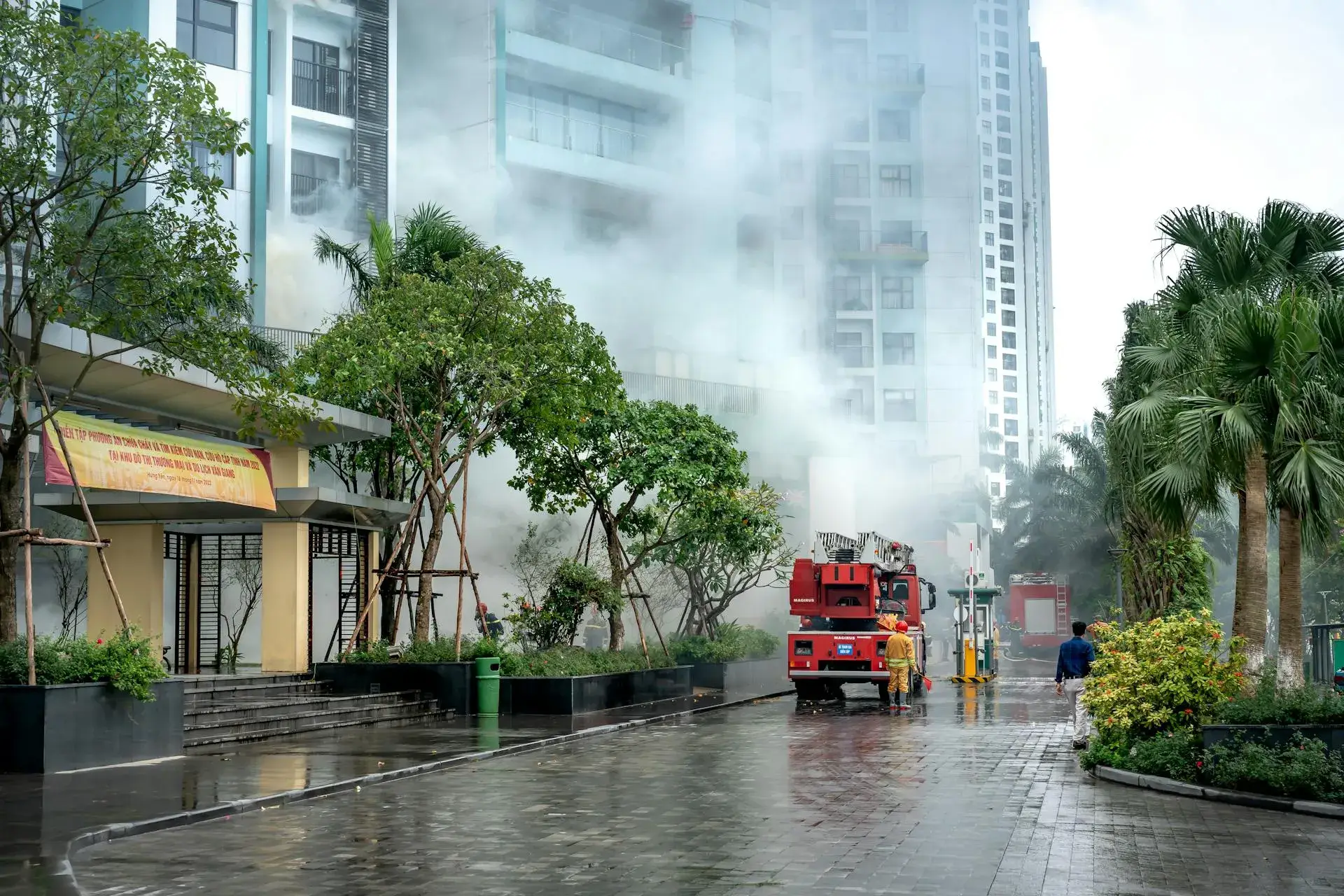
Smoke Damage Restoration in Leawood, KS
Acidic smoke particulates penetrate multi-zone HVAC ducts and custom woodwork within hours. Our Leawood restoration team arrives within 60 minutes.
What Happens When You Call
Your emergency call connects immediately with our Johnson County response coordinator who evaluates soot type and dispatches specialists to Leawood.
Technicians arrive within 60 minutes, seal off unaffected living areas, and establish negative air pressure containment zones.
Industrial HEPA air scrubbers equipped with activated carbon filters begin capturing airborne combustion particles and volatile organic compounds.
Our team performs precision soot removal on all architectural surfaces, decontaminates multi-zone HVAC ductwork, and executes molecular deodorization.
Smoke damage represents a pervasive chemical hazard that extends far beyond the physical boundaries of a fire. Microscopic soot particles, volatile organic compounds, and corrosive aerosols travel through wall cavities, ceiling plenums, and multi-zone ventilation systems, embedding acrid odors deep into luxury finishes. X Response provides specialized emergency smoke remediation across Leawood. We deploy industrial HEPA air filtration equipment, chemical sponge systems, and thermal deodorization technology to halt chemical corrosion and restore pristine indoor air quality. Call our Leawood smoke restoration team now.
Why Leawood Homes Are Vulnerable to Smoke Damage
Leawood is distinguished by expansive, high-end residential architecture where homes in neighborhoods such as Hallbrook, Leawood South, and the Ironhorse corridor frequently exceed 5,000 square feet. These luxury properties are engineered with complex multi-zone heating and cooling infrastructure, often featuring three or more separate furnace and air conditioning units. Supply and return ductwork traverses multi-story vertical chases, unconditioned attic cavities, and finished basement plenums. When an indoor fire or localized kitchen flare-up occurs, air handlers rapidly draw airborne soot and carbon monoxide gases into return grills, pressurizing the duct network and distributing microscopic particulate contamination to every bedroom suite and living area across the estate.
The Johnson County Department of Health and Environment tracks fine particulate matter across residential corridors in Leawood, issuing health alerts when regional agricultural burning in the Flint Hills elevates ambient smoke levels. While regional prairie management burns periodically introduce outdoor particulate haze across northeast Kansas during the spring, indoor structural fire smoke presents a substantially more toxic threat. Structural fires consume synthetic upholstery, foam insulation, electronic plastics, and high-performance paint finishes. This synthetic combustion generates dense, oily soot containing hydrochloric and sulfuric acids that chemically etch architectural glass, tarnish custom bronze fixtures, and permanently discolor fine millwork in Leawood residences unless neutralized by certified specialists.
Multi-Zone Forced-Air HVAC Duct Contamination
Large Leawood estates depend on sophisticated multi-zone HVAC networks with extensive sheet metal and flex ducting. If a furnace blower operates during or following a fire, toxic soot coats the interior walls of supply trunks, dampening insulation, and settling onto cooling evaporator coils. Operating the system afterward forces microscopic carbon particulates into living spaces, contaminating draperies, bedding, and artwork. Comprehensive remediation requires negative-air rotary brush scrubbing, coil decontamination, and internal antimicrobial encapsulation of all duct runs.
High-Volume Synthetic Resin Combustion
Modern luxury home furnishings contain high concentrations of polyurethane foams, synthetic textiles, and chemical laminates. Smoldering fires consume these materials at lower temperatures, generating sticky, greasy soot laden with unburned hydrocarbons. When wiped with standard water-based cleaning products, this oily residue smears across painted surfaces and penetrates deeply into open wood pores. Specialized vulcanized natural rubber sponges and polar chemical degreasers are required to lift soot without damaging delicate finishes.
Thermophoretic Soot Staining on Exterior Wall Assemblies
During cold Kansas winter months, a significant thermal gradient exists between warm interior air and exterior wall surfaces built with stone, stucco, or brick veneer. In a thermodynamic process known as thermophoresis, airborne smoke particulates are driven toward cold exterior framing studs, vaulted ceiling perimeters, and window headers. Dark, parallel soot lines form along exterior wall studs where surface temperatures are coolest, demanding targeted chemical sponge treatment before repainting.
Cathedral Ceilings and Open Rafter Smoke Migration
Many Leawood residences incorporate dramatic two-story great rooms with timber-framed cathedral ceilings and tongue-and-groove cedar planking. Hot combustion gases naturally rise and pool within these high architectural peaks. Smoke particles penetrate deep into porous wood fibers and behind tongue-and-groove paneling, creating an elevated odor reservoir that continually off-gases into upper living areas during warm summer afternoons unless sealed with specialized shellac encapsulants.
Fine Art, Designer Fabrics, and Porous Millwork Vulnerability
Homes throughout Leawood frequently feature valuable personal property, including oil paintings, custom wool draperies, silk upholstery, and unsealed architectural woodwork. Acidic smoke residues degrade delicate canvas pigments and cause irreversible discoloration on fine fabrics within 48 hours. Salvaging these high-value contents requires prompt on-site stabilization, HEPA particulate vacuuming, and specialized ultrasonic or ozone chamber restoration.
Remediating smoke damage in luxury Leawood estates requires advanced equipment, precise chemical understanding, and meticulous craftsmanship. Our certified restoration technicians restore healthy indoor air quality and protect high-value architectural assets.
What Happens to Your Home While You Wait
Within Minutes
Airborne soot particles settle on all horizontal surfaces. Acidic chemical residues begin yellowing plastics, discoloring window blinds, and penetrating porous wall paint. Acrid smoke odors saturate draperies, upholstered furniture, and clothing.
1–24 Hours
Corrosive chemical soot etches glass mirrors, marble countertops, and polished brass fixtures. Drywall absorbs gaseous combustion products deep into its gypsum core. Uncleaned electronic circuit boards experience micro-corrosion from acidic deposits.
24–48 Hours
Soot stains become permanently bonded to painted surfaces, wooden cabinetry, and porous grout lines. Bare metal finishes suffer pitting and permanent discoloration. Smoke odors trapped inside forced-air ductwork intensify throughout the home.
48–72 Hours
Synthetic soot permanently degrades vinyl flooring, appliance finishes, and architectural millwork. Restoration scopes expand from surface cleaning to extensive material replacement and aggressive structural encapsulations.
One Week and Beyond
Pervasive smoke odors become permanently embedded in structural framing, subflooring, and ceiling insulation. Contaminated materials that were not cleaned immediately must be completely demolished and replaced during extensive reconstruction.
Immediate soot neutralization halts chemical etching and saves expensive luxury finishes. Contact X Response today for 24/7 smoke restoration in Leawood.
How We Restore Smoke-Damaged Leawood Homes
Our comprehensive smoke remediation protocol follows strict IICRC standards to restore indoor air quality and eliminate structural soot.
Air Scrubbing and Negative-Pressure Containment
We immediately isolate smoke-affected rooms from clean areas of your Leawood residence using heavy polyethylene critical barriers. Commercial HEPA air scrubbers equipped with deep-bed activated carbon filters operate continuously to capture airborne soot particles and volatile organic compounds.
Precision Soot Surface Cleaning and Chemical Neutralization
Our technicians identify the exact soot composition and apply specialized chemical solutions. We utilize dry vulcanized chemical sponges to lift dry soot from delicate ceilings and wallpaper, followed by targeted alkaline solutions, degreasers, and HEPA vacuuming on custom millwork and stone surfaces.
Multi-Zone HVAC Ductwork Decontamination
We connect commercial negative-air vacuum equipment to each heating and cooling zone, using high-velocity rotary brushes and compressed air whips to dislodge soot particles from supply and return runs. Evaporator coils and air handlers are sanitized, and duct interiors are treated with antimicrobial encapsulants.
Molecular Thermal Deodorization and Hydroxyl Generation
To eliminate odors trapped deep within structural framing and insulation, we deploy industrial thermal fogging units that vaporize solvent-based neutralizers into microscopic droplets matching the exact micron size of original smoke particles. We also run commercial hydroxyl generators that break down odor molecules safely.
Encapsulation Sealing and Air Quality Verification
Where framing members experienced direct smoke impingement, we apply professional pigmented shellac odor-blocking sealants to lock remaining odors permanently inside the wood. Comprehensive particulate testing confirms your Leawood residence is fully restored to pristine, healthy standards.
The X Response Difference
Choose proven technical remediation over cosmetic cover-ups. X Response delivers clean, safe, and permanently deodorized living spaces.
Insurance Claim Guidance for Leawood Homeowners
Smoke damage claims in luxury Leawood homes involve detailed technical documentation demonstrating that microscopic soot has compromised structural and air quality components beyond visible charred areas. Property insurance policies typically cover the cost of professional soot cleaning, structural deodorization, duct sanitization, and contents pack-out. However, adjusters require clear proof of soot distribution and thermal migration patterns. We assist Leawood homeowners by providing comprehensive diagnostic documentation that satisfies insurance adjusters.
How X Response Helps
- Digital soot wipe testing and surface particulate documentation proving the presence of combustion residues in unaffected rooms
- Standardized Xactimate line-item estimates itemizing every surface cleaning, deodorization phase, and ductwork remediation step
- Comprehensive photographic evidence capturing thermophoretic staining, attic rafter soot, and HVAC coil contamination
- Detailed contents inventories distinguishing between salvageable hard goods, textile items requiring dry-cleaning, and total loss items
- Direct technical consultations with insurance adjusters during on-site inspections to review required odor elimination scopes
X Response delivers certified mitigation services and prepares comprehensive loss documentation. We do not act as public insurance adjusters or negotiate claim settlements. Property owners should consult their insurance carrier regarding policy limits, deductibles, and covered perils.
Certified Restoration Specialists Serving Leawood
Our smoke restoration team holds advanced credentials from the Institute of Inspection, Cleaning and Restoration Certification (IICRC), including Fire and Smoke Restoration Technician (FSRT) and Odor Control Technician (OCT). Serving Leawood, Hallbrook, and surrounding Johnson County communities, our technicians understand the construction nuances of custom luxury residences and expansive mid-century properties.
We operate specialized mobile remediation trailers stocked with high-output HEPA air filtration equipment, thermal foggers, hydroxyl generators, and industrial surface cleaning products. We treat your property with technical precision and care, restoring a healthy, odor-free living environment for your family.
In Leawood, X Response works with Best Option Restoration, an independent local restoration partner serving Johnson County.
Smoke Damage Restoration FAQ for Leawood Homeowners
Other Emergency Services in Leawood

Water Damage Restoration
Burst pipes, storm flooding, standing water. We extract, dry, and restore before mold sets in.
Learn more
Fire Damage Restoration
Structural damage, soot, debris. We stabilize, clean, and rebuild what fire destroyed.
Learn more
Mold Remediation
Testing, containment, removal, prevention. We find the source, eliminate the growth, and stop it from returning.
Learn more
Sewage Cleanup
Sewer backups, contaminated water, biohazard. We extract, sanitize, and restore safely.
Learn more