
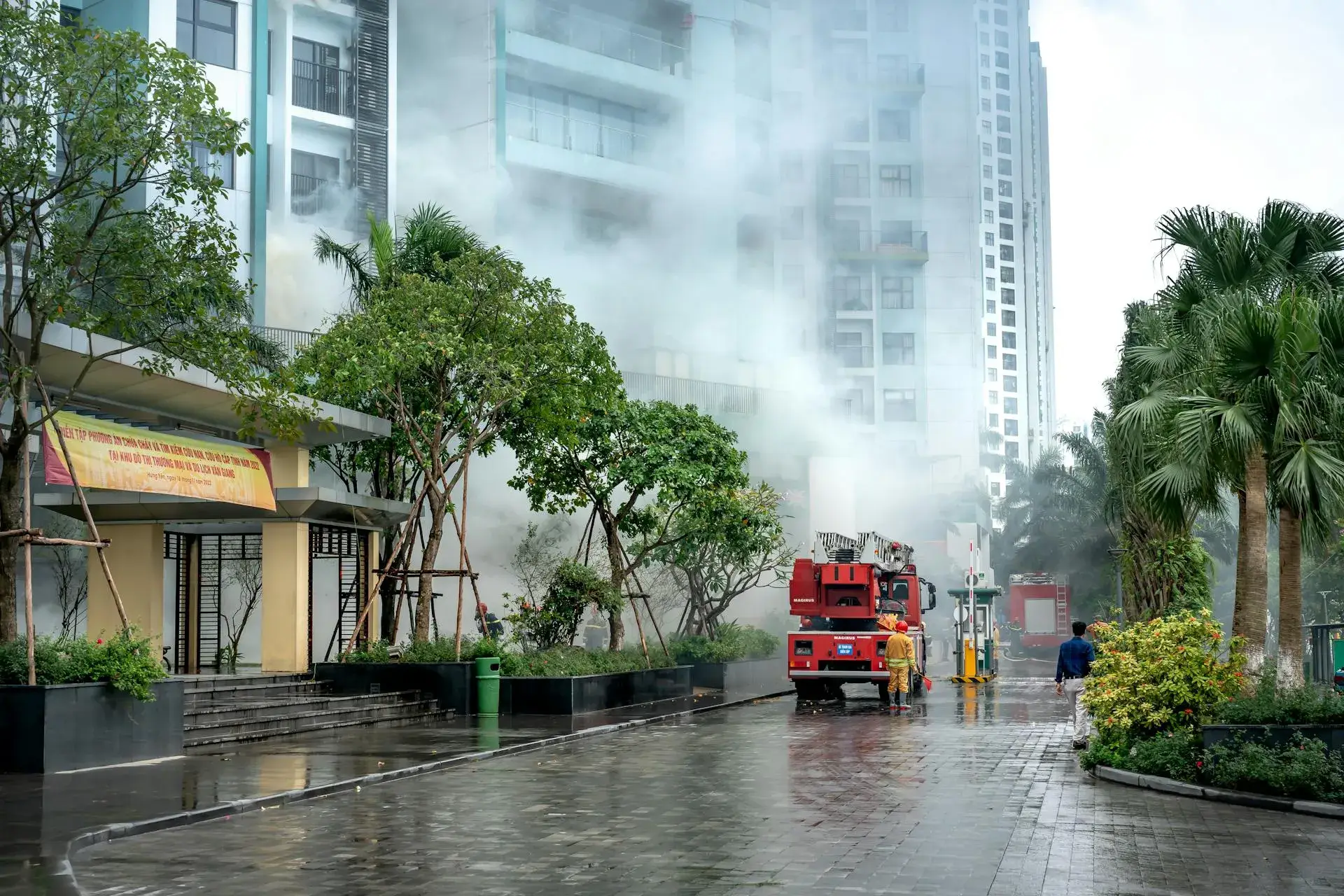
Smoke Damage Restoration in Lacombe, LA
Smoke residues are acidic and corrosive. Whether from wildfire events, prescribed burns in Big Branch Marsh, or a structure fire, smoke contamination worsens every hour in Lacombe's humid lakeside air. Our team responds immediately.
What Happens When You Call
A real person takes your emergency call and dispatches smoke damage specialists to your Lacombe location.
Technicians conduct a thorough assessment, tracing smoke migration paths through ductwork, attic spaces, and structural cavities.
Systematic soot removal begins with surface-appropriate techniques, from dry chemical sponges on drywall to HEPA vacuuming on textiles.
Deep odor neutralization using thermal fogging and hydroxyl generators addresses embedded contamination that surface cleaning cannot reach.
Smoke does not stay outside your home. It migrates through HVAC intakes, attic vents, soffit gaps, and building envelope penetrations, depositing fine particulate matter on every interior surface. In Lacombe's humid climate, soot bonds rapidly with moisture on surfaces and becomes progressively harder to remove. Call now. Your local team is standing by.
Why Lacombe Homes Are Vulnerable to Smoke Damage
Smoke damage in Lacombe originates from a convergence of sources unique to this north shore community's geography and surrounding landscape. In August 2023, extreme heat and drought contributed to wildfires throughout Louisiana that negatively impacted air quality across Southeast Louisiana, prompting the Louisiana Department of Health to urge residents to take precautions. For Lacombe residents, this was not an abstract regional advisory affecting distant neighborhoods. The community's position between Lake Pontchartrain's open water and expansive tracts of pine flatwoods means that smoke from distant fires concentrates along the lake shore where thermal inversions trap particulate matter at ground level. The lake's cooler water surface creates a temperature differential that prevents warm smoke plumes from rising and dispersing as they would over uniform terrain. Unlike inland communities where smoke dissipates upward through convective mixing, Lacombe's lakeside topography holds smoke plumes close to the surface for extended periods, prolonging exposure and significantly increasing the quantity of fine soot that infiltrates homes through HVAC intakes, soffit vents, attic ventilation openings, and gaps around windows and doors. Residents have described multi-day episodes where visibility drops and the smell of burning wood permeates every room despite closed windows.
Beyond regional wildfire events, Lacombe faces recurring smoke exposure from prescribed burns conducted in the Big Branch Marsh National Wildlife Refuge, which borders the community directly to the south along the Lake Pontchartrain shoreline. These managed burns are essential for maintaining the refuge's longleaf pine savanna ecosystem, controlling invasive species, and reducing hazardous fuel accumulation, but they produce substantial smoke that drifts directly into residential areas when wind conditions shift after ignition. The U.S. Fish and Wildlife Service schedules burns during favorable wind windows, yet the unpredictable weather changes characteristic of Southeast Louisiana occasionally push smoke plumes northward through Lacombe's residential corridors. The proximity is significant: some Lacombe homes sit within half a mile of refuge burn units, meaning they experience high concentrations of combustion byproducts including fine particulate matter (PM2.5), carbon monoxide, and volatile organic compounds. Homeowners within a mile of the refuge boundary may experience multiple smoke events between October and April each year during the prescribed fire season. Over time, this cumulative, repeated exposure deposits a measurable soot film on ceiling fans, light fixtures, window sills, and HVAC filter media that homeowners often mistake for normal household dust accumulation. Professional testing frequently reveals that this residue contains the same acidic compounds found in structure fire soot, capable of etching metal fixtures and discoloring paint over months of repeated deposition.
The pine forests that characterize Lacombe's landscape also present a direct wildfire smoke risk during Louisiana's periodic drought cycles. The community is surrounded by thousands of acres of pine plantation timber and native pine flatwoods that dry rapidly during extended periods without significant rainfall. Lightning strikes in these forests during summer afternoon thunderstorms can ignite fires that smolder undetected in the thick pine duff and needle layer for days before flaring up under wind and spreading across the forest floor. When these small wildland fires occur upwind of residential areas, Lacombe homes receive concentrated smoke exposure that can persist for hours or days depending on suppression success and wind consistency. The community's homes, many constructed decades ago with older HVAC systems that draw return air through unsealed attic spaces or through ductwork running in unconditioned crawl spaces, are particularly vulnerable to this localized smoke infiltration. These older systems lack modern air filtration media rated for fine particulate capture, and their return air pathways create direct conduits for outdoor smoke to enter the conditioned living space. Even homes with newer systems often have building envelope gaps around plumbing penetrations, electrical service entries, and attic access panels that allow smoke migration independent of the HVAC system entirely.
Professional smoke damage restoration in Lacombe requires understanding how the community's constant high humidity interacts with soot chemistry in ways that fundamentally differ from drier inland environments. When smoke particles settle on surfaces in a dry climate with 30 to 40 percent relative humidity, they remain on the surface as a removable dry film for several days, giving homeowners a reasonable window to arrange professional cleaning. In Lacombe's 80+ percent relative humidity along the lake shore, moisture bonds with acidic soot compounds within hours of deposition, creating a chemical solution that carries dissolved residues deeper into porous materials including drywall paper facing, unfinished wood trim, grout, natural stone, and natural fiber fabrics like cotton upholstery and wool area rugs. This humidity-driven penetration shortens the effective treatment window dramatically, from days to just 24 to 48 hours before surface cleaning methods become insufficient to fully remove the contamination. Our restoration protocol prioritizes immediate soot stabilization on all affected surfaces, using dry chemical sponges and HEPA vacuuming to capture loose particles before the ambient moisture drives contamination beyond the reach of non-destructive cleaning. We then deploy thermal fogging equipment that generates a heated deodorizing vapor designed to penetrate the same micro-pathways smoke originally traveled, neutralizing odor compounds embedded deep within wall cavities, attic insulation, and the structural framing of Lacombe's pier-and-beam homes where soot settles on exposed wood surfaces in the crawl space below.
Prescribed Burn Proximity
Big Branch Marsh National Wildlife Refuge borders Lacombe directly along the lake shore, and regular prescribed burns between October and April produce smoke that drifts into the residential community when Southeast Louisiana's unpredictable winds shift after ignition.
Pine Forest Wildfire Exposure
Thousands of acres of pine flatwoods and plantation timber surrounding Lacombe create concentrated wildfire smoke exposure during drought periods when lightning strikes or human activity ignites the dry forest floor and duff layer.
Lakeside Thermal Inversion Trapping
Lake Pontchartrain's thermal influence creates atmospheric inversion layers that trap smoke plumes at ground level along the north shore, concentrating fine particulate matter in Lacombe's residential areas for extended periods.
Humidity-Accelerated Soot Penetration
Lacombe's persistent lakeside humidity exceeding 80 percent bonds with acidic soot compounds within hours of deposition, driving contaminants deeper into porous building materials and shortening the effective professional cleaning window to 24 to 48 hours.
Smoke damage in Lacombe's humid lakeside environment requires rapid, professional treatment that accounts for multiple recurring smoke sources. The combination of prescribed burn proximity, wildfire risk from surrounding pine forests, and aggressive humidity-driven soot penetration means that delay allows permanent material damage that no amount of consumer cleaning products can reverse. Professional intervention within the first 48 hours dramatically improves outcomes and reduces total restoration costs.
What Happens to Your Home While You Wait
Within 1 Hour
Smoke particles settle on horizontal surfaces throughout the home. Acidic residues begin interacting with metal finishes, tarnishing fixtures and appliance surfaces.
1 to 24 Hours
Soot penetrates into fabric weaves, carpet fibers, and grout lines. Lacombe's lakeside humidity bonds moisture with soot, carrying compounds into porous materials.
24 to 48 Hours
Chemical etching begins on countertops, appliance faces, and painted walls. Yellow or brown staining becomes visible on light surfaces and ceilings.
48 to 72 Hours
Odor compounds embed deeply into drywall, insulation, and wood framing. Surface cleaning alone can no longer eliminate the musty, acrid smell.
One Week and Beyond
Permanent discoloration and material degradation occur. Soft goods and textiles may become unrestorable. HVAC ductwork requires full professional decontamination.
Smoke damage worsens rapidly in Lacombe's humid lakeside conditions. Contact PowerPro Remediation for immediate smoke restoration.
How We Restore Smoke-Damaged Lacombe Homes
Our smoke damage restoration process in Lacombe systematically addresses contamination from surfaces through structural cavities, HVAC ductwork, and the exposed crawl space framing beneath raised homes.
Smoke Source and Migration Assessment
We trace smoke pathways through your home using visual inspection, particle counters, and thermal imaging, identifying contamination in rooms that may appear unaffected and in crawl spaces where soot settles on exposed framing.
Surface Soot Removal
Technicians use surface-matched techniques: dry sponges for drywall, HEPA vacuuming for textiles, alkaline solutions for hard surfaces, and specialized cleaning for the wood framing exposed in Lacombe's pier-and-beam crawl spaces.
Deep Odor Neutralization
Thermal fogging and hydroxyl generators penetrate wall cavities, ductwork, attic insulation, and crawl space framing to neutralize embedded odor molecules that surface cleaning cannot reach.
HVAC Decontamination and Air Quality Verification
Complete duct cleaning, coil treatment, and filter upgrades ensure your system circulates clean air. Post-treatment air quality testing confirms elimination of fine particulate contamination.
The X Response Difference
PowerPro Remediation restores Lacombe homes from smoke damage completely, addressing both the visible soot residue on accessible surfaces and the hidden contamination embedded in wall cavities, ductwork, and crawl space framing that causes lingering odors in this humid lakeside community.
Insurance Claim Guidance for Lacombe Homeowners
Smoke damage claims require thorough documentation of contamination extent beyond the immediate fire area or point of smoke entry, including evidence of migration through ductwork, attic spaces, and into adjacent rooms.
How X Response Helps
- Photographic evidence of soot deposits on surfaces throughout the structure, documenting the full extent of smoke migration
- Air quality testing results documenting particulate levels and volatile organic compounds before and after treatment
- HVAC contamination assessment showing smoke particle accumulation within the duct system and air handler
- Content inventory with cleaning feasibility determination for each affected textile, furnishing, and electronic item
PowerPro Remediation does not adjust claims or guarantee coverage decisions, but our detailed contamination documentation demonstrates the full scope of smoke damage to your insurance carrier.
Certified Restoration Specialists Serving Lacombe
Our Lacombe smoke damage specialists combine IICRC Fire and Smoke Restoration (FSRT) certification with specialized training in thermal fogging, hydroxyl generation, and HVAC decontamination. They understand how the north shore's lakeside humidity accelerates soot damage compared to inland communities and tailor treatment urgency and protocol intensity accordingly. Their familiarity with Lacombe's pier-and-beam construction means they know to inspect and treat crawl space framing where soot settles on exposed wood, a step that generic restoration companies routinely miss in this community's raised homes.
In Lacombe, X Response works with PowerPro Remediation, an independent local restoration partner serving St. Tammany Parish County.
Smoke Damage Restoration FAQ for Lacombe Homeowners
Other Emergency Services in Lacombe

Water Damage Restoration
Burst pipes, storm flooding, standing water. We extract, dry, and restore before mold sets in.
Learn more
Fire Damage Restoration
Structural damage, soot, debris. We stabilize, clean, and rebuild what fire destroyed.
Learn more
Mold Remediation
Testing, containment, removal, prevention. We find the source, eliminate the growth, and stop it from returning.
Learn more