
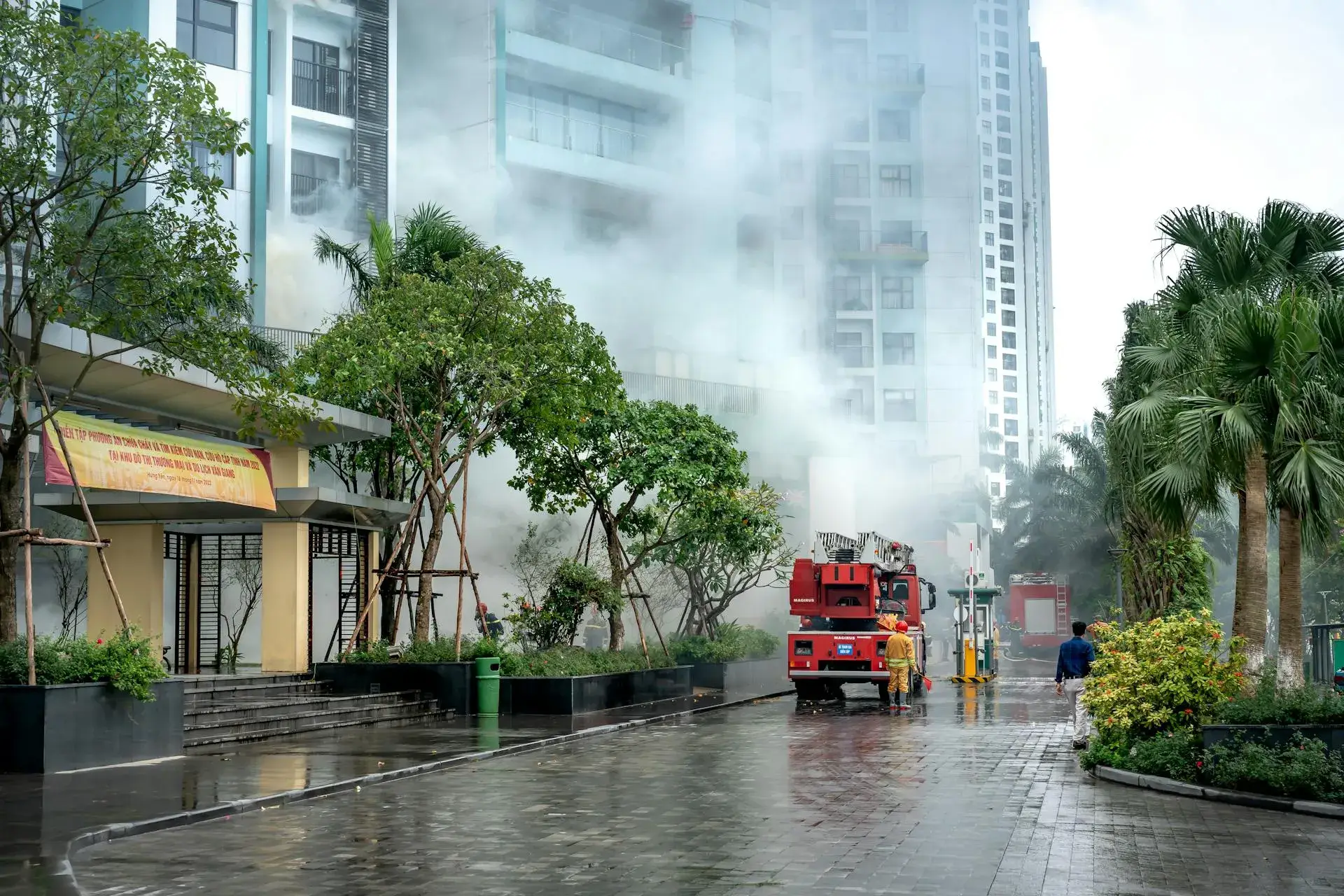
Smoke Damage Restoration in Gallatin, TN
Smoke residue bonds permanently to surfaces within hours. Our local team responds to Gallatin emergencies within 60 minutes to stop damage before it sets.
What Happens When You Call
A real person answers, not a call center. We assess your smoke damage situation, identify the likely source, and begin coordinating your response immediately.
Your dedicated restoration team is dispatched from our local base serving Gallatin and the surrounding Sumner County communities.
Team arrives with HEPA air scrubbers, chemical sponges, thermal foggers, and surface testing equipment. Emergency stabilization begins immediately to prevent permanent bonding.
Source identified, contamination mapped, air scrubbing initiated, and restoration plan documented. You know exactly what comes next.
Smoke residue is actively bonding to every surface in your home right now. The longer it sits, the deeper it penetrates porous materials and the harder it becomes to remove without replacing the material entirely. When you reach out to X Response, your restoration team mobilizes within minutes and arrives within the hour. From that point forward, one team manages everything: surface stabilization, soot removal, odor elimination, HVAC decontamination, and insurance documentation. Call now. Your team is standing by.
Why Gallatin Homes Are Vulnerable to Smoke Damage
Gallatin sits at the edge of where suburban Middle Tennessee meets open country. Sumner County is still heavily rural, with farmland, grassland, and woodland surrounding a fast-growing county seat, and that landscape shapes the city's smoke risk in a way that is different from a dense urban core. Outdoor burning is a routine part of rural and semi-rural life here: leaf piles, brush, cleared vegetation, and storm debris are burned across the county every season. The state regulates it for good reason. From October 15 through May 15, the Tennessee Division of Forestry requires a burn permit for any open-air fire within 500 feet of a forest, grassland, or woodland, the months when dry vegetation and leafless trees push wildfire danger up. When a debris burn escapes, or a grass or brush fire moves through a wooded subdivision edge, the smoke does not stay outside. It infiltrates nearby homes through HVAC intakes, gaps in the building envelope, and open windows, leaving residue on surfaces and in ductwork.
Gallatin's smoke exposure is not only an outdoor problem. The older homes around the historic square, many heated by aging gas or oil-fired furnaces, are prone to puffback events, where unburned fuel ignites in a delayed burst and forces oily soot through the entire duct system in minutes. And in both the historic neighborhoods and the newer subdivisions, a structure fire in one home sends heavy smoke into adjacent properties through shared walls, attics, and air systems even when the neighboring house never catches fire. Each of these sources, escaped debris and brush smoke, furnace puffback, and structure-fire smoke, produces chemically different residue that demands a specific cleaning approach. Using the wrong method can drive the residue deeper and set stains permanently, which is why identifying the source comes before any surface is touched.
Rural Debris and Brush Fire Smoke
Across Sumner County, open burning of leaves, brush, and cleared vegetation is common, and the Tennessee Division of Forestry requires a permit for open-air fires near woodland from October 15 through May 15 because of the elevated wildfire danger in those months. Burns that escape their intended area, and grass or brush fires that move along the wooded edges where Gallatin's subdivisions meet open land, generate heavy smoke that drifts into nearby homes. This smoke carries fine particulate and the residue of burning vegetation, which settles on surfaces, embeds in soft furnishings, and circulates through HVAC systems. Homes at the wildland-urban interface, where development pushes into wooded and grassy areas, absorb more of this smoke than homes in the built-up center of town.
Furnace Puffback in Older Homes
Gallatin's older neighborhoods around the downtown square contain homes heated by aging gas and oil-fired furnaces that have often exceeded their expected service life. When a puffback occurs, unburned fuel in the firebox ignites in a delayed burst and forces oily, acidic soot through the heat exchanger and into the duct system, distributing greasy black residue to every room with a register. The soot bonds to painted surfaces, fabrics, and fixtures within hours. Unlike the dry particulate from a vegetation fire, puffback residue is petroleum-based and acidic, which means it etches and discolors surfaces permanently if it is not treated with the correct chemistry quickly.
Structure-Fire Smoke in Neighboring Homes
When a structure fire occurs in a Gallatin neighborhood, heavy smoke can infiltrate adjacent homes through shared walls, attic connections, and HVAC pathways. This smoke contains a complex chemical mixture from burning synthetics, plastics, treated lumber, and household materials. The residue is highly acidic, produces persistent chemical odors, and penetrates deeply into porous building materials. Neighboring properties often sustain smoke damage that is invisible from outside but severe enough to require professional decontamination of walls, ceilings, contents, and the HVAC system. In the older, closely spaced blocks near the square, this neighbor-to-neighbor smoke transfer is a real and underestimated risk.
HVAC Distribution and Whole-Home Contamination
Gallatin homes rely on forced-air HVAC systems that act as distribution networks, spreading contamination far beyond its point of origin. A puffback in the basement sends soot to every room with a register. A kitchen fire circulates smoke through the return air system into bedrooms and closets. Even outdoor brush smoke drawn in through a fresh-air intake gets distributed through the ductwork. By the time you see soot in one room, the duct system has usually carried particulate throughout the home. Effective restoration has to address the entire HVAC system, not just the visible surfaces, or the home keeps recirculating contaminated air long after the cleanup looks finished.
Humid Climate and Odor Persistence
Middle Tennessee's humid climate intensifies and prolongs smoke odor. Humidity causes porous materials like drywall, wood trim, carpet fibers, and upholstery to expand slightly, trapping smoke molecules deeper within their structure. When humidity drops, the material contracts and releases odor, so the smell comes and goes with the weather. This makes Gallatin smoke damage particularly resistant to surface-only cleaning. Effective odor elimination requires penetrating treatments like thermal fogging and hydroxyl generation that reach the molecules embedded within materials, not just the residue sitting on the surface.
These factors make smoke damage in Gallatin more complex than surface cleaning. The county's rural character means escaped debris and brush smoke is a recurring seasonal source. Older furnaces near the square produce puffback events. Closely spaced homes mean structure fires affect their neighbors. Effective restoration requires identifying the smoke source first, because the wrong cleaning approach can set stains permanently and turn a manageable job into full material replacement.
What Happens to Your Home While You Wait
Within 1 Hour
Smoke particles settle on every exposed surface. Soot begins adhering to walls, ceilings, countertops, and furnishings. At this stage most residue can still be removed with dry methods, chemical sponges and HEPA vacuuming, without damaging the underlying surface. The window for the simplest restoration is open but closing quickly.
1–24 Hours
Acidic compounds in smoke residue begin etching metal surfaces, discoloring paint, and yellowing plastics. Soot penetrates fabric weave, carpet fibers, and upholstery. Gallatin's humidity accelerates this penetration as materials absorb moisture and expand, pulling smoke molecules deeper. Odor begins embedding in porous materials. Chrome fixtures and brass hardware develop permanent tarnish if acidic residue is not neutralized.
24–48 Hours
Smoke residue bonds chemically to painted surfaces, drywall, and wood finishes. What could have been cleaned now requires repainting or refinishing. Grout, natural stone, and unfinished wood absorb soot permanently at this stage. The HVAC system has circulated contaminated air through every room, and duct surfaces hold a film of residue that releases particulate and odor with every cycle. The scope of restoration expands significantly.
48–72 Hours
Permanent staining sets into carpet, upholstery, and soft furnishings that cannot be reversed with professional cleaning. Wood furniture finishes yellow. Walls require not just repainting but primer sealing to prevent odor bleed-through. The entire HVAC system, including the evaporator coil and supply plenums, holds embedded contamination that standard duct cleaning cannot fully address. Restoration cost and timeline increase substantially.
One Week and Beyond
Odor becomes deeply embedded in structural materials: framing, subfloor sheathing, insulation, and drywall core. Surface cleaning alone cannot reach it. Materials that could have been saved now require removal and replacement. In Gallatin's humid climate, trapped smoke molecules interact with ambient moisture to produce persistent off-gassing for months. What started as a cleaning project becomes demolition and rebuild.
The difference between cleaning your home's surfaces and gutting contaminated materials is often just a day of response time. Contact X Response now. Our Gallatin team responds within 60 minutes.
How We Restore Smoke-Damaged Gallatin Homes
From the moment our team arrives, every step is matched to the specific type of smoke residue affecting your home. Here is exactly what the restoration process involves.
Smoke Source Identification and Damage Assessment
The first step is identifying what burned, because the smoke source determines cleaning chemistry and whether materials can be saved. Our team tests surfaces to classify the residue: dry smoke from fast-burning material, wet smoke from smoldering, protein residue from kitchen fires, petroleum-based soot from puffbacks, or fine particulate from outdoor vegetation fires. Each requires a different approach. We map the contamination extent, test the HVAC system for distribution, and document everything for insurance. In Gallatin homes with forced-air systems, that assessment always includes the ductwork and the air handler.
Emergency Stabilization and Air Quality Control
Before detailed cleaning begins, we stabilize the environment. HEPA air scrubbers capture airborne particulate throughout the home. The HVAC system is shut down to stop circulating contaminated air. We seal off heavily damaged rooms and establish negative air pressure where needed. For puffback events, that means isolating the furnace room and the registers on the affected system. For outdoor smoke infiltration, we seal the building envelope and filter incoming air. This stabilization protects your family and belongings while cleaning proceeds.
Surface Cleaning and Soot Removal
This is the core of the restoration. Dry smoke residue is removed with dry chemical sponges and HEPA vacuuming, never wet-wiped, because moisture sets dry soot permanently. Petroleum-based puffback soot requires solvent-based cleaners applied in a specific sequence. Protein residue from kitchen fires needs enzymatic cleaners. Each surface type receives cleaning chemistry appropriate to both the residue and the substrate. Our team works from ceilings down, room by room, testing cleaned surfaces to verify complete removal. In Gallatin's older homes with crown molding and detailed trim, this prevents residue from hiding in crevices.
HVAC Decontamination and Odor Elimination
Once surfaces are clean, we address the HVAC system: the supply and return ductwork, the blower assembly, the evaporator coil, and the air handler housing. For puffback events, the ductwork often holds the heaviest soot concentration and drives ongoing odor if it is not thoroughly cleaned. After mechanical cleaning, we eliminate embedded odor using thermal fogging and hydroxyl generators depending on the residue type. Gallatin's humid climate makes this harder because moisture-swollen materials trap smoke molecules deeply, so we run air quality testing to verify that particulate and odor levels have returned to normal.
Quality Verification and Completion
Before we consider the job complete, a final inspection verifies that all surfaces pass visual and wipe-test inspection, air quality readings are acceptable, and odor is eliminated rather than masked. We hand you completion documentation including before-and-after photos, air quality results, and a summary of the work performed. That record supports your insurance claim. If any area does not pass, including the humidity test where Gallatin's climate can cause odor to reappear, we keep working until it does.
The X Response Difference
When you contact X Response, you get a dedicated team that understands smoke chemistry, matches technique to residue type, and manages everything from emergency stabilization through insurance documentation to final verification. One team, one standard, complete accountability.
Insurance Claim Guidance for Gallatin Homeowners
Smoke damage insurance claims in Tennessee depend heavily on the source and whether the event was sudden and accidental. Most homeowner's policies cover smoke damage from structure fires, including damage to adjacent properties. Furnace puffback events are typically covered as sudden equipment malfunction. Coverage for smoke that drifts in from an outdoor fire varies by carrier: some policies cover it as a sudden external event, while others may classify gradual environmental contamination as excluded. Soot damage from any covered peril typically includes surface cleaning, odor elimination, HVAC decontamination, and replacement of materials that cannot be restored. Knowing how your carrier classifies the event matters, so documentation of the source is critical from day one.
How X Response Helps
- Identify and document the smoke source clearly, which determines coverage eligibility under your policy
- Provide professional photos, air quality readings, surface test results, and a detailed scope of work from day one
- Classify the event (sudden fire, equipment malfunction, or external smoke infiltration) to align documentation with your coverage terms
- Prepare a restoration scope that maps to standard insurance coverage categories so your adjuster can process the claim efficiently
- Explain your policy's likely coverage before you file, so you understand your options and potential out-of-pocket exposure
X Response does not file claims on your behalf, adjust claims, or make coverage determinations. We provide documentation and guidance to help you make informed decisions about your property and your policy. Coverage decisions are made solely by your insurance carrier.
Certified Restoration Specialists Serving Gallatin
When you contact X Response for smoke damage in Gallatin, your restoration team is drawn from certified professionals who work across Sumner County and understand the specific challenges of smoke restoration here. They know the difference between dry particulate from a vegetation fire, greasy puffback soot, and complex structure-fire residue, and they carry the equipment and chemistry to address each correctly. They have worked through escaped debris-burn smoke at the wooded edges of Gallatin's subdivisions, puffback events in older homes near the square, and structure-fire smoke that crossed from one closely spaced home to the next. This is a specialized team with expertise in smoke chemistry, trained to match the restoration approach to the residue type before any cleaning begins.
Every technician holds current IICRC certification in fire and smoke damage restoration (FSRT) and carries appropriate Tennessee state licensing. Equipment includes HEPA air scrubbers, thermal foggers, hydroxyl generators, negative air machines, and the full range of cleaning chemistry for different smoke residue types. When your team arrives, they bring everything needed to begin stabilization immediately, including air quality monitoring to verify safe conditions throughout the project.
In Gallatin, X Response works with Tennessee Water and Fire, an independent local restoration partner serving Sumner County.
Smoke Damage Restoration FAQ for Gallatin Homeowners
Other Emergency Services in Gallatin

Water Damage Restoration
Burst pipes, storm flooding, standing water. We extract, dry, and restore before mold sets in.
Learn more
Fire Damage Restoration
Structural damage, soot, debris. We stabilize, clean, and rebuild what fire destroyed.
Learn more
Mold Remediation
Testing, containment, removal, prevention. We find the source, eliminate the growth, and stop it from returning.
Learn more
Sewage Cleanup
Sewer backups, contaminated water, biohazard. We extract, sanitize, and restore safely.
Learn moreNearby Service Areas
Also serving nearby: