
Smoke Damage Restoration in Old Hickory, TN
Smoke compounds penetrate deeper into your home with every passing hour. Our local team responds to Old Hickory emergencies within 60 minutes to stop the damage before it becomes permanent.
What Happens When You Call
A real person answers, not a call center. We assess your smoke damage situation, identify the smoke source type, and begin coordinating your response immediately.
Your dedicated smoke restoration team is dispatched from our local base serving Old Hickory and the surrounding Davidson County communities.
Team arrives with HEPA air scrubbers, soot removal equipment, and air quality testing instruments. Emergency assessment and containment begin immediately.
Contamination mapped, cleaning protocol determined, equipment deployed. You know exactly what comes next.
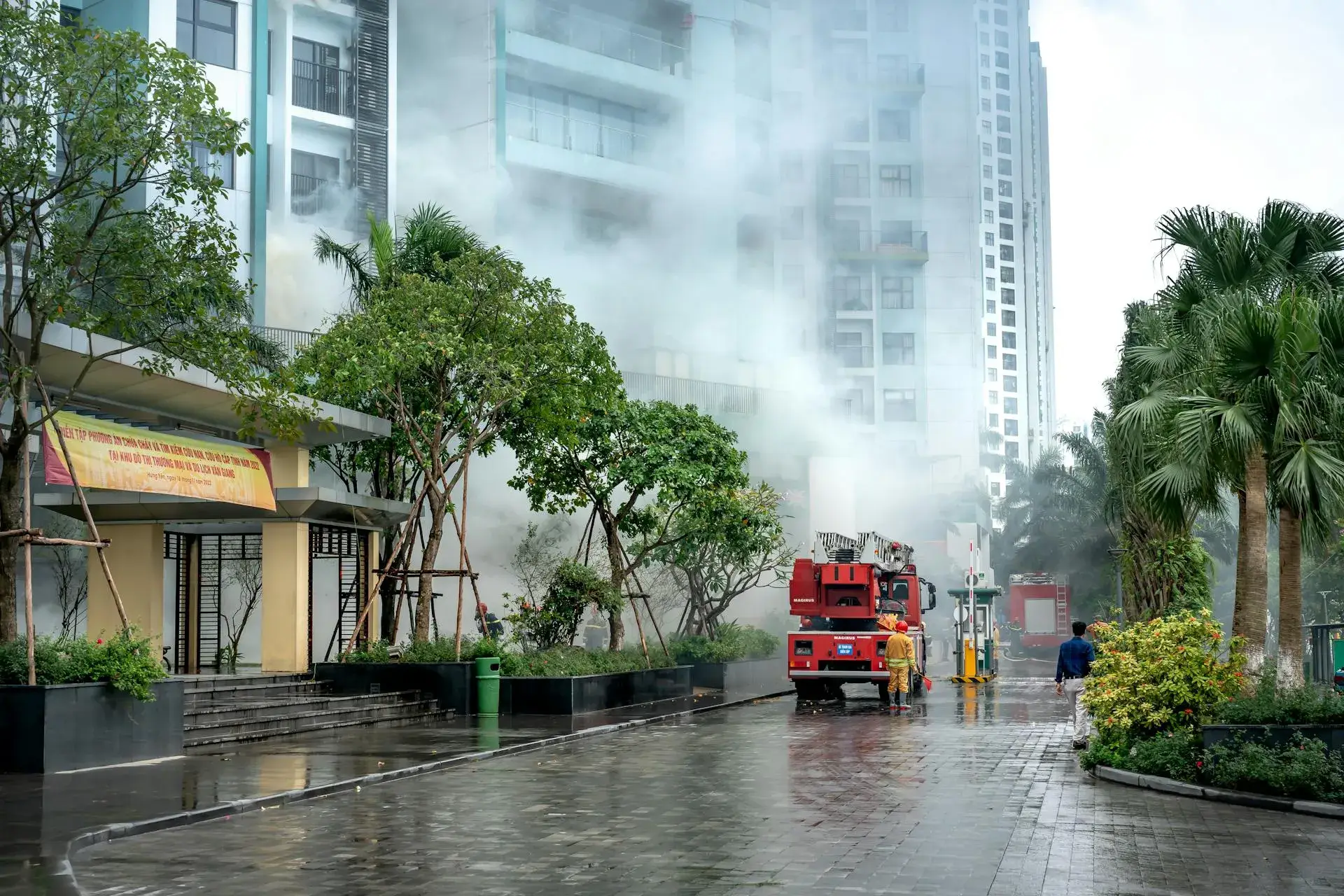
Smoke damage does not wait. Whether it entered your home from a structure fire next door, a wildfire smoke event blanketing Davidson County, or a kitchen fire that spread soot through the HVAC system, the compounds are reacting with your surfaces right now. X Response exists for exactly this moment. When you reach out, your smoke restoration team is mobilized within minutes and on site within the hour. From that point forward, one team manages everything: assessment, soot removal, deodorization, and air quality verification. You are never left guessing about the next step. Call now. Your team is standing by.
Why Old Hickory Homes Are Vulnerable to Smoke Damage
Old Hickory's smoke damage risk comes from two directions that most Nashville neighborhoods do not face simultaneously: the community's proximity to structures built a century ago with porous, unsealed materials that absorb smoke deeply, and its geographic position in the Cumberland River valley where atmospheric inversions trap smoke at ground level. In June 2023, Canadian wildfire smoke drifted into Middle Tennessee and pushed Nashville's air quality to 8.7 times the World Health Organization's annual guideline value for PM2.5, triggering health advisories across Davidson County including the Old Hickory community. The smoke hung over the Nashville basin for days, and Old Hickory's position in the river valley at Hadley Bend meant the particulate settled and concentrated in the low-lying area rather than dispersing with wind. Homes with original single-pane windows, unweatherstripped doors, and aging building envelopes, which describes much of the 1918-era Village housing stock, could not keep the outdoor contamination out.
Beyond regional wildfire smoke events, Old Hickory faces smoke exposure from local structure fires in its densely built historic core. The October 2024 apartment fire on Hills Lane sent smoke across the surrounding blocks, and the Village's narrow lot spacing means any structure fire exposes multiple neighboring homes to soot and smoke infiltration even when those homes never catch fire themselves. The 1918 worker bungalows were built with wood lath and plaster walls, original hardwood flooring, and crawl spaces that communicate with the living space above. Smoke follows the path of least resistance, and in these homes that means through every crack in the plaster, every gap between floorboards, every unsealed penetration around plumbing and electrical, and directly into the crawl space through the open foundation vents that were standard practice in that era.
The June 2023 Canadian Wildfire Smoke Event
In June 2023, smoke from hundreds of active wildfires in Quebec and Ontario drifted south into the eastern United States. Nashville and Middle Tennessee experienced multiple days of visibly hazy skies and degraded air quality. Monitoring stations in the Nashville metro area recorded PM2.5 concentrations that reached 8.7 times the World Health Organization's annual guideline, prompting Davidson County officials to issue health advisories recommending residents stay indoors with windows closed. For Old Hickory's older homes, that guidance was difficult to follow effectively. The Village's 1918-era bungalows have single-pane wood windows, original door frames with gaps that have widened over a century of settling, and foundation vents that draw outdoor air directly into crawl spaces. These homes have no meaningful air barrier between inside and outside. During a multi-day smoke event, fine particulate infiltrated these structures continuously, depositing on surfaces, embedding in soft goods, and contaminating HVAC systems that recirculated the polluted air throughout the home.
River Valley Atmospheric Trapping
Old Hickory sits in the Cumberland River valley at the Hadley Bend meander, surrounded on three sides by the river at a low elevation relative to the surrounding terrain. When atmospheric conditions create a temperature inversion, which happens frequently in Middle Tennessee during the transitional seasons of spring and fall, smoke and particulate become trapped at ground level in the valley rather than rising and dispersing. This affects Old Hickory more intensely than neighborhoods on higher ground. During the June 2023 wildfire event, the river valley acted as a bowl that collected and concentrated the drifting particulate. Homes in the low-lying sections of Hadley Bend experienced worse air quality than homes on the ridgelines above, and the smoke lingered longer because the valley geometry prevented wind from sweeping it clear. Any future wildfire smoke event, agricultural burn, or large structure fire in the eastern Davidson County area will concentrate in this same geography.
Porous Historic Building Materials
The Village's original construction materials are exceptionally porous compared to modern sealed surfaces. Unpainted plaster absorbs smoke compounds into its calcium matrix. Original hardwood flooring, worn smooth by a century of use, has open grain that traps soot particles below the surface. Wood lath behind plaster walls absorbs smoke that penetrates through cracks. Original millwork with multiple layers of aged paint develops micro-cracks that allow smoke to reach the bare wood beneath. These materials cannot be cleaned with the same methods used on modern sealed surfaces. Aggressive cleaning damages the original finish. Inadequate cleaning leaves residue embedded in the pores. Effective smoke restoration in Village homes requires understanding the absorption characteristics of each material and applying the technique that removes contamination without destroying the historic surface.
HVAC Infiltration in Older Duct Systems
Most of Old Hickory's older homes were retrofitted with forced-air HVAC systems decades after original construction. The ductwork often runs through crawl spaces, between floor joists, and through attic spaces, following available paths rather than sealed dedicated chases. Joints are sealed with tape that deteriorates over time, creating gaps that draw surrounding air into the duct system. During a smoke event, whether from a nearby structure fire or a regional wildfire, these gaps pull contaminated air into the ducts and distribute it through every supply register in the home. The HVAC blower becomes a smoke distribution system, carrying soot and volatile compounds into rooms that were never directly exposed to the smoke source. Cleaning the visible surfaces accomplishes nothing if the duct system continues circulating trapped contamination every time the system cycles.
Exposure Smoke from Adjacent Structure Fires
Old Hickory's narrow lot spacing in the Village means a structure fire at one address sends smoke directly into neighboring homes. The October 2024 apartment fire on Hills Lane produced a smoke plume that drifted across surrounding blocks. Homes downwind of a structure fire experience smoke infiltration through every opening: windows, doors, soffit vents, foundation vents, and the gaps inherent in century-old construction. The exposure is not limited to the hours while the fire burns. Smoldering debris can produce smoke for days after the visible fire is suppressed, and the accumulated soot on exterior surfaces continues to off-gas volatile compounds that migrate indoors. A homeowner whose property never caught fire can still face significant interior smoke contamination from a neighbor's fire, particularly when wind direction pushes the plume directly across their lot.
These factors combine in Old Hickory to create a smoke damage environment that goes beyond what most Nashville neighborhoods face. The river valley traps airborne particulate at ground level. The century-old housing stock cannot keep it out. The porous original materials absorb it deeply. The retrofitted HVAC systems distribute it throughout the home. And the narrow lot spacing means every local structure fire is a neighborhood-wide smoke event. Effective smoke damage restoration here requires understanding both the source of the smoke, whether wildfire particulate, structure fire soot, or smoldering-debris compounds, and the specific material science of cleaning and deodorizing a 106-year-old home without destroying its historic character.
What Happens to Your Home While You Wait
Within 1 Hour
Acidic soot compounds begin reacting with moisture on surfaces. In Old Hickory's humid river-bend climate, this reaction starts faster than in drier environments. Fine particulate settles on horizontal surfaces, begins embedding in carpet fibers, and lands on upholstery. Volatile organic compounds from structure fire smoke off-gas and absorb into porous materials. The original plaster and exposed wood in Village homes begins absorbing smoke at the molecular level.
1–24 Hours
Soot permanently stains porous and unsealed surfaces. In Village homes, that includes original hardwood, unpainted plaster, and aged grout. Metal fixtures tarnish and pit as acidic residue corrodes the surface. Smoke odor compounds penetrate deeper into soft goods, clothing, and upholstered furniture. If the HVAC system runs during this period, contamination spreads to every room connected to the duct system regardless of whether smoke originally reached those spaces.
24–48 Hours
Smoke compounds bond permanently with porous building materials. The distinction between cleanable contamination and permanent damage begins to blur. Odor molecules embed so deeply in plaster, wood, and fabric that surface cleaning alone cannot reach them. Electronics corrode internally as conductive soot bridges circuits. In the Village's older homes with open wall cavities, smoke that entered through cracks has now reached lath, framing, and insulation behind walls where it cannot be accessed without opening the wall.
48–72 Hours
Corrosion on metal surfaces becomes irreversible. Glass etching from acidic soot is permanent. Clothing and soft goods that could have been cleaned at 24 hours become total losses. The odor has fully permeated structural materials, making deodorization a multi-technique, multi-day process rather than a single treatment. Restoration cost increases as more items and materials shift from the salvageable column to the replacement column.
One Week and Beyond
Widespread permanent damage to surfaces, electronics, and soft goods. Structural materials have absorbed smoke compounds so deeply that thermal fogging alone cannot reach them, requiring sealants, encapsulation, or material replacement. In Village homes, irreplaceable original elements may be permanently compromised. The scope shifts from cleaning to reconstruction. Insurance claim complexity and cost escalate at each stage.
The gap between cleaning your Old Hickory home and replacing its contents grows wider with every hour of delay. Contact X Response now. Our Old Hickory team responds within 60 minutes.
How We Restore Smoke-Damaged Old Hickory Homes
From the moment our team arrives, every step is documented, measured, and verified. Here is exactly what the smoke restoration process involves.
Source Identification and Contamination Mapping
Our team begins by identifying the smoke source, which determines the cleaning protocol. Structure fire smoke produces oily, protein-rich soot that requires chemical cleaning. Wildfire smoke produces fine particulate that embeds in porous surfaces and requires different removal techniques. Electrical fire smoke produces corrosive residue that attacks metal and electronics. We map the contamination using visual inspection, air quality meters, and surface sampling to determine exactly how far the smoke traveled through your Old Hickory home, including through HVAC ductwork, into crawl spaces, and behind walls. In the Village's older homes, we check for smoke migration through wall cavities, between floorboards, and into spaces that may not show visible soot but carry odor compounds.
Air Quality Stabilization
Before detailed cleaning begins, we stabilize indoor air quality with HEPA air scrubbers positioned throughout the home. These units filter particulate down to 0.3 microns, capturing the fine soot and smoke compounds that remain airborne and continue contaminating surfaces. In homes where the HVAC system distributed smoke throughout the structure, we seal supply registers in unaffected rooms to prevent cross-contamination during cleaning. For Old Hickory homes with crawl space foundations, we address the crawl space air separately because the open communication between crawl space and living space means contaminated air below the home continuously re-contaminates the space above.
Surface Cleaning and Soot Removal
Every surface is cleaned using the technique matched to its material. For the Village's original plaster walls, we use dry chemical sponges that lift soot without wetting or damaging the plaster surface. For painted trim and millwork, we use pH-neutral cleaners that dissolve soot without stripping the aged finish. Hardwood floors are HEPA-vacuumed, then cleaned with solvent-appropriate solutions that reach embedded particulate without damaging the wood grain. Metal fixtures receive chemical treatment to halt corrosion before it becomes permanent. Modern surfaces like tile, glass, and sealed countertops are cleaned with standard restoration methods. Every decision weighs the material's age, porosity, and historical value against the cleaning method's aggressiveness.
Deodorization
Smoke odor embeds in porous materials at a molecular level that surface cleaning cannot reach. We deploy thermal fogging, which produces a dry fog of solvent-sized particles that penetrates the same micro-spaces the smoke reached, breaking down odor molecules through chemical reaction rather than masking them with fragrance. For severe contamination, hydroxyl generators run continuously for days, neutralizing volatile organic compounds in the air and on surfaces through oxidation. In Old Hickory's older homes where smoke has penetrated through plaster into lath and framing, we may deploy ozone treatment in sealed, unoccupied spaces to reach compounds trapped deep within wall assemblies. The river-bend humidity that keeps Old Hickory damp can reactivate odor in materials that absorbed both smoke and moisture, so we manage humidity throughout the deodorization process.
Verification and Completion
Before we consider the job complete, we verify air quality with particulate meters and conduct odor testing throughout the structure including in crawl spaces and behind access panels. We check that all surfaces pass visual inspection and that treated metals show no continuing corrosion. HVAC ductwork is verified clean or scheduled for professional duct cleaning if contamination persists. We hand you completion documentation including air quality readings, before-and-after photos, and a summary of all work performed. If post-completion monitoring reveals returning odor, which can happen when humidity reactivates deeply embedded compounds, we return and address it at no additional charge.
The X Response Difference
When you contact X Response for smoke damage, you get a restoration team that treats the source, not just the symptom. One team, material-specific methods, verified results.
Insurance Claim Guidance for Old Hickory Homeowners
Smoke damage insurance coverage depends on the source. If smoke entered your Old Hickory home from a covered peril like a structure fire on your own property, coverage typically falls under your dwelling and contents provisions. If smoke damage resulted from a neighbor's fire, you may file under your own policy and your carrier may subrogate against the neighbor's liability coverage. Wildfire smoke infiltration from regional events like the June 2023 Canadian smoke episode presents a coverage gray area: most standard policies do not explicitly cover gradual air quality degradation from distant wildfires unless it causes demonstrable physical damage to the structure or contents. Documenting the damage thoroughly and connecting it to a specific dated event strengthens your position regardless of the source.
How X Response Helps
- Document all smoke and soot contamination with professional photos, air quality readings, and a detailed scope of work from day one
- Identify the smoke source clearly, which determines which coverage provision applies under your policy
- Prepare documentation that distinguishes between salvageable contents requiring cleaning and total-loss items requiring replacement
- Align our restoration scope with standard insurance coverage categories so your adjuster can process the claim efficiently
- Explain your policy's likely coverage position before you file, so you understand your options and potential out-of-pocket exposure
X Response does not file claims on your behalf, adjust claims, or make coverage determinations. We provide documentation and guidance to help you make informed decisions about your property and your policy. Coverage decisions are made solely by your insurance carrier.
Certified Restoration Specialists Serving Old Hickory
When you contact X Response for smoke damage in Old Hickory, your restoration team is drawn from certified professionals who work across Davidson County and understand the specific challenges of deodorizing and cleaning homes in this historic community. They know how smoke moves through the open construction of 1918-era Village homes, how the river-valley geography concentrates airborne particulate, and how original plaster, aged hardwood, and period millwork respond to different cleaning methods. They have worked through structure fire exposure events in the Village's narrow-lot core, wildfire smoke infiltration during regional air quality events, and kitchen fire soot distribution through aging HVAC systems. This is not a generic cleaning crew. It is a smoke restoration team with specific knowledge of how to clean and deodorize century-old construction without damaging irreplaceable historic materials.
Every technician on your team holds current IICRC certification in fire and smoke restoration and carries the appropriate Tennessee state licensing for the work being performed. Equipment includes industrial HEPA air scrubbers, thermal foggers, hydroxyl generators, particle counters, and material-specific cleaning systems. When your team arrives, they bring everything needed to stabilize air quality and begin restoration immediately.
In Old Hickory, X Response works with Tennessee Water and Fire, an independent local restoration partner serving Davidson County.
Smoke Damage Restoration FAQ for Old Hickory Homeowners
Other Emergency Services in Old Hickory

Water Damage Restoration
Burst pipes, storm flooding, standing water. We extract, dry, and restore before mold sets in.
Learn more
Fire Damage Restoration
Structural damage, soot, debris. We stabilize, clean, and rebuild what fire destroyed.
Learn more
Mold Remediation
Testing, containment, removal, prevention. We find the source, eliminate the growth, and stop it from returning.
Learn more
Sewage Cleanup
Sewer backups, contaminated water, biohazard. We extract, sanitize, and restore safely.
Learn moreNearby Service Areas
Also serving nearby: